TEL AVIV, Israel, 13th October, 2020, // ChainWire //
MarketAcross, a world leader in blockchain public relations and marketing services, is pleased to announce the launch of Chainwire, an automated press release distribution service which provides guaranteed coverage and in-depth reports. Chainwire will be a one-stop-shop for the distribution of press releases in the cryptocurrency and blockchain sector. The launch marks the first time that advertisers can reach leading publications in the crypto media with the click of a button.
While most industries have some kind of PR newswire service, the cryptocurrency sector has become a victim of its own rapid pace of growth over recent years. Since the ICO boom of 2017, there has been a proliferation of blockchain and crypto-focused projects, exchanges, investment firms, and marketing agencies, along with niche news and informational content sites.
However, the infrastructure to connect this complex ecosystem has been slow to come up to speed, meaning that existing newswire services don’t reach their target audience. It’s estimated that one in five people own cryptocurrencies, so there is currently a significant missed opportunity to reach a massive global readership.
As a newswire service dedicated to the crypto and blockchain space, Chainwire aims to address this gap. Press releases are distributed to leading publications, offering guaranteed coverage to reach audiences worldwide. The system is integrated with publishers and blogs, enabling accurate reporting via a user-friendly dashboard. It also offers reports of the press release distribution.
Chainwire offers a flexible choice of packages to suit all types of stories and budgets, guaranteed coverage by a minimum of 10 publications for the most basic package. The standard offers more coverage and support, while the soon-to-be-launched premium package will include translations to additional languages and syndication to 300+ business tech and finance websites.
Chainwire is also welcoming publications wishing to join the service. Site owners can leverage the opportunity to produce up to date, relevant news for their audiences while maximizing the opportunity for passive income.
Chainwire will be powered by MarketAcross, which brings its extensive network of media and PR connections developed over six years operating in the blockchain and cryptocurrency marketing space.
For registration and more information about Chainwire please visit: www.chainwire.org
About MarketAcross
MarketAcross is the world’s leading blockchain PR and marketing firm. The company has helped over 150 clients, including industry leaders such as Binance, TRON, Huobi and Polkadot, to build their brand among cryptocurrency and blockchain audiences. MarketAcross works with journalists from top tier publications, influential bloggers, webmasters, and editors of small blogs to create compelling content that provides guaranteed results.
In a world where your personal data continues to be tracked, it remains essential for everybody to keep their own financial data hidden from prying eyes.
Blockchain was slated to free everybody from the traditional financial world, providing a vehicle where your money remained your own and would not have to be trusted to any third party.
While this might be true, there is still one crucial piece of information that everybody still overlooks – the fact that Bitcoin blockchain is entirely public. Many Bitcoin users believed that their Bitcoin transactions were both completely safe and private in the early days.
This might have remained true for quite some time. However, when the need for KYC/AML procedures appeared on centralized exchanges, it all changed. As soon as users started to link their Bitcoin addresses to the exchanges’ BTC addresses, their anonymity was thrown right out of the window.
Alongside scalability, the lack of privacy is one of the essential issues faced by the Bitcoin blockchain.
A ton of privacy-focused blockchains have been created because of this, including the likes of Zcash, Dash, and Verge. However, the biggest of them all is Monero – a cryptocurrency that hides both transaction values and transaction addresses.
When you send transactions on Monero, nobody can tell who sent the transaction, where it went, or how much was sent. These three properties of a transaction are all publicly viewable on the Bitcoin blockchain.
The only way to achieve a decent level of privacy while using Bitcoin is through a Bitcoin mixing service – and Bitcoinmix.org might be one of the best candidates to choose from!
What is Bitcoinmix.org?
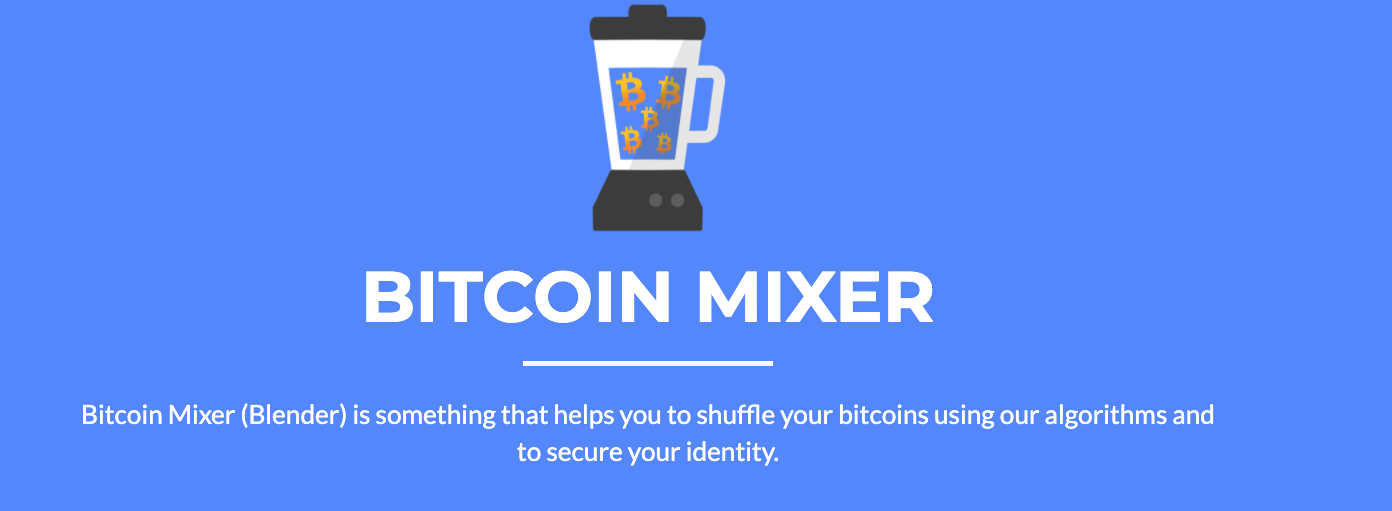
Bitcoinmix.org is a Bitcoin Mixing service (also known as a tumbling service) designed to help users achieve a certain anonymity level while conducting transactions on the Bitcoin blockchain.
Put simply, the tumbler is used to mix people’s Bitcoins to obscure their origin. After the mixing, users receive BTC that cannot be linked back to them.
To mix on Bitcoinmix.org, a user simply has to enter the Bitcoin address where they would like to receive their fresh BTC – that’s it! No email, no I.D, no sign-ups! It is crucial that the receiving BTC address remains completely clean and never touched before to stay as anonymous as possible.
After entering the address to receive BTC, they will be instructed to send the BTC they would like to mix to a specific address. Once the BTC has been sent to the mixer, the service will mix the coins and then send BTC to the receiving address minus the fees.
Bitcoinmix.org has a minimum requirement of 0.02 BTC to mix. On top of this, it charges a randomized fee between 2-5% for each transaction, and it is completely automated without the need for any outside human interaction.
The following video quickly describes what the service does:
https://youtu.be/CkvDJcZcl-U
Why Would I Ever Need To Mix My Coins?
The main reason you would want to mix your coins is to remain anonymous and prevent anybody from tracking what you are doing with your cryptocurrency.
For example, let us say that you are paying your employees. If you would just send a direct transaction from your wallet to theirs, they would quickly see how much funds you have in that wallet. On top of this, they could even do some forensic investigation of their own to see other wallets you might have owned in the past.
For example, let us say that you are paying your employees. If you would just send a direct transaction from your wallet to theirs, they would quickly see how much funds you have in that wallet. On top of this, they could even do some forensic investigation of their own to see other wallets you might have owned in the past.
This is not a great position for any employer as it would make any conversation of a salary increases a little tricky when they know you have a substantial amount of cryptocurrency.
Instead, you could easily just send your payment through the Bitcoinmix.org service, and your employees would never have any idea about how much BTC is sitting in your wallet.
Another reason as to why people use Bitcoin mixing services is to stay ahead of regulation. For years, governments around the world have been banning and regulating cryptocurrencies each year. If a government decides to ban all cryptocurrencies in your jurisdiction completely – the blockchain trail would quickly tell them how much cryptocurrency you own, and you would be liable to account for this.
To combat this, you could easily stay ahead of the curve by mixing assets that you intend to hold for the long term, and any regulator would be none the wiser about what has been mixed.
The last thing we have to mention is Bitcoin fungibility. Bitcoin mixing services such as Bitcoinmix.org play a massive role in keeping Bitcoin fungible. Fungibility refers to the concept that 1 BTC is equal to any other 1 BTC on the planet. If I send you 1 BTC, and you send me 1 BTC back – their worth and utility should be completely identical, right?
Well, this is true in most cases, but you can never be sure about the origin of any BTC you receive – there is a chance that the BTC you received has been blacklisted and will not be accepted by cryptocurrency service providers. Bitcoin mixers help address the fungibility issues that can sometimes affect unsuspecting users due to the Bitcoin blockchain’s fully transparent design.
The pros of Bitcoinmix.org:
Quickly tumble BTC without providing any personal information
Randomized 2-5% fee for using the service
Emails used on the contact form are deleted 24 hours after opening
Every stock exchange means more than one local market. If you want a big profit – you always start a new venture elsewhere. But before blockchain the international trading was difficult. Fewer investors had had enough capital to make their first successful steps on their own. But today the foul circle of poverty was broken when the blockchain arrived.
No, it was not a hyperbola. Now you can trade all around the world almost without restrictions. Forex does that but Forex deals with traditional, fiat money, it is bound by numerous government policies and various fees and taxes from old financial institutions. With blockchain you only need a proper wallet. It calls Coinbox.
Why Coinbox is your choice
The Coinbox app is currently available in over 187 countries from all over the world and has 750000+ active users.
The rise of decentralize finance apps in this DeFi craze has seen the wallet add every ERC-20 standard token on its platform. This adds 1000’s of tokens to its pool of crypto assets supported.
The wallet is available on multiple operating systems: Coinbox is available on the web supporting Windows, macOS, and Linux. You also can download the mobile based app on Google Play Store and the Apple App store.
The transactions here are clear and fast.
You can sell the BTC from all over the world to your Paypal account.
There is an easiest way to exchange any cryptocurrency here.
Coinbox is one of the best solutions if you need to sell bitcoins in the EU. The recent update let you sell your BTC for fiat directly via SEPA to your bank account.
Extended security settings which allows you to login via face-id, touch-id, or classical passwords and codes, change your BTC address after every incoming transaction and confirm operations via email.
Staking Assets & Rewards: Coinbox allows you to earn a passive income just by holding cryptocurrencies in your wallet, the so-called staking. Staking is available for the ALGO cryptocurrency, based on the open Proof-of-Stake blockchain platform Algorand. Annual Percentage Yield (APY) is 5.46% for ALGO.
How to begin your world trading
First of all it’s necessary to download application and register in the system (you may also use web version, whatever is more convenient for you);
When the application is downloaded you need to log in;
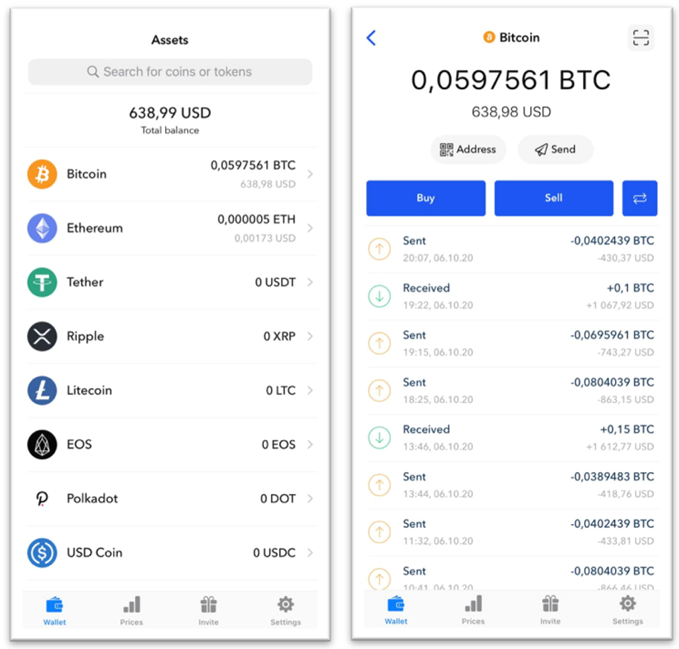
As soon as you are logged into the application, you can see the list of supported cryptocurrencies and tokens. If you always have a trade with some coin, the Coinbox wallet will provide you a complete log of your transactions. This is your “Wallet” section.
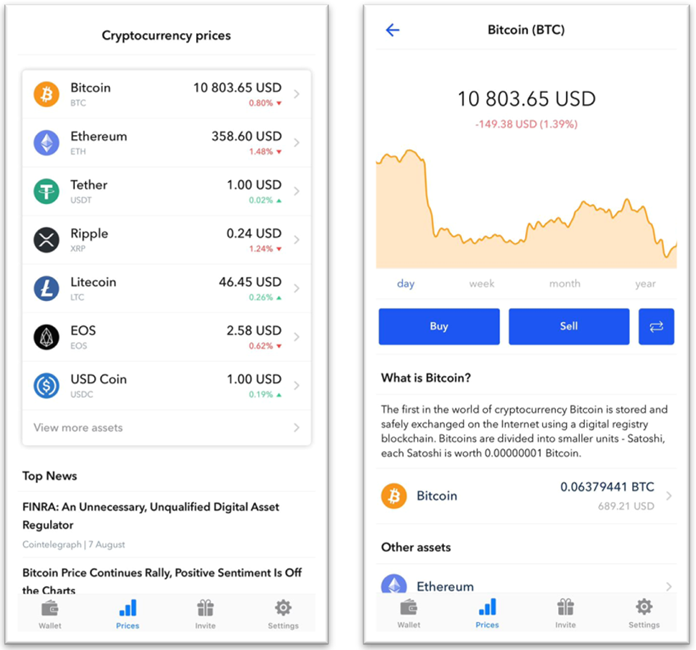
In the “Prices” section you can see the current cryptocurrency rates and top news, that will help you make your investments rational and effective.
Buy, sell (for BTC only) and exchange your coins in the proper tabs. These operations are instant, they proceed in several clicks, no more;
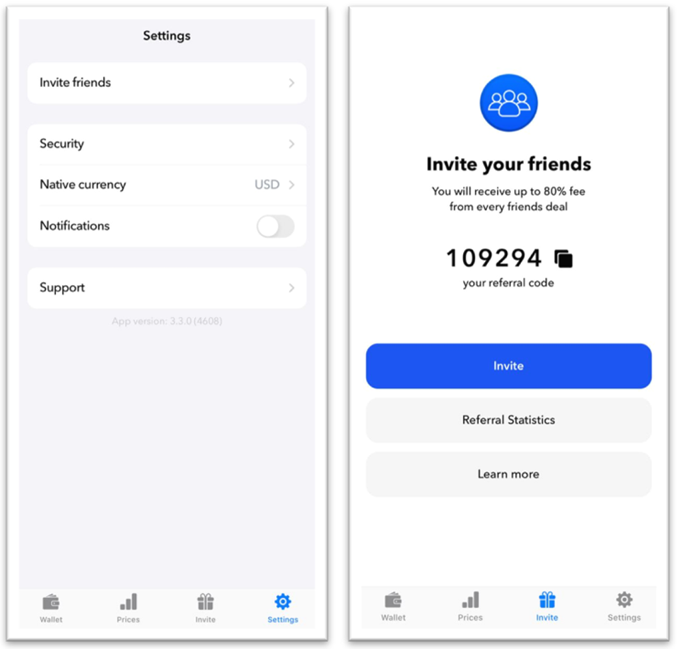
Choose your asked level of security in the “Settings” tab and get referral links for your partners. The bonuses you can receive are up to 80% fees from each deal.
Yes, it is that simple. With the wave of one finger, you can trade bitcoins from anywhere in the world. The Coinbox application is one of the coziest wallets, so just try it!
Bitcoin was invented by a mysterious figure called Satoshi Nakamoto in 2008
Nakamoto abruptly stopped working on the Bitcoin project in 2010 without providing a reason
The mystery of Satoshi Nakamoto is not resolved yet and crypto fans are still searching for viable candidates
Satoshi Nakamoto is a pseudonymous individual or group that created Bitcoin, the world’s first decentralized peer-to-peer cryptocurrency. The enigmatic Satoshi released the Bitcoin whitepaper in 2008 and launched the Bitcoin network in early 2009. Satoshi’s true identity is still unknown despite an army of cryptocurrency fans who are looking for clues to this day. There are many plausible Satoshi Nakamoto candidates, including various cryptography and software development experts. However, there are also many rumors and baseless statement surrounding this enigmatic personality, whose invention is now worth over $210 billion after starting from practically nothing.
In this article, we’ll briefly touch on some of the individuals that are commonly discussed as Satoshi Nakamoto candidates in the cryptocurrency community.
Hal Finney
Hal Finney one of the most famous Satoshi Nakamoto candidates, and for good reason. Finney was a very skilled developer one of the first people to run the early Bitcoin codebase. He is a person with the required expertise to invent Bitcoin and he had libertarian political positions as well. However, Finney died in 2014 and no one can say for sure if he was Satoshi or not.
Nick Szabo
Computer scientist Nick Szabo created a project called bit-gold that was released before Bitcoin. He also invented the term “smart contracts” and commonly discusses cryptography. However, Szabo maintains he is not Satoshi Nakamoto, and has denied these claims on numerous occasions.
Dorian Nakamoto
Dorian Nakamoto is an American engineer of Japanese origin and he was identified as a Satoshi Nakamoto candidate in March 2014. The case for Dorian Nakamoto being Satoshi Nakamoto was made by Leah McGrath Goodman in a story published by Newsweek. Dorian Nakamoto immediately denied being the inventor of Bitcoin in a report by Associated Press.
Bram Cohen
Bram Cohen is the creator of the BitTorrent peer-to-peer file sharing protocol. There is no strong evidence connecting him to Satoshi Nakamoto and he has never claimed to be Nakamoto. However, there is some indirect evidence that makes him a somewhat plausible candidate. For instance, he shares the same year of birth with the mysterious Satoshi and he talked with Adam Back in 2000. Back is the creator of HashCash, and we can consider HashCash as an inspiration for Bitcoin’s proof-of-work design.
Adam Back
Adam is the CEO of Bitcoin software company Blockstream and was cited in the Bitcoin whitepaper. On May 11, 2020, a video uploaded on YouTube claimed that Back was the inventor of bitcoin. The name of this video was “Unmasking Satoshi Nakamoto”, and it amassed plenty of views.
One clue that’s often used to connect Back with Satoshi Nakamoto is that they both share a similar writing style. For example, both of them use double space and spell words in British English. Adam Back has denied these allegations strongly and also debated the issue on Twitter.
Final thoughts
There are many other candidates that we can put on this list, but at the end of the day, it’s not important who created Bitcoin. The important thing is the existence of Bitcoin in today`s world and we can already see its profound impact in the financial space and beyond.
During the second full week of Q4 2020 several cryptocurrency projects are making advancements and upgrades to their protocols. As always, the increased attention usually translates to increased amplitude of the price movements due to higher trading volumes. If the testnets and the rolled-out features prove to be successful, the tokens associated with these projects should appreciate.
1. Zilliqa (ZIL)
Zilliqa is a high-performance and very secure blockchain platform which aims to solve the scaling issues that most of the popular blockchains are facing. Zilliqa supports the creation of smart contracts and dApps and incorporates sharding technology, which means nodes are broken down into groups of 600, i.e. shards. A unique consensus algorithm, a combination of Byzantine Fault Tolerance (BFT) and the standard mining algorithm Proof of Work (PoW) is used.
Zilliua to Test ZilSwap and Release Non-Custodial Staking
The Zilliua project is set to release its decentralized exchange feature named ZilSwap on testnet this week. The decentralized trading pool, which was build by Switcheo will allow users to trade ZIL for several other tokens. In addition, ZIL non-custodial staking is set to roll-out on Zilliua mainnet on October 14. The October 14 mainnet upgrade will also readjust payment transaction fees and smart contract transaction fees to address the issue of disproportion of gas fees between both types of transactions. As described in ZIP-9, the costs for payment transactions will double, while the costs of smart contract transactions will be slashed by a factor of 4. More details regarding the mainnet upgrade and the ZilSwap feature can be found on Zilliua blog.
2. Kava (KAVA)
Developed by Kava Labs the Kava blockchain boasts with the title of the first multi-blockchain DeFi platform. For depositing various cryptocurrencies to Kava’s multi collateral CDP system users get rewarded in Kava tokens. The Kava blockchain utilizes the Tendermint consensus and is secured by 100 validators.
The Kava project recently announced the launch of the Kava 4 Gateway Testnet 11k, which is set to take place on October 12 at 14:00 UTC. The Testnet 11k is an exact replica of the Kava 4 Gateway Mainnet release which will go live on mainnet just a few days later, on October 15 14:00 UTC. The testnet will allow validators to try out their set-ups prior to mainnet launch, in order to ensure a smooth mainnet upgrade. Furthermore, Kava Labs announced that the Harvest V1 will launch alongside the Gateway mainnet upgrade on October 15. Harvest is a cross-blockchain money market that allows users to earn interest on their crypto deposits, and to borrow funds from the platform. At launch, it will only support BTC, BNB, BUSD, USDX, XRP, and HARD deposits. HARD token is a governance token for Harvest, which will also be used as incentive to attract platform users to participate in the project’s decentralized governance. Kava is a promising DeFi platform and Harvest will likely drive the further growth and usage of the Kava platform. You can read more on Harvest V1 here.
3. Elrond (EGLD)
Elrond is a highly scalable, fast and secure blockchain platform for aApps and enterprise use cases. The EGLD token, also referred to as eGold is Elrond’s native token. It represents a medium of exchange between developers, who pay to use the network, and validators who get payed in fees for the services they provide. The Elrond network currently offers services such as general staking and delegation, and various DeFi options.
EGLD Incentivized Delegation Queue Will Open Up on October 14
While the Elrond network does offer EGLD staking, the number of tokens that can be staked is very limited. The project’s team recently decided to unlock more EGLD staking slots by launching the Phase 1 of the Incentivized Delegation Queue. Starting October 14 at 14:00 UTC, new users will be able to reserve their spot in the queue, which ultimately leads to them being able to delegate and stake their EGLD tokens and consequently enjoying an amazing APR of between 6.95% and 20%. You can read more on EGLD staking in the October 6 announcement. In addition, the Elrond team recently disclosed that already 50,000 EGLD (currently worth $400,000) have been staked in the Centaur Launch Pool. The EGLD stakes and CNTR rewards will be distributed to participating users no later than October 16 at 09:00 UTC.
Along with the development of blockchain technology new business model and ways to raise capital have emerged. Cryptocurrency became the novel possibility for a growing number of start-ups to fund their projects. ICO, IEO, and STO got into the big picture as an alternative to the already established and complicated IPO process. If you are confused by all these acronyms, worry not. We will explain what each of them means and which pros and cons the funding method comes with in this article.
IPO is the first sale of private company shares to the stockholders. This is not a new thing since it is a commonly recognized form of external financing. In an IPO, Shares are sold through a centralized and regulated stock exchange, and due to this, the government’s strict rules should be followed. In general, the prerequisites for the company to get permission for an IPO include a good name and financially stability, meaning that this funding method is often inaccessible to early-stage start-up companies. Additionally, the firm’s financial activities must be investigated by a professional audit company. All these processes make IPOs a very complex, long (up to 6 months), and costly funding method. Thereby, even many companies that meet the requirements mentioned above do not go for IPO. Furthermore, even when the company’s stocks hit the stock exchange the company still needs to attract investors, which should be accredited. For non-accredited investors a document called the Prospectus, which defines where the founds from the sale of shares will go, is needed. Naturally, the interest of the investors is to receive dividends and/or profit from reselling the stock on the stock exchange.
ICO (Initial Coin Offering)
ICO emerged as the first model of crowdfunding on the blockchain. Start-ups recognized it as a regulatory-free shortcut to the venture capital. Therefore, the ICO became a very popular funding method in 2017. What can also be called the ICO hype lasted at least until 2018 and more than 5,000 ICOs have been conducted up to now. To start ICO, you will simply need a website with the wallet address to which cryptocurrency will be sent. Often project would conduct an ICO with only a “whitepaper” describing their idea and no minimal viable product (MVP). Sometimes, even the whitepapers were missing or were written sloppily. Everything evolves in complete anonymity, and investors is not protected, which is why scams were nothing extraordinary in the space. It has to be noted that only a tiny percentage of the 2017-2018 ICOs succeeded. Many of them failed to deliver a working product, some performed an exit-scam and ran away with all the raised funds, and others such as Telegram’s TON were halted by regulators, namely the U.S. Securities and Exchange Commission (SEC). Today, ICOs are regarded as very risky since the investors will only benefit in case the development and adoption of the project’s idea turns out to be a success. Furthermore, due to regulatory crack-down it is now much more difficult to conduct an ICO than it was in 2017. The IEO and STO concept emerged, as a more regulated and investor-protecting alternatives to the once very popular ICO.
IEO (Initial Exchange Offering)
IEO emerged as a safer and more regulated alternative of the ICO. An IEO is hosted and managed by a cryptocurrency exchange platform. Token issuers need to pay a listing fee to the exchange and a well-written White Paper to hold an IEO. IEO participants must open an account on the exchange platform where the offering is taking place and deposit funds in order to buy tokens of the fundraising company. Often, the exchange hosting the IEO would also take a percentage of tokens issued by the project as commission. Due to this, an IEO is a way more expensive funding method compared to an ICO, but in return the listed companies enjoy the endorsement and promotion from the crypto exchange. As far as investors are concerned, they are at least a bit more protected in case of an IEO, since the centralized crypto exchange will review the projects and hopefully eliminate all scams and perhaps even projects that they find unlikely to succeed. Following the IEO, the purchased tokens will be displayed in the investor’s online wallet and often trading could begin immediately, which is another major benefit for both the project and investors. The cryptocurrency exchange also deploys certain security and regulatory precautions, such as the KYC process and the AML measures.
STO (Security Token Offering)
Through an STO investors can acquire security tokens, which gives them the right to receive dividend-like payments or the right to vote on the future of the issuing company. As securities, the security tokens are, with few exemptions, obliged to follow regulations and laws that apply to issuing and trading of securities in the country where they are being issues. We can say that STO is the most similar to the IPO of all the crypto fundraising methods, except that it takes place on the blockchain. Furthermore, similarly strict rules apply and the process to receive authorization to conduct a STO can sometimes take up to 6 months. Strict rules regulate the source of money, increase corporate responsibility, and diminish the probability of fraud. Nevertheless, the strict regulation also has its upside. With the blockchain industry becoming more attractive to institutional investors, a well-regulated funding method can result in a massive influx of funds, should the project spark up interest of an institutional investor. The offered token must be registered, meet the terms of local regulations, and in the U.S. must pass the Howey Test. According to legislation, companies have to register with the local regulatory body to get featured on the list of companies issuing their shares for free sale. Thus, preparations for a STO are very complex and expensive, but the post-offering management is cheap. Nevertheless, STO still tends to be cheaper than an IPO, since most of the administrative work is done online.
Conclusion
While regulations can be a big drawback for entrepreneurs, they also provide a certain level of security for both parties involved. We can conclude that IPOs are and will likely remain an established procedure to raise funds for already-reputable companies, while the popularity of the ICOs is in decline. Most of the start-ups in the blockchain space therefore opt for the slightly less regulated IEO or the more complex STO. Nevertheless, if the issued token has no utility other than representing the share of ownership of the company and granting its owner a right to vote on proposals, this kind of asset will likely be deemed a security and consequently subjected to stricter regulations.
Cryptocurrencies can be especially difficult to comprehend, particularly when it comes to understanding their fluctuating value. But the bigger question has always been, what exactly do you use them for? To this very day, society at large still finds very few uses for digital currencies, despite the best intentions of the companies and founders behind such innovations. However, in 2020, there is certainly one usage for cryptocurrency that is only going to become more prevalent – that being for online gambling purposes.
In a world where privacy is all-important, the ability to use cryptocurrency is tremendously valuable, hence its widespread usage in the arena of online gambling. But with so many to choose from, which digital dollar should you be plucking for when it comes to online casinos? The answer that most people will immediately conjure up is Bitcoin – quite possibly the world’s most well-known, and valuable cryptocurrency. As the originator, it is still a very popular and sensible choice, but the competition is closing up fast.
Another solid option when it comes to online gambling is that of EOS Crypto. Launched in 2018, it’s one of the newer sites mentioned in this article, but that doesn’t mean it’s any less reliable than its competitors. EOS is thought to have some of the safest crypto technology available today, though you should still take the opportunity to read up on it before committing. Free transactions, speedy payments and top of the range security software makes EOS a more than a dependable option.
Next up, we have Ethereum, which is similar to EOS in the sense that it is a blockchain-based crypto that uses smart contacts. Because of this, third parties aren’t able to encroach on any of your transactions, making it a perfectly safe option. Another safe bet is Dogecoin, a currency made famous by its name – which is an ode to the retro ‘Doge’ meme. The team behind Dogecoin have worked incredibly hard to prove that they aren’t just a joke, as their global user base demonstrates. Millions of people around the world use Dogecoin, making it one of the most popular, and most reputable cryptos in the game – despite its humorous origins.
If none of the above float your boat, there is also Litecoin, which has been dubbed Bitcoin’s slightly less popular twin. Litecoin remains an autonomous and decentralised currency, harnessing the power of AI to be able to process transactions faster than its twin rival. If speed is a priority for you, just as it is for many in the gambling community, then Litecoin may be the perfect choice.
All of the above would make for excellent choices if you do decide to gamble with a cryptocurrency; as they provide speedy transactions, sophisticated technology, and bulletproof security features. But if you still need some convincing over why cryptocurrencies are beneficial as a whole, allow us to explain.
Firstly, geographical location is much less of an issue when using cryptocurrencies. Some bank cards will only be usable in the issuing nation, which is a big problem if you are gambling on an offshore site. Also, crypto technology allows users to have a great deal of anonymity when betting – much more than they otherwise would have. When using conventional methods, personal ID information can be stored by the casino site and its third-party affiliates – hardly ideal for those who are hoping to keep a low profile. Finally, we come to the issue of speed, which is another area that cryptocurrencies excel in. Generally, Crypto payment methods are processed much faster than the best alternatives, all with the bonus of not imposing any additional transaction fees. That truly is a win-win!
Vidya is a multipurpose DeFi gaming token built on the Ethereum network that was created as a digital transfer of value for traditional games, blockchain games, and decentralized financial experiments. We assembled as Team3D to build Vidya as a cryptocurrency at the forefront of a cascading change that’s taking place in the world of digital value transfer in the gaming industry, specifically through peer-to-peer networks made possible by the blockchain. The Uniswap liquidity pool is locked behind a liquidity controller smart contract, appropriately titled for the job as “LiquidityController3D”. This smart contract keeps the Uniswap liquidity pool decentralized, and protected, from the woes of human error. Vidya was officially launched, and began trading, on August 22nd, 2020.
If you have ever thought to earn cryptocurrency for winning in games of skill against your friends then you have already touched upon the original vision that sparked the creation of the Vidya project. Having this medium be in the form of a token on the Ethereum blockchain allows it to avail of the unique opportunity to have its own liquid, decentralized market, thereby giving it an inherent value based purely on demand, that can’t be controlled, manipulated or subverted by any entity. Just as we intend to create a player-driven market with in-game items, and Easter eggs in the form of NFTs (http://erc721.org/), we intend for the value by which these items are measured to be completely in the hands of the community of players, enthusiasts and speculators alike.
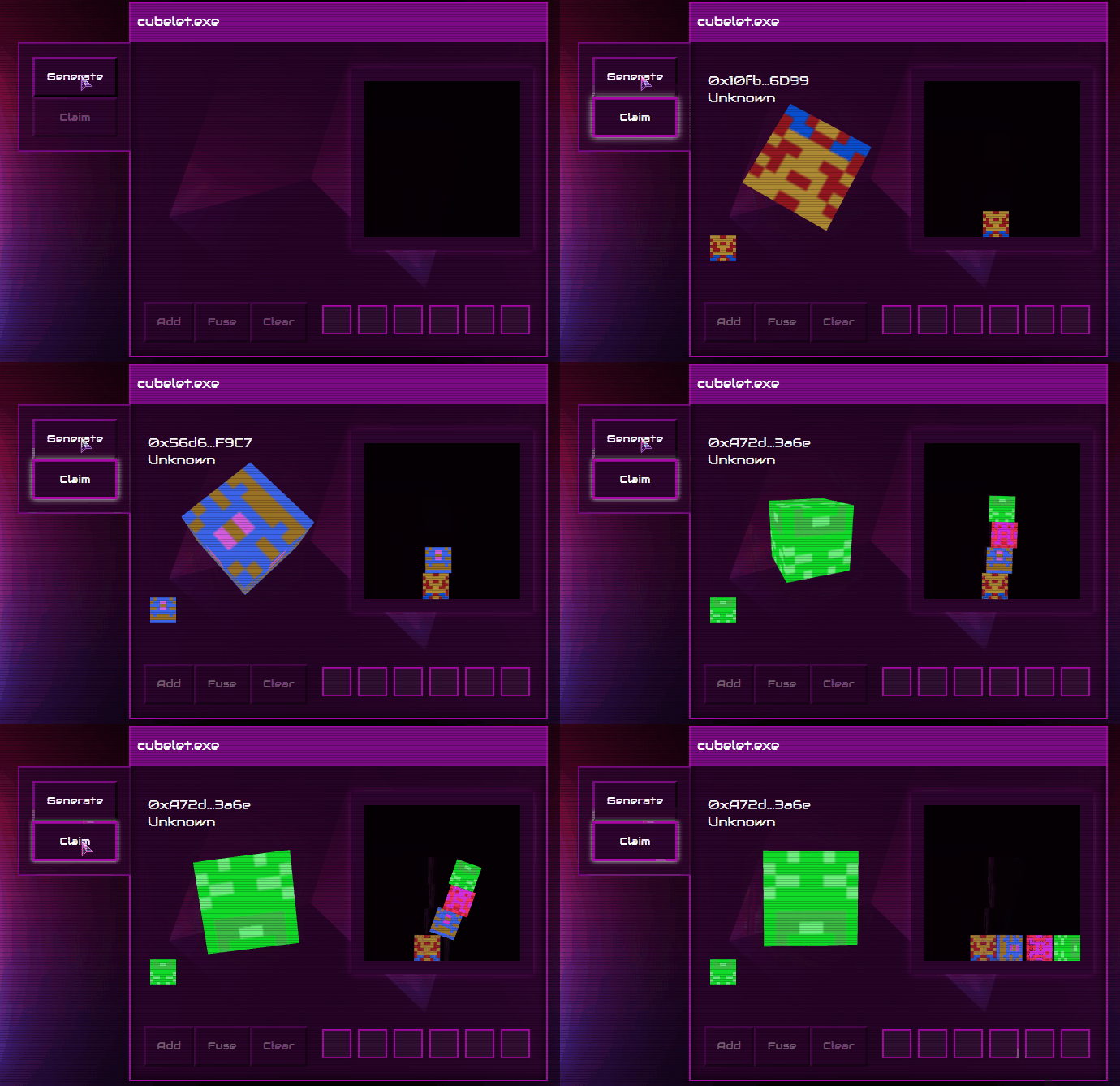
The generation of one type of NFT available in the ecosystem
Leaving consensus to those who do it best, we chose for the highly established processing power of Ethereum miners to handle Vidya token’s needs, with open ledger, blockchain based programs and protocols, transaction processing and network requirements all being handled by the most accepted provider in the world. Vidyans are therefore given the choice between an extensive and varied collection of blockchain and traditional games, as well as decentralized financial mechanisms, some examples of which being popularized in the mainstream mostly during the “Summer of DeFi” of 2020. This means, for example, that users can choose to stake their Vidya in our Generator, which will provide an even greater market liquidity for the token, whilst allowing anyone to put up their holdings for risk-free, exponential earnings over time.
In contrast to having a single, limiting sphere of functionality, the dynamic utility of Vidya gives users the freedom to interact with it in the way they like best while evolving with, and taking advantage of, the ever-progressing world of decentralized applications and finance. We make this easy for users by laying out an interactive, seamless hub through which they can interface with all Team3D and Vidya related projects, media, and information.
We call this TeamOS.
TeamOS in practice, serving as our website and gaming hub
Though seemingly complex at first, we have created a personalized crypto-gaming hub through the Team3D website that provides users with information that’s unique to them, as well as a cross-game and cross-platform system of progression through our inventory and equipment systems. When a user enters TeamOS, they have the option of connecting to it through their Ethereum public key with a Web3 provider such as Metamask. This will fetch all their wallet-specific data for use in any of our work, as well as provide them with access to their very own personalized Vidya portfolio, NFT inventory, equipment page, staking, and more. We strive for the user experience to be as familiar as it is nostalgic, staying true always to our history, our character.
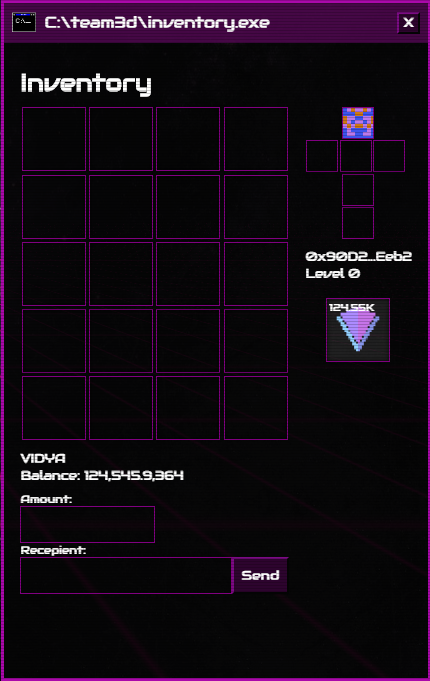
Vidya’s inventory and equipment interface
Ownership is the cornerstone of Vidya. Users spend millions of dollars daily around the world on microtransactions, items, and points that are totally under the control, and at the mercy of, the companies they were bought from. Many games or developers also become irrelevant, existing now only as distant memories, revisited only for the purpose of this example. This isn’t an issue with the market we’re building. It’s totally player-driven, can be maintained by its users even if something happens to the team, and puts total freedom in the hands of the participant. Think of it like Steam, but without the market restrictions. That means you actually get value that can be used elsewhere for the items you find or trade.
One of the great benefits of having this system take advantage of blockchain technology is how easily progression can be universally tracked across multiple games, even those from independent, 3rd party developers that opt to use Vidya! The traditional method of converting players’ real, hard-earned money into completely worthless data is, to put it kindly, for noobs. We’re an extension into gaming of crypto’s mission to redefine the meaning of value, as much as we redefine the value of control.
From this one location, users have access to their entire Vidya portfolio. Be they NFTs, or Vidya itself, anything token related will be found here. Included to the right of the inventory panel is your personal blockie paper doll, a digital representation of yourself in all your glory! Along with your paper doll comes six slots; one for headgear, one for main-hand, one for off-hand, one for torso, one for pants, and one for footwear. Only certain items can be equipped, and provide their user not only with unique cosmetic options that vary between games, but also unique abilities, buffs, or prerequisites for the discovery of secrets hidden amidst our work.
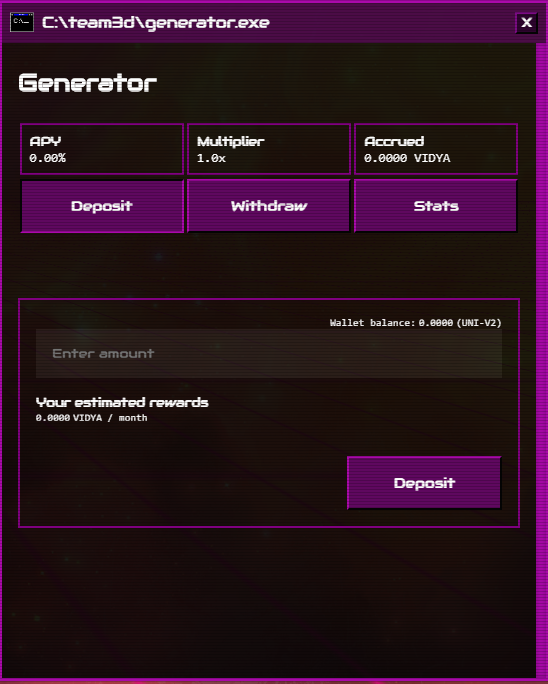
Vidya’s Generator, a liquidity staking geyser that uses NFTs
Along with our traditional gaming ecosystem, Vidya’s Generator is an NFT-based liquidity staking mechanism, and one of the more recognizable elements of typical decentralized finance in our project. The Generator consumes an NFT energy source called “Dark Matter” as fuel. In order to enter the staking pool, users first must acquire Dark Matter, then provide liquidity to the Vidya pool on Uniswap in order to receive liquidity provider tokens that they may then stake in our Generator. They will receive VIDYA daily, which rewards more for larger stakes, and compounds exponentially the longer they hold their stake within it. This incentivizes Vidyans to hold as many tokens as they can, for as long as they can. Due to the nature of this particular system of staking, the liquidity pool for Vidya on Uniswap benefits from amplified support which is bolstered, and maintained, through the rake from games.
Apart from our Generator, Vidya will feature many more rewards and earnings mechanisms. NFT staking in-game will allow users to not only earn Vidya, but also maintain status or cosmetic effects for the duration of their stake, or until their expiry. This helps to build value for Vidya as well as individual NFTs, inspiring you to hold onto them for dear life awaiting the next opportunity to capitalize on their use, or to sell them on for a profit.
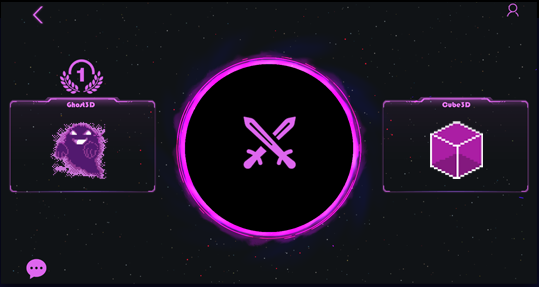
A typical, and expected, matchmaking lobby result
Player-created lobbies are established by Web3-enabled users, who must first pick a deposit amount that must be matched by others before they can join the lobby. Upon accepting the lobby configuration, the lobby-creator is then charged for the amount specified to begin the initial pool, securing the initial wager instantly. Subsequent users who then try to join will be prompted with a transaction to meet the original wager prior to joining. Once paid, they will then be entered into the lobby with the creator, where they will either begin the match, or wait for other players, depending on the match configuration.
The non-custodial escrow contract responsible for managing the match will await the trigger of a win condition, upon which it will be notified by the game to close the pool, and distribute winnings to the appropriate user(s). In the event of a lobby closure, or failure to meet win conditions, users will be sent back to the lobby menu and refunded their initial wager minus gas. Fees are only ever deducted from the pool following successful match completion.
We gamify DeFi
Who are we? We’re Team3D. We prefer to stay anonymous, but our work is known so that we don’t have to be. We’ve helped out with a ton of projects in the scene, some being: TronGoo, TronFarms, BroFistCoin, 0x60, Uptrennd, UniPower, GemBites, and many more. We’re always active, feel free to stop by for a chat any time. Look forward to meeting you!
We’re glad to announce that CoinCheckup has joined the Blockchain.News Ecosystem! The Blockchain.News Ecosystem is a community where you can follow the most relevant trends and insights from the world of cryptocurrencies and blockchain technology. Joining the Blockchain.News Ecosystem gives us additional options to connect to the cryptocurrency community, and also explore exciting business opportunities.
Blockchain.News is a digital media company focused on the fintech and blockchain sectors, featuring valuable insights from the field’s leading experts.
At CoinCheckup, we’re proud that Blockchain. News has recognized our platform as one of the leading cryptocurrency data services in the industry. As always, we will continue to provide reliable cryptocurrency data and make it accessible to users from around the globe. On CoinCheckup, you can follow the prices of more than 3,000 cryptocurrencies, but our data is not limited to prices – we also feature detailed charts, investment statistics and analytics.