Tag: Polygon

  • MATIC is the #2 Coin to Watch for the Week of May 23 – May 29, 2022

    MATIC is the #2 Coin to Watch for the Week of May 23 – May 29, 2022

    Last week’s movements on the cryptocurrency markets could be described as the calm after the storm. After the crypto market bled out more than $250 billion from its total capitalization the week before, the price movements remained rather undramatic last week. Although Bitcoin and Ethereum recovered by a few percent last week the total crypto market capitalization remained virtually the same throughout last week and stood at $1.34 trillion at the beginning of week 21. While we do hope that this week will bring some more exciting moves, we surely don’t want the bloodbath week 20 type of exciting. Anyhow, you can never go wrong by throwing an eye on our Top 3 Coins to Watch selection. 

    3. Maker (MKR)

    Maker Protocol was one of the earliest projects on Ethereum and remains the cornerstone of Ethereum’s decentralized finance ecosystem. This protocol, which launched already in 2015, allows users to lock up their Ethereum or other Ethereum-based assets as collateral to receive a loan in the form of Dai stablecoin. Dai, which is designed to trade as close to $1 as possible, is issued in a completely trustless manner. Its issuance and peg are governed by a complex system of Ethereum smart contracts. MKR is Maker Protocol’s governance token. Holders of these ERC-20 tokens can propose changes to the protocol and participate in governance polls. 

    Maker Protocol benefits from the UST and LUNA fiasco

    MKR has recently demonstrated some interesting price action, which included a surge from $1000 levels to above $1800 between May 9 and May 12. While the token has since retraced back to around $1400, Maker Protocol still enjoys renewed attention from the crypto community. Interestingly, the reason for MKR’s recent success can be found in Terra’s lack of success. As it appears, Maker’s algorithmic stablecoin Dai has emerged as one of the best alternatives following the recent collapse of the Terra ecosystem, which included the implosion of both LUNA and UST markets. As UST holders (at least those who managed to escape with only moderate losses) liquidated their (un)stablecoin holdings they went on the lookout for a more reliable stable cryptocurrency. Judging by the growing market capitalization of DAI, the longest-running decentralized stablecoin convinced many investors. As a result, DAI climbed from 22nd to 16th place on the list of cryptocurrencies by market cap and MKR performed better than most other digital currencies during the recent market pullback. Can Maker Protocol harness the potentials of the revived attention to steal even more of the stablecoin market share and benefit in the longer run?

    2. Polygon (MATIC)

    Polygon, previously known as Matic Network, is a leading Ethereum Layer 2 scaling solution. The Polygon Layer 2 network consists of several simultaneously run proof-of-stake sidechains that regularly push the data to Ethereum to create network checkpoints. The protocol also aims to deliver supersonic speeds and throughput by utilizing a modified version of Plasma. Together with several other features and tweaks, Polygon provides a major scalability improvement to the biggest smart contract blockchain. By successfully overcoming Ethereum’s most limiting shortcomings Polygon has become attractive for DeFi projects and is establishing itself as one of the key DeFi networks. 

    Polygon and L3 Network Orbs launch a new DeFi accelerator program

    According to a recently published announcement, Polygon has partnered with Orbs, a Layer 3 scaling solution, to launch a new DeFi accelerator program on DeFi.org accelerator platform. While the primary goal of the new accelerator is to help DeFi projects building on Polygon, DeFi.org team stated that projects utilizing both Polygon’s Layer 2 and Orbs’ Layer 3 infrastructure will receive special consideration. DeFi.org will offer several benefits to chosen projects, ranging far beyond funding. Developers of the accepted projects will get access to mentorship and exposure to large communities through listings on DeFi.org’s official website and other popular platforms. In addition, DeFi.org will provide supplementary liquidity injections to the best and most innovative projects. Although the total value of funds available for the program has not been revealed it is clear that the accelerator can only increase the number of DeFi projects deployed on Polygon and Orbs. On top of that, Aave launched the Lens Protocol, another project that could help boost Polygon adoption, on Wednesday, May 18. The Lens Protocol seeks to revolutionize the social networking sector by helping developers build social media dApps on the Polygon blockchain. 

    In contrast with traditional centralized social networks, Lens lets users own their content by storing it as NFTs stored in their crypto wallets. In addition, the protocol is open-source, censorship-resistant, and can connect with any number of other Polygon apps or services. Do you also think this can sprout innovation and deployment of new dApps on Polygon?

    1. Near Protocol (NEAR)

    Near is a highly scalable and developer friendly Layer 1 proof-of-stake blockchain competing with Ethereum, Solana and similar networks. The company behind Near Protocol claims that you can create simple decentralized apps (dApps) on Near in just five minutes. In addition, Near Protocol utilizes Nightshade sharding mechanism, which allows the network to perform up to 100,000 transactions per second. However, there are currently not many decentralized applications deployed on its ecosystem. According to DeFi Llama, the total vale locked (TVL) in 7 protocols running directly on Near is only $480 million. Combined with Aurora, the Ethereum Virtual Machine (EVM) running on the Near Protocol blockchain, the Near ecosystem has a TVL of $900 million.

    Pocket Network deployed to Near Protocol, Near ups its NFT game

    There are several developments that make NEAR our top coin to watch in Week 21. Firstly, the representatives of Pocket Network, a relay infrastructure middleware protocol has recently added support for Near Protocol. This is big news, as it allows Near native developers to deploy their dApps on more than 50 blockchains supported by the Pocket Network, including Ethereum, Solana, Fuse, Avalanche, Harmony, and Polygon. The integration with this multichain connectivity tool will bring faster app deployment times as well as more traffic and liquidity for protocols that decide to venture beyond the Near chain. At the same time, the Near team putting in a lot of work to enhance its NFT offering, as they believe the significantly cheaper Near Protocol can make NFTs more accessible to the masses. In fact, the project’s team will host a panel discussion about NFTs in the Near ecosystem at this month’s Near Town Hall Meeting. Nevertheless, the debate will not be exclusively about NFTs as important changes to the network, such as the changes to the block validation process, will be announced as well. If you want to be among the first to hear the announced changes, you can take part in the Near’s May Town Hall event that will take place on May 26, 2022, 5:00 PM GMT by registering here.

  • Robinhood’s Listing of SHIB, SOL, MATIC, and COMP Generate Considerable Market Excitement

    Robinhood’s Listing of SHIB, SOL, MATIC, and COMP Generate Considerable Market Excitement

    Key takeaways:

    • Popular trading platform Robinhood has listed Solana, Shiba Inu, Polygon, and Compound
    • All four newly-listed digital assets have experienced significant upward price movement in the hours since the announcement
    • Shiba Inu has jumped 20% on the news

    Robinhood adds support for four new crypto assets

    Commission-free trading platform Robinhood today announced the listing of four popular digital assets, including Shiba Inu, Solana, Polygon, and Compound. The financial services company said in a statement that the listings come as a response to community members consistently asking about a “broader selection of cryptocurrencies.”

    Robinhood CBO Steve Quirk commented on the expansion of the company’s crypto offering: 

    “We’re excited to add more choices for our customers as we work to make Robinhood the best place to invest in crypto. As a safety-first company, we have a rigorous framework in place to help us evaluate assets for listing, and we remain committed to providing a safe and educational crypto platform.”

    In celebration of the news, Robinhood has announced it is giving away $100,000 to users who participate in the Twitter promotion.

    Shiba Inu jumps 20% after Robinhood listing

    All four digital assets that Robinhood listed today experienced a notable boost to their prices. At press time, Solana is showing 24-hour gains of 3.5%, while Polygon and Compound are changing hands up roughly 6.5% each.

    The price of SHIB experienced a sharp uptick in the hours after the Robinhood listing.

    However, the popular memecoin, Shiba Inu, exploded by as much as 25% in the hours since the announcement, before retracing to “just” 20% gains at the time of writing.

    Against a backdrop of multi-day long bearish activity, three of the four new digital assets listed by Robinhood, namely SHIB, COMP, and MATIC, managed to claim three of the top five spots on the list of today’s largest gainers in the cryptocurrency top 100.

  • Opera Integrates Solana, Polygon, and Other Chains to Usher in the Era of Web3

    Opera Integrates Solana, Polygon, and Other Chains to Usher in the Era of Web3

    Key takeaways:

    • Opera has added support for Solana, Polygon, and several other Web3-centric chains in the latest iteration of its crypto-focused browser
    • The company released a beta version of the Web3 browser in January; at the time, the Opera team committed to expanding support for Layer 2 networks
    • Opera’s crypto-centric browser features a built-in digital wallet, content-rich “Crypto Corner” and a host of other crypto-oriented features

    Opera’s native Web3 browser receives support for major blockchain networks

    Norwegian Internet pioneer Opera has announced its mobile Web3 browser’s range of supported blockchain ecosystems has been expanded with several popular chains, including Solana, Polygon, StarkEx, Ronin, Celo, Nervos, IXO, and Bitcoin.

    The company’s “Crypto Browser Project” provides native support for decentralized applications (dApps) and serves as a gateway to Web3 for millions of Opera users thanks to a built-in digital wallet and a host of other crypto-centric features. 

    Opera released a beta version of its crypto browser in January. At the time, the company noted that a push towards greeted Layer 2 compatibility is one of its priorities, and committed to rolling out support for Polygon and Solana as soon as possible. Now, roughly three months later, the company has made good on its promise.

    Jorgen Arnesen, EVP Mobile at Opera, highlighted the importance of recent blockchain integrations in a statement:

    “The average web user may still be hesitant to dabble with Web3, but with the integration of Solana, Polygon, and others in our mobile browser, they can now access these technologies from the safety and familiarity of the browser that provides them with a dedicated Web3 experience.”

    In addition to a built-in non-custodial digital wallet, which allows users to gain exposure to DeFi, NFTs, and various Web3 services, Opera’s crypto-centric browser also features a special section called “Crypto Corner,” which displays the latest blockchain and NFT news, a calendar of crypto events, such as upcoming airdrops and other important dates, educational content, and more.

  • TrueUSD and Balancer Offer Liquidity Providers TUSD and BAL Rewards from Stablecoin Pool Incentive Program

    TrueUSD and Balancer Offer Liquidity Providers TUSD and BAL Rewards from Stablecoin Pool Incentive Program

    Singapore, Singapore / Mar 31 / – TrueUSD (TUSD) and Balancer (BAL) Automated Market Maker (AMM) partnered up with Polygon to offer liquidity providers with TUSD and BAL rewards from a stablecoin pool incentive program last November. The program incentivizes liquidity providers to add TUSD-DAI-USDC-USDT liquidity to the Polygon ecosystem.

    In return for adding liquidity, providers will receive BAL, TUSD, and MATIC, an outstanding opportunity for liquidity providers to gain exposure to three different assets while providing liquidity to the ecosystem. The program is live on-chain and is open to all.

    TrueUSD and Balancer (Polygon) are very popular among investors searching for a safe DeFi investment that has generated considerable interest in the crypto communities. This pool’s TVL rose as high as $116.9 million, prompting excitement from all corners of the crypto community. All MATIC rewards were paid out in early 2022, while liquidity bonuses in TUSD and BAL were maintained.

    (Source: polygon.balancer.fi, 2022.3.30)

    The market for stablecoins has exponentially evolved in the last year, with its value reaching nearly $200 billion. TUSD, the first regulated stablecoin fully backed by the US Dollar, independently verified on-chain, has earned trust from customers for its safety and transparency. Its market capitalization now totals nearly $1.5 billion, putting it fourth among stablecoin peers after USDT, USDC, and BUSD.

    TrueUSD has established partnerships and collaborations with prominent financial institutions, exchanges, and decentralized finance projects to offer users simple and flexible high-yield campaigns as well as additional incentives.

    In addition, it aims to establish a multi-dimensional, secure, and efficient connection between digital assets by utilizing multi-chain deployment, bank collaboration, and third-party verification of funds.

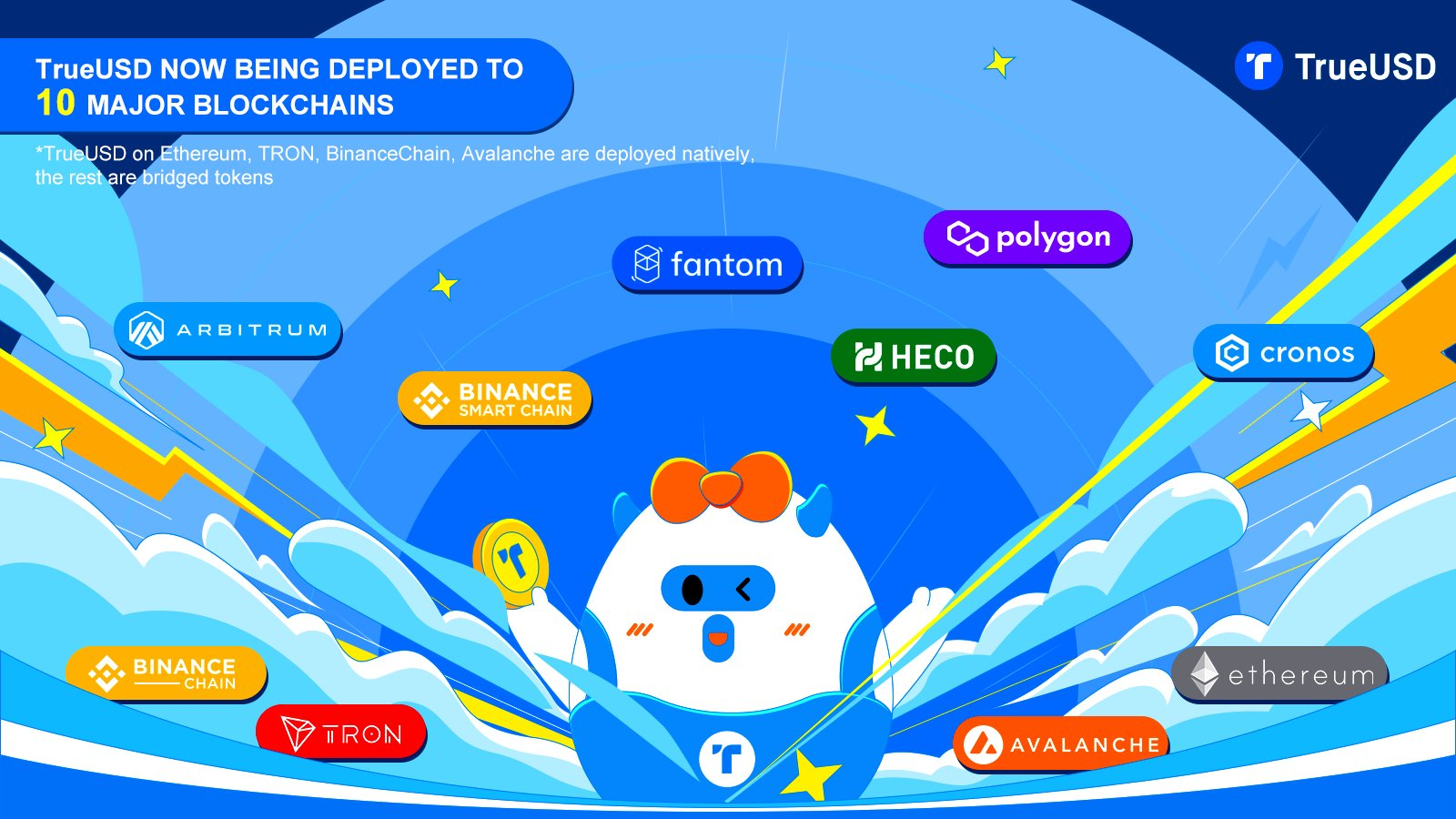
    TUSD has been successfully deployed to 10 prominent blockchain ecosystems (Source: TrueUSD website)

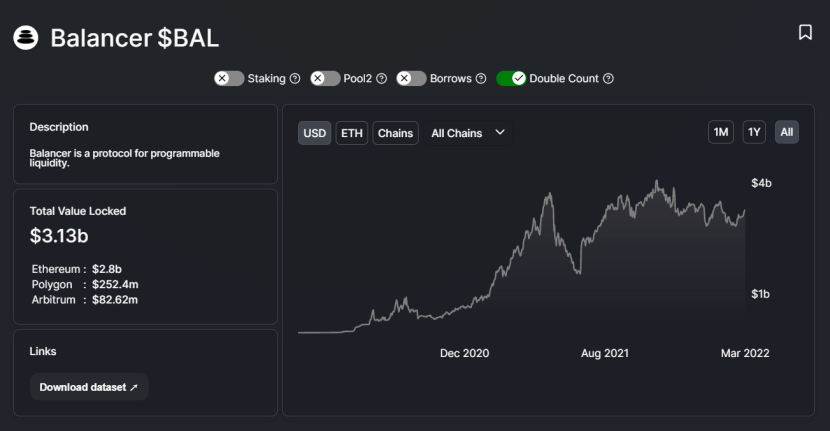
    Balancer now boasts a TVL of around $3.13 billion, and its partnership with TrueUSD launching the incentive program brings further liquidity to the protocol.

    Balancer has also co-launched a Boosted Pool incentive program with the lending protocol Aave on its Ethereum version. Building on the liquidity incentive program between TrueUSD and Balancer, there is a high potential that the two will continue to seek other forms of collaboration in the future.

    (Source: DeFi Llama, 2022.3.30)

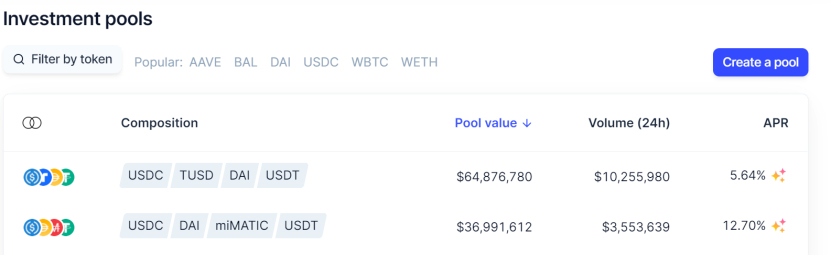
    The TUSD liquidity incentive program on Balancer is still ongoing. The TVL of TUSD-related liquidity pools has exceeded $64 million, ranking No.1 on Balancer. The APR and trading volume stood at 5.65% and $10.25 million, respectively. The TUSD-USDC liquidity pool on Beethoven X, Balancer’s next-generation AMM protocol on Fantom, has a TVL of $7.30 million with a 15.63% APR, presenting another opportunity.

    The TVL of the pool above is ranked No.1 on Balancer’s Polygon version (Source: polygon.balancer.fi, 2022.3.30)

    The data above suggests that the incentive programs are well received. As a medium of exchange for digital assets, stablecoins play a critical role in DeFi. TrueUSD’s strong alliance with quality projects has proven to be a sound strategy.

    By offering liquidity providers TUSD and BAL rewards from their stablecoin pool incentive program, TrueUSD and Balancer hope that such unprecedented success will continue to deliver stable liquidity to the Polygon ecosystem.

    About TrueUSD

    TrueUSD (TUSD) is the first independently-verified digital asset pegged 1-for-1 to US Dollars. The ERC20 stablecoin uses multiple banks, escrow accounts, and third-party attestations to reduce counterparty risk, provide transparency, and prevent fraud.

    TUSD offers liquidity on dozens of leading exchanges, DeFi protocols and is supported by major OTC desks. TUSD also supports nearly instant minting and redemption speeds through the Silvergate Exchange Network (SEN) and PrimeX by PrimeTrust.

    About Balancer Automated Market Maker (AMM)

    Balancer Protocol allows for automated portfolio management, turning the concept of an index fund on its head. Instead of paying fees to portfolio managers, you collect fees from traders who rebalance your portfolio by following arbitrage opportunities.

    Media Contact for TrueUSD

    Annabel G

    Marketing & BD Director of TrueUSD

    Email: pr@trueusd.com

  • DraftKings Partners with Zero Hash to Become Polygon Network Validator

    DraftKings Partners with Zero Hash to Become Polygon Network Validator

    Key takeaways:

    • Fantasy sports and sports betting firm DraftKings has partnered with B2B digital asset infrastructure provider to start earning MATIC rewards for being a Polygon network validator
    • Close to $770 million in crypto rewards has been earned to date by Polygon validators
    • Zero Hash will stake MATIC tokens on behalf of DraftKings

    DraftKings becomes the first major publicly-traded company to engage in PoS governance actively

    US-based sports betting giant DraftKings has partnered with leading B2B crypto infrastructure provider Zero Hash to become the first major publicly-traded company to engage in Proof-of-Stake (PoS) governance actively. According to Monday’s press release, Zero Hash will stake Polygon’s MATIC tokens on behalf of DraftKings, allowing the company to earn validator rewards for its efforts of securing the rapidly growing blockchain network. 

    Paul Liberman, a co-founder and President of Global Product and Technology at DraftKings, commented on the company becoming Polygon network validator:

    “Participating in validation supports DraftKings’ broader strategy of building out a robust, sustainable, trustworthy and decentralized infrastructure to help futureproof aspects of our business in the Web3 era.”

    Network validators play an essential role in securing PoS ecosystems. By allocating MATIC tokens, Polygon validators make it possible for new transactions to be added to the Polygon blockchain. Once a new block of transactions is verified, stakers are eligible to receive validator rewards. 

    Per the press release, Polygon validators have earned nearly $770 million in MATIC rewards to date. At the time of this writing, Polygon’s staked value is $3.95 billion, roughly equivalent to 35% of its total market cap.

    Sandeep Nailwal, a co-founder of Polygon, said the team is “thrilled” to “welcome DraftKings as one of the first corporate validators.” 

    DraftKings could be looking to expand its NFT offering to Polygon

    As the leading Ethereum Layer 2 scaling solution, Polygon boasts fast transactions and lower fees than its parent network, making it a perfect candidate for Web3-powered solutions. For this reason, the Polygon network has become a hotbed for non-fungible token (NFT) collections.

    According to market research firm Dappradar, more than $590 million worth of NFTs have been traded on Polygon, with OpenSea accounting for the largest share with $504 million trading volume.

    The DraftKings team is no stranger to NFTs themselves. Last year, the company launched its own NFT marketplace. DraftKings noted that 116 digital collections had been sold out since then, generating $44 million in trading volume. 

    With earning potential of PoS chains and decentralized finance (DeFi) in general, it will be interesting to observe whether more companies decide to follow in DraftKings’ footsteps in the near future.

  • BlockWallet Launches Browser Wallet Solution With Focus on Web3 and Privacy

    BlockWallet Launches Browser Wallet Solution With Focus on Web3 and Privacy

    Key takeaways:

    • After months of testing, BlockWallet has launched its crypto wallet extension for Google Chrome, Brave, Microsoft Edge, and Opera browser
    • BlockWallet is focused on privacy and aims to provide easy and secure access to Web3 applications running on Ethereum, BNB Chain, Avalanche, Fantom, and Polygon
    • BlockWallet uses smart contracts to make transactions untraceable and prevents third parties from parsing senders and receivers’ IP addresses and other metadata 

    BlockWallet’s Web3 privacy-focused browser wallet is now available to Chrome, Brave, Edge, and Opera users

    Tallinn-headquartered crypto company BlockWallet has launched its non-custodial browser extension wallet, allowing users to store funds and interact with decentralized finance (DeFi) applications in a secure and private manner.

    The new Web3-oriented solution currently supports some of the sector’s most popular decentralized platforms, including Ethereum, BNB Chain, Avalanche, Fantom, and Polygon. The browser extension is available to Google Chrome, Brave, Microsoft Edge, and Opera browser users.

    Iman Hossini, BlockWallet’s CTO, commented on the importance of privacy when it comes to Web3:

    “When users interact with Web3, it poses significant risks because now the financial data is also attached to the user. As we build Web3, we should not make the same errors as before but aim to create a truly private Web3 experience. BlockWallet launch is a significant step towards this goal.”

    BlockWallet’s crypto solution went through a rigorous testing phase, which saw participation from more than 2,000 beta testers to ensure a stable and secure experience for the broader public from day one. 

    A rich suite of features and privacy-focused solutions

    BlockWallet boasts some of the more advanced privacy-oriented features in the industry while retaining ease of use and a high degree of accessibility. The wallet is non-custodial, meaning that users are in complete control of their assets at all times.

    BlockWallet allows users to send and receive crypto funds without making their balance publicly available to prying eyes. Additionally, BlockWallet Proxy hides users’ metadata, allowing users to interact with the blockchain discreetly. The wallet also features a front-running bot protection system that prevents so-called “sandwich attacks.” Last but not least, BlockWallet also supports masking your main wallet address via Privacy Pools, essentially making it impossible for a third party to trace transactions back to their original source. At the moment, the feature is available only on Ethereum.

    The company’s CEO Alexandar Gaska commented on BlockWallet’s accessibility and practicality:

    “In a world where privacy violations are commonplace, it is imperative to protect your privacy. However, not everyone has the skills or time to do that. I am happy that we can finally present a practical solution for the blockchain world that allows everyone and everywhere to take ownership of their privacy.”

    BlockWallet’s feature set allows crypto users to privately and securely engage in a variety of use cases, including e-commerce, trading, gambling, and more.

    The company raised $1.8 million in the sale of the platform’s native BLANK token in the first quarter of last year. The token currently boasts a market cap of $13.48 million and a fully diluted market valuation of $86.67 million.

  • The Most Popular Types of Cryptocurrencies Supported by Online Casinos

    The Most Popular Types of Cryptocurrencies Supported by Online Casinos

    In an attempt to offer something new, certain online casinos push the boundaries of the industry by trying to be as innovative as possible. This often results in new features, special bonuses, and the addition of new and easy-to-use online payment solutions. The latter plays a key role for some people when choosing an iGaming company, which is why many casino websites try to include as many options as possible.

    Some people prefer the classic payment alternative because they know how to use them and what to expect. Yet, others are willing to experiment with things, such as cryptocurrencies. That’s one of the reasons why various sites accept these online payment solutions.

    People interested in those this know that there are thousands of currencies. However, most betting platforms only offer a handful of them, so let’s go over some of the popular alternatives. We won’t include Bitcoin because this option is accessible on sites that don’t focus only on these payment solutions.

    Ethereum

    Often called the silver of cryptocurrencies, Ethereum is one of the hottest names for digital currencies. Finding a solid iGaming site where you can use this option is not easy. However, thanks to Betenemy, you can check some of the most popular online crypto casinos where BTC, ETH, and LTC are accepted and pick a brand that offers different privileges for cryptocurrency users. Most of these sites have established themselves in this business, making them the go-to options for many punters.

    Besides being a popular option for iGaming enthusiasts, Ethereum plays a major role in all sorts of projects. That’s one of the main reasons why its price could increase in the future.

    XRP

    People who have previous experience with online casinos that offer digital currencies have stumbled upon XRP. This used to be one of the most popular cryptocurrencies in iGaming a couple of years ago. Even though many online betting platforms allow their punters to make transactions with it, XRP is not as big as it once was. Yet, with a market cap of nearly $37 billion, it is one of the biggest cryptocurrencies in the world. That’s why it continues to be the preferred option for some online punters. 

    Polygon

    One of the digital currencies that are becoming increasingly popular among traders and “investors” is Polygon. Even though this option may not have the market cap of things, such as Ethereum or XRP, it has a lot of users worldwide. Consequently, those who read Betenemy’s reviews about some of the best online crypto casinos will see that certain companies offer this option.

    Similar to other digital currencies, Polygon’s value changes daily. Consequently, you should check how much it is worth before making a transaction.

    TRON

    While it is true that Tron is not as big as other digital currencies on this list, it is one of the options available to online punters. In addition to making payments, this option often gives people access to different kinds of rewards. For example, some online casinos offer special deposit bonuses.

  • Polygon’s EIP-1599 Upgrade is Slated for Next Week, MATIC Burning is Finally Here

    Polygon’s EIP-1599 Upgrade is Slated for Next Week, MATIC Burning is Finally Here

    On Wednesday, Polygon announced that the highly-anticipated EIP-1599 upgrade is coming to the leading Ethereum Layer-2 scaling solution early next week. The network upgrade will introduce MATIC burning mechanics and start putting deflationary pressure on its value.

    Key takeaways:

    • The Polygon team shared the news on Twitter and clarified that the set of Ethereum improvement proposals (EIPs) that were first introduced via Ethereum London hard fork in August of 2021, are finally coming to the Polygon mainnet.

    • The team is aiming to activate EIP-1599 and related proposals on Polygon’s mainnet on January 18, at around 8:00 AM UTC, at block number 23,850,000. The mainnet launch comes a month after the hard fork rolled out to Polygon’s Mumbai testnet.

    • The London upgrade’s main features include a better estimation of transactions costs, which leads to a reduction in overpayments, and a fundamental change in the way transaction fees are handled – fees that were previously paid to miners will now be removed from circulation. 

    • Token burning, or destroying, is the process of removing coins from circulation, which plays a pivotal role in the supply and demand dynamics of a particular currency and creates deflationary pressure on the value of a single unit of currency.

    • When Ethereum burning was first introduced in August, the second-largest crypto began a multi-month long rally that saw its price reach the highest point to date of $4,867 on November 10. In the six months since ETH burning went live, more than 1.48 million ETH, worth nearly $5 billion, have been burned.

    • Polygon’s implementation of real-time burning mechanics comes a little over a month after Binance Coin burning was introduced on Binance Smart Chain (BSC). BNB burning differs from Polygon and Ethereum’s solution as some transaction fees are still distributed among the network’s validators and not entirely removed from circulation.

    • The price of MATIC has been trending upwards in recent days – the token gained roughly 25% in the last 72 hours and is trading just below its cycle high of $2.45 at the time of this writing.
  • Polygon is the #1 Coin to Watch for the Week of January 10 – January 16, 2022

    Polygon is the #1 Coin to Watch for the Week of January 10 – January 16, 2022

    The 2022 did not start very well for cryptocurrency investors as we have witnessed first significant market sell off already during the first week of the new year. To provide a little more detail, nearly every cryptocurrency lost more than 10% of its value on Thursday, January 6, following news that the U.S. Federal Reserve is planning to increase interest rates and start selling its $8.7 trillion portfolio. U.S. tech stocks also suffered some losses. Nevertheless, the losses were greater in the crypto sector where more than $790 million worth of long positions got liquidated. The total cryptocurrency market capitalization even dropped below $2 trillion on January 8, which has not happened since the beginning of October 2021. In this week’s article, we list coins that managed to stay relatively unaffected by the sell-off and those that are likely to undergo a speedy recovery.

    3. Phantasma (SOUL)

    Phantasma is a Layer 1 protocol optimized for Smart NFTs. These are non-fungible tokens that can be created on demand, deliver perpetual royalties, and can offer a time-limited access to content. Phantasma has diverse use cases in the GameFi sector, and its developers claim they are building the technological backbone of the future of gaming. Phantasma is a dual token economy that utilizes SOUL as its governance token and KCAL to pay for transaction fees and minting of NFTs. Phantasma’s rapid appreciation is outstanding even for the burgeoning blockchain gaming sector, as SOUL gained around 300% in the last 3 months and 4,300% in the past 1-year time frame.

    Is Phantasma the future of blockchain gaming?

    The fundamental drive of Phantasma’s rally is the growing popularity of NFTs and their use in blockchain gaming. However, Phantasma has a few more crucial features that attract new project to use Phantasma network. One of the key characteristics of Phantasma is the network’s cross-chain interoperability, as the network can smoothly interact with Ethereum, BSC and NEO-based dApps. Because of the network’s interoperability, high throughput and low costs, several projects including the role-playing card game Blood Rune, the mobile game Ghost Festival and the NFT marketplace GhostMarkets, have decided to launch on Phantasma in the past few weeks. In addition, the Phantasma network is certified as a carbon-negative blockchain, which sets it apart from carbon-heavy networks like Ethereum and helps attract positive attention to the project. Since the interest in blockchain gaming and NFTs is not showing signs of cooling down anytime soon, Phantasma has a lot of room to grow. In addition, the project has recently released its roadmap for first half of 2022, which is packed with upgrades and new functionalities.

    2. Cosmos (ATOM)

    Cosmos is developing a network of blockchains that would facilitate the interoperability of multiple, otherwise incompatible, blockchain applications and cryptocurrencies. The scalable blockchain network built for developers had grown from a small ICO into a thriving ecosystem. At the time of writing, the network’s native cryptocurrency ATOM has a market capitalization of $8.26 billion, which is more than three times as much as it had 6 months ago.

    The launch of Evmos and the upcoming Theta upgrade are the key drivers of ATOM’s most recent rally

    Rare were the coins that managed to defy the bearish trend that prevailed throughout most of the cryptocurrency market during Week 1, but ATOM was among them. While the majority of other cryptos was still slowly loosing value towards USD on Friday, January 7 ATOM managed to spike above its price from September 2021 and set a new ATH price, which now sits at $44.47. The launch of a cross-chain bridge called Evmos, which makes Cosmos compatible with the Ethereum Virtual Machine (EVM) was identified as the main cause of the rally. The new bridge allows Ethereum-based projects to interact with the Cosmos ecosystem will drastically increase the number of projects that can communicate with DeFi and NFT projects from the Cosmos ecosystem. Up to now, only Gravity Bridge enabled the transfer of ERC-20 tokens between the Ethereum and Cosmos blockchains. At the moment Gravity Bridge still operates as a standalone chain, but it plans to transfer to Cosmos Hub this quarter. Another factor that has contributed to the ATOM rally is the upcoming Theta upgrade. Its much-anticipated launch is slated for March 31. Among other things, Theta upgrade will bring support for meta-transactions, inter-chain accounts, NFT modules and liquid staking. 

    1. Polygon (MATIC)

    Polygon, previously known as Matic Network is an Ethereum Layer 2 scaling solution that focuses on providing major scalability improvements to the biggest smart contract blockchain. The Polygon protocol aims to deliver supersonic speeds and throughput by utilizing a modified version of Plasma. Its Layer 2 solution consists of several simultaneously run Proof-of-Stake sidechains that regularly push the data to Ethereum to create network checkpoints. 

    Polygon sees record-breaking activity at the end of 2021 and has a lot more in store for 2022

    Polygon ended 2021 at an all-time high as its MATIC token was changing hands at a record-breaking $2.91 on December 27. However, Polygon did not spike only in terms of MATIC price but also in terms of network activity as this Layer 2 project recorded a record amount of gaming NFTs sold on the network and exponential growth of unique daily active during the last month of 2021. While MATIC was also hit hard by the market-wide sell off that took place last week investors will likely regain faith in the most successful Ethereum L2 project faster than in other cryptocurrencies with less utility. In addition, Polygon’s 2021 Year in review official blog post gives an interesting sneak-peak into what the team will be working in 2022. At first, they will integrate EIP-1559 that will introduce burning of MATIC tokens and better fee visibility to the network. The team is also making everything ready for the launch of two public testnets – Polygon Hermez in Q2 and Polygon Miden in Q3 2022. Furthermore, the Polygon team disclosed that the relatively popular Opera browser will integrate with Polygon in 2022, which could provide a major boost to Polygon adoption, potentially bringing in millions of new users. However, developers first need to tune the protocol to accommodate such a high number of users. As it turned out, the high network activity caused by heavy NFT minting and trading in December acted as a stress test and exposed that even a scalable network like Polygon is prone to rising gas fees in times of network congestion. Amidst NFT craze fees on Polygon increased by more than 16x. Because of this, one project even decided to delay its launch. The upside in this whole story is, that even in times of network congestion fees on Polygon remained far lower than those on Ethereum L1, where one transaction could cost you more than $100.