US lawmaker Don Beyer, who introduced the new crypto-focused bill, argues that the blockchain sector needs to be regulated within the existing regulatory structures
The new bill introduces exhaustive changes to the way cryptocurrencies are regulated and establishes new legal definitions
Stablecoins and privacy coins to be prohibited, Federal Reserve with greater authority over money transactions
The US might be gearing up for a massive regulatory overhaul of the cryptocurrency industry. The recently passed Infrastructure bill, which received bipartisan approval in the US House of Representatives and later in the Senate, introduced new reporting and record-keeping rules on cryptocurrency transactions. Now, a new bill on digital assets might be passed, which would introduce major changes to the regulatory framework pertaining to a vast majority of digital tokens, fiat-based stablecoins, and decentralized finance (DeFi) protocols.
What is the “Digital Asset Market Structure and Investor Protection Act”?
The “Digital Asset Market Structure and Investor Protection Act”, also known as “Digital Assets Bill”, is the latest legislative proposal that was introduced in the House, which aims to amend the existing US laws and regulations in order to give the government a greater oversight and provide legal tools to clamp down on crypto. The bill that was introduced late in July, will incorporate “digital assets into existing financial regulatory structures,” according to the US representative from Virginia, Don Beyer, the bill’s primary sponsor.
Congressman Don Beyer. Image source: Arlington Magazine
Bitcoin, Ethereum and their hard-forks would be classified as commodities, other tokens as securities
The world’s largest and second-largest coins and their respective blockchain splits, would fall under the commodities laws. Since 2018, the Securities and Exchange Commission (SEC) treats Bitcoin and Ethereum as non-securities. For instance, SEC’s former official William Hinman famously argued that Ethereum is sufficiently decentralized and therefore can’t be considered a security.
Under the new proposal, BTC and ETH would be recognized as commodities, officially named ‘digital assets’. Other digital tokens, would be regulated as securities and classified under a new term ‘digital asset currencies’. Since some crypto assets have properties that make them hard to assign to any of the two groups, commodity or a security, they face the danger of being doubly regulated by both sets of regulations.
The major problem with the new rules is that BTC and ETH futures trading will not be allowed as margin trading of commodities is not permitted, except to high-level investors. Additionally, crypto projects that would be regulated as securities, would have to abide by a strict set of regulations, meaning that digital asset security trading could only take place on regulated exchanges.
Prohibition of fiat-based stablecoins and privacy coins
“No person may issue, use, or permit to be used a digital asset fiat-based stablecoin that is not approved by the Secretary of the Treasury,” the subsection of the new law reads. Getting the approval of the US Treasury will be a tall order, especially when considering the US’s relatively hostile stance towards crypto. It seems that the bill is trying to put a stop to the use of stablecoins, likely due to the fact that their use-case is somewhat similar to the so-called digital US Dollar. More on that later.
The new regulation also outlaws the use of privacy coins, such as Monero, and proposes sanctions of up to $250,000 and up to five years of imprisonment for their users. Additionally, anonymizing services, such as those based on the Mixer, CoinJoin and CoinSuffle technologies are also prohibited and sanctioned in the same way as privacy tokens.
Changing the definition of money and laying the groundwork for CBDCs
The bill’s language flat out makes it impossible to use private cryptocurrencies as legal tender, since the newly established crypto classifications, namely ‘digital assets’ and ‘digital asset securities’, are specifically excluded from the US Code on Money and Finance as a part of new amendments.
The new legislation also lays the groundwork for the digital US dollar, a central bank digital currency (CBDC), which would grant the Federal Reserve the authority to issue a form of digital USD and to track all transactions of the new blockchain-based Federal reserve note.
Other major countries are also working towards the goal of issuing their own version of CBDCs, with China including the creation of digital Yuan in its latest five-year plan, and the European Union working to bring a digital EURO to fruition.
Bottom line
Among the more important aspects of the new bill, which we haven’t covered in the above sections, is the proposed regulation of smart contracts that are longer than 24 hours as futures contracts. The 58-page long bill is simply too long and includes too many provisions and new rules to fully cover in a single article.
The bill is currently awaiting a vote in the House and could very likely be amended before then. Let’s hope that if the new crypto-focused legislation does manage to pass the vote in the House, it is an amended version of the bill that helps the industry flourish and not the one that stops it in its tracks.
Panther Protocol creates private scalable infrastructure for smart contract platforms, DeFi and Web3, and is delighted to announce a strategic partnership with Polygon, the Layer-2 scaling solution often referred to as “the Ethereum’s Internet of Blockchains.”
Panther Protocol, who is building their MVP on Polygon, aims to bring interoperable privacy and compliance friendly selective disclosure mechanisms to the Polygon network. Besides providing technical support, Polygon will help Panther collaborate with projects within its ecosystem in the development efforts of privacy features that empower end users. It will also aid our mission in giving institutions and fintechs a clear path into private and compliant DeFi.
Polygon and Panther both acknowledge the value of privacy as a basic human right. Panther leverages the zkSNARK technology to let users mint fully-collateralized, privacy enhancing zero-knowledge assets (zAssets) by depositing their digital assets from any blockchain into Panther vaults. They can then use zAssets across the DeFi ecosystem.
The MVP will allow the first Panther users to get acquainted with zAssets, which provide privacy by default whilst retaining DeFi composability. Minting zAssets can effectively be seen as a shielding mechanism, and burning as unshielding. It will be implemented via a small number of shielded privacy pools on Polygon, keeping balances of zAssets permanently backed 1:1 by native collateral in Panther vaults.
Expect to see in the Panther MVP:
Shielding and Deshielding of assets – the foundation for zAssets to function
Private transfer of assets
Voluntary Full disclosure of selected transactions and their linkage
Ability to interact with Panther via web wallet
Panther Vaults
Why launch the MVP on Polygon?
Panther decided to launch our MVP on Polygon (formerly known as Matic) while the $ZKP token will be launched on Ethereum and use Polygon’s interoperable capabilities to bridge tokens over. The project chose Polygon because it has demonstrated its incredible technical capabilities, it has very low fees, which will allow the proper shielding of zAssets, and of course, because of its thriving and rapidly expanding DeFi ecosystem.
“Polygon’s approach brings scalable, low cost transactions to the Ethereum network as well as a burgeoning ecosystem of DeFi protocols already using their technology. Panther’s partnership will enable zAsset utility between all Panther users in a privacy preserving, scalable and regulatory compatible fashion – opening the doors for true institutional adoption and retail usage,” said Panther Protocol CEO Oliver Gale.
About Polygon
Polygon is a protocol and a framework for building and connecting Ethereum-compatible blockchain networks. Polygon aggregates scalable solutions on Ethereum, supporting a multi-chain Ethereum ecosystem and combines the best of Ethereum and sovereign blockchains into a full-fledged multi-chain system. Polygon solves pain points associated with Blockchains, like high gas fees and slow speeds, without sacrificing on security.
About Panther Protocol
Panther is an end-to-end privacy protocol connecting blockchains to restore privacy in Web3 and DeFi while providing financial institutions a clear path to compliantly participate in digital asset markets.
Panther provides DeFi users with fully collateralized privacy-enhancing digital assets, leveraging crypto-economic incentives and zkSNARKs technology. Users can mint zero-knowledge zAssets by depositing digital assets from any blockchain into Panther vaults. zAssets flow across blockchains via a privacy first interchain DEX and a private metastrate. Panther envisions that zAssets will become an ever-expanding asset class for users who want their transactions and strategies the way they should always have been: private.
San Francisco, United States, 21st September, 2021,
Portal ,a self-hosted Layer 2 wallet and true cross-chain DEX on Bitcoin that makes atomic swaps between Bitcoin and other digital assets fast, secure, and private, is delighted to announce the closing of an $8.5 million funding round to build a self-sovereign and uncensorable DeFi on Bitcoin.
The funding round saw participation from Coinbase Ventures, ArringtonXRP Capital, OKEx, Republic.co, Shima Ventures, LD Capital, Monday Capital, GenBlock, Taureon, Autonomy Capital, Krypital, B21 Capital as well as the senior executives and founders of Ethereum, DFINITY, MobileCoin, Tether (USDT), Galaxy Digital, Bitcoin.com, Republic, Centre.io, Polymath, Æternity, Hedera Hashgraph, Blockstream, Reef Finance, GlobeDX, FIO, Portion, and 4K.
Michael Arrington, founder of ArringtonXRP & TechCrunch, said, “Decentralized cross-chain bridging is one of the hardest problems in crypto right now, especially as multiple blockchains gain real traction. We’re excited to see Portal’s Bitcoin-native approach to multichain transfers go live and provide an alternative bridging mechanism to the growing number of active onchain users.”
Brain Johnson from Republic Capital said “Interoperability is a necessity for blockchain to bridge into the mainstream finance world. Republic Capital invested in Portal with this future in mind. Utilizing Bitcoin’s security as an anchor, we believe the Portal and its team are in a unique position to build one of the leading bridges in DeFi.”
Portal offers the speed and liquidity of centralized platforms with the trust minimization guarantees of Bitcoin. From spot markets to options, p2p lending and borrowing, all using on-chain, peer to peer contracts and without third party custody or control, Portal unlocks Bitcoin’s potential to actually decentralize finance.
At the core of Portal is its Layer 2 and Layer 3 technology, called Fabric, which is an open-source toolbox for deploying censorship-resistant layers on top of the Bitcoin base layer. Fabric enables the completely private, off-chain execution of “smart contracts” for asset issuance, P2P swaps, staking, liquidity, derivatives, and more.
Portal CEO Eric Martindale said, “By bringing a fast, peer-to-peer, Layer 2 exchange — with the speed of centralized exchanges but with privacy — Portal is delivering on the promise of self-sovereignty for everyone. The current centralized exchanges, false “decentralized” DEXs, custodially wrapped tokens, and censorable ecosystems all threaten Bitcoin’s promise of self-sovereignty. Fabric technology enables Layer 3 privacy on cross-chain transactions and eliminates the need for centralized custodians.”
On why they chose to build on Bitcoin, Martindale commented, “We believe Bitcoin provides the much needed financial infrastructure that the free, uncensorable internet-of-the-future will be built on, and although we are starting with a P2P exchange, our mission is to be The Platform for decentralized, peer-to-peer human interactions… be it communications, financial transactions, or social media.”
The platform uses Bitcoin’s “hash time-locked contracts” to ensure that users retain full control over the funds offered up in trade, preventing counterparty risk and loss of funds. It incentivizes anonymous, self-interested third parties to intermediate transactions between mutually untrusting peers while guaranteeing security.
The funding announcement comes ahead of Portal’s public token sale on Republic.co launchpad in October.
About Portal
Portal is DeFi built on Bitcoin. It makes DeFi unstoppable with anonymous, zero-knowledge swaps via the first true cross-chain DEX that’s genuinely trustless. It eliminates minting wrapped coins (ie wBTC, wETH) or risky staking with intermediaries. With Portal, DeFi becomes a service that anyone can provide, maintaining anonymity within open, transparent markets with a security model as robust as Bitcoin mining.
Fabric protocol is Portal’s Layer 2 and Layer 3 technology that enables building censorship-resistant communications, media and one-click cross-chain swaps, all on Bitcoin.
As the cryptocurrency market matures, investors are becoming familiar with more sophisticated ways of leveraging their crypto assets. While the “Buy and HODL” mantra still remains popular among crypto holders, there’s now many ways that this passive strategy can be enhanced with yield-earning opportunities.
The Binance cryptocurrency exchange seems well aware of the demand for passive investments from cryptocurrency holders, and has created an entire range of investment products under its Binance Earn banner. In this article, we’ll be checking out Binance Dual Investment, an example of a high yield product offered by the exchange.
Depending on your investment goals, Binance Dual Investment can perform two roles – if you’re a Bitcoin or Ethereum holder, you can hedge against your BTC falling in price. If you have stablecoins, you get the opportunity of getting more BTC for you money, although at a later date. You’ll be earning interest in either case, but the overall profitability of your investment will still depend on market conditions – Binance Dual Investment is not a risk-free investment.
Binance Dual Investment explained
There are two kinds of Binance Dual Investments that you can invest in. You deposit BTC or ETH in the Up-and-Exercised products, while the Down-and-Exercised products accept stablecoin deposits. Let’s learn more about how these two products work.
Up-and-Exercised
In this type of Binance Dual Investment product, your deposit is converted into the alternate currency if the settlement price of the underlying asset is above the strike price at the delivery date. Currently, you can only deposit BTC and ETH into Up-and-Exercised products.
Let’s say you’re using an Up-and-Exercised product with BTC as the underlying asset. If the price of BTC is higher than the strike price at the delivery date, your BTC and accumulated interest will be converted into BUSD.
If the product is not exercised, you’ll receive your deposited BTC, plus interest.
Image source: Binance
Down-and-Exercised
In Down-and-Exercised products, your deposit currency is converted into the alternate currency if the settlement price of the underlying asset is below the strike price at the delivery date. Currently, you can deposit either BUSD or USDT into Down-and-Exercised products. If exercised, your stablecoins will be converted into BTC or ETH (depending on which product you used).
For example, let’s say that you deposited BUSD into a Down-and-Exercised product that uses ETH as the underlying asset. If the price of ETH is lower than the strike price at the delivery date, your BUSD, plus the accumulated interest, will be converted into ETH.
If the product is not exercised, you’ll receive your deposited stablecoins, plus interest.
Image source: Binance
Important concepts
To understand how Binance Dual Investment functions, we should first explain some of the key terms associated with the product.
Underlying asset: The asset that the reference price and strike price are referring to. Currently, the underlying assets offered by Binance for Dual Investment are BTC and ETH.
Deposit currency: The asset that you are depositing into Binance Dual Investment. Currently, you can choose between BTC, BUSD and USDT.
Alternate currency: The asset that your deposit currency will be converted into if the product is exercised.
Reference price: The current price of the underlying asset.
Settlement price: The current price of the underlying asset at 08:00 UTC on the delivery date. This price is then compared to the strike price to determine if the product should be exercised.
Delivery date: The date when the price of the underlying is checked against the strike price. You cannot withdraw your funds before the delivery date.
Strike price: The price level that determines whether the deposit currency will be converted or not. The strike price is checked against the settlement price to determine the result. The strike price is used as the conversion rate if the product is exercised.
APY (Annual Percentage Yield): Each Binance Dual Investment product has an associated APY. The APY of each product fluctuates over time, but your personal APY will be locked in once you subscribe to the product. To avoid confusion and unrealistic expectations, we should note that this figure is annualized.
Typically, the APY is higher the further away the delivery date is. The difference between the reference price and the strike price and how it relates to the type of product (Up-and-Exercised or Down-and Exercised) also impacts the APY.
Now, let’s check out some of the main advantages and disadvantages of Binance Dual Investment:
The pros of Binance Dual Investment
Opportunity to earn high yields
Provides hedging opportunities
Passive investment
The cons of Binance Dual Investment
You cannot withdraw your assets during the duration of your subscription, so you’re giving up some liquidity
If the price goes significantly above/below the strike price (depending on the product you’re subscribed to), you’d be better off simply holding your assets and not using Binance Dual Investment
Why would you want to use Binance Dual Investment?
Binance Dual Investments is one of the available options to earn yield on your crypto assets, whether it is BTC or stablecoins. Here’s some examples of the interesting use-cases for the product.
Binance Dual Investment allows you to essentially “lock in” a more favorable price for assets compared to the current price (but not necessarily the future price). Let’s say that 1 BTC is currently trading at $10,000, and you hold 1 BTC. If you want to hedge your portfolio against a Bitcoin price drop, you can deposit your 1 BTC in an Up-and-Exercised Binance Dual Investment product. Let’s say that the strike price is $11,000. At the delivery date, if the price is at $11,000 or below, you will receive 1 BTC + interest (paid in BTC), which means you’ll be better off than if you just held the 1 BTC in your wallet.
If the price is at $11,000 or above, you’ll receive $11,000 + interest. However, if the Bitcoin price is significantly higher than $11,000, you’d be better off if you just held the 1 BTC in your wallet. If the Bitcoin price increased all the way to $15,000, for example, you’d still only receive $11,000 + interest. If you did nothing, you would have $15,000 worth of BTC in your wallet, instead of the $11,000 + interest you got from Binance Dual Investment.
If you hold stablecoins and you’d like to buy BTC, the Down-and-Exercised Binance Dual Investment product can help you “lock in” a bigger amount of BTC than you could purchase right now. Here’s how it works:
Let’s say that you’re holding 10,000 USDT and Bitcoin is currently trading at $10,000. If you used the USDT to buy Bitcoin on a spot market, you’d get 1 BTC. Now, let’s see what happens if you put your 10,000 USDT in a Down-and-Exercised Binance Dual Investment product with a strike price of $9,000. If Bitcoin is trading below the strike price at the delivery date, you will receive 1 BTC + interest (paid in BTC), which is more than the 1 BTC you could have acquired with your 10,000 USDT before you deposited it into Binance Dual Investment.
If the Bitcoin price is higher than $9,000 at the delivery date, you’ll receive your 10,000 USDT back + interest (paid in USDT).
How to use Binance Dual Investment?
Before you can use Binance Dual Investment, you’ll have to create an account with Binance.
After your account is ready, head over to the “Finance” section at the top of your Binance interface and select “Earn”.
Then, select the “High Yield” option.
Scroll down to “Dual Investment”, and select “View More” to see all of the available Binance Dual Investment subscriptions.
Before the platform allows you to use Binance Dual Investment, you’ll be asked to answer a quiz to show that you have adequate knowledge of the product. Hopefully, you’ll learn enough about Binance Dual Investment in this article, but you can also check out this helpful guide on Binance Academy, as well as Binance’s official product explanation. Make sure that you fully understand the product before investing any funds!
What are the risks of Binance Dual Investment?
Like any other income-earning opportunity, Binance Dual Investment comes with a certain degree of risk. If you’re depositing BTC in an Up-and-Exercised subscription, you’ll be in a losing position if the price of Bitcoin significantly exceeds the strike price at the subscription’s delivery date. Inversely, if you’re depositing a stablecoin in a Down-and-Exercised subscription, you’ll take a loss if the Bitcoin price is significantly below the strike price at the delivery date.
Let’s demonstrate this with a quick example. On September 20, you invest 1,000 USDT in a Binance Dual Investment product with the following parameters:
Reference Bitcoin price: $44,313
APY: 5.17%
Strike price: $43,000
Delivery date: September 24, 2021
When you’re subscribing to the product, you’re presented with the two possible scenarios that can happen at the delivery date.
If the price of Bitcoin is higher than the strike price ($43,000), you will receive your 1,000 USDT investment back, plus interest.
If the Bitcoin price falls below the strike price, you will receive 0.02326 BTC. This is roughly the equivalent to the amount of BTC that could be bought with the 1,000 USDT you’re depositing, plus the interest (annualized at 5.17% in our example).
The delivery date rolls around and due to a significant crash in the cryptocurrency market, Bitcoin is now trading at $35,000, far below the $43,000 strike price.
As per the terms of your subscription, you receive 0.02326 BTC. However, since Bitcoin is now trading at $35,000, the BTC you received is only worth $814, less than your initial investment of 1,000 USDT (for this example, we’re assuming that 1 USDT always equals $1).
In this scenario, simply holding your 1,000 USDT would have been better than putting it into Binance Dual Investment. If you held your 1,000 USDT until the expiration date and then purchased Bitcoin, you could have gotten 0.02857 BTC for your money.
The bottom line
Binance Dual Investment is a very unique product, and serves as a useful addition to Binance’s suite of products that let investors earn yield on their cryptocurrency holdings. Binance Dual Investment can be non-intuitive at first, but it does offer useful hedging options and can help you execute more sophisticated investment strategies and enhance the yield you’re earning on your crypto holdings. Still, you have to keep in mind that Binance Dual Investment is a non-principal protected product, and you can take losses if market conditions are unfavorable to your position.
The total cryptocurrency market capitalization has again dropped by a few $100Bs and the crypto markets ended Week 37 with a total valuation of $2.15 trillion. Furthermore, as we approach the end of Q3 2021 the total crypto market valuation keeps on falling and it reached $1.95 trillion on September 20, the lowest total market capitalization in over a month. Nevertheless, there are a few cryptocurrencies that manage to defy the general downtrend and post green numbers even in such negative market conditions. We have hand-picked three such projects and their respective cryptocurrencies for this Week’s Top 3 Coins to Watch article.
3. Algorand (ALGO)
Algorand is a blockchain platform that can be used for digitalization and tokenization of almost any kind of asset via the creation of so-called Algorand Standard Assets (ASAs). Additionally, the project features Atomic transfers – a solution for secure and immediate settlement for multiparty transactions – and supports the on-chain creation of smart contracts. Furthermore, Algorand has implemented a pure proof-of-stake (PPoS) consensus protocol, meaning that anyone holding ALGO can participate in the consensus process through staking and be rewarded for that. Last week ALGO peaked at $2.52, which makes for the highest price of this cryptocurrency since the launch of its blockchain in June 2019.
Algorand’s $260 million DeFi incentive program could boost adoption and thereby pave the way to an even brighter future for the project
By launching Viridis, a cryptocurrency fund dedicated to help grow the DeFi ecosystem on the Algorand blockchain, the project has joined the company of Celo and Fantom, which have recently established similar funds as well. Viridis fund contains 150 million ALGO (currently worth around $260 million), among which 100 million ALGO are going to be spent on liquidity incentives for DeFi apps built on Algorand while the remaining 50 million ALGO will be awarded to developers in the form of “SupraGrants” for the creation of critical DeFi infrastructure. Viridis fund has already announced what the first two grants will be awarded for – they will go to projects building decentralized price oracles and cross-chain token bridges for Algorand. Both the Price Oracle SupraGrant and the Bridge SupraGrant are worth $5 million.
In addition, SkyBridge Capital a crypto-focused investment firm, recently revealed that it has plans to launch an Algorand Fund. The company’s director Anthony Scaramucci also disclosed that the firm has already raised more than $100 million toward the newly announced fund, which will be capped at $250 million. This proves that there is plenty of interest for such financial instrument among institutional investors as well. In other news, Algorand has reportedly entered a 5 year sponsor partnership worth over $100 million with the New York-based Drone Racing League (DRL) and will be claiming title rights starting with DRL’s sixth season, which begins this month. A bit older yet perhaps more influential piece of information is that El Salvador’s blockchain infrastructure will rely on Algorand blockchain. The announcement was first made by Koibanx, the blockchain financial infrastructure company that is building the infrastructure for the government of El Salvador. With progress being made on so many aspects of project development, we believe that ALGO could soon reclaim and even set a new 2-year high price by breaching past the $2.50 mark.
2. PancakeSwap (CAKE)
PancakeSwap is a Uniswap-like decentralized exchange (DEX) and yield farming protocol operating on the Binance Smart Chain (BSC). The fact that it does not operate on the congested Ethereum network allows for lower fees and consequently more profit. PancakeSwap currently has a total value locked (TVL) of $4.8 billion and boasts with APYs of more than 100%. All trades are executed via an automated market maker design.
PancakeSwap Launches its own NFT Marketplace and the first NFT Collection called PancakeSquad
According to an announcement on Twitter and a Medium post from August, PancakeSwap, the popular Binance Smart Chain DEX and AMM protocol, is aiming to expend its services and launch a native non-fungible token (NFT) marketplace on September 22. Users will be able to both buy and sell NFTs. All trades will be conducted in BNB/WBNB and fees from the NFT marketplace will be used to buyback and burn CAKE. To accompany the launch of the NFT marketplace PancakeSwap will also be releasing a limited bunny themed NFT collection called PancakeSquad. Each one of a kind NFT will come with a set of traits to define its rarity. The minting fee will be in CAKE and all CAKE used for minting will be burned. So overall, PancakeSwap’s NFT platform introduces two CAKE burning mechanisms, that will decrease the available supply of CAKE. As NFTs are still very popular, the increased attention combined with CAKE burning mechanisms might have a noticeable effect on CAKE price as well.
1. Avalanche (AVAX)
Avalanche is a highly scalable open-source smart contract-enabled blockchain ecosystem. It relies on its own Proof-of-Stake consensus protocols called the Avalanche consensus protocol and the Snowman consensus protocol, which guarantee blockchain immutability while consuming minimal amount of energy at the same time. In addition, Avalanche ecosystem is also highly interoperable – for example Avalanche applications are compatible with Ethereum’s Solidity smart contract programming language and Ethereum-based tokens can be transferred to Avalanche blockchains via Avalanche Bridge. As such it is most often used for various DeFi applications and enterprise blockchain deployments. Every blockchain within Avalanche is part of a subnet, but validators can choose which subnets they want to participate in. Nevertheless, validators are required to be active on the Primary Network, which consists of three blockchains: the Platform chain or P-Chain, the Contract chain or C-Chain and the Exchange chain or X-Chain.
Partnerships, integrations, and a private investment round, which raised $230 million pushed AVAX to new ATH price
The Avalanche Foundation recently revealed that is has conducted a private sale of AVAX tokens back in June 2021. The investment round which attracted some $230 million of fresh capital was led by well-known crypto funds like Polychain and Three Arrows Capital. Other participants in the private sale include R/Crypto Fund, Dragonfly, CMS Holdings, Collab+Currency and Lvna Capital. Proceeds from the private sale will be used to support the development and adoption of the Avalanche ecosystem through project grants, token purchases, liquidity mining incentive programs and other mechanisms. Avalanche Rush, a liquidity mining program, which we wrote about in the Top 3 Coins to Watch article 4 weeks ago, is just one of the examples of such mechanisms. In addition, Avalanche is establishing important partnerships and deploying new integrations. Avalanche’s nonfungible token (NFT) ecosystem for example has been recording a large influx of interest following the establishment of a partnership with the sports card and memorabilia company Topps.
Avalanche is a serious ETH killer candidate and with no definitive date of Ethereum 2.0 full launch, platforms like Avalanche have a perfect opportunity to steal some of its market share. The fact that Avalanche is compatible with Ethereum further simplifies and boosts the migration of liquidity and even projects. In fact, the total value locked (TVL) on Avalanche has recently almost reached $3 billion and is still rising. The TVL on Avalanche could further surge if the community of Aave, one of the top DeFi protocols in the cryptocurrency ecosystem, decides to deploy on Avalanche. The proposal from Avalanche Foundation is currently still in discussions, but the Avalanche community seems to be in favour of the deployment and will soon conduct a Snapshot vote to signal if holders support or oppose the integration. To conclude, Avalanche’s increasing popularity has also affected AVAX price, which is up by 410% in past 6 months and has recently, on September 19, set an ATH price of $75. The AVAX price has since dropped back to $64, but with a roadmap packed with upgrades scheduled for Q4 2021 we believe that it would be very surprising if AVAX doesn’t trade above $100 by the end of the year.
Evergrande, one of the biggest property developers in the world, owes more than $300 billion and has lost more than 80% of its value since the start of the year
Some analysts fear that the collapse of Evergrande could have similar ramifications for the global economy as the bankruptcy of Lehman Brothers in 2008
The cryptocurrency market has been heavily impacted by the news, with most coins posting double-digit losses
The cryptocurrency market has dropped below $2 trillion for the first time since mid-August. The price of Bitcoin has decreased to $43,000 just two weeks after hitting the 4-month high on September 7 as other crypto assets are also posting heavy losses. The recent downturn seems to be strongly linked to the debt crisis of the Chinese property developer Evergrande, which has thoroughly shaken the global markets.
What is Evergrande and why would its collapse matter?
Evergrande is China’s second-largest property developer and was at one point the most valuable real estate company in the world. Evergrande took out massive amounts of loans to finance its rapid expansion. The company has already sold much of its still unfinished real estate projects, without paying contractors, which are now at risk of having to incur heavy losses.
Additionally, as reported by BBC, Evergrande owes over $300 billion to more than 170 banks and 120 financial firms worldwide, which makes it the world’s most indebted real estate developer. If the Chinese government doesn’t bail out Evergrande, its collapse could have significant ramifications for the global economy as it would lower the loan issuing capacity for countless banks and institutions that have financed Evergrande’s aggressive expansion.
Some analysts are calling the Evergrande fiasco “China’s Lehman moment”. Due to the fallout of the subprime mortgage crisis in 2008, at the time 4th largest US investment bank Lehman Brothers was forced to file for bankruptcy, which started a domino effect that led to the worst global financial crisis since the 1930s. Evergrande’s collapse could easily be a catalyst for a similar scenario, particularly when accounting for the growing Chinese housing bubble. With skyrocketing real estate prices despite 65 million empty apartments across the country, the Chinese housing sector might be facing an imminent collapse.
Evergrande shares (3333.HK) have fallen by 85% this year and are currently trading at an 11-year low.
Image source: Yahoo Finance
Stock market prices nosedive
S&P 500 market index responded to the Evergrande news by having the single worst day performance since May. The index lost as much as 2.9%, before retracing to finish the Monday trading down 1.7%. Stock and bond markets around the world have also incurred losses with Hong Kong property stocks being particularly hard hit, having lost almost 6% on Monday.
LATEST: Hong Kong property stocks see the biggest selloff in more than a year as Evergrande woes spread. The Hang Seng Property Index fell up to 5.9%. https://t.co/zD2s7Eabumpic.twitter.com/ehm5SZhbuz
The managing director at a Hong Kong brokerage firm, Louis Tse is concerned about the spillover effect:
“Evergrande is just the tip of the iceberg that affects the banks as well — if you have lower property prices what happens to their mortgages? It has a chain effect.”
What does this mean for crypto?
The performance of the cryptocurrency market is heavily correlated with the performance of real-world assets. Digital currencies are a form of risk-on assets, meaning that they belong to the same group of financial products as stocks and other financial instruments that have a high-yield potential. Risk-on assets do best during times of easy monetary conditions when low interest rates and easy access to money help create a positive market sentiment.
Economic uncertainty, on the other hand, encourages investors to seek shelter in low-yielding risk-off assets (also called ‘safe haven’ assets), such as gold, established reserve currencies, and virtually risk-free government bonds. As long as the global stock markets remain turbulent, we can expect crypto to follow suit.
The recent Bitcoin bull run not only resulted in gains for the HODLers but also many new users entered the market. While some may feel comfortable with the tools currently available, there are still many issues. Let us address some of the problems beginners may face with cryptocurrency exchanges.
An Influx
In the last year, Bitcoin grew more than 300%, and Altcoins (cryptocurrencies other than Bitcoin) followed. The impressive bull run gained a great deal of attention from all sets of people.
We have seen large companies like Microstrategy, Square, Tesla, Grayscale Investments and BlackRock investing in cryptocurrencies. On the other hand, El Salvador making Bitcoin a legal tender and other countries showing similar interest fueled the growth of adoption.
Recently, Chainalysis reported that the global cryptocurrency adoption rate grew by 880%. Research conducted by Crypto.com showed that the number of crypto users doubled between February and May. As of June 2021, there were over 220 million active users of crypto.
Wait, isn’t adoption great?
It is indeed great, and it’s a good time to be in the cryptocurrency industry. And the new entrants have plenty of resources at their disposal to get to know the basics.
But, it’s a completely different game when it comes to exchanging cryptocurrencies. There are several problems beginners may face with cryptocurrency exchanges.
Problems Beginners May Face With Cryptocurrency Exchanges
Complicated User Interface
There is a notion that cryptocurrencies are complicated, and using the exchanges can be overwhelming at times. Almost all the trading platforms interface includes a market candlestick chart, order book, trading pairs and several other advanced features.
Many are doing a great job at simplifying this. Still, we cannot remove some of the essential tools required for trading. Despite the advantages these tools offer, the complicated user interface may scare off beginners.
Accounts and Custody
Most cryptocurrency exchanges require users to create an account to access their services. Furthermore, KYC verification is a mandatory requirement to trade cryptocurrencies on the platforms.
In some cases, the verification may take a few days to complete, which may result in the loss of opportunities for the users.
Cryptocurrencies go on the narrative of financial freedom and complete control of an individuals’ wealth by themselves. Whereas exchanges are custodial and hold the cryptocurrencies of the users. This is the biggest problem beginners may face with cryptocurrency exchanges.
Every beginner should ask themselves why is it bad to keep cryptocurrency on exchanges.
Because as long as the cryptocurrencies are in the exchange accounts, the user does not fully have control over them. In other words, not your keys, not your coins. Beginners looking to trade while keeping full control over their funds may not find centralized exchanges suitable.
Technical Issues and Security Breaches
Source: A deleted user on Reddit
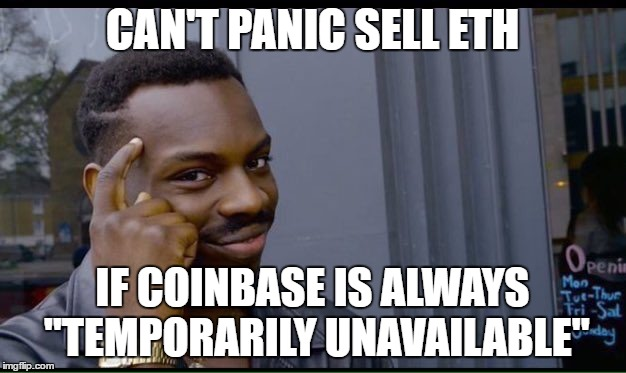
You must’ve seen the memes on some exchanges going offline when there is a big movement in the market. Not only the exchange is offline, but your cryptocurrencies in the exchange account will not be accessible.
Also, several hacks resulted in the loss of user funds in the past. Data breaches also took place in which bad actors used the user data to run phishing attacks.
Fees and Pairs
To conduct a trade on a cryptocurrency exchange, a user would need to deposit cryptocurrencies, place the orders, then finally withdraw the funds. All these steps may include fees, and that’s how exchanges make money.
Also, a user has to go through multiple transactions to achieve their preferred pair if the exchange doesn’t offer it. The multiple transactions also add up to the fees.
Besides, the selection of cryptocurrencies may not be huge on the exchanges.
But, what’s the solution to the problems with exchanges?
Enter ChangeHero
Unlike the traditional trading platforms, ChangeHero is an instant cryptocurrency exchange that mostly solves the problems beginners may face with cryptocurrency exchanges. The user interface of ChangeHero eliminates complicated aspects of trading and delivers a clean UI with all the necessary information.
There is no requirement to create an account on ChangeHero to exchange cryptocurrency. Also, no need to worry about order books, charts, ChangeHero takes care of everything.
Source: ChangeHero
A user can start exchanging cryptocurrencies right from the homepage. ChangeHero offers 70 cryptocurrencies for instant exchanges, and there are over 4000 exchange pairs.
In terms of fees, ChangeHero is non-custodial, and you don’t have to create an account. This, in turn, eliminates the deposit and withdrawal fees when conducting an exchange.
The only fee ChangeHero charges are the commission to process an exchange. For the Best Rate transaction, the fee will be 0.5% and 0.7% in case of a Fixed Rate transaction. The platform does comply with the AML and KYC regulations and follows a risk-based ranking approach. A KYC verification will be implemented if a transaction is flagged by the system.
As ChangeHero is integrated into various exchanges, even if one is down, it will not affect the functioning of the service. Users of ChangeHero get uninterrupted service.
An Alternative
ChangeHero does offer a possible solution to the problems beginners may face with cryptocurrency exchanges. But, the platform does have limitations such as no advanced charting tools, margin trading, etc.
However, ChangeHero and other instant cryptocurrencies exchanges function as an alternative to the traditional trading platforms.
ChangeHero is on a mission to simplify the cryptocurrency exchanges and contribute to mass adoption. If you are a beginner looking to quickly exchange cryptocurrencies without any complications, then ChangeHero is the place to go.
The cryptocurrency market has started the week off on a bearish footing, losing roughly 9% and shrinking to $2.01 trillion since yesterday’s peak valuation of $2.18T. Virtually all coins in the top 100 are posting considerable losses.
Bitcoin is below $45,000 for the first time in the last 7 days
The sharp decline in the price of Bitcoin in the last 8 hours is mirrored when looking at other cryptocurrencies as well.
The price of the largest crypto has reached the weekly high point of $48,800 on September 18. Since then, Bitcoin has faced a considerable amount of selling pressure, which pushed the value down to $44,840 at the time of this writing. Despite the bearish trend, Bitcoin has managed to regain some of its overall share in the market in proportion to other coins as the BTC dominance grew to almost 42% in the last day. The change in the dominance ratio shows that altcoins have had an even rougher go in the last 24 hours than Bitcoin.
Terra, Algorand, and Avalanche lost the most among major projects
DeFi projects Algorand and Avalanche find themselves in the loser bracket after having a stellar month.
It is somewhat surprising to find the trio of Terra, Algorand, and Avalanche at the top of the list of biggest losers in the past 24 hours (when filtering for top 30 cryptocurrencies by market cap). All three projects have been immensely successful as of late. ALGO and AVAX have enjoyed the boost provided by their respective decentralized finance (DeFi) incentive programs, while LUNA’s Columbus-5 upgrade has been attracting a lot of attention.
The trio of successful altcoin projects is seemingly following in the footsteps of the largest altcoin of them all. Ethereum has lost approximately 13% since September 16, dropping from $3,650 to $3,125 at press time. While ETH burning introduced with the London hard fork has played a crucial deflationary role with more than $1 billion worth of ETH being burned since the EIP-1599 launch, it wasn’t enough to overcome the bearish market trend.
Looking at longer time scales puts the most recent market dip into perspective. Crypto has been on a tear in the last 12 months.
Generally speaking, the past month has been a bit rough for the cryptocurrency marketplace. Most of the blame for the subpar performance can easily be attributed to the fairly recent flash crash that wiped out more than $300 billion from the market in the span of hours. Despite this fact, major coins and the cryptocurrency market, in general, are still showing immense growth when looking at 6M and 12M time scales. Cardano and Solana are definitely the highlights of the show with their meteoric rise in 2021. Despite both tokens losing roughly a third of their value since their respective all-time highs, they are nevertheless still up by thousands of percent in the last 1-year period.
The total cryptocurrency market cap is staying above the cumulative value of $2T for the moment. It will be interesting to observe where we go from here. Bitcoin regaining the $45,000 level as quickly as possible and Ethereum staying above the $3,000 mark will be crucial.
MARYPORT, ENGLAND, Fast-rising blockchain platform DeSpace Protocol is set to hold its highly anticipated IDO from September 20 to September 21 2021. The DeFi and NFT hub revealed this information in its Medium channel and noted key details about the IDO event.
DeSpace Protocol IDO will be held across three IDO launchpad platforms: DuckDAO.io, A2DAO.io and Poolz.finance. Interested participants will have to register for whitelisting, and applicants will be selected via a whitelist lottery.
Successful applicants will be able to purchase DeSpace Protocol native token DES at the best available price. DeSpace Protocol has allocated a total of 781,251 DES tokens for the IDO at a price of $0.32 per token. Additionally, 50% of the token allocation will be unlocked after the IDO event, while the remaining 50% will be unlocked after one month.
The Next Generation Hub for DeFi and NFTs
DeSpace Protocol is an innovative platform that provides users with advanced DeFi and NFT functionalities. It combines a suite of DeFi and NFT services aggregated from the crypto space within a single web interface.
Users can easily connect and transact on multiple DeFi and NFT protocols by using the intuitive and user-friendly interface on DeSpace Protocol. All these are made possible using DeChain, a Layer-2 blockchain solution that connects different chains and allows easy transactions across multiple bridges.
DeChain combines Delegated Proof of Stake and Decentralized Proof of Transaction (DPoTS) consensus methods to provide security, speed and high throughput. This allows DeSpace Protocol to be highly scalable while maintaining low transaction fees within its ecosystem.
Key Features
DeSpace Protocol has developed a few features that allow users to engage in DeFi and NFTs easily. The key features include the NFT and DeFi aggregators, NFTPad, DeSwap and DeLend
DeSpace integrates NFT and DeFi aggregators that enable users to trade NFTs from major marketplaces and access diverse DeFi services from a single interface. The cross-chain interoperability makes it easy for users to explore and select the best protocols to place their capital or investments. In addition, there are no extra fees for using DeSpace aggregators, and the inbuilt reward system means that users earn every time they use the platform.
DeSwap is the native decentralized exchange on DeSpace and allows users to swap tokens quickly.
The DEX has some of the lowest fees in the DeFi space and offers fast trades with low slippages. Liquidity providers can deposit LP tokens, receive competitive returns on their capitals, and take part in yield farming activities.
DeLend is a powerful decentralized lending platform that allows anyone to stake DES or other supported collateral in exchange for rewards in stablecoins. DeLend also has dynamic interest rates that encourage lending when demand is high and borrowing when demand is low.
NFTPad is the dedicated NFT platform where anyone can mint, mine and win DeSpace NFTs in a gamified system. NFT craters can trade on DeSpace’s NFT auction marketplace and earn different rewards. Users can also unlock extra rewards by staking DeSpace NFTs or combine them to unlock rare and valuable NFT items.
Users are incentivized with DES tokens for performing transactions on DeSpace Protocol. DES token also unlocks several utilities and serves as the governance token where hodlers can vote on certain proposals that affect the operations of DeSpace Protocol
Future developments on DeSpace Protocol
DeSpace has revealed that once the IDO is completed, it will launch the first version of its dApp. This is expected to occur within Q4 2021 and will enable users to explore the full suite of its DeFi and NFT products.
The DeSpace team is led by CEO Francis Ifegwu and consists of top stakeholders in the blockchain industry. Other key members include Micky I, Evgeniy Tretyakov and Isak Saryieu. The IDO launch promises to be a significant milestone for the project and kickstart a new era for the DeSpace ecosystem.
You can learn more about DeSpace by visiting the following links: