Global Credit Risk & Debt Recovery Conference 2026 Dates: 01 – 02 July 2026 Venue: Mövenpick Grand Al Bustan, Dubai, UAE
Dubai, UAE – The Global Credit Risk & Debt Recovery Conference 2026 is set to bring together senior decision-makers, innovators, and solution providers from across the banking, financial services, and corporate sectors. This premier two-day event will connect 100+ senior delegates and feature 25+ industry experts, providing actionable insights into the future of credit, risk, collections, and restructuring.
Why Attend:
Engage with CXOs, Credit & Collections Heads, Legal & Compliance Experts, and Finance Leaders.
Learn from expert panels, case studies, and interactive sessions.
Discover innovative tools and technologies shaping the future of collections and recovery.
Network with regional and international peers, building strategic partnerships.
Conference Themes:
Digital Transformation & Automation in Collections
Advanced Analytics & AI in Risk Management
Strategic Debt Recovery & Restructuring
Compliance & Regulatory Updates
Product Steering & Operational Efficiency
This event provides a unique opportunity to learn, collaborate, and contribute to shaping the future of credit risk and recovery strategies in the region.
About TAB Group: TAB Group delivers large-scale conferences, exhibitions, and bespoke events across Banking & Financial Services, Mining, Agriculture, and Building Materials, creating impactful platforms that drive collaboration and growth.
OP-ed disclaimer: This is an Op-ed article. The opinions expressed in this article are the author’s own. CoinCheckup does not endorse nor support views, opinions or conclusions drawn in this post and we are not responsible or liable for any content, accuracy or quality within the article or for any damage or loss to be caused by and in connection to it.
Auckland, New Zealand, is set to host its largest and most ambitious cryptocurrency and Web3 event to date, with the launch of NZCryptoCon, proudly presented in partnership with Swyftx, the event’s official Naming Rights Partner.
Taking place in 6-7 June 2026, NZCryptoCon will bring together thousands of attendees from across New Zealand, Australia, and the wider Asia-Pacific region, marking a major milestone for the country’s digital finance and technology ecosystem. The event is designed to educate, connect, and inspire – creating a platform where industry leaders, builders, investors, businesses, and newcomers can come together to explore the future of crypto, blockchain, and Web3.
As New Zealand’s first large-scale crypto convention, NZCryptoCon will feature a comprehensive multi-stage program including keynote presentations, panel discussions, exhibitor showcases, and curated networking experiences. Topics will span cryptocurrency fundamentals, blockchain innovation, regulation, security, decentralised finance (DeFi), NFTs, Web3 infrastructure, and the growing role of digital assets in the global financial system.
In relation to the timing and relevance for a national crypto event, CEO & Founder of NZCryptoCon, Dave Haslop, said:
“Crypto adoption in New Zealand is already mainstream. Research shows nearly half of Kiwis have owned, currently own, or are actively considering digital assets. The community is here, the momentum is real, and now it’s time for a major event that matches the scale of what’s already happening on the ground.”
Swyftx, one of the region’s most trusted and user-friendly digital asset exchanges, has been confirmed as the Naming Rights Partner for the inaugural event. Known for its strong focus on education, accessibility, and responsible participation in crypto markets, Swyftx’s involvement reflects a shared commitment to empowering individuals with the knowledge and tools needed to engage confidently with digital assets.
“We’re excited to partner with NZCryptoCon to help grow awareness and provide accessible, trusted knowledge about cryptocurrency to as many Kiwis as possible,” said a Swyftx spokesperson.
“By joining forces with Easy Crypto, Swyftx is now the largest crypto exchange in New Zealand, and a significant part of our focus is dedicated to raising crypto awareness, investing in education, and supporting opportunities that drive responsible adoption. NZCryptoCon shares these same objectives, and we’re delighted to be part of an event that is helping shape the future of crypto in New Zealand.”
NZCryptoCon aims to play a central role in connecting the local ecosystem while linking New Zealand to the global digital asset industry.
“New Zealand has incredible talent and one of the most engaged grassroots crypto communities anywhere, but it’s been missing a national stage,” Haslop added. “NZCryptoCon becomes the annual hub that brings everyone together – founders, investors, builders, and the next wave of newcomers – to connect locally and plug into the global industry.”
The partnership with Swyftx will see the exchange play a central role across the event experience, including on-stage content, educational sessions, branding integration, and exclusive activations designed to support both first-time attendees and experienced participants.
NZCryptoCon is expected to attract a diverse audience, including retail investors, developers, fintech professionals, startups, institutional players, policymakers, students, and those simply curious about the space. Beyond the conference program, the event will place a strong emphasis on community and culture, with curated networking events and partner-led experiences designed to foster meaningful collaboration.
Early-release tickets for NZCryptoCon are now available, with limited-time launch pricing. Further announcements, including speaker line-ups, exhibitor partners, and detailed program highlights, will be released in the coming months.
OP-ed disclaimer: This is an Op-ed article. The opinions expressed in this article are the author’s own. CoinCheckup does not endorse nor support views, opinions or conclusions drawn in this post and we are not responsible or liable for any content, accuracy or quality within the article or for any damage or loss to be caused by and in connection to it.
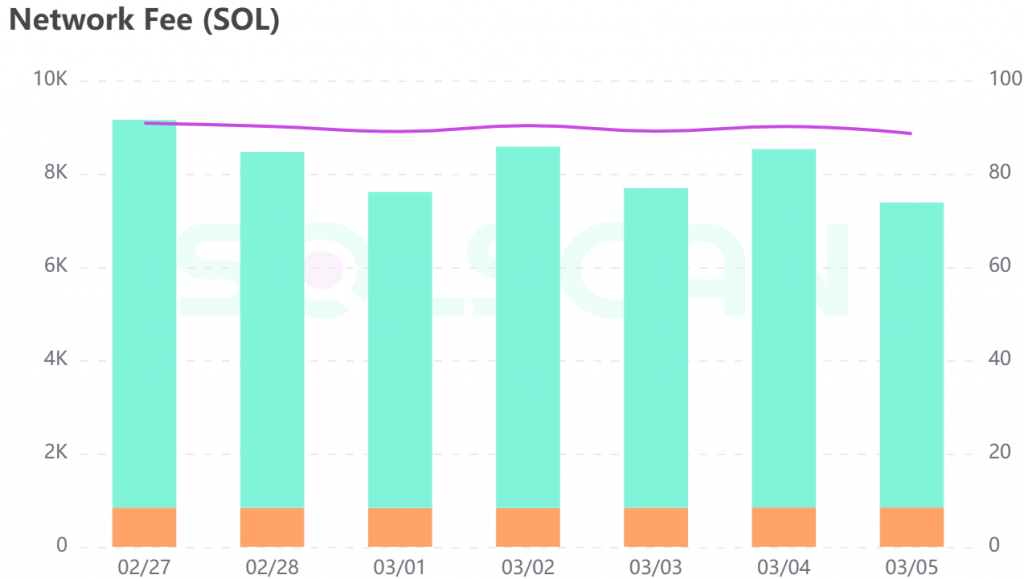
Solana gas fee – that is, the cost for each transaction – amounts to about $0.013151 (0.00015 SOL). This amount includes the base fee as well as the so-called prioritization fee.
Solana has emerged as a standout in the cryptocurrency market, particularly noted for its low gas fees. Unlike Ethereum, where gas fees can fluctuate dramatically, Solana’s transaction costs are remarkably stable and affordable, typically costing just a couple of cents per transaction. This affordability is partly due to Solana’s innovative Proof-of-History (PoH) consensus mechanism, which enhances efficiency and scalability.
In this article, we are going to examine how Solana gas fees work and what’s average price of transaction on the Solana network.
How much is the average Solana gas fee?
The average Solana gas fee costs between $0.00043 and $0.013. The exact cost is influenced by network activity, which directly depends on how many transactions are being handled at the same time.
It’s worth noting that there are two types of Solana transaction fees a user has to be aware of. Here’s a brief description of each:
Base fee: A fixed cost of making transactions on the Solana network. This fee amounts to just 0.000005 SOL (about $0.004346 at current rates).
Additional (prioritization) fee: Users can opt to pay an additional fee to prioritize their transactions. This feature ensures that time-sensitive transactions are processed swiftly. Currently, the additional fee amounts to 0.000145 SOL, or $0.01271 (about 96% of the average transaction cost on the Solana network).
It’s worth noting that there’s also a vote fee, which is paid daily by validators. This fee grants validators the right to participate in Solana’s consensus system and is the same no matter the SOL stake.
Solana’s fee-burning mechanism
Solana’s fee-burning mechanism is an integral part of its economic model, contributing to both network sustainability and the long-term value proposition of SOL.
Half of all transaction fees collected on the network are burned, meaning they are permanently removed from circulation. This deflationary mechanism reduces the total supply of SOL over time.
The remaining 50% of the transaction fees are distributed to validators. This not only incentivizes validators to maintain the network but also ensures that the network remains secure and operational. The distribution of fees to validators ensures that they are compensated for their work, maintaining a high level of security and efficiency on the network.
By reducing the supply of SOL, the burning mechanism helps to preserve and potentially increase the value of the remaining tokens. This is beneficial for all SOL holders as it creates a deflationary pressure on the token.
Image source: Solscan
Benefits of Solana’s low fees
The low cost of transactions makes Solana accessible to a broader audience, fostering wider adoption. In addition, affordable fees encourage more developers to build on Solana, enhancing its ecosystem with diverse applications and services. Finally, the fee-burning mechanism contributes to the long-term value proposition of SOL by potentially reducing its supply over time.
These benefits have certainly played an important role in making Solana one of the most active blockchain ecosystems in the crypto space. They have also played a very important role in reviving the SOL ecosystem after its massive collapse in 2022. After crashing by more than 90% due to its affiliation with the disgraced FTX exchange, SOL quickly regained its footing and now sits as the 7th largest crypto asset on the market.
The bottom line
Solana’s low gas fees, combined with its robust infrastructure, make it a formidable competitor in the blockchain space. Its economic model not only ensures affordability but also incentivizes network participation and sustainability. As the cryptocurrency landscape evolves, Solana’s cost-effective and efficient transaction mechanism positions it as a leading choice for developers and users seeking a reliable and scalable blockchain solution.
Solana’s low gas fees have also contributed to the rise of meme coin projects on the blockchain in recent months. Projects like Dogwifhat, Mew, and Bonk are just a few examples of meme coins issued on Solana that have skyrocketed in value recently. Check our article for a complete overview of meme coins that could be the next Shiba Inu.
Abu Dhabi, United Arab Emirates —Senior leaders from global finance, digital asset infrastructure, and regulatory institutions will convene in Abu Dhabi on May 13, 2026, for the inaugural Digital Assets Forum Abu Dhabi — a highly curated gathering examining the adoption of digital assets under the UAE’s progressive regulatory framework.
The forum comes amid rapid institutional momentum across the Gulf. The UAE has emerged as a global leader in digital asset regulation, providing structured licensing regimes, sovereign-backed innovation programs, and a robust ecosystem where banks, asset managers, and institutional investors are actively deploying capital and forming strategic partnerships.
Following the successful third edition of Digital Assets Forum in London — which gathered nearly 2,000 senior attendees from global banks, asset managers, and infrastructure providers — the forum now expands to the Middle East at a pivotal moment.
“Across our successful London editions, we have seen how regulatory clarity drives institutional engagement,” said Victoria Gago, Co-Founder of Digital Assets Forum. “Abu Dhabi is now at the center of a structural shift in global finance, with capital concentration, infrastructure buildout, and global firms relocating headquarters. This forum brings together the decision-makers who are shaping the future of digital finance and turning strategy into action.”
Confirmed institutional speakers include Christoph Richter, Head of Digital Assets & AI at ADGM; Sebastian Widmann, Head of Dubai at Komainu; Karl Naim, Group Chief Commercial Officer at XBTO Middle East; Yan Ma, Executive Director at Spartan Group; Catrina Wang, General Partner at Portal Ventures; Elliot Andrews, CEO of Aspen Digital; and Rachel Conlan, Global Chief Marketing Officer at Binance.
DAF Abu Dhabi will examine UAE digital asset regulation versus other jurisdictions, institutional digital asset management and portfolio strategies, stablecoins, payments and CBDCs, DeFi and TradFi integration, real-world asset tokenisation (RWA), the state of crypto ETFs, liquidity, custody and institutional market infrastructure, and institutional risk management frameworks — all with a focus on practical outcomes that enable investment, capital allocation, and partnership execution.
Digital Assets Forum Abu Dhabi is designed as a highly curated, executive-level gathering focused on deal-making, capital deployment, and strategic partnership formation. The format includes main-stage panels, closed-door sessions, dedicated one-to-one meeting areas, and private briefing rooms. The objective is not retail awareness, but to translate dialogue into tangible agreements and coordinated investment strategies for 2026 and beyond.
About Digital Assets Forum
Digital Assets Forum is a global institutional series bridging traditional finance and digital assets.
The Abu Dhabi edition marks its expansion into the Middle East, following established editions in London.
Launched in 2018 in Barcelona, the European Blockchain Convention — organiser of Digital Assets Forum — has become one of Europe’s leading blockchain platforms for financial institutions, policymakers, and infrastructure providers integrating blockchain into mainstream finance.
OP-ed disclaimer: This is an Op-ed article. The opinions expressed in this article are the author’s own. CoinCheckup does not endorse nor support views, opinions or conclusions drawn in this post and we are not responsible or liable for any content, accuracy or quality within the article or for any damage or loss to be caused by and in connection to it.
There is no denying that Bitcoin cloud mining seems like a lucrative proposition. The thought of generating income without the headaches of managing a hardware setup is certainly appealing, but with so many available options, it can be hard to choose the best one for you.
In this article, we’ll explore the top crypto cloud mining platforms in today’s market and examine their key features, helping you determine which option best meets your needs.
Best Bitcoin cloud mining platforms in 2026
BitFuFu – The first choice for Bitcoin mining enthusiasts
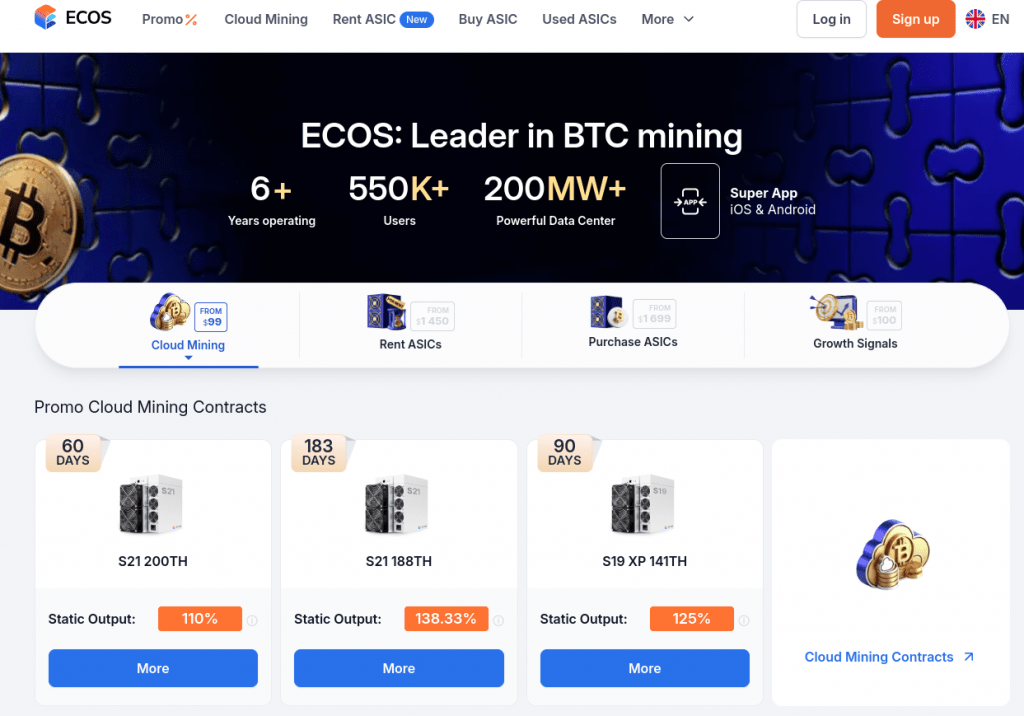
ECOS– Complete cloud mining solution with helpful integrations
Binance – Cloud mining offered by the world’s most popular exchange
NiceHash– A dynamic marketplace for buying and selling hash power
GoMining– An innovative GMT-powered cloud mining platform
BitDeer– A crypto mining company founded by Bitmain co-founder Jihan Wu
The best Bitcoin cloud mining solutions: An overview of the top choices
In the upcoming sections, we will examine the best cloud crypto mining platforms on the market and explore the different ways in which users can utilize cloud services to secure Proof-of-Work (PoW) networks in exchange for mining rewards.
1. BitFuFu – The first choice for Bitcoin mining enthusiasts
BitFuFu allows its users to get Bitcoin at a lower cost than just buying it on the market. The platform features a hosting capacity of 522 MW, divided between 25 facilities worldwide.
The platform allows their users to purchase different contract lengths, ranging from 30 to 360 days, with many options in between. Each option carries its own hasrate fee, as well as an unchanging service fee. They also outline the expected static output ratio, which is the expected profit from mining rewards. For newer and less experienced users, they also have an “Easy BTC” option, which allows for hassle-free mining, as well as a dedicated $60 three-day plan for those looking to dip their toes into cloud crypto mining.
Key features:
Many contract options, from 30 to 360 days
Simple and transparent calculation of Bitcoin mining rewards
Easy BTC option for new users
Miner rental service
Native application for both iOS and Android
2. ECOS – Complete cloud mining solution with helpful integrations
ECOS is an all-in-one solution for cloud mining, offering mining rig rentals and cloud mining contracts, as well as other helpful tools like a mining contract calculator to estimate your mining output, a crypto wallet to store your assets, and a blog page to keep you up-to-date with the latest crypto news. Their mobile app, available on both iOS and Android, provides users with a simple overview of their existing contracts, allowing them to monitor their profits and explore additional offers.
The platform offers a wide range of contracts, with options for even multiple year-long contracts which promise a significant return on investment. As with BitFuFu, the contracts each carry their own service fees. ECOS offers promotional short-term contracts, as well as a 1-day free trial, which aims to familiarize users with the process of crypto mining. After the trial period is over, users may opt to buy a contract to keep all the Bitcoin they mined during this period.
Key features:
All-in-one solution for cloud mining
1 day free trial for new users
Easy-to-use mobile application
Purchase and rental of ASIC machines
Integrated wallet to mined store crypto assets
3. Binance – Cloud mining offered by the world’s most popular exchange
Binance is one of the world’s leading crypto exchanges, offering its users cloud mining via their Binance Pool program. Their current contract allows users to mine BTC for 360 days for as little as $23.04, with an estimated daily mining output of 0.00000069 BTC (around $0.042).
Binance states that their rates can fluctuate based on mining difficulty and unsuspected events that may disrupt the ASIC miners.
Key features:
Cloud mining offered by the world’s leading crypto exchange
360-day mining duration contract for as low as $23.04
Daily BTC rewards
Transparent mining calculations
4. NiceHash – A dynamic marketplace for buying and selling hash power
NiceHash is a leading cryptocurrency platform specializing in crypto mining and the trading of mining power. It functions as an open marketplace that links sellers of hashing power with buyers. Buyers can choose the cryptocurrency they want to mine, select a mining pool, set their preferred price, and place an order. This order is then made accessible to all miners or hashing power sellers connected to the NiceHash platform.
The platform is user-friendly, with a straightforward interface. Miners using NiceHash Miner software complete orders by providing computing power for the chosen cryptocurrency mining process. This system offers a flexible and accessible way for individuals to engage in cryptocurrency mining, regardless of their technical knowledge or the size of their mining operations.
It should be noted that NiceHash is fundamentally different from the other platforms on this list. Instead of the company selling its own hash power, it merely connects buyers with sellers, which might be more appealing to some users.
Key features:
Allows users to mine many different PoW cryptocurrencies
Users aren’t bound by contracts
Supports over 30 mining algorithms
Allows users to calculate an approximate income based on their device specifications, along with an auto-detect tool for ease of use
5. GoMining – An innovative GMT-powered cloud mining platform
GoMining, powered by its native GMT token, allows its users to get acquainted with Bitcoin mining without having to actually purchase and operate mining equipment. While the platform is vastly different from the other offerings on this list, it still provides users with daily cryptocurrency rewards.
By staking the GMT token and holding the company’s NFTs, users gain exposure to BTC mining. GoMining’s 9 data centers are powered by a combined power capacity of 350 MW. They are part of over 20 active mining pools (including Binance), which increases the chances of sharing BTC mining rewards and lowers variance.
Key features:
Holders of GMT tokens and NFTs can gain access to the Bitcoin mining infrastructure
Purchasing cloud mining contracts is not necessary
KYC verification is required
Shared BTC mining rewards
6. BitDeer – A crypto mining company founded by Bitmain co-founder Jihan Wu
BitDeer is a cloud infrastructure provider and chip designer that includes cloud mining among its range of services. The platform currently offers cloud mining contracts with 30-day and 180-day terms powered by the Antminer S19 Pro ASIC. However, availability can be limited, and the service appeared to be sold out at the time of writing.
With BitDeer’s cloud mining service, users can rent high-performance mining hardware without dealing with setup or maintenance. Customers can select their preferred hash rate capacity and, in some cases, choose the miner model they want to use. After purchasing a plan, users can track their hash rate and mining performance through a real-time monitoring dashboard.
Key features:
Company led by experienced mining industry professionals
Real-time monitoring of mining performance
Occasional promotions with discounted cloud mining plans
Bitcoin cloud mining FAQs
Is Bitcoin cloud mining real?
Indeed, Bitcoin cloud mining is a real concept. You can rent mining power from a company to engage in the process of validating transactions on the Bitcoin network. That being said, some services are fraudulent in nature, so doing your own research is crucial.
Is Bitcoin cloud mining still profitable?
While services may advertise the process to be profitable in the long term, the actual profitability is affected by the current price of Bitcoin, mining difficulty and the provider’s maintenance fees. These factors are all prone to fluctuation, which impacts profitability.
Is it safe to invest in cloud mining?
The safety of cloud mining investments varies across providers. While the ones included in our list are well-respected and safe, there are many others that are illegitimate. Researching a service’s credibility and understanding its fees, terms, and reputation in the community are crucial steps to take before deciding to invest.
The bottom line
Bitcoin cloud mining offers an attractive alternative for individuals who want to engage in cryptocurrency mining without the hassle of managing hardware or bearing the costs of buying their own mining equipment. The reality, however, is that in today’s market, Bitcoin mining with even the most powerful GPUs or top ASIC machines has become unprofitable.
Castries, Saint Lucia, March 12th, 2026, Chainwire
PrimeXBT, a global multi-asset broker and crypto asset service provider, announced the launch of PXTrader 2.0, a major upgrade of its native trading platform that combines crypto with traditional financial markets, giving traders access to more than 350 instruments from a single account. The launch reflects PrimeXBT’s leading role in the growing convergence between crypto and traditional finance, supported by infrastructure designed to allow digital asset capital to move more freely across global markets.
PXTrader 2.0 reflects a broader shift in how digital assets are being used within financial markets. Increasingly, crypto is evolving beyond a standalone asset class and becoming a form of trading capital. With PXTrader 2.0, traders can fund accounts with cryptocurrencies such as BTC and ETH while gaining exposure not only to crypto futures, but also to Forex, commodities, indices, shares, and crypto CFDs. This unified environment enables traders to move between crypto markets and traditional financial instruments without leaving the same trading platform.
The platform also introduces a range of advanced trading tools designed to support active traders navigating both digital and traditional markets. PXTrader 2.0 integrates TradingView charts with more than 100 indicators, advanced order types, and flexible leverage models, including cross and isolated margin up to 1:1000. Traders can also choose between hedge and netting position modes, allowing greater flexibility in how positions are managed across markets. For crypto futures traders, the platform additionally provides access to a real orderbook, offering greater market transparency and liquidity visibility.
“Geopolitical tensions often trigger ripple effects across global markets, influencing currencies, commodities, equities, and digital assets at the same time. For traders, this creates a broader set of opportunities, particularly when they can move efficiently between asset classes. The ability to use crypto capital to access global markets is becoming an increasingly important advantage in this environment,” said Jonatan Randin, Senior Market Analyst at PrimeXBT.
As crypto market matures, many traders are expanding beyond single-asset strategies and looking for platforms that connect digital assets with the broader financial ecosystem. The ability to deploy crypto capital across multiple markets enables traders to diversify exposure and respond to opportunities across both traditional and digital asset markets.
With PXTrader 2.0, PrimeXBT continues to evolve its platform to reflect these changing market dynamics. By combining crypto with traditional financial instruments in a single trading environment, the broker aims to provide traders with a more connected and flexible way to access global markets.
PrimeXBT is a global multi-asset broker and crypto asset service provider trusted by traders in more than 150 countries. The platform bridges traditional and digital markets within one integrated environment, redefining versatility and innovation in online trading. Clients can access Forex, CFDs on indices, commodities, shares, crypto, and Crypto Futures, as well as buy, store and exchange cryptocurrencies directly. This unified experience extends across both the native PXTrader 2.0 platform and MetaTrader 5, supported by advanced risk-management tools and a wide range of funding options in crypto, fiat and local payment methods. Since 2018, PrimeXBT has focused on empowering traders through broad multi-asset access, fair and transparent conditions, professional-grade technology and dedicated human support. By combining expertise, trust and a client-first approach, PrimeXBT sets a benchmark of excellence in the financial industry and provides traders with the tools they need to trade, grow and succeed with confidence.
Disclaimer: The content provided here is for informational purposes only and is not intended as personal investment advice and does not constitute a solicitation or invitation to engage in any financial transactions, investments, or related activities. Past performance is not a reliable indicator of future results. The financial products offered by the Company are complex and come with a high risk of losing money rapidly due to leverage. These products may not be suitable for all investors. Before engaging, you should consider whether you understand how these leveraged products work and whether you can afford the high risk of losing your money. The Company does not accept clients from the Restricted Jurisdictions as indicated on its website / T&Cs. Some products and services, including MT5, may not be available in your jurisdiction. The applicable legal entity and its respective products and services depend on the client’s country of residence and the entity with which the client has established a contractual relationship during registration.
BYDFi announced the integration of its perpetual futures market data into TradingView, enabling traders to access real-time pricing and crypto market signals directly within TradingView charts. The integration supports more efficient workflows by bringing BYDFi derivatives data into a familiar charting environment used by traders worldwide for crypto futures analysis.
Market Signals in View, Strategy in Sync
With BYDFi perpetual futures data available on TradingView, users can monitor price action, volume dynamics, and market structure signals on TradingView while keeping their chart workflow anchored to BYDFi as the data source, ranging from BTCUSDT perpetual futures price action to broader trends across crypto derivatives markets. This reduces context switching for active traders who rely on technical indicators, pattern tools, and multi-timeframe analysis.
BYDFi, Built for Active Derivatives Traders
Derivatives Depth and Execution: With a derivatives lineup designed for different risk preferences and trading approaches, BYDFi supports 500 plus perpetual contracts with leverage options up to 200x, backed by advanced execution and risk controls for high leverage crypto trading, helping users approach perpetual contracts trading in a more structured way.
Global Scale and Responsible Participation: Founded in 2020, BYDFi serves over 1,000,000 users across 190+ countries and regions. BYDFi holds MSB licenses in the U.S. and Canada and is a member of South Korea’s CODE VASP Alliance, reflecting an ongoing focus on operational transparency and responsible market participation.
Support and Safeguards for Users: Maintaining over 1:1 Proof-of-Reserves with periodic public reporting, BYDFi prioritizes transparency alongside an 800 BTC Protection Fund. 24 by 7 multilingual customer support and timely responses across official channels, including social media, reinforce BYDFi’s user first service standard.
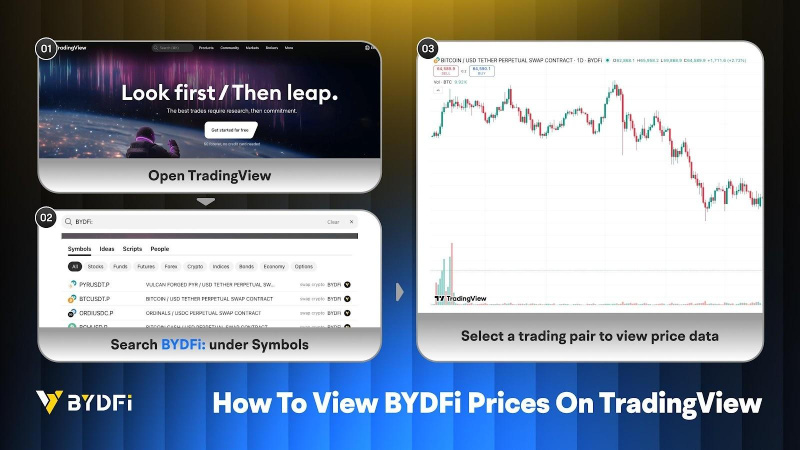
How to Access BYDFi Perpetual Futures Data on TradingView
Users can view BYDFi perpetual futures market data on TradingView in a few quick steps:
Open Symbol Search on TradingView and enter BYDFi:
View the full list of available perpetual futures contracts.
Select a trading pair to view live price data and use TradingView’s analysis tools to refine your market view and timing.
Michael, Co-founder and CEO of BYDFi, commented: TradingView is one of the most widely used charting platforms for traders. Bringing BYDFi perpetual futures market data into TradingView helps traders streamline analysis and stay closer to the signals that matter. BYDFi will continue improving infrastructure, product depth, and user protections to support more informed decision making in fast moving markets.
About BYDFi
Established in 2020, BYDFi is a global crypto trading platform that combines the power of a centralized exchange (CEX) with its on-chain trading engine, MoonX. BYDFi is Newcastle United’s Exclusive Official Crypto Exchange Partner. Recognized by Forbes as one of the Best Crypto Exchanges In Canada For 2026, BYDFi offers intuitive, low-fee trading across Spot and Perpetual Contracts to Copy Trading, and Automated Crypto Trading Bots, empowering both new and experienced traders to navigate digital assets with confidence.
BYDFi is dedicated to delivering a world-class crypto trading experience for every user.
New York, United States, March 7th, 2026, Chainwire
OmniPact, a decentralized protocol building a trust layer for peer-to-peer transactions of physical and digital assets, announced today it has raised $50 million in a private funding round. The investment will speed up the development of its mainnet, integration of cross-chain features, and deployment of its decentralized arbitration module.
The funding round was backed by a consortium of institutional investors and family offices that requested anonymity. Investors voiced confidence in OmniPact’s technical roadmap and its ability to set new standards for secure, intermediary-free transactions across Web4 and traditional commerce.
A significant share of the proceeds will fund the final development and security audits of OmniPact’s core contracts and multi-chain infrastructure. The funds will also support the protocol’s testnet launch, scheduled for Q1 2026, and expand the engineering team to accelerate the integration of real-world asset (RWA) and AI agent transaction capabilities.
“The funding validates our thesis that the future of commerce requires a neutral, transparent, and trustless foundation,” said Alex Johnson, Co-founder and CEO of OmniPact. “Our infrastructure eliminates intermediaries entirely, returning power to users. This investors’ confidence lets us execute our roadmap and bring secure, decentralized custody to a global audience.”
OmniPact protocol addresses the “trust problem” in peer-to-peer transactions by using smart contracts as on-chain guarantors. Combining algorithmic custody with decentralized arbitration and reputation systems, it enables secure exchanges without centralized platforms—with the new funding set to bring this vision to market.
About OmniPact
OmniPact is a decentralized protocol founded in 2024 with the mission to create a neutral, transparent, and trustless foundation for peer-to-peer commerce. By leveraging smart contracts as on-chain guarantors, OmniPact enables secure transactions of physical and digital assets without intermediaries. The protocol combines algorithmic custody, decentralized arbitration, and reputation systems to solve the “trust problem” in both Web4 and traditional commerce. With a focus on cross-chain interoperability and real-world asset integration, OmniPact is committed to returning control and security to users worldwide. For more information, visit [www.omnipact.io].
Contact
OmniPact Secures $50 Million to Advance Trust Infrastructure Alex Johnson OmniPact omni@omnipact.io
You’re wondering if XRP can reach a whopping $500 price point — a notion that seems unlikely at first glance (and second and third, to be fair). To achieve this, the market capitalization of XRP would need to skyrocket to over $26 trillion. That would dwarf the GDP of major economies.
This would require a monumental shift in the cross-border payments market, with widespread adoption and favorable regulatory outcomes. While this scenario might seem far-fetched, there are factors that could drive significant growth.
Let’s explore what it would take for XRP to reach such heights and what industry experts have to say about its potential trajectory.
Key takeaways
Market Cap Requirement: A $500 price point requires a market cap exceeding $26 trillion, making it highly improbable.
Growth Necessity: XRP needs an unprecedented increase of over 100,000% from its current price to reach $500.
Adoption and Demand: Capturing a larger share of the cross-border payments market and increased adoption by financial institutions are crucial for significant price increases.
Realistic Targets: More plausible price targets are between $10 and $50, contingent on favorable market conditions and regulatory clarity.
XRP market capitalization analysis
The prospect of XRP reaching a $500 price point hinges heavily on its market capitalization. To put this in perspective, achieving such a price would require a market cap of approximately $26 trillion, which far surpasses the total market cap of all cryptocurrencies combined and is significantly higher than the GDP of major economies like the United States.
Currently, XRP’s market cap stands around $31 billion, indicating that the asset would need to increase more than 700 times to achieve the proposed $500 price point. We don’t like to make bold predictions here, but… this just isn’t happening any time soon.
A more realistic analysis suggests that even capturing a significant share of the growing global remittance market would yield a much lower price. For instance, capturing 25% of this market would only yield about $50 billion in revenue, translating to a potential price of $250.
This shows how impractical it is to expect a $500 price point for XRP under current market dynamics and regulatory environments.
Thus, a price analysis reveals that the notion of XRP reaching $500 is highly speculative and unlikely without substantial shifts in market conditions and regulatory clarity.
Ripple project overview
Ripple’s project encompasses a multifaceted approach to revolutionizing cross-border payments. It leverages its XRP token to provide liquidity and efficiency.
You can see this reflected in RippleNet, their platform that uses XRP as an intermediary to enable fast international transactions. This strategy aims to provide liquidity services to businesses and financial institutions. Ripple is positioned as a potential disruptor to traditional systems like SWIFT.
Founded in 2012 by Chris Larsen and Jed McCaleb, Ripple’s XRP has grown to become the 3rd largest cryptocurrency by market capitalization.
With a maximum supply of 100 billion tokens and a circulating supply of approximately 56 billion XRP, it’s evident that their strategic partnerships with major financial institutions like American Express and Bank of America are working well for them.
A key part of their success is the Ripple Protocol Consensus Algorithm (RPCA), which enhances decentralization and security, allowing Ripple to process 1,500 transactions per second with a block processing time of just 0.06 seconds.
This technical capability, combined with strategic partnerships, highlights the Ripple project’s potential to transform cross-border payment efficiency for financial institutions.
Historical price analysis of XRP
When examining the historical price movements of XRP, you’ll notice a pattern of significant volatility, marked by dramatic fluctuations since its launch on February 1, 2013. Initially, XRP gained little market attention but eventually reached an all-time high of $3.84 in January 2018 during a bull market.
This peak was followed by a steep decline to around $0.20 in November 2020, partly due to the SEC lawsuit against Ripple Labs, which significantly impacted its market performance.
Analyzing the historical data, you can see that XRP experienced a surge to approximately $1.96 in 2021 but faced instability due to fluctuating market conditions and continued legal challenges.
More recent data shows that as of March 6, 2026, XRP closed at roughly $1.40. This shows a fairly cautious market sentiment despite a 386% growth in 2024. By the end of the year, our XRP price prediction shows that the token will rise to $1.75, which would be a relatively modest but still very respectable 25% price increase.
These price movements underscore the volatility of XRP. This historical context provides a foundation for understanding XRP’s potential price trajectories.
XRP current fundamentals
XRP’s current market position is built on a foundation of robust fundamentals that show its utility in the global financial ecosystem. You’ll find that XRP’s speed, liquidity provisions, and regulatory clarity play significant roles in its market dynamics.
Considering its current market cap of approximately $85 billion, XRP is the 5th largest cryptocurrency. The circulating supply of about 61 billion tokens out of a maximum of 100 billion indicates a substantial but controlled supply.
Key points to note about XRP’s fundamentals include:
Transaction Efficiency: XRP can process 1,500 transactions per second, with a block processing time of just 0.06 seconds, making it significantly faster than many other cryptocurrencies.
Liquidity Solutions: Ripple’s On-Demand Liquidity service eliminates the need for pre-funded accounts, enhancing the efficiency of cross-border transactions and liquidity for financial institutions.
Market Structure: The top 10 addresses hold only 20.5% of the total supply, indicating a relatively decentralized structure.
Regulatory Clarity: A pivotal ruling in the SEC lawsuit clarified that XRP isn’t classified as a security for public sales. This has had a positive impact on its market perception and trading volume.
These fundamentals suggest that while ambitious targets like $500 are impractical, more realistic predictions, such as $10 to $50 by 2040 or 2050, could be feasible under favorable market conditions.
Bullish market scenario analysis
Market momentum and favorable regulatory environments are necessary factors in the bullish market scenario for XRP. To reach a price target of $500, you’d need to see significant shifts in demand and adoption that propel XRP’s market capitalization to approximately $26 trillion, surpassing the combined market cap of major corporations like Microsoft and Apple.
In a bull market, capturing a substantial share of the growing global remittance market could enhance XRP’s value. If XRP were to capture 25% of the cross-border remittance sector, it could yield around $50 billion in revenue for Ripple, potentially translating to a price of $250 under favorable conditions.
However, achieving a $500 or even a $250 price point remains highly unlikely without substantial changes in market dynamics and regulatory clarity.
Still, that doesn’t mean XRP’s price can’t go up. Ripple’s strategic partnerships with over 200 financial institutions, including Bank of America and Santander, increase the likelihood of increased adoption and transaction volumes necessary for a price surge.
Positive regulatory outcomes, such as the recent ruling deeming XRP not a security for public sales, could also bolster investor confidence and lead to a substantial price increase if market sentiment remains bullish.
Bearish market scenario analysis
In a bearish market scenario, the path to a $500 price point for XRP appears insurmountable. The sheer scale of market capitalization required – approximately $31 trillion – far exceeds the total market cap of all cryptocurrencies combined as of March 2026.
To put this into perspective, consider the following:
Astronomical market cap: Achieving $500 per XRP would necessitate a market capitalization that surpasses the US GDP, an unprecedented and unrealistic target.
Unfeasible price surge: XRP would need to increase by over 100,000% from its current price of around $0.49, a growth trajectory that’s highly improbable given existing market conditions.
Regulatory hurdles: Even a partial victory in the SEC lawsuit may not be enough to drive XRP’s price significantly higher due to ongoing regulatory uncertainties and market sentiment. Historical performance: XRP’s historical price peaks, such as its all-time high of $3.84 in 2018, have yet to be replicated, further challenging the likelihood of reaching $500.
Factors influencing XRP price
Regulatory and market dynamics have a significant impact on the price of XRP. As an investor, you need to be aware of these factors.
The SEC lawsuit against Ripple, for instance, has had immediate implications for XRP’s legal status and market confidence.
Market sentiment also plays a huge role. The price movements of XRP are often correlated with the performance of major cryptocurrencies like Bitcoin and Ethereum. Positive developments in these markets can have a ripple effect (no pun intended) on XRP’s value.
Also, increased adoption by financial institutions can raise demand for XRP, which would impact its price positively. For XRP to reach higher price targets, it needs to capture a larger share of the cross-border payments market, which would necessitate a substantial increase in market cap.
Roadmap to $500 Price Point
XRP’s roadmap to a $500 price point hinges on a series of highly improbable events and market conditions. The most significant barrier is the astronomical market cap required, estimated at $31 trillion, which far exceeds the current US GDP.
For XRP to reach this level, it would need to capture a substantial share of the cross-border payments market, which is projected to reach $250 trillion by 2027.
Consider the following key factors that could theoretically support such a high price target:
Factor
Description
Market Share
Crypto as a whole would need to take off significantly from where it is currently, and XRP would need to be at the forefront of it.
Market Sentiment
Crypto as a whole would need to take off significantly from where it’s at currently, and XRP would need to be at the forefront of it.
Partnerships
Establishing liquidity and demand through partnerships with over 200 financial institutions.
Given these conditions, even reaching a 10% market share would be a significant challenge. The historical price pattern suggests that XRP would need an unprecedented increase of over 100,000% from its current levels. This target is highly speculative at best and is likely not rooted in reality.
Frequently asked questions
How high can XRP go?
XRP could potentially reach a price range of $10 to $50 if favorable market conditions and regulatory clarity align, especially with broader adoption in the cross-border payments market. However, reaching a price as high as $500 is highly improbable without monumental shifts in market dynamics.
How high will XRP go in 2026?
By the end of 2026, XRP might realistically reach $1.74, but it would require a lot of factors to align perfectly. Reacting higher than that, such as $10, is contingent on increased adoption by financial institutions and very positive crypto market sentiment. This price range accounts for decent growth in cross-border payments and positive legal developments.
How high will XRP go in 2030?
By 2030, XRP could potentially reach $50, assuming significant market adoption, widespread use in cross-border payments, and ongoing regulatory clarity. This is a best-case scenario with strong institutional support and expanding use cases.
Will XRP reach $1,000?
Reaching $1,000 for XRP is extremely unlikely given the market capitalization required, which would need to surpass the total GDP of many major economies. Such a price would require unprecedented shifts in both financial markets and XRP adoption on a global scale. In short, XRP is very unlikely to reach $1,000 in our lifetime.
The bottom line
You’re examining if XRP can reach $500. Given its current market cap and the astronomical increase needed, reaching this price point seems highly improbable. A more realistic goal is between $10 and $50, contingent on favorable market conditions and increased engagement from financial institutions. Even then, it would likely take decades.
Achieving a $500 valuation would require significant adoption in cross-border payments and would lead to a market cap exceeding $31 trillion. Simply put, this is beyond the realistic scope of current market trends.













 OmniPact protocol addresses the “trust problem” in peer-to-peer transactions by using smart contracts as on-chain guarantors. Combining algorithmic custody with decentralized arbitration and reputation systems, it enables secure exchanges without centralized platforms—with the new funding set to bring this vision to market.

