When top altcoins such as Ethereum (ETH) rally, the entire crypto market rallies, as they have the ability to inject life into the whole market. This is evident right now, where the entire market has turned green thanks to the likes of Bitcoin and Ethereum experiencing sustained price gains. The domino effect doesn’t stop with well-established projects but trickles down to even projects with smaller market caps.
For instance, recent data shows investors are going for small-cap coins such as Filecoin (FIL) and VC Spectra (SPCT) due to their affordability and bigger room to grow.
Ethereum Prediction: Can ETH Reach Its All-Time High?
Ethereum has enjoyed a nice run over the past month, adding 32% to its value. This has helped Ethereum (ETH) cross the $2,000 mark for the first time since August. As of November 16, Ethereum (ETH) is trading around $2,035, and its uptrend is gaining momentum.
The big question is whether Ethereum (ETH) can reach its all-time high in this bull cycle. The technical and fundamental analysis shows it’s pretty possible for ETH, which should be good news for anyone wondering if I should buy Ethereum.
This Ethereum prediction considers the ETH chart, which shows the altcoin is facing imminent resistance at the $2,165 level. The Ethereum price appears to have returned to the 21 EMA as ETH forms higher highs and lowers. With the uptrend still strong, ETH will hope to bounce off the level before attempting to break past the resistance and push higher.
If successful, the next significant resistance lies at the $2,652 Ethereum (ETH) level. This Ethereum prediction also considers the fundamentals for the best cryptocurrency project, and they look promising with the potential to push ETH to its all-time high.
Ethereum is buzzing after the recent revelation of BlackRock filling an ETH ETF with the SEC.
Filecoin Price Prediction: How High Can FIL Go?
Trading at a lowly $5, Filecoin (FIL) is proving popular with low-budget investors thanks to its affordability and utility. The attention Filecoin (FIL) has received over the past few weeks has made it one of the best altcoins performance-wise.
Filecoin (FIL) is up 64% over the past month and is still pushing up. Now, investors can’t help but wonder how high Filecoin (FIL) can go. This Filecoin price prediction considers the altcoin’s charts and fundamentals to answer this question.
A quick glance at the Filecoin (FIL) chart reveals the altcoin recently managed to break past significant resistance at the $4.96 level. The altcoin supports it by pushing towards the next level at $6.42. The uptrend has loads of momentum, with volumes rising, backed by the ADX firmly pointing upwards.
The fundamentals also look good, with the Filecoin (FIL) community buzzing after the project struck a strategic alliance with Sushi that will allow the DEX to utilize its decentralized storage capabilities. Based on this, this Filecoin price prediction sees FIL rising above $10 over the next few weeks.
VC Spectra (SPCT) Tipped To Cross $1 Once Listed On Major Exchanges
A recent poll by a leading media outlet found that investors are keen on VC Spectra (SPCT) thanks to its growth potential. While also identifying the project’s utility as a convincing factor. This has made VC Spectra (SPCT) one of the best altcoins to invest in right now.
Priced at a meager $0.066, many experts are tipping VC Spectra (SPCT) to cross the $1 mark by the second quarter of 2024 once the altcoin is listed on top crypto exchanges. SPCT is already up 725% and is projected to grow further by the end of the presale. By the end of the presale, it should reach $0.080, meaning investors from Stage 4 will have 21.21% ROI, while Stage 1 investors will gain 900%.
VC Spectra aims to simplify crypto investing and trading for its users. SPCT is used to access various investment and trading opportunities in its ecosystem. The BRC-20 standard token allows holders to access multiple funds specializing in early-stage ICOs and earn rewards while accessing the many opportunities within the DeFi market.
SPCT is tipped to grow in value as demand for VC Spectra’s asset management and trading services grows. Also, thanks to the token’s deflationary nature, its value is expected to grow over time as supply reduces through regular token burns.
Learn more about VC Spectra (SPCT) and its presale:
Disclaimer: This is a paid-for sponsored article. The views and opinions presented in this article do not necessarily reflect the views of CoinCheckup. The content of this article should not be considered as investment advice. Always do your own research before deciding to buy, sell or transfer any crypto assets.
After a successful run from the v17 update, B2BinPay announces yet another update to its website and services to accommodate user interface and streamline improvements. The new v18 takes the company’s commitment and services to a new level.
This update focuses on merging the merchant and enterprise accounts together to simplify the registration and account management, besides other enhancements in the legal compliance and website interface.
Let’s go through some of the prominent features of the new B2BinPay v18.
Unified Accounts
The main change for clients with the new update is merging services, which is a new approach the company has been focusing on. This strategy simplifies the user journey and operations on the platforms.
This merge combines the merchant and enterprise models into a single interactive account with an enhanced user experience. This update allows users to customise functions and features to their preferences and to suit their business needs.
Transactions can now be managed in a unified account with a smoother operation and payment model. This integration focuses on the following aspects.
Customisation
The new unified account structure has become highly flexible and customisable as both business models are integrated. Therefore, the registration process is now more straightforward, reducing clutter with every step in the account type and making setting up the user’s first account easier.
User Journey
The update includes a smoother onboarding procedure, entailing a one-fee structure for the unified account (merchant and enterprise). Clients can now choose the service packages they want to receive without implying additional fees or going through complicated and lengthy steps. Thus, the update focuses on accommodating freedom in the user’s experience.
The new interface approach is more straightforward and better streamlined to reduce the time required before launching a new account’s business on the platform and getting started with the first transaction.
Highly Functional Front-end
The new release revamped the website interface to fit the B2Broker group website design and aesthetics and incorporated more functionalities.
However, it is not only about having a good-looking website; it went through extensive speed and security improvements to bring its customers highly reliable services in a safe environment.
The update touched several areas that required improvement without reworking the whole structure not to change the user’s favourite features. Thus, the transition to the new look will be smooth and does not catch users off guard. Here’s what the new update brings.
New Wallet Management
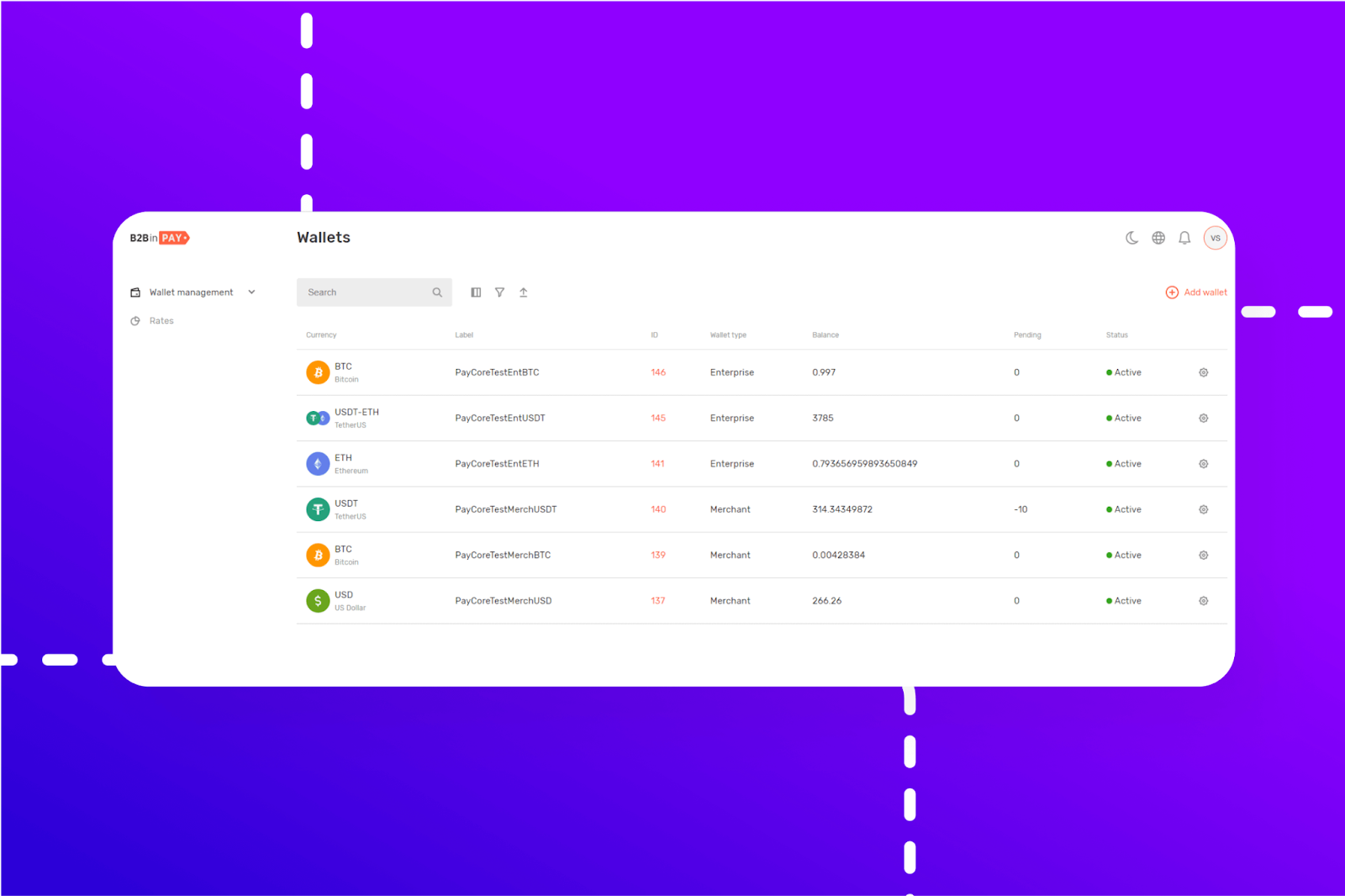
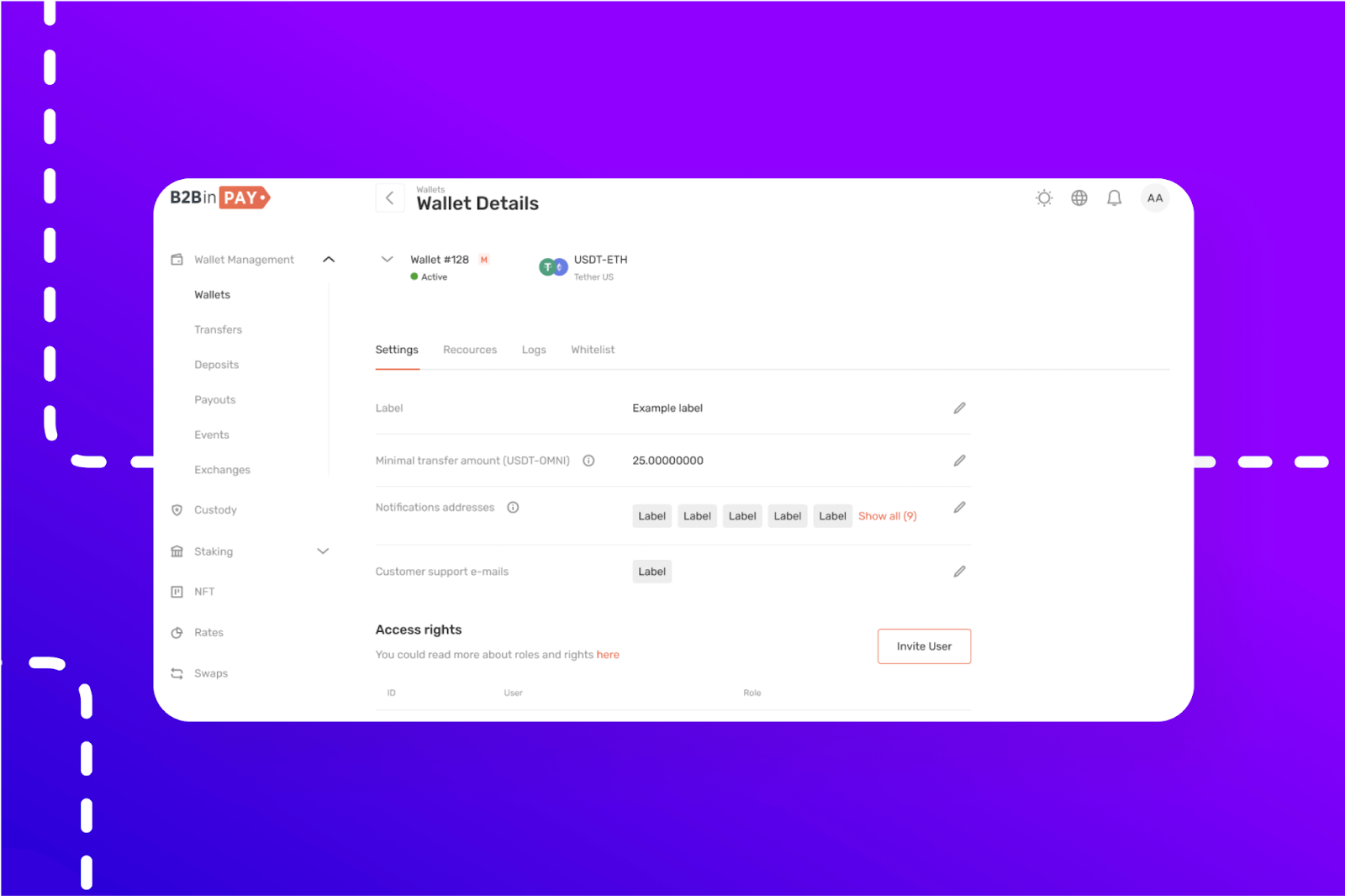
Managing wallets and operations is now smoother with a revamped page that cuts the fluff and clicks, helping the user get straight to the point and improving the loading speed. The new design streamlines the functions in a better way to ensure a clear user journey. These adjustments include withdrawals, payout and exchanges.
Improved Account Functions
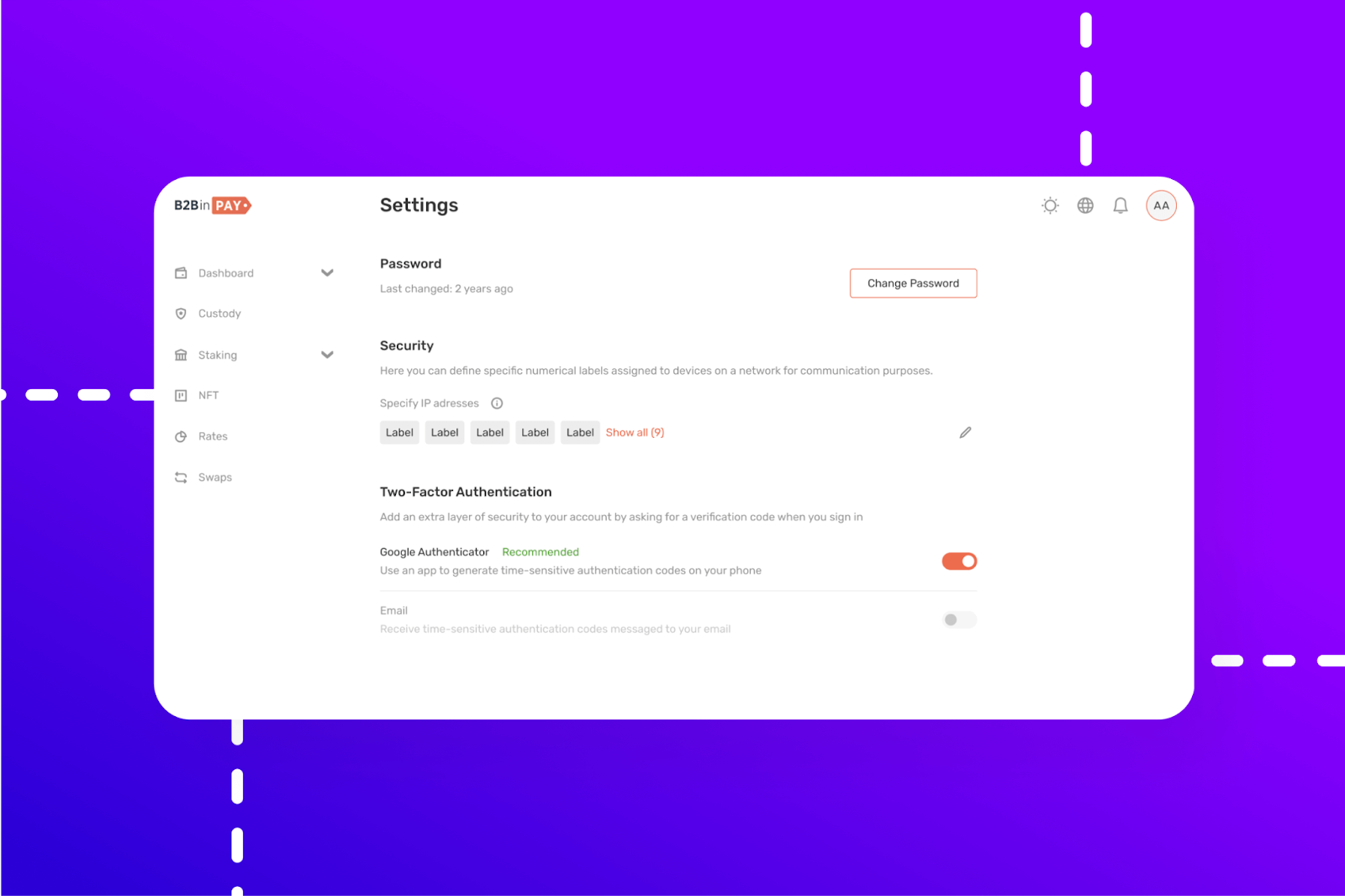
Users can now do more from their account page, such as configuring API integrations, choosing customisation options and exploring more tools to adjust the profile quickly and smoothly.
The update considers the security measures by adding two-factor authentication to the payment page, which makes transacting more secure. More updates have been added to the checkout page to align with the new design and user journey.
Enhanced Invoicing Options
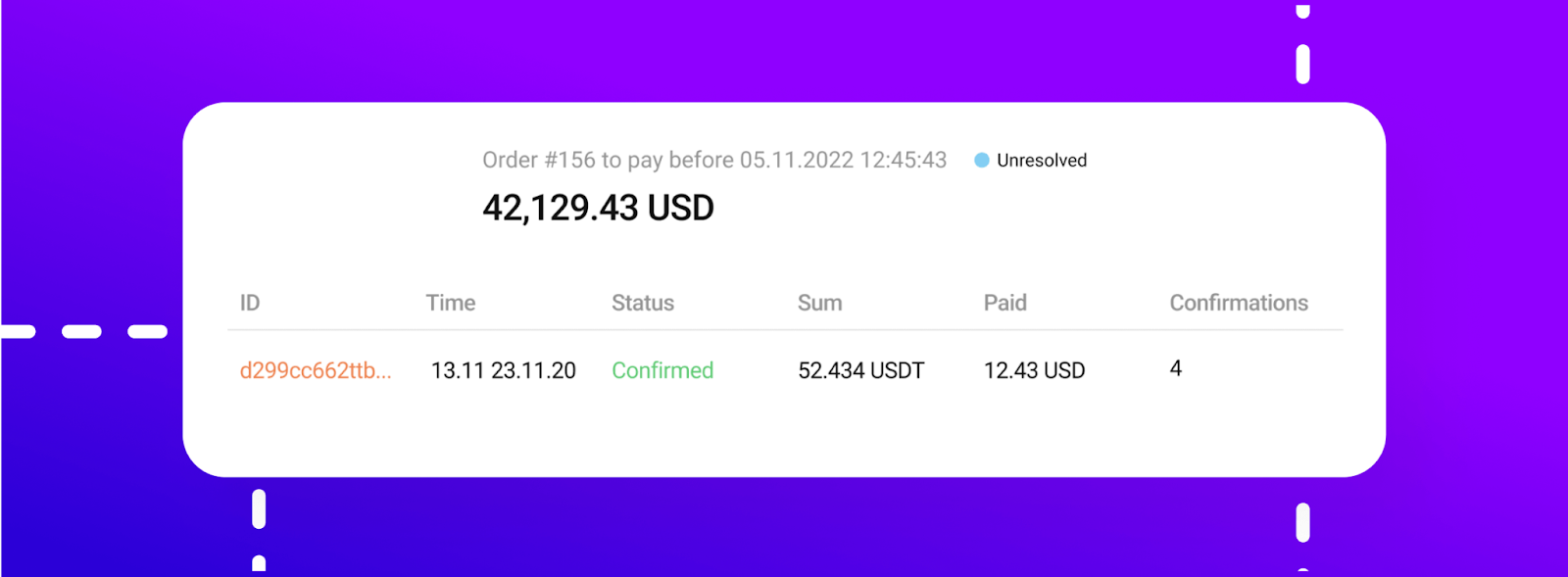
The update to the invoice management system adhered to the customers’ needs to gain more control over their operations, especially in terms of the invoice expiration cycle. The 7-day limit was removed, and users can now adjust expiration times to their preferences. This gives more control to businesses over their financial operations and invoice management.
Highly-functional Helpdesk
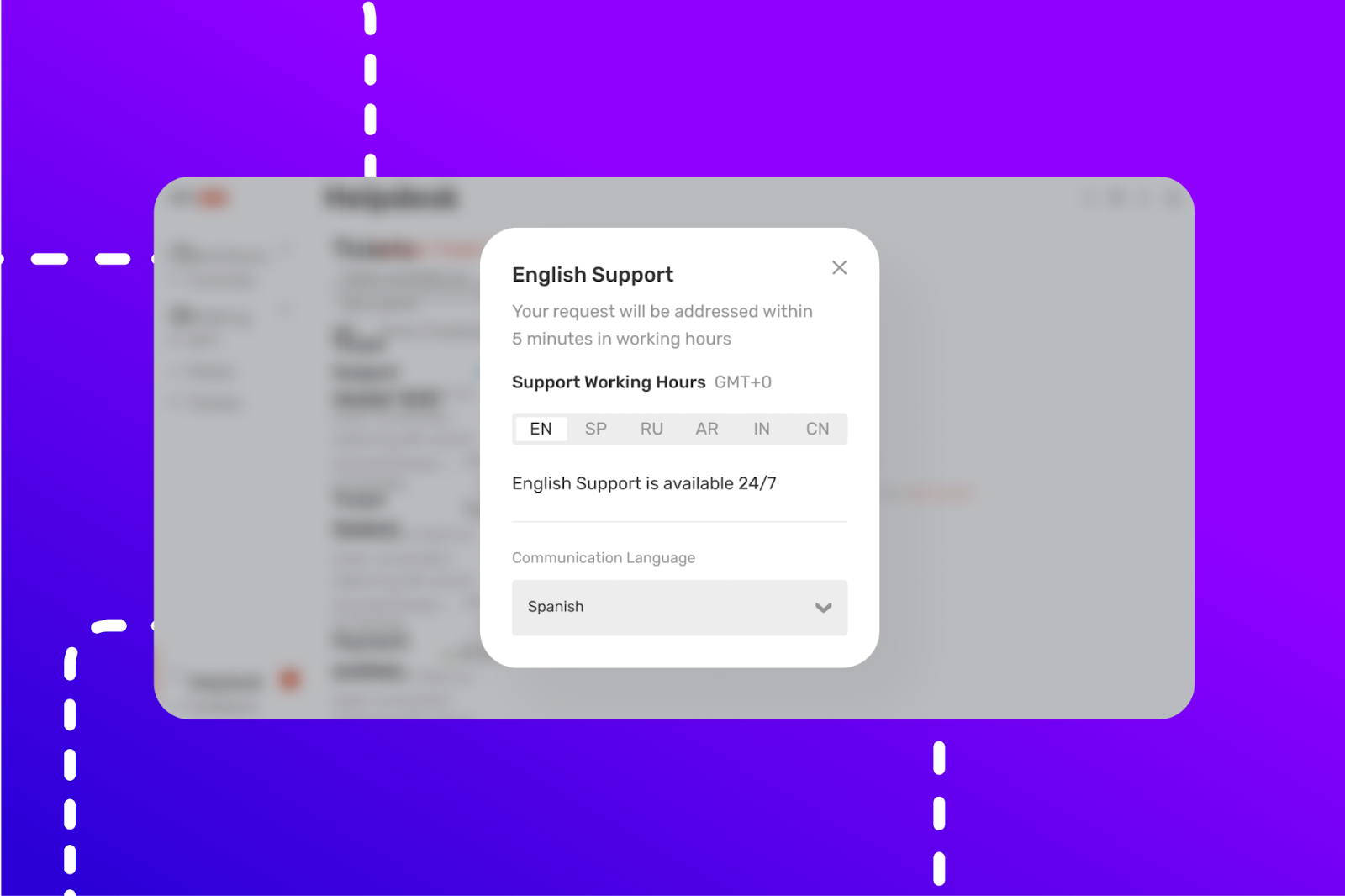
The Helpdesk was part of the new v18 update, adding more languages to the support system to provide customer service to users from different countries. Moreover, the user experience is more streamlined, and a new notification system ensures users are informed of their queries.
Neat-looking Rates Page
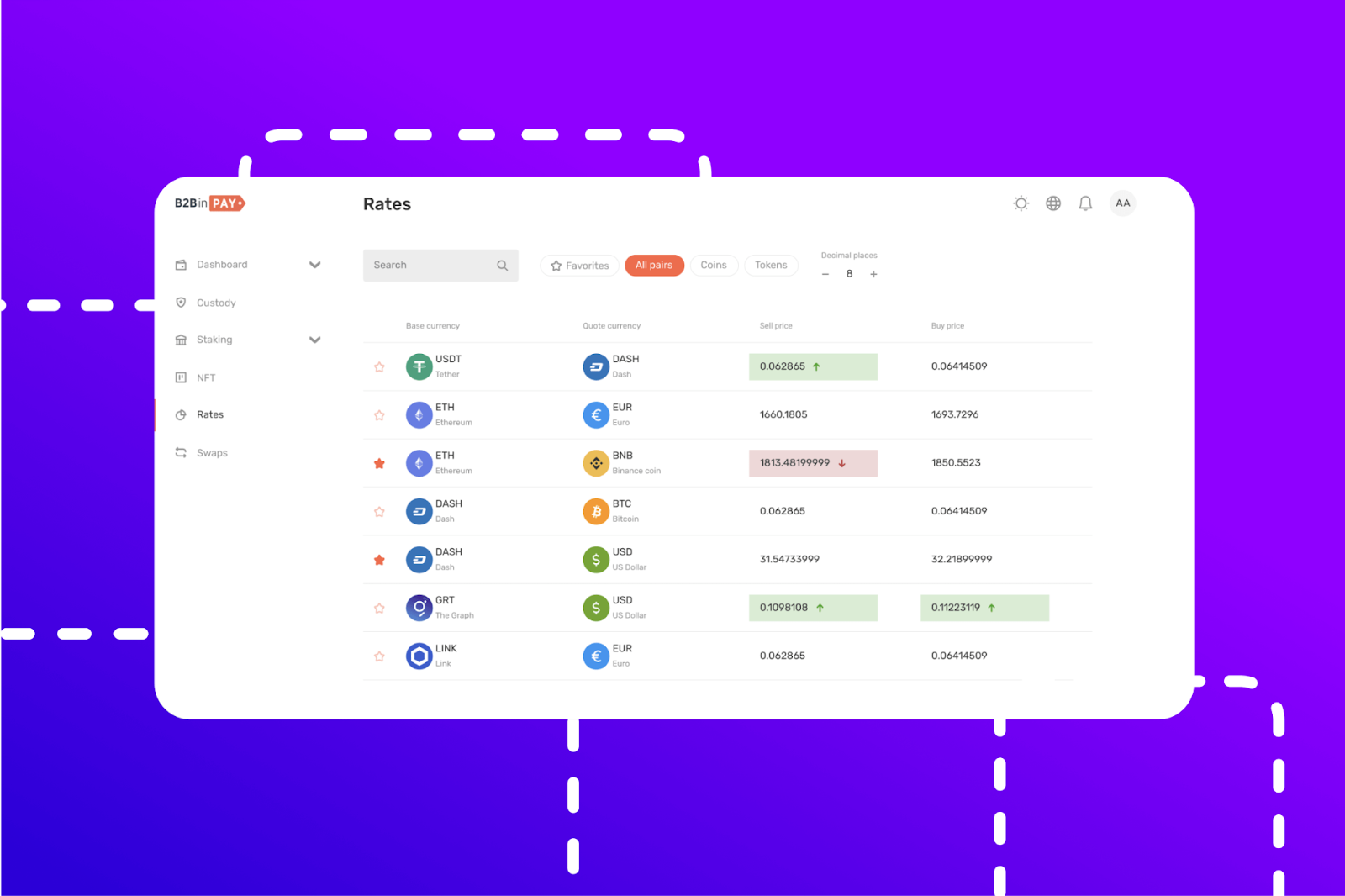
Viewing currencies’ rates now has more functions on its page, including filters and favourites. The update improves efficiency by moving the rates to the top of the page.
Adhering to FATF Travel Rule
As part of B2BinPay’s strive to comply with the legal requirements and high standards, they have integrated with Notabene. This means that now, B2BinPay has full adherence to the Financial Action Task Force Travel Rule requirements.
This step deepens trust and confidence in B2BinPay operations as they follow legal procedures in collecting and sharing personal information associated with crypto transactions to combat money laundering.
Conclusion
The leading crypto payment provider, B2BinPay, keeps pushing the boundaries by releasing yet another update to its services and suits. v18 focuses on putting more control and flexibility in the user’s hands and promises a highly functional and seamless user experience that meets and exceeds customer expectations.
In the ever-evolving world of cryptocurrency, the allure lies in its departure from traditional finance – offering individuals control over their assets and embracing the principle of decentralization. “Your keys, your coins,” a mantra among crypto enthusiasts, underscores the beauty of this new financial landscape where power is returned to the people.
However, the gateway to this decentralized world often lies through centralized platforms, creating an inherent paradox. Centralized exchanges (CEXs), while necessary for entry into the crypto space, often hold user assets, both crypto, and fiat, which contradicts the ethos of cryptocurrency.
Enter CryptoUnity, a fresh face in the crypto arena, adeptly merging the benefits of centralization with the core principles of decentralization. This innovative platform is designed with beginners in mind, featuring a centralized exchange for ease of access. Yet, it remains staunchly committed to the foundational tenet of crypto – decentralization.
CryptoUnity stands out as one of the first centralized exchanges to integrate a cold wallet system within its platform, allowing users to truly own their keys – and their coins. This feature not only aligns with the decentralized philosophy of crypto but also enhances user security. Understanding the security risks associated with CEXs, CryptoUnity has taken a pioneering step by partnering with a highly regulated external custodian. This strategic move ensures that user assets are segregated from company assets, further bolstering trust and safety.
CryptoUnity is more than just a trading platform; it’s a comprehensive ecosystem, built together with many different features, where users can purchase their first cryptocurrency, securely store it in a cold wallet, and embark on an educational journey in the crypto space. The platform’s user interface is meticulously crafted for beginners, offering clear guidance, straightforward screens, and explanations at every juncture.
The platform’s achievements speak volumes about its potential and commitment. CryptoUnity has raised over 1 million euros in a bear market, ranks in the top 10% of CertiK projects with a gold KYC badge, sold out their IDO in just over 5 hours, and has made its presence felt at numerous conferences. These milestones underscore its credibility and long-term vision in the crypto world.
At the heart of CryptoUnity lies a community dedicated to nurturing learning, long-term goals, and mass adoption. With the recent launch of their native utility token, $CUT, which took place just two days ago, the platform offers an enhanced user experience through the token’s multiple utility cases. This recent development of the $CUT token launch serves as a precursor to the introduction of the entire platform, slated for early next year, marking a significant step in the platform’s evolution.
CryptoUnity is not just another crypto platform; it is a beacon of trust, security, and user-centric innovation. With its unique blend of centralized convenience and decentralized security, it is poised to be a game-changer in the crypto world – a platform with serious, long-term potential that appeals to both beginners and seasoned crypto enthusiasts alike.
London, United Kingdom, November 16th, 2023, Chainwire
MetaWin, a trailblazer in the digital competitions arena, today announced the launch of its most ambitious event to date – the MetaWin Millionaire. This groundbreaking competition offers participants a chance to win $1 million in USDC Stablecoin, marking a new epoch in online competitions.
A Game-Changing Event in the Blockchain Space
MetaWin Millionaire is not just a competition, it’s a revolution in the digital contest landscape. Hosted entirely on-chain, this event exemplifies transparency and fairness through blockchain technology. It’s open to everyone, with free entry requiring only the payment of a nominal Ethereum gas fee to register.
Ensuring absolute impartiality, MetaWin employs Chainlink’s renowned on-chain random number generator to select the winner. This third-party integration underlines MetaWin’s commitment to unquestionable fairness and legitimacy in its competitions.
As the clock ticks down with just 37 days left, excitement mounts. The much-anticipated draw will take place on December 22, 2023, at 4 PM Eastern. The winner will witness a life-changing moment as $1 million in cryptocurrency instantly transfers into their wallet from the smart contract.
A Legacy of Successful Competitions
MetaWin is no stranger to hosting high-stake competitions. With over 16,500 contests completed, including NFTs and cryptocurrency giveaways, MetaWin has already changed lives. The biggest win to date has been an impressive 150ETH ($300K), setting the stage for the massive million-dollar event.
Join the Race For a Chance to Become a Millionaire
Currently, with 2,363 participants and counting, MetaWin invites everyone to join this extraordinary opportunity. It’s more than a competition; it’s a chance to be part of blockchain history and potentially turn your life around with a million-dollar reward.
To enter, users can visit MetaWin.com and connect with their favorite Web3 wallet to register their entry today.
About MetaWin
MetaWin is at the forefront of on-chain competition platforms, revolutionizing how digital contests are conducted. By harnessing the power of blockchain technology, MetaWin provides a transparent, fair, and thrilling competition experience. With a history of significant giveaways and a commitment to innovation, MetaWin is reshaping the future of online competitions.
This solution offers users convenient and efficient portfolio tracking features.
Tired of using multiple apps to track your crypto assets in several wallets on multiple networks? We have a solution for you! The 1inch Network is excited to roll out the 1inch Portfolio, a well-designed tracking tool that enables users to obtain comprehensive information about their crypto portfolios!
Based on the 1inch Portfolio API, this portfolio tracker offers users a possibility to get portfolio data and detailed analytics on a single screen. Users no longer have to use multiple apps to collect data about their crypto assets held in various wallets and/or on multiple blockchain networks.
With the 1inch Portfolio, users can conveniently track their assets in all of their wallets across all supported networks. In addition, the 1inch Portfolio provides data on users’ positions in multiple liquidity pools.
The main advantages of the 1inch Portfolio:
Multi-wallet. According to our data, the majority of crypto users have two to five wallets. The 1inch Portfolio enables users to add as many wallets as they like and get a full picture of their crypto holdings.
Multi-chain. Our data also shows that most users have assets on two to four various networks. Thanks to the 1inch Portfolio, they can now view all their assets across supported blockchains on a single screen.
Advanced DeFi analytics. No more need to visit various sources to get data for blue chip protocols, such as Uniswap, Lido or Aave. You can get comprehensive analytics of your liquidity provider positions across all of these platforms in one place.
The 1inch Portfolio is a go-to solution for DeFi users who hold their crypto assets in multiple liquidity pools and/or wallets.
Cryptocurrencies were conceived as a means of anonymous payments. But with the increasing integration of digital money into the real economy, its anonymity is becoming less accessible. There are fewer and fewer platforms where you can convert BTC to ETH without disclosing personal data. However, maintaining anonymity when conducting crypto-fiat transactions using bank cards or accounts is almost impossible.
The most difficult situation is for centralized crypto exchanges, which act as a link between traditional finance and the cryptocurrency market. They are required to comply with legal requirements and KYC procedures become mandatory. Decentralized crypto exchanges, so far, are not subject to control by external authorities and are more consistent with the basic principles of the cryptosphere.
However, if you are only interested in Crypto/Crypto (between cryptocurrencies) transactions, then there are still ways to remain incognito. This is even possible on some centralized platforms.
HTX (Huobi)
This is one of the few top crypto exchanges with a loyal attitude towards anonymous clients. At the same time, the company also complies with KYC and AML standards in accordance with international norms. Users can trade on HTX in both the spot and futures markets, as well as use margin trading. The exchange also provides analysis and charting tools. The ecosystem has its own multifunctional token HT. It is used to pay commissions, and also gives you the right to vote and receive discounts.
OKX
OKX, another top crypto exchange with a friendly approach to anonymous users. This platform provides access to the trading terminal immediately after registering an account. If you do not plan to make fiat deposits and withdrawals, the verification procedure is not required. The exchange offers spot and margin trading, derivatives, passive income generation, and NFT trading. The total number of cryptocurrencies available on the platform is about 200 types.
Uniswap
This platform is the leader among decentralized exchanges in terms of trading volume. It uses an automatic market maker mechanism and contributes greatly to the popularity of this innovative model. At first, Uniswap operated on the Ethereum blockchain, but over time it switched to a second-layer solution.
What makes Uniswap unique is the ability for any user to add their own cryptocurrency to the platform. In addition, this site has its own UNI token, which provides the right to participate in project management.
Decentralized trading platforms do not provide a registration procedure. To work with them, just connect your crypto wallet.
dYdX
A decentralized trading platform that provides a wide range of tools for margin and perpetual trading to users. It operates on StarkEx, a layer 2 solution for the Ethereum blockchain. However, this trading platform plans to move its operations to its own blockchain in the Cosmos ecosystem.
Formally, the volume of transactions is not limited, but technical restrictions are not uncommon here. Decentralized platforms have appeared relatively recently and are more complex than centralized ones. Since they have a fairly modest number of users, trading platforms often face a lack of liquidity.
LetsExchange
A non-custodial trading platform https://letsexchange.io that is available to users around the world. The service is available without registering an account and supports over 3,900 coins and tokens. Swaps are performed quickly and anonymously. The platform interface is very simple and clear. Since the service cooperates with many reputable exchanges, it does not have problems with liquidity. There are no limits on the number and volume of transactions.
And yet, until the world is ready to abandon fiat money, the ability to remain incognito is quite illusory. You can move coins between different platforms as much as you like, but every crypto-fiat transaction involving a bank card provides a clue to de-anonymizing the user.
The gambling industry is one of the biggest industries in the world. Since there are lots of people interested in making money through betting, several betting platforms have emerged. Some are good, while others can rip you off of your hard-earned money.
Making the wrong choice of a crypto casino can impact your betting experience adversely. But with the knowledge of choosing the right crypto casino, you can offer yourself a fantastic gaming experience. In this article, we’ll unveil some tips to help you make the right choice.
6 Tips on Choosing the Right Crypto Casino
As a newbie in the online casino industry, it is crucial to know the crypto casino for beginners and those for professionals. Not all crypto casinos are for you. If you fail to recognize what is suitable for you, you may lose more than you can afford. Besides, you need to know the crucial factors that determine the right crypto casino. With this, you find it easier to pick a crypto casino that is enjoyable and safe. Check out these factors below:
1. Reputation
The first step you should take before choosing crypto casinos is to know how reputable they are. How can you know their reputation? You can check their platforms to see if reputable regulatory authorities have licensed and regulated them. Besides, you can read the reviews of other players. You should know that not all reviews are fake.
How long casinos have been in the industry can establish their authenticity. So, you may want to research the date they began. Their longevity can show their overall reputation. With a reputable crypto casino, a secure and fair gaming experience can be guaranteed.
2. Game selection
The second tip is to assess the game selection. You should check the crypto casinos to see the games they offer. Before you proceed to make a decision, you need to know if the platforms offer numerous popular game options, including blackjack, slots, baccarat, poker, and roulette. It will also be great if they provide specialty games like scratch cards or bingo.
Aside from the game options crypto casinos offer, the quality of the games also matters. You need to know if the games were created by reputable software providers, such as Playtech, Microgaming, and NetEnt. Games from these providers are undoubtedly fair and of high quality. The providers create games with fair and random outcomes through the use of random number generators.
Furthermore, you should know if the crypto casinos offer mobile gaming. Most reputable crypto casinos provide a mobile app or a mobile-friendly platform for their customers.
3. Bonuses and promotions
Since the gambling industry is a highly competitive world, the best should offer the best package. You should check the bonuses and promotions the crypto casinos provide. Do they offer loyalty programs, free spins, deposit bonuses, and welcome bonuses? Their reward offers should be attractive. But you should read their terms and conditions.
4. Security
You will deal with digital currency in crypto casinos. This is why you should pick platforms that prioritize security. You should check if your financial and personal details are safe. When looking for crypto casinos, the safest platforms will be those that offer two-factor authentication and use encryption technology. With these security measures, your data can be safeguarded.
5. Diverse Payment Methods
Most online casino platforms offer numerous payment options. So, if you want to choose crypto casinos, you need to go for those that provide diverse payment methods.
With numerous cryptocurrencies on the platforms, you will have many options to deposit and withdraw funds without any hassles across the blockchain ecosystem.
6. User experience
How you feel when you visit crypto casino platforms matters. Your experience as a user can contribute to how well you will do with betting. This is why you need to check the website design and ease of navigation. If the interface is user-friendly, you will have an enjoyable gaming experience.
Another important aspect is customer support. You need to check if the customer support is responsive. If your preferred crypto casinos are reputable, trustworthy, and reliable, they will have a support team that is dedicated to the needs of their customers.
Singapore, Singapore, November 15th, 2023, Chainwire
BinaryX, a GameFi and Initial Game Offering (IGO) platform, today announced the launch of Pancake Mayor, a new city-building simulator on the newly launched PancakeSwap Gaming Marketplace.
Pancake Mayor: City Building Simulator
Pancake Mayor is a free-to-play casual city-building game where players can obtain in-game currency, Mayor Cash, to upgrade and build their own cities, inspired by famous cities around the world. Players can accumulate Mayor Cash by playing a spin-the-wheel mini-game, raiding other players’ cities, and participating in special events.
“We designed Pancake Mayor for the everyday gamer – it offers a fun, lighthearted and rewarding experience for our users,” said Rudy S., Head of Growth at BinaryX. “Pancake Mayor is the first of many hyper casual games that we will develop in the play-to-earn space, and it will provide our gamers with a new way to utilize, engage, and earn with BinaryX. We are excited to launch on PancakeSwap’s Gaming Marketplace to bring Pancake Mayor to new users.”
Hyper casual games are becoming increasingly popular, and Pancake Mayor is positioned to appeal to a wide range of gamers. The game is easy to play and offers a variety of ways to earn rewards, making it a great choice for both casual and experienced gamers alike.
“PancakeSwap’s Gaming Marketplace marks an exciting new chapter in our continued commitment to innovation and enhancing the user experience. We invite our community, gamers, and game developers to join us in creating a gaming ecosystem that is vibrant, innovative, and, above all, incredibly fun,” said Chef Mochi, Head of PancakeSwap.
Open Test Launch
Pancake Mayor will be launched with an Open Test lasting for 7 days from 15 November, 2023, 9pm GMT+8 to 21 November, 2023, 9pm GMT+8. During this period, players can enjoy all game content for free, including tournament events, Crazy Vault gameplay, point activities, and more. After the test concludes, the game will be wiped and reset. For more game content and activities, follow BinaryX on social media.
Watch the trailer of Pancake Mayor
About BinaryX
BinaryX is a leading GameFi and IGO platform committed to delivering cutting-edge gaming experiences backed by blockchain technology.
Offering Initial Game Offering (IGO) services, BinaryX gives game developers the opportunity to launch their GameFi projects on their platform, and for users to get early access to innovative new games.
As one of the top projects on the BNB Chain, BinaryX has a vast community of more than 100k coin holders. With the token BNX, BinaryX is also one of the top few metaverse projects by trading volume on the BNB chain, with a strong market cap.
PancakeSwap is a leading multichain decentralized exchange that operates on an automated market maker (AMM) model and is available across 9 chains: BNB Chain, Ethereum, Aptos, Polygon zkEVM, zkSync Era, Arbitrum One, Linea, Base, and opBNB. Launched in 2020, PancakeSwap is one of the most popular DEXs in the cryptocurrency industry due to its low transaction fees, high-speed trading, and user-friendly platform. PancakeSwap has over $614 billion in total trading volume and over $1.39 billion in total liquidity locked, making it the leading multichain DEX in the industry.
For the first time in history, we have two competing (or indeed, collaborating) financial systems – DeFi (Decentralised Finance), made possible through crypto processing gateways, and TradFi (Traditional Finance) that relies on standard, centralised fiat processing.
One of the most prominent debates when these systems are compared is security, which is a paramount concern for both industry stakeholders and consumers alike.
So, which of these systems has the edge in ensuring the safety of assets and transactions?
Through a comprehensive exploration of both realms, we seek to discern if the innovative blockchain truly offers a more secure alternative to the age-old traditional finance system.
TradFi – Security
Traditional finance, often referred to as the legacy financial system or TradFi, is built upon centralised institutions like banks, credit card companies, and stock exchanges. In terms of security, these organisations are fortified with specific layers that have developed throughout the long history of traditional finance. Let’s take a look.
Firstly, there’s physical security. Even as far back as ancient Mesopotamia, fortified temples served as repositories for valuables and grain. Indeed, sometimes the old ways work best – bank vaults, armoured vehicles, and security personnel all serve as effective deterrents against would-be bank robbers.
Then comes the second layer of security – deposit insurance. The idea of deposit insurance was discussed in the U.S. from the late 19th century. However, it wasn’t until the Great Depression in the 1930s that these discussions gained significant traction. After the stock market crash in 1929, a series of bank runs ensued, leading to widespread bank failures. In response, the U.S. government established the Federal Deposit Insurance Corporation (FDIC) in 1933 as part of the Banking Act. The FDIC insured bank deposits up to a certain amount (which has since been periodically adjusted) and was funded by premiums paid by the member banks.
Lastly comes digital security. As banking evolved from the introduction of ATMs in the 1960s and 1970s to online and mobile banking in the late 20th and early 21st centuries, the necessity for robust digital security measures became paramount. To counter threats ranging from data interception and phishing to advanced cyberattacks, banks implemented various security mechanisms. These include SSL encryption, multi-factor authentication, biometric verification, and AI-driven anomaly detection. The ever-evolving landscape of cyber threats pushes the banking sector to continuously innovate, ensuring the safety of customer data and funds in the digital age.
We also shouldn’t forget that these institutions are heavily regulated, requiring them to adhere to specific standards and undergo periodic reviews. This somewhat counteracts one of the frequent consequences of centralisation – corruption.
However, this is by no means a watertight system in terms of its security. After all, the traditional financial system grapples with a myriad of security challenges.
Physical Thefts and Bank Robberies: Even in our digital age, the threat of physical thefts, especially bank robberies, remains real and palpable.
Forgery and Counterfeit Currency: The production and use of counterfeit currency pose significant risks, potentially undermining the trust in physical money.
Cheque Alterations: With the continued use of cheques in some regions, alterations can lead to unauthorised transactions and significant losses.
Insider Threats: Employees with privileged access can misuse their positions, leading to unauthorised actions or data breaches.
Data Breaches: Even before the rise of digital banking, data breaches have always been a concern. These breaches can result in identity theft and unauthorised transactions.
So, can these vulnerabilities be mitigated? A competing system claims to have the answers.
DeFi – Security
Blockchain technology, commonly associated with cryptocurrencies, is predicated on a decentralised architecture, contrasting with the centralised nature of traditional finance. At its core, security in blockchain is underscored by cryptographic principles, consensus algorithms, and distributed ledgers, representing a paradigm shift from conventional financial systems. Let’s delve deeper.
Firstly, we should consider the security-related benefits of a ‘decentralised’ blockchain, wherein transaction data is not stored on a single server or database but is instead distributed across a vast network of computers, often referred to as nodes. Each node maintains a copy of the entire ledger, ensuring data redundancy. In a centralised system, if the primary server is compromised or fails, the entire system is vulnerable. However, in a blockchain, even if one or several nodes are attacked or go offline, the system as a whole remains functional and secure. This distributed nature eliminates the traditional “single point of failure” responsible for data breaches and unauthorised transactions within the traditional banking system, making blockchains resilient against both technical failures and malicious attacks.
Then, there are the benefits associated with cryptography. Each transaction made on the blockchain is encrypted using sophisticated cryptographic algorithms, turning transactional data into complex codes that are nearly impossible to decipher without the corresponding decryption key. This encryption ensures data integrity, as any minor change in the transaction data would produce a drastically different cryptographic result, making tampering evident.
Beyond just encryption, blockchains utilise digital signatures, a cryptographic tool. When a user initiates a transaction, it is signed with their private key, a unique cryptographic identifier. Others in the network can then use the initiator’s public key to verify the transaction’s authenticity and ensure it hasn’t been altered in transit. This dual mechanism of encryption and digital signatures not only safeguards data integrity but also provides robust authentication, ensuring that transactions are genuine and traceable back to their origin.
And lastly, there’s the transparency element. At their core, the consensus mechanisms of the blockchain dictate how transactions are verified and how new blocks are added to the chain, ensuring that all participants agree on a single version of the truth. Such a level of transparency makes it incredibly difficult to ‘trick’ the system, thereby deterring bad actors.
Comparing the Two
Now that we’ve managed to get our heads around the security-related elements of each system, let’s compare some competing themes of each system, with the intent of crowning a winner.
Centralisation vs. Decentralisation
Centralisation in traditional finance concentrates operations and data within specific entities like banks or regulatory bodies, offering streamlined decision-making and oversight but exposing the system to vulnerabilities like single points of failure from cyberattacks, institutional collapses, or insider threats.
In contrast, the blockchain’s decentralised framework disperses operations across numerous nodes, providing resilience against many conventional threats but introducing its own challenges, such as potential network forks and the risk of 51% attacks where majority control could compromise the system’s integrity. This dichotomy highlights the trade-offs between centralised efficiency and decentralised robustness in the financial realm.
The Human Element
The traditional financial landscape, with its intricate web of human-managed operations and decisions, has been historically susceptible to errors, intentional fraud, and various forms of misconduct, often culminating in substantial financial damages. Blockchain, with its algorithmic and automated approach, notably diminishes this human involvement, especially in transaction verifications, thus mitigating many associated risks. However, it’s not entirely foolproof.
The decentralised ecosystem, though robust, faces challenges from flawed smart contract codes, which, once deployed, can be exploited. Additionally, the secure custody of cryptographic keys (a crucial component of blockchain operations) often lies with the end-users, who may not always exercise the necessary caution, leading to loss or theft.
Regulation and Oversight
Traditional finance’s highly regulated landscape allows for stringent checks and oversight, offering protections to consumers and holding institutions accountable for malpractices. While critics argue these regulations can stifle innovation or become cumbersome, the framework provides a safety net for consumers, ensuring they have legal recourse in the event of disputes.
On the other hand, the nascent blockchain industry, being a relatively recent phenomenon, lacks comprehensive global regulations. While this has spurred innovation and allowed for rapid growth, it also means that DeFi participants may find themselves without a safety net in certain situations.
However, as the industry matures, regulations will inevitably evolve to strike a balance between protection and innovation. Recent regulations such as MiCA have been successful in establishing a unified stance on cryptocurrencies in Europe, and we expect to see similar regulatory endeavours in the near future.
Concluding Thoughts
When weighing the merits of security in DeFi against TradFi, it becomes apparent that both systems come with their unique strengths and vulnerabilities.
Blockchain’s decentralised, cryptographic, and transparent nature undeniably offers robust safeguards against many of the security challenges encountered in the traditional financial system. However, its relative infancy as an industry and lack of comprehensive regulations pose certain risks.
Conversely, the tried-and-tested traditional finance infrastructure, with its layers of physical, digital, and regulatory protections, stands as a testament to the resilience and adaptability of centralised systems, even as it grapples with its own set of challenges.
Ultimately, as technology continues to evolve and the lines between DeFi and TradFi blur, we might find that the future of finance lies not in a contest between the two but in a symbiotic merger, leveraging the strengths of both worlds to build a safer, more inclusive financial ecosystem for all.
Indeed, this is where the crypto processing gateway comes in – a system that serves the hybrid world, offering quick, secure transactions on the blockchain while maintaining principles of AML and transaction monitoring native to TradFi. Should your business wish to onboard such a solution to reap the benefits of both worlds, one such solution is CryptoProcessing.com, the largest crypto payments gateway in terms of transaction volume.
Head on over to their site to learn more and book a free consultation with a member of their sales team today.