Blog

  • BTCC Exchange Nears 15-Year Mark with Plans for AI Trading Tools and Expanded RWA Offerings in 2026

    BTCC Exchange Nears 15-Year Mark with Plans for AI Trading Tools and Expanded RWA Offerings in 2026

    VILNIUS, Lithuania, January 22nd, 2026, Chainwire

    BTCC, the world’s longest-serving cryptocurrency exchange, reported record 2025 performance with $3.7 trillion in total trading volume and a global user base that reached 11 million, a 60% increase year-over-year. As the exchange approaches its 15th anniversary in 2026, it is shifting focus toward AI-enabled trading tools and expanded real-world asset offerings.

    2025 Performance Highlights

    For the full year, BTCC recorded $3.27 trillion in futures volume and $431 billion in spot trading volume. The exchange’s tokenized real-world asset (RWA) trading recorded significant growth, with quarterly volumes increasing from $1.2 billion in Q1 to $22.7 billion in Q4. Over the course of the year, total tokenized futures volume amounted to $53.1 billion.

    Throughout 2025, BTCC maintained its commitment to transparency through monthly Proof of Reserves (PoR) reporting, with reserves consistently above 100%. The exchange also introduced product enhancements, including a site-wide UI refresh, an updated VIP program, and integration with TradingView for futures trading.

    Global Expansion and Industry Recognition

    In 2025, BTCC expanded its global presence through a variety of community events. The exchange participated in TOKEN2049 in Dubai and Singapore, hosted a Summer Festival in Tokyo, organized an MVP Night during Taipei Blockchain Week, and sponsored the Red Eagle Foundation’s charity golf events, which raised over $100,000 during the year.

    Beyond events, BTCC strengthened its brand visibility through high-profile partnerships. The exchange partnered with NBA All-Star Jaren Jackson Jr. as its first global brand ambassador. The collaboration bridges sports and cryptocurrency communities by showcasing Jackson’s identity as an elite athlete, music producer, and crypto trader. 

    The exchange’s efforts were recognized with multiple industry honors, including the Best Centralized Exchange (Community Choice) award from BeInCrypto.

    2026 Strategic Priorities

    Building on 15 years of operational track record, BTCC has outlined three focus areas for the year ahead:

    • AI-Powered Trading Features: Integration of AI across risk management and trade execution optimization tools designed for both professional traders and mainstream users.
    • Real-World Asset Expansion: Following the 18-fold growth in tokenized asset trading volume in 2025, BTCC will significantly expand its RWA product suite with additional asset classes and new trading pairs.
    • Next-Generation Trading Platform: Launch of a comprehensive trading system spanning derivatives, spot markets, and multi-asset matching engines, alongside a new wealth management feature offering diversified strategies for different risk profiles.

    “15 years in this industry has taught us that the real risk isn’t change but standing still,” said Marcus Chen, Product Manager at BTCC. “Our focus for 2026 is translating operational experience into speed: building what traders need for where markets are heading, not where they’ve been.”

    About BTCC

    Founded in 2011, BTCC is a leading global cryptocurrency exchange serving over 11 million users across 100+ countries. Partnered with 2023 Defensive Player of the Year and 2x NBA All-Star Jaren Jackson Jr. as global brand ambassador, BTCC delivers secure, accessible crypto trading services with an unmatched user experience.

    Official website: https://www.btcc.com/en-US

    X: https://x.com/BTCCexchange

    Contact

    Aaryn Ling
    press@btcc.com

  • 15 Best Crypto Hardware Wallets: Top Crypto Storage Solutions for 2026

    15 Best Crypto Hardware Wallets: Top Crypto Storage Solutions for 2026

    10 Best Crypto Hardware Wallets: Top Crypto Storage Solutions for 2023

    While there are many ways to hold your cryptocurrency assets, not all types of wallets are equal in terms of safety. While leaving your coins on centralized exchanges is undoubtedly the most convenient way, it is also the least safe way to hold your precious digital assets. There are countless tragic stories of how investors lost sizeable crypto portfolios because they kept it on an exchange that went bust, the last infamous example being the collapse of FTX in November 2022.

    Compared to exchanges, even keeping your coins in web, mobile, or desktop wallets, where you are the owner of the private keys to your wallet, is a much safer option. Nevertheless, offline hardware wallets (also referred to as “cold storage”) are unequivocally the safest cryptocurrency storage method. Hardware crypto wallets are made of durable material and only connect with the network when you want to move the funds from or off them, which makes them extremely resilient to hacking attempts.

    List of the best crypto hardware wallets for 2026:

    1. Ledger Nano X – The best hardware wallet for most crypto holders
    2. Ledger Nano S Plus – A budget-friendly option from Ledger
    3. Trezor Safe 5 – Trezor’s flagship hardware wallet model
    4. Trezor Safe 7 – Next-generation Trezor wallet featuring enhanced security upgrades
    5. ShapeShift KeepKey – A cheap hardware wallet that does not compromise on security
    6. Trezor Safe 3 – A simple yet secure hardware wallet from Trezor
    7. Ledger Nano (5th Gen) – The newest Ledger model offering improved speed and performance
    8. NGRAVE ZERO – Powerful wallet with a myriad of security protocols
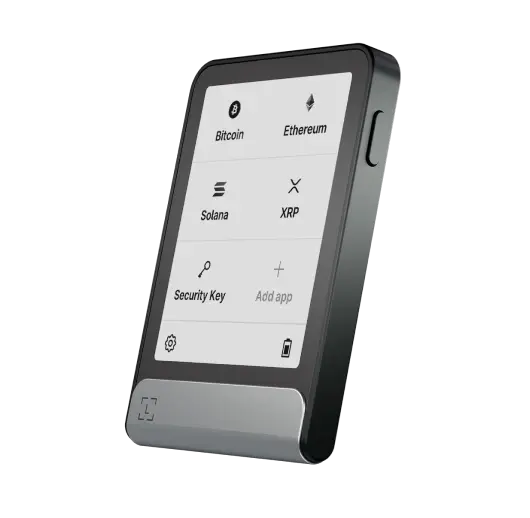
    9. Ledger Flex – A high-end option with an E Ink touchscreen display
    10. Cypherock X1 – A seedless hardware wallet with NFC-based multi-factor authentication
    11. Ledger Stax – A premium crypto wallet designed for advanced users
    12. Coinkite ColdCard Mk4 – A truly air-gapped crypto hardware wallet
    13. CoolWallet S – A highly portable credit card-like crypto wallet
    14. SecuX V20 – A robust wallet with dual connectivity and a large responsive touchscreen
    15. Tangem – A simple and lightweight hardware wallet
    16. Keystone Pro – A secure hardware wallet powered by AAA batteries
    17. Shift Crypto BitBox02 – A crypto wallet capable of connecting to full Bitcoin nodes

    The 17 best crypto hardware wallets in 2026: A detailed overview

    Over the years, many different types and brands of hardware crypto wallets appeared on the market, which makes deciding on which one to buy increasingly difficult. Hardware wallets differ greatly in backup features, the number of supported blockchains, materials used, and also price. To make the decision at least a bit easier we have prepared an overview of the best crypto hardware wallets on the market today.

    1. Ledger Nano X – The best hardware wallet for most crypto holders

    Ledger Nano X is the flagship product of French company Ledger and is often considered to be one of the best and most versatile cryptocurrency hardware wallets on the market. This hardware wallet boasts a CC EAL5+ certified secure element chip and supports over 5000 cryptocurrencies and is therefore a suitable storage option for almost any cryptocurrency user. In addition, Ledger Nano X is compatible with almost all popular operating systems, including Android, iOS, MacOS, Windows, and Linux. The hardware wallet can be connected either via USB or Bluetooth, one of the biggest differences that sets it apart from the Nano S.

    The wallet uses Ledger’s proprietary Ledger Live software, which simplifies cryptocurrency management and seed phrase generation and restoration. A small display on the hardware wallet provides the user with immediate visual feedback, making processes more intuitive. In addition, the Nano X does not only support a huge number of cryptos but can also connect with a whooping 100 applications. Integration with hot wallets like Metamask and other Web3 wallets is another advantage of the Ledger Nano X, allowing users to access DeFi platforms and blockchain dApps.

    Last but not least, Ledger’s hardware wallets have not been exploited or found to have vulnerabilities, which provides a good illustration of the company’s commitment to top-tier security standards. Although the market price of $149 sets Ledger Nano X among the more expensive crypto hardware wallets, the Nano X’s superior security and dApp integrations make it the best hardware wallet available in 2025 

    Pros of Ledger Nano X:

    • Full self-custody and control over private keys
    • Open source code for transparency
    • Very intuitive, attractive user interface
    • Built-in exchange for top rates on coin swaps
    • Based in privacy-protecting Switzerland
    • Helpful developers provide direct support
    • Fully free with no transaction fees (of course, except for blockchain miner fees)

    Cons of Ledger Nano X:

    • Currently only adaptive web interface
    • Limited language support at launch
    • New project with a short track record so far
    • Open source design means independent auditing is needed

    2. Ledger Nano S Plus – A budget-friendly option from Ledger

    Ledger Nano S Plus is a highly secure hardware crypto wallet that offers many of the features of the more expensive Nano X but at a lower price point. Ledger Nano S Plus also supports over 5,500 cryptocurrencies and allows you to install up to 100 applications. It featured the same advanced security systems as its more expensive option, including a CC EAL5+ certified security element. This hardware wallet utilizes Ledger Live software that streamlines the process of creating a new wallet or transferring your old wallet to a new platform.

    On the other hand, the Ledger Nano S Plus has a storage capacity of 1.5 MB, which is slightly less than the Ledger Nano X, which has 2 MB. While most ordinary hardware wallet users should find 1.5 MB of storage more than enough, some might miss the Bluetooth support, which Ledger Nano S Plus also lacks. However, the USB-only connectivity of the Nano S Plus eliminates the need for a battery, which makes the Ledger Nano S Plus extra light (it weighs only 21 grams). The wallet comes in five different colors, including Matte Black, Mystic White, BTC Orange, Deepsea Blue, and Ice.

    The Ledger Nano S Plus is packed with features and is available at almost half of the price of the Nano X. This makes Ledger Nano S Plus one of the most popular hardware crypto wallets. In fact, the Nano S Plus seems to continue the legacy of its predecessor, the Nano S, which was a bestseller among hardware wallets, when it launched back in 2016.

    Pros of Ledger Nano S Plus:

    • Supports more than 5,500 cryptocurrencies
    • Top-tier security (CC EAL5+ certified chip)
    • Affordable (priced at $79)
    • Among best-selling hardware wallets

    Cons of Ledger Nano S Plus:

    • No Bluetooth connectivity
    • The device’s user interface and navigation can be complicated for novice users

    3. Trezor Safe 5 – Trezor’s flagship hardware wallet

    Trezor Safe 5 is an advanced next-generation hardware wallet designed to provide top-tier security while keeping usability at the forefront. It supports over 9,000 cryptocurrencies, including Bitcoin, Ethereum, and ERC-20 tokens, and allows users to send, receive, and stake assets directly through the Trezor Suite desktop app or compatible third-party wallets such as MetaMask.

    This model introduces the new 1.54-inch Trezor Touch color touchscreen with haptic feedback, offering a more intuitive and tactile user experience compared to previous versions. Built with open-source transparency, it features an EAL 6+ Secure Element for enhanced offline and online protection. The Trezor Safe 5 also includes a microSD card slot for additional security options, and its Gorilla Glass 3 screen paired with an anodized aluminum backplate makes it both durable and premium in feel.

    For backup, users can rely on a new 20-word recovery seed with optional Multi-share Backup support, making it safer to restore wallets in case of loss or damage. The device remains PIN- and passphrase-protected, ensuring that only authorized users can access stored funds. Connectivity is handled via USB-C, and while it supports Windows, macOS, Linux, and Android, there’s still no native iOS app.

    Priced at $169, the Trezor Safe 5 stands out as a secure and refined hardware wallet choice for those who prioritize both strong encryption and modern design.

    Pros of Trezor Safe 5:

    • Vivid color touchscreen with haptic feedback
    • Durable Gorilla Glass screen and aluminum backplate
    • Supports Multi-share Backup and microSD protection

    Cons of Trezor Safe 3:

    • No native iOS support
    • Pricier than entry-level wallets

    4. Trezor Safe 7 – Next-generation Trezor wallet featuring enhanced security upgrades

    Trezor Safe 7 is the newest flagship hardware wallet from Trezor, built with a strong focus on long-term, open-source security. Priced at $249, it is the company’s most advanced model to date and the first hardware wallet marketed as quantum-ready. The device uses a dual-chip architecture that pairs the open-source Tropic Zero One (TROPIC01) chip with an NDA-free EAL6+ secure element, allowing independent security audits without relying on closed components.

    This transparent hardware design sets the Safe 7 apart from most competing wallets. By removing NDAs at the chip level, Trezor enables full third-party inspection while maintaining a high security standard. The approach reinforces Trezor’s self-custody philosophy, giving users direct control over their private keys without sacrificing verifiability or protection.

    On the hardware side, the Safe 7 features a 2.5-inch edge-to-edge color touchscreen that is noticeably larger than previous Trezor models. The wallet is housed in a single-piece aluminum body with a Gorilla Glass 3 backplate and carries an IP54 rating for basic dust and splash resistance. Bluetooth Low Energy support and Qi2-compatible magnetic wireless charging add everyday convenience, while the built-in LiFePO₄ battery is designed to last significantly longer than standard lithium batteries.

    Using the Trezor Suite interface, users can manage over 9,000 cryptocurrencies, store NFTs, and access trading, staking, and third-party DeFi services from one dashboard. All wireless communication is encrypted and authenticated through the open-source Trezor Host Protocol (THP). The Safe 7 is available in multiple color options, with a Bitcoin-only edition for users who prefer a simplified setup.

    Pros:

    • Quantum-ready security architecture with a fully auditable dual-chip design
    • Open-source components without NDAs, enabling full third-party verification
    • Large touchscreen with durable aluminum and Gorilla Glass construction
    • Bluetooth connectivity and Qi2 magnetic wireless charging support

    Cons:

    • Premium price point compared to entry-level hardware wallets
    • Larger and heavier than older Trezor models due to the expanded display

    5. ShapeShift KeepKey – A cheap hardware wallet that does not compromise on security

    ShapeShift KeepKey is a sturdy hardware wallet that is among the cheapest hardware wallets on the market today. Although KeepKey devices sell for just $49 these wallets do not compromise on security. This ShapeShift product utilizes AES hardware encryption and 2-factor authentication, which puts its security on par with the wallets listed above. KeepKey can also deploy firmware updates without being connected to the internet. However, when you do need to connect the device to a computer and the internet, you should not have any problems as KeepKey supports most systems, including PC operating systems such as MacOS, Windows and Linux, and Android mobile operating systems. Through a large OLED display that occupies the entire front surface of the device, the user is constantly informed about what is going on with his wallet and transactions.

    Nevertheless, every bargain comes with some trade-offs. In the case of ShapeShift’s KeepKey, the biggest disadvantage is the fairly limited support of different cryptocurrencies. You will be able to store Bitcoin, Bitcoin Cash, Bitcoin Gold, Litecoin, Ethereum (together with Ethereum-based tokens), Dogecoin, Dash, and nothing else. The wallet is also unable to integrate with Web3 wallets or DeFi applications. This means that even less advanced users with a diversified crypto portfolio might quickly find that the cheap KeepKey falls short of meeting all their needs. If you are, however, just looking for secure and cheap cold storage of the above-mentioned coins, KeepKey is definitely the hardware wallet to consider.

    Pros of ShapeShift KeepKey:

    • One of the cheapest hardware wallets on the market ($49)
    • Large OLED screen
    • Allows password entry and QR code viewing
    • Open-source and simple-to-use software

    Cons of ShapeShift KeepKey:

    • Very narrow list of supported cryptocurrencies
    • No support for Web3 wallet or dApp integration
    • No multi-signature support

    6. Trezor Safe 3 – A simple yet secure hardware wallet from Trezor

    Trezor Safe 3 is a dependable and affordable hardware wallet built for users who want solid protection without paying premium prices. Maintaining Trezor’s open-source transparency, it introduces a Secure Element chip (EAL 6+) to protect private keys, even in the event of physical compromise. It supports more than 9,000 cryptocurrencies and integrates seamlessly with the Trezor Suite desktop app for managing, sending, receiving, and staking crypto assets.

    Priced at $79, the Trezor Safe 3 offers great value for users who prefer simplicity and robust functionality. The 0.96″ OLED display allows easy transaction verification directly on the device, while PIN and passphrase protection reinforce security. Though it lacks microSD and touchscreen support, it remains one of the most trusted midrange wallets on the market, compatible with Windows, macOS, Linux, and Android. It also supports Tor integration and coin control for those who prioritize privacy.

    Pros of  Trezor Safe 3:

    • Secure Element chip with advanced protection
    • Trezor Suite integration for staking and privacy tools
    • Lightweight, intuitive, and affordable

    Cons of Trezor Safe 3:

    • No touchscreen or haptic feedback
    • No native iOS app
    • Lacks microSD card support

    7. Ledger Nano (5th Gen) – The newest Ledger model offering improved speed and performance

    The Ledger Nano 5th Gen is the newest model in Ledger’s Nano series, positioned between entry-level wallets and the brand’s premium devices. Priced at $179, it delivers much of the functionality found in the Ledger Flex and Ledger Stax while remaining more affordable. It also reflects Ledger’s shift in terminology, with the company now referring to its devices as “signers” to highlight their role in securely authorizing transactions rather than storing assets.

    This model is the first Nano device to feature a 2.76-inch E Ink touchscreen, replacing physical buttons with a more modern interface. Security is handled by Ledger’s CC EAL6+ certified Secure Element, which isolates private keys from the rest of the system. Bluetooth and NFC support enable wireless use across supported devices, while the lightweight plastic body keeps the wallet portable, even if it lacks the premium feel of Ledger’s higher-end models.

    The Nano 5th Gen ships with a Ledger Recovery Key, allowing users to create a PIN-protected NFC backup of their recovery phrase. This offers a more durable alternative to paper backups and improves recovery options if the primary seed phrase is lost. Inside the box, users also get a USB-C cable and recovery sheets, with asset management handled through Ledger Wallet, where users can manage thousands of cryptocurrencies, stake supported assets, and connect to Web3 applications.

    Customization is another focus, with multiple color options and support for custom lock screen images. The E Ink display contributes to strong battery efficiency and provides easy access to device settings, security controls, and advanced features such as passphrase protection and PIN shuffling. Overall, the Nano 5th Gen is designed for users who want modern interaction and strong security without stepping up to Ledger’s most expensive devices.

    Pros:

    • First Nano model to feature a full E Ink touchscreen
    • NFC-enabled recovery backup with the Ledger Recovery Key
    • Strong key isolation using a CC EAL6+ certified Secure Element
    • Wireless functionality through Bluetooth and NFC

    Cons:

    • Plastic casing does not feel as premium as Ledger Flex or Stax
    • Priced higher than previous Nano models like the Nano X
    • Touchscreen interface may not suit users who prefer physical buttons

    8. NGRAVE ZERO – Industry-leading security with EAL7 certification

    If ultimate security is your priority, the NGRAVE ZERO sets a new standard, even for highly secure wallets like Ledger and Trezor. Operating entirely offline, it uses QR code communication, eliminating the risks associated with USB, Bluetooth, or any wireless connectivity. This ensures your private keys remain completely isolated from online threats. This level of security makes it one of the best air-gapped wallets

    The wallet boasts an EAL7 certification, the highest security standard in both the blockchain and financial industries. One of its standout features is its self-destruction capability—if the device is tampered with, it automatically wipes all private keys, leaving no trace for potential attackers. This kind of proactive security is unmatched.

    The full-color touchscreen is not just visually appealing but also highly functional, making navigation and transaction verification straightforward. Another innovative feature is its light sensor technology, which securely generates private keys directly on the device, avoiding pre-set recovery phrases. For added security, the wallet pairs seamlessly with the GRAPHENE metal plate backup, offering a recovery solution as durable as the wallet itself.

    However, the NGRAVE ZERO’s exceptional security and advanced features come at a price. At just over $400, it is one of the most expensive wallets available, which may deter budget-conscious users.

    Pros:

    • Air-gapped design with QR code communication for ultimate offline security
    • EAL7 certification—highest security standard in the industry
    • Self-destruction feature wipes private keys if tampered with
    • Light sensor technology for secure, on-device private key generation
    • Full-color touchscreen simplifies navigation and transaction verification
    • Durable GRAPHENE metal plate for robust backup and recovery

    Cons:

    • High price point of over $400
    • Lack of wireless or USB connectivity might be inconvenient for some users
    • Larger size compared to slim, portable wallets

    9. Ledger Flex – A high-end option with an E Ink touchscreen display

    The Ledger Flex is Ledger’s latest mid-to-premium hardware wallet, built to balance strong security with a more comfortable user experience. It features a 2.84-inch E Ink touchscreen that makes reviewing and confirming transactions easier than on Ledger’s Nano models. The wallet supports both USB-C and Bluetooth connectivity, allowing it to work seamlessly with desktop computers, laptops, and mobile devices.

    In terms of security, the Flex uses Ledger’s EAL6+ CC-certified Secure Element, which isolates private keys from the rest of the system. Users can install up to 100 crypto applications on the device and access more than 5,500 supported assets through third-party integrations. Asset management, staking, and dApp access are handled through Ledger Wallet, giving users a single interface for everyday use.

    At $249, the Ledger Flex sits at the higher end of the hardware wallet market. This pricing makes more sense for users who transact regularly or value the larger display and customization features, such as personalized lock screens with images or NFTs. For basic cold storage or infrequent use, the cost may be harder to justify compared to simpler Ledger models.

    For users willing to spend more, Ledger’s Stax offers an even larger display and additional premium touches at a significantly higher price. The Flex positions itself as a middle ground, offering many premium features without reaching flagship-level pricing, making it a practical choice for active crypto users who want both security and usability.

    Pros:

    • Large 2.84-inch E Ink touchscreen for easy transaction review
    • EAL6+ CC-certified Secure Element for strong key protection
    • Works across desktop, laptop, and mobile devices
    • Supports both USB-C and Bluetooth connectivity

    Cons:

    • Bigger and heavier than Ledger’s entry-level wallets
    • High price compared to most hardware wallets on the market

    10. Cypherock X1 – A seedless hardware wallet

    The Cypherock X1 is a revolutionary hardware wallet that removes the need for a traditional seed phrase, solving one of the biggest vulnerabilities in crypto security. Instead of relying on a single recovery phrase, it uses Shamir’s Secret Sharing to split private keys across four encrypted NFC cards, ensuring that no single card holds the complete key. To access your funds, you’ll need at least two of these cards, making it significantly more resilient against theft, loss, or hacks.

    Unlike many other hardware wallets, Cypherock X1 operates completely offline, connecting only via USB-C to sign transactions securely. It supports over 9,000 cryptocurrencies and integrates with MetaMask, allowing seamless DeFi and NFT transactions without compromising security.

    Pros:

    • No seed phrase required – Eliminates a single point of failure
    • Multi-factor authentication – Requires at least two NFC cards for access
    • Wide asset support – Compatible with over 9,000 cryptocurrencies
    • Offline security – No Bluetooth or internet connectivity, reducing attack risks
    • Works with MetaMask – Seamless integration for DeFi users

    Cons:

    • Requires managing multiple NFC cards – Losing too many can result in fund loss
    • No Bluetooth connectivity – Some users may prefer wireless transaction signing

    11. Ledger Stax – A premium crypto wallet designed for advanced users

    Ledger Stax is the most premium hardware wallet in Ledger’s lineup, built with a strong focus on design and usability. Created in collaboration with Tony Fadell, the designer behind the iPod, the device stands out with its curved E Ink touchscreen and high-end materials. Demand has been strong since launch, with early production batches selling out shortly after becoming available.

    The Stax features a large E Ink display that makes reviewing transactions far more comfortable than on Ledger’s Nano models. It supports Bluetooth, USB-C, and wireless charging, and includes customization options such as a personalized lock screen that can display images or NFTs. Compared to the Ledger Nano X, the difference is most noticeable in screen size and presentation, as the Nano X uses a much smaller display and does not support home screen customization.

    Security remains a core focus, with the Ledger Stax using a secure element chip certified under CC EAL5+ and EMVCo standards. Private keys are kept isolated from the rest of the system, and the device relies on a standard recovery seed for wallet restoration in case of loss or damage. From a software perspective, it offers the same core functionality as other Ledger wallets, including asset management, staking, and Web3 access through Ledger Wallet.

    At $399, the Ledger Stax is difficult to justify purely on features. While the design, display, and charging options are clear upgrades, the underlying software experience is largely the same as on the Nano X or even the more affordable Nano S Plus. The Stax is best suited for users who value premium design and a large screen, rather than those looking for the best value-for-money hardware wallet.

    Pros:

    • High-end design with premium materials
    • Large curved E Ink touchscreen display
    • Supports thousands of cryptocurrencies and NFTs
    • USB-C, Bluetooth, and wireless charging support
    • Can hold up to 100 applications at once
    • Secure element chip certified to CC EAL5+ standards

    Cons:

    • Significantly more expensive than most hardware wallets
    • Interface may feel unfamiliar at first
    • E Ink display refresh rate is slower than traditional screens

    12. Coinkite ColdCard Mk4 – A truly air-gapped crypto hardware wallet

    ColdCard Mk4 is a maximum-security hardware cryptocurrency wallet produced by the Canadian crypto hardware manufacturer Coinkite. It is one of the rare hardware wallets that can be used without ever being connected to a computer, as everything from wallet creation with seed generation to transaction signing can be done without connection thanks to the natively implemented PSBT (BIP174). Nevertheless, the ability to connect to a computer exists thanks to the USB-C connector at the bottom edge of the device. ColdCard Mk4 includes two secure elements, supplied by two different manufacturers, which additionally minimizes unknown vulnerability risks. The PIN is also entered through a full-size numeric keypad, which is a bit old-school but practical and a bulletproof input method.

    ColdCard Mk4 only supports Bitcoin, but the security and utilities of this Bitcoin cold storage are unrivaled. The device features expanded multi-sig capabilities allowing it to handle big and complex Bitcoin transactions. In Coinkite’s official store, this device has a price tag of $148.

    Pros of Coinkite ColdCard Mk4:

    • Full-sized physical numeric keypad
    • Bright OLED display
    • Two independent security elements
    • A truly air-gapped hardware wallet
    • MicroSD card support for backup and data storage

    Cons of Coinkite ColdCard Mk4:

    • A Bitcoin-only hardware wallet

    13. CoolWallet S – Highly portable credit card-like crypto wallet

    CoolWallet S is a portable and durable crypto hardware wallet that stands out from its competition mainly due to its design. It comes in the form of a credit card-sized device, that has a thickness of only 0.8 mm and weighs only 6 grams. In addition, this “crypto card” is also waterproof and tamper-resistant. The wallet features a small built-in screen and a button, which is used to confirm transactions. According to the manufacturer, the device should last up to 3 months with a single battery charge.

    The wallet connects via an encrypted Bluetooth connection to most mobile devices. On top of the advanced encryption standard AES256 that secures the wireless connection, the device utilizes both biometric and physical 2FA checks to ensure your assets’ safety and has an embedded EAL5+ certified secure element. Nevertheless, the device is easy to interact with and allows a new cold wallet to be created in under 5 minutes due to the simplicity and intuitiveness of the user interface. Furthermore, the wallet features a built-in cryptocurrency swap system. You will have to spend $99 to buy one sleek CoolWallet S but the company offers a small discount if you buy two devices. If you convince a friend to buy it, too, you will have to part with only $89 per device (or $178 for both hardware wallets).

    Pros of CoolWallet S:

    • Highly portable due to its unique credit card-like design
    • Easy-to-use interface
    • Encrypted Bluetooth connection
    • Long-lasting battery (up to 3 months)

    Cons of CoolWallet S:

    • Limited cryptocurrency support

    14. SecuX V20 – A robust wallet with dual connectivity and a large responsive touchscreen

    SecuX V20 is a robust and stylish cryptocurrency hardware wallet with many useful features and a premium feel. The V20 supports over 1000 cryptocurrencies, including Bitcoin, Tether, Litecoin, Ethereum, and Stellar, and has a responsive color 2.8″ touchscreen to ensure smooth interaction. The wallet, which supports multiple operating systems, can connect either via an encrypted Bluetooth connection or a wired USB connection. When you want to establish a connection between your hardware wallet and another device via Bluetooth or USB, the connection needs to be approved on the online interface called SecuXcess, which can be found within SecuXTech.

    SecuX V20 allows for the private keys to be created and stored offline but can also integrate with third-party wallets or apps if needed. Private keys and PIN codes are stored on an EAL 5+ certified secure chip. When turning on the SecuX V20 for the first time, the user is prompted to set a 4-digit PIN code, which is later used to interact with the wallet and confirm a transaction. Another rigorous safety measure that many hardware wallets, including V20, employ is the complete wipe-out of data on the device if an incorrect PIN code is entered 4 times in a row. The device allows users to create hidden wallets, which adds an extra layer of security. You can also set a really strong password, as the device supports hidden wallet passwords up to 99 characters long. SecuX V20 has a price tag of $120.

    Pros of SecuX V20:

    • 2.8″ highly responsive color touchscreen
    • Support for multiple passwords and multiple signatures
    • Support for most PC operating systems, Chrome, iOS, and Android
    • USB and encrypted Bluetooth connectivity
    • Hidden wallet feature

    Cons of SecuX V20:

    • A bit complicated interface
    • The bulky design makes it less portable

    15. Tangem – A simple and lightweight hardware wallet

    The Tangem wallet stands out with its unique, credit card-like design. Ultra-slim and portable, it lacks a screen and instead relies on NFC (near-field communication) to connect with your smartphone or other NFC-compatible devices.

    Despite its minimalist appearance, Tangem is powerful. It supports over 6,000 cryptocurrencies and 30 blockchain networks. With an EAL6+ security standard (one of the highest available) and thorough audits by Kudelski Security, your private keys are well-protected.

    One of its most practical features is its packaging: Tangem wallets are sold in packs of up to three cards, providing built-in backups if one is lost or damaged. Adding to its appeal, the wallet comes with an impressive 25-year replacement warranty, a rarity in the hardware wallet market.

    Priced at $55, it’s a cost-effective option. However, it does require an NFC-compatible device, so you’ll need a smartphone or tablet with this capability to use it.

    Pros:

    • Ultra-portable, credit card-sized design
    • Supports 6,000+ cryptocurrencies and 30 blockchains
    • High security with EAL6+ certification and Kudelski audit
    • Affordable price point of $55
    • Comes with a 25-year replacement warranty
    • Sold in packs for easy backup options

    Cons:

    • Requires an NFC-compatible device to function
    • Lacks a screen, which some users may find limiting
    • Dependence on a smartphone or tablet for operation might not suit everyone

    16. Keystone Pro – a secure hardware wallet powered by AAA batteries

    Keystone Pro is an air-gapped hardware wallet with a range of security-focused features, including an advanced fingerprint biometric authentication system. The device supports wallet backup using Shamir backups and will self-destruct wallet keys if it detects tampering attempts. This hardware wallet is exclusively air-gapped. It cannot be connected via Bluetooth or USB even if you wanted to, as it does not support such connections. Transactions are conducted through the use of a camera and QR codes, while the device also has a 4-inch color touchscreen that displays information about transactions and wallet addresses.

    Keystone Pro is available for purchase at the price of $149. Keystone also offers an Essential version of their crypto hardware wallet. For a cheaper option that lacks fingerprint authentication, a self-destruct function, and rechargeable batteries, the Keystone Essential is priced at $119.

    Pros of Keystone Pro:

    • Large touchscreen and camera
    • Support for air-gapped transactions
    • Long battery life (powered by 4 AAA batteries)

    Cons of Keystone Pro:

    • A small onscreen keyboard makes password input difficult
    • Bad build quality and cheap materials
    • No Bluetooth or USB connectivity
    • Fairly expensive ($169)

    17. Shift Crypto BitBox02 – Crypto wallet capable of connecting to full Bitcoin nodes

    BitBox02 is a simple and easy-to-use but secure cryptocurrency wallet that supports the most popular cryptos such as Bitcoin, Ethereum, and Litecoin but also more than 1500 less-known ones. The hardware wallet is controlled through the BitBoxApp, which features a straightforward user interface. The App’s and BitBox02’s source code is open-source and has been audited by an independent security company.

    This hardware wallet, which is produced by Shift Crypto in Switzerland, employs high-level security measures and has a dual-chip design to further increase the security of the crypto storage. What sets BitBox02 apart from most other wallets is the ability to use a microSD card with the wallet’s backup information, thus eliminating the need to enter a 12- or 24-word phrase every time you want to run the wallet. In addition, when connecting to the wallet through the BitBoxApp, users can opt into Tor forwarding, which further increases the security and privacy of the wallet. Worry not, the communication between your computer and your hardware wallet is also encrypted, which minimizes the risk of man-in-the-middle exploits and attacks. For Bitcoin purists, BitBox02 is also available as a Bitcoin-only firmware, which removes ballast code and further reduces the risk of exploits.

    Pros of Shift Crypto BitBox02:

    • OLED display and responsive touch controls
    • Open-source externally audited source code
    • Tor forwarding feature

    Cons of Shift Crypto BitBox02:

    • No app for iOS devices
    • Rather expensive (139€ or $153)

    The bottom line: There are plenty of options on the market for keeping your crypto safe

    By selecting a hardware wallet with a secure backup system that is built out of robust and durable materials, users can be confident that their crypto assets are safeguarded. It is also of key importance to check that the hardware wallet of your choosing supports all your favorite cryptocurrencies.

    The prices of commercial cryptocurrency hardware wallets range from around $50 to more than $200. But even the purchase of an expensive high-end hardware wallet packed with security features should not be hard to justify if you are holding a large crypto portfolio. If, however, your portfolio is considered small, you only hold a small number of different coins and rarely interact with DeFi apps, you could do just fine with a lower-end hardware wallet. 

    Just remember that each and every hardware wallet featured on our list is incomparably safer than keeping your coins on an exchange. Do remember (and live by) the age-old crypto saying: “Not your keys, not your coins!”

    If you really want to up your crypto security game to the next level, we suggest investing in metal crypto wallets for seed phrase storage. This method of storing your seed phrase is much better than writing it down on a piece of paper, as paper is susceptible to various forms of damage.

  • 8 Meme Coins That Could Be the Next Shiba Inu

    8 Meme Coins That Could Be the Next Shiba Inu

    With its exponential growth and relentless innovation, the cryptocurrency market has seen the rise of numerous altcoins that offer unique investment opportunities. Among them, meme coins have emerged as a captivating and often controversial subgroup fueled by the power of internet memes and social media frenzy. While meme coins gained immense popularity in 2021 when Shiba Inu took the crypto sphere by storm, it is important to highlight that this subgroup of altcoins also comes with an inherent level of risk that could either make or break an investment portfolio.

    Shiba Inu, a now well-known meme coin, first saw the light of day in August 2020 but only soared to unprecedented heights during the bull market of 2021. In the period between January 2021 and October 2021, SHIB’s price grew over 85,784,180% to reach the token’s ATH (all-time high) valuation of $0.00008845 on October 28, 2021.

    Which crypto will become the next Shiba Inu?

    Here are 8 meme coins with a Shiba Inu-like explosive potential:

    1. Pepe Coin – A community-driven meme coin built upon the legacy of Pepe the Frog
    2. Dogwifhat – 2024’s most hyped meme coin
    3. Bonk – A popular meme coin on Solana
    4. Pudgy Penguins – NFT collection featuring 8,888 unique, hand-drawn penguins
    5. Floki Inu – A meme token depicting a Shiba Inu dog in a Viking hat
    6. Bone ShibaSwap – A playful decentralized trading platform
    7. Fartcoin – A meme coin devised by an AI agent
    8. Pump.fun – A Solana-based platform where meme coins are launched and traded instantly

    In the following sections, we’ll embark on a journey through the unpredictable world of meme coins, exploring the factors that make them a captivating investment in an attempt to identify those that could potentially become the next Shiba Inu.

    Examining 8 meme coins that could become the next Shiba Inu coin

    Let’s examine the meme-inspired cryptocurrencies that we believe have the potential to rally in the future due to a combination of lively communities and unique value propositions.

    1. Pepe Coin – A community-driven meme coin built upon the legacy of Pepe the Frog

    Pepe Coin (PEPE) is a deflationary meme coin launched on the Ethereum blockchain, paying homage to the Pepe the Frog internet meme created by Matt Furie. Capitalizing on the popularity of meme coins like Shiba Inu and Dogecoin, PEPE is one of the newest contenders for the title of the leading meme-based cryptocurrency. Shortly after its launch, PEPE experienced a significant surge in value, causing it to reach a market cap of $1.6 billion in late May 2023. This rapid growth attracted buyers and turned several early adopters into millionaires in the process.

    PEPE differentiates itself from other meme coins through its no-tax policy, rewarding long-term stakers through a redistributive system, and implementing a burning mechanism to ensure scarcity of the PEPE coin. Founders of PEPE, on the other hand, remain anonymous. They do, however, regularly utilize social media platforms like Twitter to promote the meme coin and cultivate its devoted community. To conclude, Pepe Coin has several unique characteristics that could make it stand out among other meme coins, also in terms of price performance.

    2. Dogwifhat – 2024’s most hyped meme coin

    Dogwifhat (WIF) is a meme coin on the Solana blockchain that has become the main representative of Solana’s meme coin scene. Dogwifhat launched in November of 2023, which almost perfectly coincided with the resurgence of the Solana ecosystem. Positioned at the right place and at the right time, WIF benefited significantly as a growing number of crypto traders started paying close attention to the Solana ecosystem.

    The Dogwifhat project is not promising any utility for the WIF token, and they don’t even provide a roadmap. The entire token revolves around an image of a Shiba Inu breed dog wearing a knitted hat, which is often edited by community members to create memes.

    Although the fact that WIF has no utility whatsoever means that the token could easily crash in value, it also ironically works in favor of the token. By not making any promises at all, the Dogwifhat team seems to have completely embraced the high-risk and speculative nature of the crypto markets.

    Dogwifhat is currently the tenth-largest meme coin by market capitalization, behind Floki Inu and SPX9600.

    3. Bonk – A popular meme coin on Solana

    Bonk is a meme coin built on the highly scalable Solana blockchain. It gained widespread attention at launch in late 2022 after being distributed through a large airdrop to members of the Solana community. According to the project’s website, Bonk aims to limit the influence of venture capital firms within the Solana ecosystem while putting more control in the hands of everyday users.

    The development team says BONK has been integrated into more than 130 products spanning gaming, betting, decentralized finance, and NFTs. The community has also launched several games that allow users to spend and earn BONK tokens, helping to expand its use beyond simple trading.

    After the initial hype faded in 2022, interest in Bonk remained quiet for much of 2023. That changed dramatically toward the end of the year, when the token surged by more than 5,600% over the final three months. This rally pushed BONK into the top 100 cryptocurrencies by market capitalization. The momentum continued into the 2024 market cycle, with Bonk reaching a new all-time high in November 2024. At the time of writing, BONK has a market cap just above $750 million, placing it just outside the top five meme coins.

    4. Pudgy Penguins – NFT collection featuring 8,888 unique, hand-drawn penguins

    Pudgy Penguins is a well-known NFT collection made up of 8,888 hand-drawn penguin characters minted on the Ethereum blockchain. Launched in July 2021, the project quickly gained recognition for its focus on community and positive branding within the NFT space. Holders, collectively referred to as “The Huddle,” are central to the project’s identity, with an emphasis on creativity, inclusivity, and shared ownership.

    The project has grown beyond digital collectibles, expanding into physical merchandise, toys, and various forms of digital content. This broader strategy is designed to connect Web3 culture with mainstream audiences and establish Pudgy Penguins as a recognizable consumer brand rather than just an NFT collection.

    Community engagement remains a core part of the ecosystem, supported by events, collaborations, and ongoing initiatives. Pudgy Penguins has also explored new on-chain concepts such as Soulbound Tokens, which are intended to strengthen digital identity and participation across its expanding ecosystem.

    5. Floki Inu – A meme token depicting a Shiba Inu dog in a Viking hat

    Floki Inu (FLOKI) is a cryptocurrency that emerged from the Shiba Inu (SHIB) community and draws inspiration from Elon Musk’s Shiba Inu dog. It aims to be the people’s cryptocurrency and serves as the utility token for the Floki Ecosystem. The project is focused on developing four flagship utility projects, including Valhalla, an NFT gaming metaverse, FlokiFi, a suite of decentralized finance products, FlokiPlaces, an NFT and merchandise marketplace, and the University of Floki, a content and education platform. The first-mentioned Valhalla project remains one of the main highlights of Floki’s development. It is an NFT gaming metaverse where players can earn rewards, battle with creatures called Vera, and engage in activities like gardening and trading assets.

    Floki is managed by a decentralized community and has a core team representing the community’s interests. The members of the Floki community, who are known as the “Floki Vikings”, take social engagement very seriously. In addition, the project has formed quite a few partnerships with prominent crypto projects like Chainlink, Trader Joe, and ApeSwap. They work towards the long-term vision of creating an autonomous and decentralized ecosystem, combining memes with utility, and exploring various use cases through NFTs, games, and decentralized finance features.

    6. Bone ShibaSwap – A playful decentralized trading platform

    Bone ShibaSwap (BONE) is the governance token of the ShibaSwap decentralized exchange (DEX), offering voting functionality to the Shib Army community. With BONE, users can vote on proposals, submit their suggestions, and gain access to future NFTs. The more BONE tokens held, the greater the voting power wielded by users. ShibaSwap, launched in July 2021, serves as an exchange platform for users to trade their SHIB tokens for other cryptocurrencies, and BONE which is an Ethereum-based token, acts as a crucial component in the Shiba ecosystem, which also includes the popular Shiba Inu (SHIB) and Doge Killer (LEASH) tokens.

    The ShibaSwap platform offers various features, including liquidity provision (DIG), staking of SHIB, LEASH, and BONE tokens (BURY), ERC-20 token swapping, earning WOOF returns (rewards), migration of Uniswap V2 liquidity to ShibaSwap for additional BONE rewards (FETCH), and access to analytics through BONEFOLIO. With Shiba Inu ranking as the second most valuable meme coin by market capitalization, having reached a high of $40B, BONE presents an enticing opportunity within this vibrant ecosystem. In addition, ShibaSwap envisions building a metaverse platform by combining SHIB, LEASH, and BONE. This development aims to create the “best Decentralized Ecosystem (DECO) on the planet,” with BONE serving as the governance token of this revolutionary DAO called Doggy.

    7. Fartcoin – A meme coin devised by an AI agent

    Fartcoin is a meme cryptocurrency developed on the Solana blockchain, originally conceived by an AI entity called Terminal of Truths. The idea for Fartcoin was first shared on the Infinite Backrooms platform, a hub where AI agents interact and exchange concepts.

    After the initial suggestion, anonymous members of the crypto community took the idea and turned it into reality using the Pump.fun launchpad. The token officially launched in October 2024 and began to gain traction with notable price increases by November of the same year.

    The inherently absurd nature of Fartcoin’s concept drew substantial attention, generating widespread publicity that further propelled its price growth. At its peak, Fartcoin achieved a market capitalization of roughly $1.5 billion.

    8. Pump.fun A Solana-based platform where meme coins are launched and traded instantly

    Pump.fun is a meme coin launchpad built on the Solana blockchain that went viral in 2024. Rather than operating as a single cryptocurrency, the platform allows users to create and launch their own meme coins instantly, with no coding skills required. This approach has made it easy to turn internet jokes, trends, and viral moments into tradable tokens within minutes.

    The platform quickly became a center for high-volume speculative activity on Solana, with thousands of new tokens being created every day. Most of these projects are short-lived, but a small number have managed to build active communities and secure listings on centralized exchanges.

    By removing technical and financial barriers, Pump.fun has changed how meme coins come to market. Its model has accelerated the pace of token creation on Solana and reinforced the trend toward fast, community-driven meme coin launches.

    So, which crypto could become the next Shiba Inu?

    Gone are the days when meme coins were underestimated and disregarded by crypto investors. Especially after Dogecoin’s and Shiba Inu’s remarkable performance in 2021, crypto enthusiasts often and eagerly seek the next best meme coin. In addition, meme tokens often boast strong communities and a high potential for deploying decentralized apps and projects. Perhaps also because of this, it is nowadays not a rarity that meme coins appear on lists of the best cryptocurrencies to invest in.

    In this article, we presented the top 8 meme coins that we believe have a high potential to be the next coin to explode, with the reasoning behind each token’s inclusion. To conclude, we are adding a concise table of all the featured meme coins along with each token’s basic market data.

    NameTickerBlockchain PlatformLaunchedMarket Cap*
    Pepe CoinPEPEEthereumApril 2023$2.06 billion
    DogwifhatWIFSolanaNovember 2023$325 million
    BonkBONKSolanaJanuary 2023$777 million
    Pudgy PenguinsPENGUSolanaDecember 2024$603 million
    Floki InuFLOKIBNBJuly 2021$405 million
    Bone ShibaSwapBONEEthereumJuly 2021$18 million
    FartcoinFARTCOINSolanaOctober 2024$1.21 billion
    Pump.FunPUMPSolanaJuly 2025291 million

    *Market capitalization data as of January 21, 2026.

    However, if you are a slightly more conservative investor, you might find some less memeable digital asset investment ideas in our top altcoin picks and the best long-term cryptos articles. In any case, it is crucial for you to conduct your own due diligence before making any investment decisions. 

  • Next Crypto to Explode: Top 12 Picks for 2026

    Next Crypto to Explode: Top 12 Picks for 2026

    Next Crypto to Explode: Top 10 Picks for 2023

    Forecasting which is the next cryptocurrency to explode is always a daunting task, as it is very challenging to predict how the market will behave in the rest of 2026 and the future. At the same time, the fact that a few projects have a much higher likelihood of performing exceptionally well compared to the rest remains almost undisputed.

    Which is the next cryptocurrency to explode in 2026?

    When trying to identify the next big crypto project and evaluating what crypto is going to explode next, it is important to consider several factors. Most important are the project’s fundamentals, such as the technology it uses, its potential use cases, and the team that stands behind it. However, one should not omit external factors such as regulation, market sentiment, and economic conditions from its analysis. 

    Taking all these factors into account, we have compiled a list of the 12 most promising blockchain projects that have the potential to explode in 2026:

    1. Kaspa – An Innovative layer 1 distributed ledger
    2. Sui – A revolutionary scalable smart-contract-enabled blockchain
    3. Filecoin – A decentralized blockchain-based file storage network
    4. Solana – A fast and low-cost blockchain for decentralized apps and finance
    5. Polygon – A leading layer 2 solution for faster and cheaper transactions
    6. XRP – An ISO 20022-compliant remittance-focused cryptocurrency
    7. Mina Protocol – A lightweight blockchain utilizing recursive zk-SNARKs
    8. Rocket Pool – A sophisticated decentralized Ethereum staking platform
    9. Cronos – A smart-contract-enabled blockchain environment by Crypto.com
    10. Shiba Inu – The second most popular meme-inspired cryptocurrency
    11. Toncoin – A blockchain project originally designed by the Telegram team
    12. Render Network – Decentralized network for GPU power

    As you can see, our selection consists of several established market leaders that still have a large room to grow, mixed with a few promising newcomers, whose native cryptocurrencies could be the next in line to go on a bull run. In the remainder of the article, we will explore the reasoning behind each crypto’s placing on our list of the next cryptos to explode in 2026.

    1. Kaspa – An Innovative layer 1 distributed ledger

    Kaspa is a Layer 1 cryptocurrency that takes a different technical approach compared to traditional blockchains by using a blockDAG (Directed Acyclic Graph) architecture instead of a linear chain of blocks. More specifically, Kaspa is built on GHOSTDAG, a protocol that allows multiple blocks to be created and confirmed in parallel rather than forcing them into a single chain.

    This unique design enables Kaspa to add new blocks extremely quickly, currently at a rate of one block per second, while maintaining high security and decentralization. Thanks to its architecture, the network can process transactions efficiently with minimal fees, even under higher network load. Kaspa is secured by proof of work and uses the k-HeavyHash algorithm, a modified version of Bitcoin’s SHA-256, making the network permissionless and open to anyone who wants to participate as a miner.

    Why could Kaspa be the next cryptocurrency to explode in 2026?

    Kaspa has already proven itself as one of the strongest-performing crypto assets in recent years. In 2024, it emerged as one of the most profitable cryptocurrencies to mine and gained roughly 59% against the US dollar in 2025. This strong performance highlights growing interest from both miners and long-term investors.

    Another major catalyst for Kaspa came when Marathon Digital, one of the largest cryptocurrency mining companies in the United States, announced the launch of its Kaspa mining operations. Marathon has invested heavily in Kaspa mining hardware, including Bitmain’s KS3, KS5, and KS5 Pro miners, and expects to control around 16% of Kaspa’s global hashrate once its full deployment is complete. The company cited Kaspa’s fair launch, advanced technology, and strong market position as key reasons for expanding beyond Bitcoin mining.

    That said, investors should also keep expectations realistic. Kaspa is no longer a low-cap project, with a market capitalization of around $1.2 billion, ranking it among the top crypto assets by market value. While this could limit the scale of future gains compared to smaller projects, Kaspa’s technology, mining adoption, and growing network activity still position it as a strong contender for further upside in the coming years.

    2. Sui – A revolutionary scalable smart-contract-enabled blockchain

    Sui is an emerging Layer 1 blockchain and smart contract platform that aims to make digital asset ownership fast, private, secure, and accessible to everyone. Similarly, to Aptos, the platform is based on the Move programming language. Sui enables parallel execution, sub-second finality, and the creation of rich on-chain assets. Due to the horizontal scalability of both processing power and storage, Sui will be able to support a wide range of applications at unrivaled speed and low cost. Sui was founded by former executives and lead developers of Meta’s Novi Research.

    Why could Sui be the next cryptocurrency to explode in 2026?

    Once fully deployed, Sui will provide a platform, on which creators and developers could easily build user-friendly applications. At the same time, Sui aims to solve the common pain points of first-generation blockchains, such as scalability issues and a lack of, or at least very expensive on-chain storage. This revolutionary up-and-rising blockchain could turn out to be the next disruptive project in the crypto space and even dethrone the established smart blockchains.

    In fact, SUI has already attracted a large number of cryptocurrency investors, who went on a spending spree as soon as SUI started trading on Binance. This caused SUI’s price to explode from its Launchpool price of just $0.10 to $1.84 just moments after the trading commenced. This indicates that at least part of the community may have already recognized SUI’s enormous potential.

    3. Filecoin – A decentralized blockchain-based file storage network

    Filecoin is a decentralized network that enables users to rent their unused hard drive space and receive FIL, the platform’s native cryptocurrency, in exchange. The project launched its highly anticipated mainnet on October 15, 2020, after having successfully raised $205 million through an ICO already back in 2017.

    To ensure secure and accurate data storage, Filecoin uses a proof-of-replication consensus mechanism. By incentivizing users to offer storage space, the platform established a decentralized data storage network, which provides a more affordable and efficient data storage alternative to centralized cloud storage providers.

    Why could Filecoin be the next cryptocurrency to explode in 2026?

    With the growing adoption of decentralized protocols and the increased demand for Web3 solutions, the need for decentralized storage is expected to rise. As already mentioned, Filecoin offers a file storage solution that is not only more cost-effective but also more reliable compared to its centralized counterparts – the cloud storage providers.

    These advantages position Filecoin as a big beneficiary of the transition to Web3 and a potential major player in the future of the crypto industry.

    4. Solana – A fast and low-cost blockchain for decentralized apps and finance

    Solana is a smart contract-enabled blockchain platform that prioritizes scalability. With an impressive throughput of 65,000 transactions per second and incredibly low transaction fees, Solana is viewed as a formidable competitor to Ethereum. It achieves such high efficiency through a novel proof-of-history consensus algorithm and timestamping system.

    Consequently, Solana is highly sought after by a variety of non-fungible token (NFT) projects and decentralized finance application developers. Solana’s significant financial backing from major investors such as Polychain and Andreessen Horowitz ensures ample resources for the future development of its ecosystem, further cementing its appeal to blockchain developers.

    Why could Solana be the next cryptocurrency to explode in 2026?

    Solana is one of the top high-performance smart blockchains in the world that can cater to the needs of hundreds of DeFi, NFT, and other projects. Interestingly, SOL currently trades at around $20, far from its ATH of $260 achieved in November 2021, despite the concurrent growth in Solana adoption. This leaves SOL a lot of space for potentially fast price growth.

    In addition, Solana is one of the most progressive blockchains when it comes to the integration of artificial intelligence (AI). The Solana developers recently integrated a special ChatGPT plug-in, which allows users to query on-chain data directly from ChatGPT. If Solana follows through on even more thorough AI integration, SOL could go a long way.

    5. Polygon – A leading layer 2 solution for faster and cheaper transactions

    Polygon, formerly known as Matic Network, is a leading layer 2 scaling solution for Ethereum that addresses the scalability limitations of the largest smart contract blockchain.

    Polygon uses multiple proof-of-stake sidechains and regularly pushes data to Ethereum to create network checkpoints, which allows it to achieve higher speeds, significantly higher throughput and, most importantly, lower fees. As a result, Polygon has become an attractive platform for developers of decentralized apps and has established itself as a leading player in the DeFi sector.

    Why could Polygon (MATIC) be the next cryptocurrency to explode in 2026?

    Polygon has emerged as the top Ethereum layer 2 solutions over the past few years. In addition, the project offers a variety of payment, non-fungible token (NFT), and DeFi-focused solutions. What is more, the project has lately been especially successful at securing partnerships with major global corporations, such as Disney, Reddit, Nubank, and others. Assuming that Polygon maintains its strong momentum from 2022, which is likely, MATIC’s price could easily climb higher.

    While some investors may be concerned that layer 2 solutions could become redundant as Ethereum’s scalability improves, Vitalik Buterin himself recently emphasized that they will continue to play a crucial part in the Ethereum ecosystem. To conclude, Polygon’s new partnerships, innovative features, and solutions to Ethereum’s scalability challenges are drawing attention from more and more established businesses, making Polygon a promising platform for future development and MATIC a potentially very lucrative investment.

    6. XRP – An ISO 20022-compliant remittance-focused cryptocurrency

    Ripple Network was launched in 2012 by Chris Larsen, Jed McCaleb, and Arthur Britto with an aim to facilitate fast and cost-effective cross-border payments and improve the traditional banking system. Ripple uses a unique Ripple Protocol consensus algorithm (RPCA) to validate transactions, which is not proof-of-work nor proof-of-stake but instead relies on a distributed agreement protocol to increase processing speed and efficiency. The Ripple Network is ISO 20022-compatible and, perhaps also due to this, well connected to the traditional payment systems.

    The blockchain’s native cryptocurrency is XRP, whose total supply is fixed at 100 billion coins. At launch, 80% of the XRP supply was given to the fintech firm Opencoin, now known as Ripple Labs. Ripple Labs still holds over half of the total XRP supply. Coins are mostly locked in escrow wallets, and a small portion of XRP is released each month.

    Why could XRP be the next cryptocurrency to explode in 2026?

    XRP has established a distinct role in the crypto ecosystem by focusing on fast and low-cost value transfers. This gives it a solid long-term use case, especially in areas where transaction speed and efficiency are critical. As global remittance volumes continue to rise, solutions like ODL could become more widely used by institutions looking to move funds across borders without relying on slow and costly traditional systems.

    The XRP Ledger has also demonstrated reliability and efficiency over more than a decade in operation. Its consensus mechanism sidesteps the energy demands associated with Proof-of-Work networks while still supporting a high volume of transactions. Ongoing partnerships with banks, payment providers, and financial services companies could further reinforce XRP’s position as blockchain adoption in payments expands. If these integrations keep growing, XRP could continue to stand out as a strong long-term cryptocurrency.

    7. Mina Protocol – A lightweight blockchain utilizing recursive zk-SNARKs

    Mina Protocol is a blockchain that prioritizes simplicity and accessibility. It is known for being the world’s lightest blockchain, with a network size of just 22 KB. The project was initially launched as Coda Protocol in 2017 but underwent a rebranding to Mina Protocol in October 2020.

    Unlike other blockchains that grow in size as adoption and traffic increase, Mina’s size is designed to remain constant. This unique feature allows for easy access and low system requirements for users interacting with the blockchain. Despite its ultra-small size, Mina maintains a secure and decentralized network using zero-knowledge proofs technology also known as zk-SNARKs.

    Why could Mina Protocol be the next cryptocurrency to explode in 2026?

    Mina Protocol has actually already exploded soon following its launch in the period between July and September 2021, when it saw a surge of over 500%. Nevertheless, most of its gains were erased during the 2022 bear market. Once the market sentiment shifts again, Mina Protocol has the potential to recover a significant portion of its losses.

    In addition, Mina’s size and low system requirements are the blockchain’s unique characteristics, which could come in handy if or when blockchain-based solutions break through to less-powerful electronic devices such as microchips on the Internet of Things (IoT).

    8. Rocket Pool – A sophisticated decentralized Ethereum staking platform

    Rocket Pool is a decentralized staking platform for Ethereum that enables users to participate in the staking process, even if they hold less than the required 32 ETH. With Rocket Pool, users can stake as little as 0.01 ETH. After staking ETH, users receive rETH, which is a tokenized staking deposit token. The amount of rETH on their account grows with time as staking rewards are also paid out in rETH. rETH can be swapped for ETH and vice versa at any given moment.

    The protocol also allows users to offer staking node services to the pool. Node operators can reach higher returns by participating in Rocket Pool than by staking solo but are required to monitor and maintain smooth uninterrupted operation of their staking node. The governance token for the protocol’s DAO is RPL, which also serves as incentives and insurance for the value behind rETH in the event of penalties or slashing.

    Why could Rocket Pool be the next cryptocurrency to explode in 2026?

    With the increasing demand for generating passive income with ETH through staking, services like Lido and centralized solutions offered by several centralized exchanges have gained popularity among crypto investors. If this trend continues, Rocket Pool, one of the leading decentralized Ethereum staking platforms, is expected to emerge as one of the best-performing crypto assets in 2026.

    9. Cronos – A smart-contract-enabled blockchain environment by Crypto.com

    Cronos is the leading Ethereum Virtual Machine (EVM)-compatible layer 1 blockchain network built on the Cosmos SDK. The blockchain is developed by Crypto.com cryptocurrency exchange and is designed to seamlessly interact with Ethereum-native decentralized applications (dApps).

    Cronos also aims to provide faster transactions and lower fees compared to the Ethereum mainnet. Cronos achieves this by utilizing a Proof of Authority consensus algorithm, which allows for faster block confirmations and higher throughput. Cronos’ native token is CRO. The token can be used for staking, governance, as a medium of exchange within the network, as well as to get benefits and discounts when using Crypto.com’s services.

    Why could Cronos be the next cryptocurrency to explode in 2026?

    Firstly, as an exchange-backed token, CRO price is not only related to the current traffic and use cases on the Cronos network but also to the benefits it can provide to Crypto.com users. Throughout the last few years, this has caused the CRO price to drop despite the Cronos ecosystem experiencing continued growth and expansion. As a result, CRO trades more than 93% below its ATH price today. This either means that CRO was overbought for the perks it provided in the past or that the token is significantly undervalued today. Whatever the case, CRO price could spike again if Crypto.com reintroduces some of the perks, which could happen in the next sustained bullish period.

    In addition, the Cronos community has recently proposed to decrease CRO’s inflation rate by implementing a burning mechanism. According to the proposal, 15% of fees in each transaction would be transferred to a community pool and then periodically burned as per the approval from the project’s governance community. This could significantly reduce the growth of CRO’s available supply and drive the price of CRO up in the long run.

    10. Shiba Inu – The second most popular meme-inspired cryptocurrency

    Shiba Inu (SHIB) is a blockchain platform that was launched in August 2020. It started as an “experiment in decentralized community building” but quickly gained attention due to its unprecedented market run. The project is managed by the pseudonymous Shytoshi Kusama, a volunteer project lead, and has a massive social media following known as the “Shib Army.”

    Throughout the years Shiba Inu has evolved from merely an experimental blockchain to a fully functional environment for various decentralized applications. The project’s ecosystem includes the native ShibaSwap decentralized exchange, SHIB Burning Portal, as well as several NFT and metaverse projects. The ecosystem is powered by a trio of tokens: SHIB, LEASH, and BONE. SHIB, the platform’s primary incentive token, is firmly positioned among the top 20 cryptocurrencies with the largest market capitalization.

    Why could Shiba Inu be the next cryptocurrency to explode in 2026?

    Shiba Inu (SHIB) has the potential to be the next crypto to explode due to several factors. Firstly, the upcoming launch of Shibarium, a layer 2 solution for the Shiba Inu blockchain, could lead to improved transaction speed and lower transaction costs. Additionally, the effect of SHIB burning could potentially decrease the circulating supply of the token, which may drive its price higher in the long term.

    It has to be noted that SHIB burning is a bit unpredictable as it doesn’t follow any fixed schedule or mechanism but rather represents the community members performing gamified tasks or sending their SHIB to a so-called “dead wallet” during burning events or parties. Nevertheless, the community seems very eager to destroy enough tokens to push the price of SHIB above 1 cent. With these developments, SHIB could see another massive market rally soon.

    11. Toncoin – A blockchain project originally designed by the Telegram team

    Toncoin is the native asset of TON Blockchain, a decentralized blockchain platform originally designed by the team behind the popular encrypted messaging app Telegram.

    TON Blockchain supports smart contracts functionality, and achieves consensus through Proof-of-Stake. However, we should mention that the project also implemented Proof-of-Work for a limited amount of time to determine the initial distribution of TON coins and ensure a fair and decentralized launch.

    Even though it started under Telegram’s wing, TON Blockchain transitioned to being developed by the community and is no longer officially affiliated with Telegram. Nevertheless, the Telegram app continues to roll out various integrations with Toncoin. For example, users can store, send and receive TON coins directly from the Telegram application.

    Why could Toncoin be the next cryptocurrency to explode in 2026?

    Toncoin continues to be closely integrated with the Telegram messenger, which has a massive userbase of around 950 million people worldwide. In 2024, we saw the rapid growth of Telegram mini apps such as Notcoin and Hamster Kombat, which provided a gamified way for users to engage with the TON Blockchain ecosystem and earn tokens as a reward.

    Recently, the TON Foundation announced a major partnership with Jupiter to create a new liquidity aggregator on the TON Blockchain. Jupiter is known for its impressive success on the Solana blockchain, where it enables efficient token swaps. With players such as Jupiter becoming involved with TON Blockchain, 2026 could be the year when TON Blockchain becomes a powerhouse in DeFi (decentralized finance).

    12. Render Network – Decentralized network for GPU power

    The Render Network is a decentralized platform that connects users in need of GPU rendering with those who have unused GPU capacity. The platform simplifies access to GPU rendering while enabling hardware owners to earn income from their computer’s idle resources.

    While Render Network is not specifically focused on AI, it plays a supportive role in meeting the growing demand for AI by providing GPU computing power, which is essential for technologies like ChatGPT. The platform already facilitates image generation using deep learning models such as Stable Diffusion.

    Initially, Render Network’s incentive system operated on the Ethereum blockchain. However, the project has since migrated its RENDER token to Solana, which has become the go-to platform for dePIN projects aiming to scale to larger user bases.

    Why could Render Network be the next cryptocurrency to explode in 2026?

    RENDER is a solid option if you’re expecting an altseason in 2026 since it covers two of the most hyped investment sectors at the moment – AI (artificial intelligence) and dePIN (decentralized physical infrastructure networks).

    Although the Render Network project is certainly more of a dePIN project than it is an AI project, RENDER has benefited significantly from generative artificial intelligence, as the network can harness computing power to generate images using deep learning models.

    Notably, Render Network has established a partnership with OTOY, Stability AI and Endeavor to create intellectual property and infrastructure for technologies powered by artificial intelligence. One of the key goals of the partnership is to optimize Stability AI’s models to operate on the Render Network.

    The bottom line – There are several crypto candidates that could see explosive growth in 2026

    As previously stated, successfully identifying what is the next crypto to explode requires thorough research and, admittedly, also quite some luck. Nevertheless, the 12 cryptocurrencies we have listed hold a relatively high potential for significant price increases in the rest of 2026. Furthermore, each of these cryptocurrencies has one or more distinctive features that set it apart from the rest of the crypto projects, which could bode very well for the project in certain situations.

    If you are, however, a long-term investor, who is not constantly on the search for the next big thing in crypto and you prefer HODLing, we recommend you read through our picks for the best cryptocurrencies to buy today for the long-term.

  • 10 Best Crypto to Buy Today for Long-Term

    10 Best Crypto to Buy Today for Long-Term

    10 Best Crypto to Buy Today for Long-Term

    Investing in cryptocurrency has been gaining popularity ever since Bitcoin’s genesis back in 2009. While initially, the cryptocurrency sector was flooded with people trying to make a quick buck through a few speculative trades, the time frame of most crypto investments has been gradually shifting toward the long term as the sector matures.

    In fact, many investors today consider cryptocurrency a viable long-term investment asset class. Those investors who believe that crypto will appreciate in the long run and therefore keep their coins and tokens safely stashed in their digital wallets are referred to as “HODLers” in the crypto jargon.

    Which crypto to buy today for long-term HODLing?

    In this article, we will explore the best long-term cryptocurrency investments, based on factors such as market capitalization, adoption rate, and the technology behind the project. Whether you are already a seasoned investor or new to the world of cryptocurrency, this guide will provide valuable insights into which crypto to buy today for the best long-term returns.

    In our opinion, the best long-term crypto investments are:

    1. Bitcoin – The world’s first and most renowned cryptocurrency
    2. Ethereum – The largest smart contract and dApp environment
    3. BNB – The native token of the BNB Chain and the Binance ecosystem
    4. Cardano – A proof-of-stake blockchain with a vibrant community 
    5. Polygon – A leading layer 2 scaling solution for faster transactions
    6. Polkadot – A blockchain network specialized in cross-chain transfers
    7. Uniswap – A decentralized exchange with an automated market maker
    8. XRP – A cryptocurrency for cross-border payments and settlement
    9. Filecoin – A decentralized file storage network
    10. Chainlink – The leading decentralized oracle network for secure data feeds

    Exploring the best long-term crypto projects

    This section will highlight 10 cryptocurrency projects that have demonstrated longevity or are strategically positioned for future growth. The list includes payment-focused cryptocurrencies, smart contract platforms, DeFi protocols, and more. We’ll explore the unique value propositions of each project and why they stand out for long-term investment potential.

    1. Bitcoin – The world’s first and most renowned cryptocurrency

    Bitcoin is the world’s first truly decentralized digital cryptocurrency. It was launched on the 3rd of January 2009 by Satoshi Nakamoto, whose real identity has remained a mystery to this day. The Bitcoin blockchain is a public ledger that is secured by a proof-of-work consensus algorithm. This requires miners to put in computational work to solve complex cryptographic problems and process transactions. For their work, miners can be rewarded with transaction fees and block rewards. The block reward decreases every four years in an event called the Bitcoin halving. This caps the total Bitcoin supply at 21 million coins and generates deflationary pressure.

    While Bitcoin started out as a niche project that mainly interested cryptography enthusiasts and “cypherpunks”, it didn’t take long for a wider audience to recognize the distinctive features of Bitcoin, leading to the emergence of a lively global market for BTC by 2012. The all-time high price for 1 BTC, which sits at $126,025, was reached in October 2025.

    Why is Bitcoin a good crypto to buy today for the long term?

    If you believe cryptocurrency has long-term potential, it’s hard to argue that Bitcoin won’t remain one of the leading assets in the space. It is still the largest cryptocurrency by market capitalization, and while it could eventually be overtaken, Bitcoin is likely to continue playing a central role in the market.

    Bitcoin is also a compelling long-term holding due to its predictable monetary policy. Its supply is capped at 21 million BTC, meaning no more than that will ever exist. The issuance of new coins is highly transparent and can be estimated with precision thanks to scheduled halvings and mining difficulty adjustments. Because of this, many investors see Bitcoin as sound money, which helps support long-term demand and can aid price recovery during market downturns.

    Beyond its monetary design, the Bitcoin network has proven resilient, securing significant amounts of value for more than a decade. Long-term holders have historically seen strong returns, and confidence in the protocol is likely to grow as long as it continues to operate reliably. Institutional interest has also increased since the launch of spot Bitcoin ETFs in early 2024, reinforcing BTC’s position as one of the strongest long-term crypto investments for 2025 and beyond.

    2. Ethereum – The largest smart contract and dApp environment

    Ethereum is an open-source blockchain that pioneered smart contract functionality in 2015. While the Ethereum network can also facilitate transfers of value between different Ethereum addresses, its key added value is in the execution of various smart contracts. Throughout their existence, Ethereum’s smart contract capabilities have facilitated numerous blockchain-powered innovations such as ICOs, DeFi, NFTs, and DAOs.

    Ethereum’s native asset, Ether (ETH), currently holds the position of the second-largest cryptocurrency by market capitalization. In addition, the Ethereum network hosts numerous ERC20 tokens (from exchange tokens to DeFi tokens and stablecoins), which further extend the Ethereum environment’s reach, liquidity, and utility.

    Why is Ethereum a good crypto to buy today for the long term?

    Ethereum is one of the most established cryptocurrencies and currently has the second-largest market capitalization after Bitcoin. It also ranks just behind Bitcoin in terms of institutional interest and access through traditional financial markets, with ETH products widely available to both retail and professional investors.

    The network is supported by a large and active community of developers and users who continue to expand its functionality. This strong ecosystem has allowed Ethereum to drive many of the most important innovations in crypto, including decentralized finance, NFTs, and smart contract standards, and it remains a key platform for new blockchain applications.

    In September 2022, Ethereum completed its transition from proof of work to proof of stake. This shift significantly improved the network’s energy efficiency and laid the groundwork for future scalability upgrades. In 2023, the Shanghai and Capella upgrades enabled ETH staking withdrawals, reducing risk for validators and making staking more accessible. More recently, the Dencun upgrade in 2024 introduced proto-danksharding, which sharply reduced transaction costs for layer 2 networks and improved overall scalability.

    Ethereum’s monetary dynamics have also changed meaningfully. The implementation of EIP-1559 in August 2021 introduced a fee-burning mechanism that permanently removes a portion of ETH from circulation with every transaction. Since its launch, several million ETH have been burned, slowing supply growth and, during periods of high network activity, pushing ETH issuance toward deflation. Together, these developments have strengthened Ethereum’s position as a long-term crypto asset with strong fundamentals.

    3. BNB – The native token of the BNB Chain and Binance ecosystem

    BNB is a cryptocurrency that was launched by Binance, one of the largest cryptocurrency exchanges in the world. Initially called the Binance Coin, this ERC-20 standard token was used to pay for trading fees and other services on the Binance exchange with a discount. However, Binance launched its own blockchain, the Binance Chain, in April 2019, and BNB was migrated from the Ethereum blockchain to the Binance Chain shortly thereafter.

    This is how BNB became the native asset of the BNB chain and was granted a whole new range of utility. The BNB chain is a smart chain that facilitates fast transactions and lower fees compared to the Ethereum network, which made it a popular choice among users and developers. BNB has a limited supply of 200 million coins.

    Why is BNB a good crypto to buy today for the long term?

    As the native cryptocurrency of the Binance exchange, BNB’s success is largely tied to the success of this international cryptocurrency conglomerate, which operates one of the largest and most popular cryptocurrency exchanges in the world. While Binance has a large and active user base and a strong track record of innovation and development, you should be aware that, despite being decentralized on paper, BNB is, in fact, quite centralized because of its strong ties to Binance. To invest in BNB for the long term, you should therefore trust in the success of Binance in the long run.

    The price of BNB is predicted to surpass $1,000 in early 2026, according to the algorithm.

    Binance offers plenty of bonuses for BNB holders, such as reduced trading fees, the ability to participate in Binance Launchpad, BNB staking, and even earning cashback when paying with the Binance VISA Card. 

    Binance also regularly conducts buybacks and burns of BNB tokens using a portion of its profits, thereby reducing the total supply, and potentially increasing the value of each coin. In addition to the quarterly BNB burns, the BNB chain also employs a real-time burning mechanism introduced by BEP95 (BNB Chain equivalent of EIP-1559 on Ethereum). Holders of the BNB cryptocurrency should be aware that if there are any issues with Binance as a business (like we’ve seen with the recent SEC lawsuits against the Binance exchange and BUSD creator Paxos), the value of BNB will also likely take a hit.

    4. Cardano – A proof-of-stake blockchain with a vibrant community

    Cardano is a decentralized blockchain platform created to provide secure, transparent, and sustainable infrastructure for decentralized applications and transactions. Founded by Charles Hoskinson, a co-founder of Ethereum, Cardano uses a proof-of-stake consensus mechanism to validate transactions on its network. The blockchain was designed with a rigorous academic approach and features a layered architecture and built-in treasury system for easy maintenance and future upgrades.

    Its native cryptocurrency is ADA, which is used to pay for transaction fees and as a store of value. Cardano’s potential for faster, scalable, and cost-effective transactions, as well as its commitment to sustainability, has gained attention from investors and traders for various use cases, including DeFi and NFTs.

    Why is Cardano a good crypto to buy today for the long term?

    Cardano has a rather large developer community and a very active user base. Perhaps also because of this, the blockchain is steadily receiving upgrades to improve its scalability and smart contract capabilities. The high scalability, ultimate efficiency, and continued improvement of the protocol make Cardano one of the top contenders among the smart contract-enabled chains.

    Cardano is famous for its commitment to rigorous scientific research and development principles. While such a methodical approach allows Cardano to avoid the pitfalls encountered by projects with rushed development, it also has its drawbacks. For example, Cardano has been rather slow at capitalizing on important trends such as DeFi and NFTs. Nevertheless, this could suggest that the growth of Cardano is more sustainable and less hype-driven than that of other comparable projects.

    As the platform’s smart contract functionality evolves further, we will likely see a growing number of interesting decentralized applications launch on this incredibly scalable platform. To conclude, Cardano remains a promising blockchain platform with strong potential for growth in the long term.

    5. Polygon – A leading layer 2 scaling solution for faster transactions

    Polygon is a Layer 2 scaling solution for Ethereum, designed to solve the blockchain’s scalability limitations. Previously known as Matic Network, Polygon uses multiple proof-of-stake sidechains to regularly push data to Ethereum for network checkpoints. With two bridges facilitating seamless asset transfers between Ethereum and Polygon, users benefit from supersonic speeds and high throughput, as well as easy and swift exits to the Ethereum mainnet.

    Polygon’s features have made it an attractive option for DeFi projects, establishing it as a leading player in the DeFi sector. Developers and businesses are taking note of its solutions to Ethereum’s scalability challenges, making Polygon a promising platform for innovation.

    Why is Polygon a good crypto to buy today for the long term?

    The largest fear of investors in Polygon has been that the project will become obsolete as the Ethereum mainnet receives additional scalability-focused upgrades. Nevertheless, even after more than a year following Ethereum’s transition to PoS, Polygon continues to complement Ethereum by further amplifying its scalability and facilitating interoperability with other blockchain networks. Even after Ethereum developers deploy sharding, it is far more likely that Polygon will shift its focus to other use cases than straight up disappear, causing MATIC’s price to crash.

    Polygon has lately achieved considerable success and adoption in the NFT sector. The popular Layer 2 solution has secured partnerships with several mainstream companies, including Reddit, Starbucks, DraftKings, and Robinhood, indicating its potential as a significant beneficiary if blockchain-based applications and NFT-based collectibles gain mainstream popularity.

    In addition, the Polygon network has maintained a high level of activity even during past bear market conditions. This is a significantly positive sign that reflects the network’s utility and the project’s long-term vision, which are independent of current market conditions.

    6. Polkadot – A blockchain network specialized in cross-chain transfers

    Polkadot is a next-generation blockchain platform that addresses issues of interoperability and scalability through the use of parallelly-run chains, also called parachains. Similarly to Cardano, the Polkadot project was created by one of the developers initially involved with Ethereum; the founder of Polkadot is Ethereum co-founder Gavin Wood. The platform is designed to allow different blockchains to connect and communicate with each other, creating a seamless network of various blockchain ecosystems.

    Polkadot uses a unique consensus mechanism known as nominated proof-of-stake (NPoS) and allows for cross-chain communication, enabling the creation of decentralized applications that can leverage the features and functionalities of multiple blockchains. The platform utilizes a native currency called DOT.

    Why is Polkadot a good crypto to buy today for the long term?

    Polkadot’s unique value proposition as a platform for cross-chain communication and interoperability has attracted significant attention from developers and investors.

    The platform’s modular design allows for not only flexibility and upgradability but also virtually unlimited room for growth. In addition, each parachain can be customized to best accommodate the specific needs of each project. The use of parachains will allow Polkadot to capitalize on any new trends that will emerge in the crypto space in the future.

    Last but not least, Polkadot has repeatedly stayed within the Top 50 highest market cap cryptocurrencies and already has a vibrant ecosystem of developers and projects building on the platform. This could indicate that the ecosystem has a potential for continued growth and innovation in the long term, making Polkadot one of the most promising blockchain platforms currently available.

    7. Uniswap – A decentralized exchange with an automated market maker

    Uniswap is an automated market maker (AMM) protocol that enables quick and easy swaps between different Ethereum-based tokens. Its governance token, UNI, is an ERC-20 token that allows holders to vote on proposals that determine the future of the platform.

    In the past, Uniswap has been struggling with high fees on the Ethereum network, which have caused a decline in its user base and market share. Rather than giving up, the project answered by implementing upgrades that improved its services and reduced fees. Two major milestones were the release of Uniswap V3 in March 2021, which implemented an improved version of the AMM protocol, and the launch of the Uniswap protocol on two Ethereum Layer 2 networks in July 2021.

    Why is Uniswap a good crypto to buy today for the long term?

    Uniswap is a decentralized exchange protocol that allows users to trade cryptocurrencies without the need for intermediaries. With over $4.1 billion locked across six different blockchains, Uniswap is already an established player in the DeFi space. Continued demand for decentralized finance (DeFi) and decentralized trading has been a significant driver of Uniswap’s growth in the past and will likely continue to fuel Uniswap’s development and UNI’s appreciation in the future.

    In the future, Uniswap could benefit from the influx of new investors. As more people become interested in cryptocurrencies and decentralized finance, they will discover Uniswap and likely start using its services. Furthermore, Uniswap could benefit a lot if more centralized exchanges get into trouble or are struck by negative publicity, as was the case in November 2022, when FTX collapsed.

    For the long-term success of a project, it is also crucial that the developers continue to introduce new features and improve the existing ones. Since Uniswap regularly introduces new features and deploys improved and more efficient iterations of its protocol, such as Uniswap v3, UNI could be a good crypto to hold for the long term.

    8. XRP – A cryptocurrency for cross-border payments and settlement

    XRP is the native cryptocurrency of the Ripple blockchain, which was launched in 2012 by Chris Larsen, Jed McCaleb, and Arthur Britto. It was designed to enable fast and inexpensive cross-border payments, with the goal of improving the traditional banking system. The Ripple network uses a unique Ripple Protocol consensus algorithm (RPCA), which is neither proof-of-work nor proof-of-stake. Instead, it relies on a distributed agreement protocol to validate transactions, allowing for faster and more efficient processing.

    One of the unique features of Ripple is its maximum supply of 100 billion coins, all of which were minted at launch. At that time, 80% of the total XRP supply was given to fintech firm Opencoin, which later rebranded as Ripple Labs in 2015. As of today, Ripple Labs still holds more than half of the total XRP supply. However, most of the company’s XRP holdings are locked in escrow, with a small portion released each month.

    Why is XRP a good crypto to buy today for the long term?

    XRP has established a distinct role in the crypto market by focusing on fast and low-cost financial transfers. This gives it a practical long-term use case, especially in areas where speed and efficiency are critical. As global remittances continue to expand, solutions like Ripple’s On-Demand Liquidity (ODL) could become more relevant for institutions looking to move money internationally without relying on slow and expensive legacy systems.

    The XRP Ledger has also demonstrated strong reliability over more than a decade of continuous operation. Its consensus mechanism allows for high transaction throughput without the energy demands associated with Proof-of-Work networks. This makes the network well-suited for large-scale payment activity while remaining efficient and stable.

    In addition, Ripple continues to build partnerships with banks, payment providers, and financial institutions. These integrations suggest growing interest in blockchain-based payment infrastructure and could support broader adoption over time. With a fixed XRP supply and an established role in cross-border payments, XRP remains a notable long-term project within the payments-focused segment of the crypto market.

    9. Filecoin – A decentralized file storage network

    Filecoin is a decentralized storage network that allows users to rent out their unused hard drive space in exchange for the platform’s native cryptocurrency, FIL. The project raised $205 million worth of crypto in a 2017 ICO and launched its highly anticipated mainnet on October 15, 2020.

    Filecoin uses a proof-of-replication consensus mechanism to ensure that data is stored correctly and securely. By incentivizing users to contribute storage space, Filecoin creates a decentralized network that allows for more efficient and cost-effective data storage compared to centralized cloud storage providers.

    Why is Filecoin a good crypto to buy today for the long term?

    Filecoin network’s decentralized storage service eliminates dependence on centralized cloud storage providers and offers a highly competitive storage marketplace that results in improved consumer pricing. With the wider adoption of cryptocurrency, blockchain, and decentralized protocols, projects like Filecoin are poised to enjoy increased demand for their services. In fact, decentralized storage will likely be critical for supporting the migration to Web3 solutions.

    An excellent example of the network’s potential application is in storing media linked to NFTs, ensuring that it remains accessible and unaltered over an extended period. If the need for decentralized storage expands, Filecoin could certainly emerge as one of the major cryptocurrency powerhouses in the near future.

    10. Chainlink – The leading decentralized oracle network for secure data feeds

    Chainlink is a decentralized oracle network that connects smart contracts to off-chain data sources and APIs. It enables smart contracts to access external data securely and reliably, thus providing a bridge between the blockchain and the real world. As of today, Chainlink is one of the most widely used oracle solutions in the blockchain ecosystem, with a growing number of integrations with various blockchain platforms and projects.

    The network is powered by LINK, its native token, which is used to pay node operators for providing reliable data and to secure the network through staking. Furthermore, LINK is also used as a governance token for the project, allowing token holders to vote on proposals to improve the network.

    Why is Chainlink a good crypto to buy today for the long term?

    Since its launch in 2017, Chainlink’s decentralized oracle network has quickly grown to become a cornerstone of the crypto ecosystem. The network plays an almost irreplaceable role in many decentralized applications on several different blockchains, including major projects like Aave, Synthetic, Compound, and Ethereum Name Service.

    Chainlink’s services have an immense number of potential applications. A particularly interesting one is that Chainlink’s secure and reliable access to off-chain data makes it a valuable tool for verifying the solvency of cryptocurrency exchanges and other financial institutions. These entities could generate and display their proof of reserves using Chainlink in the future.

    Furthermore, Chainlink is currently in the process of transitioning towards Economics 2.0, which will feature LINK staking along with the BUILD and SCALE programs designed to expand the Chainlink ecosystem and make the network more accessible for developers. With these developments, Chainlink’s potential for growth over the long term is substantial.

    The bottom line – Long-term investing is about looking at the big picture

    We sincerely hope that this article has provided you with valuable insights and ideas to consider in your quest to find the most promising and ultimately best crypto for long-term holding. In general, all the featured cryptocurrencies are already established projects with a clear vision for future development, a growing user base, and active developers. This is why these projects are poised to thrive regardless of the ups and downs of the volatile cryptocurrency markets. Therefore, they present excellent investment opportunities for those seeking long-term growth.

    Nevertheless, the best cryptocurrency to invest in widely varies between investors, as the pick greatly depends on your investment goals, risk tolerance, skill, knowledge, and the amount of time you are prepared to put into research and portfolio management. If you decide to get into the HODL game, make sure to do your own research and take all the necessary precautions to keep your assets safe. Our guides on the best hardware wallets and best metal wallets can help you choose a secure storage setup catered to your needs.

  • Pendle Announces Token Upgrade as Its DeFi Yield Platform Scales

    Pendle Announces Token Upgrade as Its DeFi Yield Platform Scales

    Singapore, Singapore, January 20th, 2026, Chainwire

    Pendle, The world’s largest crypto yield trading platform, has announced an upgrade to its native token, introducing sPENDLE. The update is intended to unlock deeper liquidity, diversify revenue streams, and strengthen Pendle’s position within the onchain yield and rates segment. Supported by recent performance metrics from Pendle and Boros, the upgrade underscores the platform’s long term goals in decentralized finance (DeFi) and broadens related markets.

    Record 2025 Performance and Protocol Dominance

    In 2025, Pendle achieved major milestones across key network and financial metrics, illustrating both robust usage and sustained market capture in yield trading:

    • Average Total Value Locked (TVL): ~$5.7B up 76% YoY, with a peak TVL of ~$13.4B. This reflects strong liquidity engagement across yield markets, placing Pendle immediately within the likes of other major DeFi protocols such as Uniswap, Aave and Hyperliquid.
    • Total fees accrued: ~$44.6M up +134% YoY, with holders’ revenue reaching ~$34.9M.
    • Monthly notional trading volume: ~$54B (90-day trailing average) with frequent daily nine-figure volume, a testament to Pendle’s fixed yield demand.

    The data reflects Pendle’s position as a notable venue for tokenized yield and funding rates trading, with reported realized fees and liquidity depth exceeding those of several comparable platforms within the fixed income space.

    Pendle’s New Token Enhancements

    The upgraded Pendle token introduces a comprehensive solution to for simplicity and fair distribution across its ecosystem:

    • Protocol revenue will be used for PENDLE token buybacks, and distributed to active sPENDLE holders
    • Improved liquidity model by enabling sPENDLE a simple 14-day withdrawal period (or instant redemption for a 5% fee). 
    • sPENDLE also transforms as composable, and fungible token that can be integrated with any dApp, eliminating the trade-off between participation and liquidity regardless of time horizon
    • The previous manual voting system will be upgraded to an algorithmic emission model, targeting to cut PENDLE emissions by 20-30% while delivering significantly better allocation efficiency
    • vePENDLE locks will be paused on January 29th, and any existing vePENDLE holders by then will receive a special multiplier to their virtual sPENDLE balance based on their remaining lock duration (up to 4x). Rewards will be distributed based on this virtual sPENDLE balance, allowing PENDLE holders to gain outsized rewards during this transition period with vePENDLE

    “This upgrade is a structural improvement as we scale both Pendle and Boros” said TN Lee, Co-Founder and CEO of Pendle. “Our goal has always been to bring the efficiency and scale of traditional fixed income markets into DeFi. With this upgrade, Pendle becomes a more robust, sustainable, and institution ready yield infrastructure.”

    Boros: New Frontier in Onchain Rates Trading

    Additional catalyst for Pendle’s upgraded token architecture is Boros, a first-of-its-kind onchain venue that tokenizes perpetual funding rates, transforming an untradable yield stream into a tradable instrument. Boros metrics highlight rapid organic adoption and material growth potential:

    • Key Metrics: 4-months after its launch Boros achieved ~$6.9B in open interest ~$91M and $6.8M in deposits by year-end 2025.
    • Boros has generated ~$301K in fees while operating in a nascent market establishing early product-market fit for rate derivatives on-chain.
    • Perpetual markets with ~$63B in open interest represent a significant growth potential where Boros currently holds early share, expecting to unlock up to 10x OI penetration with corresponding ~15% incremental protocol fee growth.
    • Boros has also listed NVDAUSDC-Hyperliquid, allowing users to speculate and trade the funding rate of HIP-3 NVIDIA perp market, heralding the listing of more exotic assets as well as other equity perps like S&P500, NASDAQ, AMZN, TSLA and more.

    By addressing one of the largest untapped yield sources in DeFi which is funding rates exposure, Boros further strengthens Pendle’s growth vector, helping diversify revenue beyond TVL and traditional yield fees.

    Strategic Vision: From DeFi Yield to Global Fixed Income Infrastructure

    Pendle’s token upgrade is intended to support the protocol’s infrastructure for scaling the yield layer of decentralized finance (DeFi) in relation to both centralized and traditional financial markets. Fixed income remains one of the largest segments in global finance, and Pendle has developed a range of tools—from principal and yield tokens to funding rate derivatives—aimed at facilitating access to this area. The protocol continues to broaden its integrations, including leverage strategies, AI applications, collateralized PT usage, and cross-chain liquidity mechanisms.

    About Pendle

    Pendle is the world’s largest crypto yield trading platform empowering the tokenization and trading of yield-bearing assets. Pendle unlocks sophisticated yield strategies for retail and institutional participants alike redefining the future of onchain fixed income.

    Contact

    Growth
    growth@secrettune.io

  • UK SEO Summit Announces Its Return to London on 26 August 2026 as a Premier Hybrid Event for Search Professionals

    UK SEO Summit Announces Its Return to London on 26 August 2026 as a Premier Hybrid Event for Search Professionals

    London, UK. Dec 13, 2025 – The UK SEO Summit has officially announced its upcoming edition, which will take place on 26 August 2026 in London, UK, and is one of the most anticipated SEO events in the UK. Recognized as a leading SEO conference in the UK, the UK SEO Summit will once again bring together search engine optimization professionals, digital marketers, founders, and industry leaders from across the globe for a high- impact, hybrid experience that blends in-person engagement with global online participation. 

    Designed to empower professionals at every level, the UK SEO Summit has established itself as a must-attend SEO conference in London, offering advanced insights, practical strategies, and direct access to some of the most respected voices in the search industry. The event is organized by Skyrocket Marketers Agency, a London-based SEO agency known for delivering data-driven search growth strategies to businesses in the UK and beyond. 

    A flagship SEO event for the UK search community 

    As one of the most comprehensive London SEO conferences, the UK SEO Summit focuses on helping attendees rank higher, reach further, and dominate the UK search landscape. The summit’s agenda spans the full spectrum of modern SEO, including on-page SEO, technical SEO, off-page SEO, local SEO, and eCommerce SEO. 

    Participants attending this SEO event in London will gain in-depth exposure to topics such as keyword research, site architecture, mobile optimization, page speed performance, backlink acquisition, content optimization, and adapting to algorithm updates. The sessions are built around real-world case studies and actionable frameworks designed to deliver measurable improvements in search visibility and long-term growth. 

    With search evolving rapidly, the UK SEO Summit positions itself as a forward-thinking London SEO conference, helping professionals stay ahead of trends shaping the future of organic search in the UK and globally. 

    Hybrid format expands global reach 

    The UK SEO Summit will be delivered as a fully hybrid SEO conference in London, allowing attendees to participate either in person in London or remotely from anywhere in the world. This flexible format ensures broader access to high-value content while maintaining the energy, interaction, and community that define top-tier SEO Networking UK experiences. 

    World-class speaker lineup 

    The 2026 edition of the UK SEO Summit features an impressive lineup of industry experts, consultants, and founders who are actively shaping the search ecosystem. Confirmed speakers include: 

    • Craig Campbell, SEO Trainer & Consultant at Craig Campbell SEO 
    • Ivana Flynn, SEO Consultant 
    • Katarina Dahlin, Senior Growth Hacker at WhitePress® 
    • Dan Taylor, Enterprise SEO Consultant 
    • Oliver Kenyon, Founder & CEO of ConversionWise 
    • Anna Moragli, SEO Strategist and Founder & CEO of Search Magic 
    • Kalin Karakehayov, Founder at Seo. Domains 
    • Michael Melen, Co-Founder at SmartSites 

    Through keynote presentations, expert panels, and practical sessions, speakers will share insights drawn from hands-on experience across enterprise SEO, growth marketing, content strategy, and conversion optimization. 

    High-impact SEO networking opportunities 

    Beyond education, the UK SEO Summit is widely recognized for its focus on meaningful seo networking uk. The event is designed to foster collaboration, idea exchange, and long-term professional relationships among attendees. 

    Networking sessions create opportunities for SEO specialists, agency owners, developers, marketers, and decision-makers to connect with peers, explore partnerships, and gain exposure to new tools and methodologies. This emphasis on community has helped position the event among the most valuable seo conferences london for relationship-driven growth. 

    Learning, knowledge sharing, and professional growth 

    At its core, the UK SEO Summit is a knowledge-driven uk seo summit that encourages learning, contribution, and professional development. Attendees are invited to be part of an idea-focused environment where expertise is shared openly, innovation is celebrated, and practical skills are sharpened. 

    Whether attending to refine technical SEO capabilities, enhance content strategies, or understand emerging ranking signals, participants leave equipped with strategies they can immediately apply to client campaigns or internal projects. 

    Tickets and sponsorship opportunities 

    Tickets for the UK SEO Summit on 26 August 2026 are now available, including early-bird online and in-person passes. The event also offers sponsorship packages for brands seeking visibility among a targeted audience of SEO professionals, digital marketers, and business leaders. 

    Sponsorship opportunities allow companies to align their brand with one of the most influential london seo conferences, gaining exposure through event promotion, on-site engagement, and direct interaction with decision-makers in the search industry. 

    Organized by Skyrocket Marketers Agency 

    The UK SEO Summit is organized by Skyrocket Marketers Agency, an SEO agency based in London, UK. The agency specializes in delivering performance-focused SEO strategies and has built the summit as a platform to elevate industry standards, foster collaboration, and drive sustainable growth within the search marketing community. 

    For full event details, speaker updates, ticket information, and ongoing news, visit https://ukseosummit.com/

    For tickets visit https://ukseosummit.com/tickets/

    As one of the UK’s leading SEO events UK, the UK SEO Summit continues to define what a modern SEO conference UK should deliver: strategic insight, powerful connections, and practical knowledge that helps professionals succeed in an increasingly competitive search landscape.

    Media Contact

    Company Name: SKYROCKET MARKETERS LTD
    Contact Person: Andreas loannou
    Email: info@ukseosummit.com
    Website: https://ukseosummit.com/
    City: London Country: United Kingdom

    OP-ed disclaimer: This is an Op-ed article. The opinions expressed in this article are the author’s own. CoinCheckup does not endorse nor support views, opinions or conclusions drawn in this post and we are not responsible or liable for any content, accuracy or quality within the article or for any damage or loss to be caused by and in connection to it.

  • NEXST Brings KISS OF LIFE to Life: Debut VR Concerts on the Ultimate Web3 Entertainment Platform

    NEXST Brings KISS OF LIFE to Life: Debut VR Concerts on the Ultimate Web3 Entertainment Platform

    Dubai, UAE, January 16th, 2026, Chainwire

    NEXT INNOVATIONS TECHNOLOGY L.L.C. (NEXST), a next-generation Web3 entertainment platform, announced a strategic partnership with KISS OF LIFE, the winner of the 2025 Asia Artist Awards “Best Musician Group.” The group will join NEXST VR LIVE as the platform’s second official collaboration artist.

    NEXST VR LIVE is the immersive VR concert service within the NEXST ecosystem, supported by the $NXT token. Through this collaboration with KISS OF LIFE, NEXST continues its mission to bring large-scale global fandoms on-chain by embedding digital ownership, decentralized access, and immersive technology into entertainment experiences.

    Building a Gateway From Web2 Fandoms to Web3

    NEXST is an AI-, VR-, and blockchain-powered entertainment platform designed to bridge mainstream Web2 audiences into Web3 in a natural and accessible way. Rather than requiring prior crypto knowledge, NEXST leverages globally recognized artists and immersive VR content as an intuitive entry point into the decentralized ecosystem.

    In July 2025, NEXST VR LIVE announced Korean girl group UNIS as its first collaboration artist, with VR content currently in production. The partnership with KISS OF LIFE is the perfect spark that kicks off the next stage of evolution at NEXST. 

    By centering highly interactive entertainment experiences, NEXST introduces Web3-native value propositions such as digital asset ownership and cryptocurrency-based purchases of VR content—while maintaining a seamless user experience for fans new to Web3.

    At its core, NEXST delivers deeply interactive experiences with built-in Web3 value: digital asset ownership, crypto-powered VR content purchases all in a smooth, beginner-friendly package.

    KISS OF LIFE: A Global Artist Leading the Next Wave of Immersive VR Lives

    KISS OF LIFE is an award-winning K-POP group with approximately 9 million followers across global social platforms, known for its distinctive artistry, high-energy performances, and strong influence on global youth culture. Following their successful Japanese debut in November with a new album, they wrapped up a sold-out Japan tour in December. With each milestone, KISS OF LIFE continues to expand their international influence and solidify their place on the global stage.

    Through this partnership, KISS OF LIFE’s expressive performance style and dynamic stage presence will be fully integrated into the immersive environments of NEXST VR LIVE. Moving beyond traditional “watch-only” concert formats, fans will be able to step inside the music world itself—sharing a virtual space with the artists and engaging in a next-generation VR live experience that redefines how live music is consumed in digital environments.

    Shaping the Future of Entertainment With NEXST

    NEXST blends AI, VR, and Web3 to rebuild entertainment at its core: making music, live shows, and fan communities more immersive and rewarding than ever.

    NEXST is expanding collaborations with more global and K-pop artists as well as premium IP to create a new paradigm where fans can discover artists, connect directly with them, and co-create shared experiences. Meanwhile, the company aims to build a sustainably scalable entertainment ecosystem that evolves alongside its global community.

    For information on the NEXST token ($NXT), upcoming TGE, and the latest updates, users can visit NEXST’s official channels.

    Website: https://www.nexst.io

    X (Twitter): https://x.com/NEXST_AI

    Discord: https://discord.gg/nexst

    Medium: https://medium.com/@sns.nexst

    About NEXST

    NEXST is an AI-driven entertainment infrastructure that transforms the full spectrum of fan experiences into on-chain, verifiable value. By blending proven Web2 models with VR, AI, gaming, and RWA ticketing, NEXST is building a new paradigm of fan continuity—a unified digital economy for global engagement.

    About KISS OF LIFE


    KISS OF LIFE is a multinational girl group made up of Julie (JULIE), Natty (NATTY), Belle (BELLE), and Haneul (HANEUL).The group’s name embodies their mission: to breathe new life into the world through fresh music and ignite excitement for living.

    Since debuting in 2023, KISS OF LIFE has captivated K-POP fans around the world powerful choreography that far exceeds rookie expectations, alongside original and highly creative content. Beginning in Korea in October 2024, the group embarked on their world tour, “KISS OF LIFE 1ST WORLD TOUR [KISS ROAD],” traveling across North America, Europe, and Asia. Following their successful Japanese debut in November with a new album, they wrapped up a sold-out Japan tour in December. With each milestone, KISS OF LIFE continues to expand their international influence and solidify their place on the global stage.

    「KISS OF LIFE」Official Channels

    KISS OF LIFE OFFICIAL X :https://x.com/KISSOFLIFE_S2

    KISS OF LIFE OFFICIAL Instagram : https://www.instagram.com/kissoflife_s2

    KISS OF LIFE OFFICIAL YouTube : https://www.youtube.com/@KISSOFLIFE_official

    KISS OF LIFE OFFICIAL TikTok : https://www.tiktok.com/@kissoflife_official

    Contact

    PR
    Yumiko Skurr
    NEXT INNOVATIONS TECHNOLOGY L.L.C
    yumiko.s@nexst.io

  • Mingo Secures Exclusive 54-Country Ticketing Deal on Hedera

    Mingo Secures Exclusive 54-Country Ticketing Deal on Hedera

    Gibraltar, Gibraltar, January 16th, 2026, Chainwire

    MINGO today announced the launch of MINGO Tickets, its digital ticketing platform, alongside its expansion across 54 countries. Designed to make event access verifiable and reliable, the platform improves the fan experience while giving organisers greater confidence and control over ticketing.

    Live event ticketing continues to face major challenges worldwide, from ticket fraud and duplicated access to high fees and poor fan experiences. As demand for live events grows globally, organisers are under increasing pressure to adopt systems that are secure, scalable, and accessible across multiple markets. 

    Built as a progressive web app and powered by enterprise grade infrastructure on the Hedera network, MINGO Tickets works seamlessly across devices without app downloads. It addresses core ticketing issues such as fraud and duplication, supporting high volume events with predictable costs, fast performance, and built in integrity. As part of this expansion, MINGO is rolling out MINGO Tickets across Africa through a partnership with African Boxing and the Yucateco Boxing League, supporting live events across 54 nations and one of the world’s fastest growing sports markets. 

    Africa represents a mobile first environment where accessibility and reliability are critical. MINGO Tickets is designed to operate across diverse markets while helping reduce ticket fraud by issuing verifiable digital tickets that make authenticity provable rather than assumed. 

    MINGO was one of the earliest builders on Hedera, selecting the network to support real world utility at scale. Hedera’s speed, security, sustainability, and predictable fees enable MINGO Tickets to operate effectively from grassroots events to major international promotions. 

    A Practical Approach to Event Access

    • Verifiable digital tickets that help prevent fraud and duplication
    • Lower, predictable ticketing fees for organisers
    • Simple mobile first access through a progressive web app
    • Tools that allow organisers to engage fans beyond the event

    Joe Arthur, CEO of Mingo, said:

    “As live events scale globally, the systems behind them need to scale too. MINGO Tickets is about improving access, reducing fraud, and giving organisers a platform they can rely on, while keeping the experience simple for fans. Expanding across 54 countries is a major step in proving that this model works.” 

    Hon. Omonlei Yakubu Imadu, CEO of Yucateco Boxing Promotions and Vice President of African Boxing, hailed the partnership as a turning point for African sports: 

    “Our vision has always been to elevate African boxing to the global stage, but we lacked the digital highway to connect our 54 nations. MINGO is not just a ticketing app; it is the operating system for the future of our sport. By integrating ticketing, fighter payments, and fan engagement into one sovereign platform, we are finally unlocking the true economic power of the African continent.”

    Kevin Noone, Secretary General of The WBC Asian Boxing Council and Secretary General of WBC MuayThai, added: 

    “This partnership is a step in the right direction. Making events more accessible for fans, while protecting the integrity of the sport, is hugely important. MINGO Tickets achieves both by delivering a simple, secure, and fair ticketing experience—exactly what the boxing and MuayThai industries need as they continue to grow around the world.” 

    Built for Scale and Global Use

    The rollout across 54 countries marks the first phase of MINGO’s wider international expansion. Future developments will continue to focus on improving access, reducing friction, and supporting organisers and fans with infrastructure designed for real world events at global scale.

    About MINGO

    MINGO is a digital infrastructure company building tools for live events, including ticketing and fan engagement. Built on the Hedera network, MINGO is designed to address long-standing issues in the ticketing industry such as fraud and scalping, while improving access and reducing friction for organisers and fans across global markets

    Contact and Information

    MINGO is actively onboarding events of all sizes worldwide. Anyone who introduces an event organiser, promoter, or venue to the platform may be eligible to participate as part of MINGO’s global expansion.

    To get involved, users can get in touch at events@mingo.com

    Mingo Online

    X: @mingoapps

    Telegram: https://t.me/mingobroadcast

    Website: tickets.mingo.com

    Contact

    Marketing Manager
    Cillian Arthur
    MINGO
    cillian@mingoapps.com