Author: Vuk Martin

  • 8 Best Crypto Rewards Credit Cards in 2026: Earn Crypto While You Spend

    8 Best Crypto Rewards Credit Cards in 2026: Earn Crypto While You Spend

    Crypto rewards credit cards are growing in popularity. They reward you with Bitcoin, Ethereum, Solana, or other cryptocurrencies instead of traditional cash back or miles. Every time you swipe, you’re passively building that crypto balance.

    It’s a cool and compelling concept: ordinary daily spending becomes a strategy to accumulate digital assets. 

    For many people, choosing a crypto rewards card is one of the easiest ways to start investing without changing their normal spending habits. And while this used to be a niche benefit found mostly in the U.S., more issuers are expanding to multiple countries. Credit cards with crypto rewards are getting increasingly available worldwide.

    In this guide, I’ve picked the 8 best crypto rewards credit cards in 2026. My choice comes down to reviewing various cards individually, and these eight are at the absolute top.

    Let’s get started!

    Overview of 8 best crypto rewards credit cards in 2026

    CardBest forRewards rateAnnual feeSupported cryptoAvailabilityKey perks
    Gemini Credit CardDiverse crypto rewards3% dining, 2% groceries, 1% other (4% gas/EV rideshare up to $300/mo)$050+ coinsUS onlyInstant rewards, no FX fees
    Crypto.com Visa CardHigh cashback (with conditions)1–5% CRO depending on staking tier$0CRO (convertible)Global (varies)Lounge access, subscription rebates
    Coinbase One CardEveryday spending versatilityup to 4% BTC (starts at 2%)$49.99Multiple coinsUS + select regionsSpend crypto or fiat directly
    Binance Visa CardUsers in Asia and the Middle EastUp to 8% BNB (tier-based)$0BNB (convertible)60+ countries (no US)No FX fees, high global acceptance
    Nexo CardUsing crypto as collateral2% BTC or NEXO$0BTC, NEXO30+ countriesNo FX fees, spend without selling
    Venmo Credit CardBeginners3% top category, 2% second, 1% other$0BTC, ETH + othersUS onlyAuto-convert cashback to crypto
    Trustee CardBinance Pay users and European crypto spendersNone (0.5% transaction fee)€10 (discounted to €5 for Binance users until Feb 25)USDT (via Binance Pay) + other supported assets on Trustee PlusEurope (virtual only)Binance Pay integration, NFC payments, €5k daily/€50k monthly limit
    Uphold CardFrequent travelers and multi-asset usersUp to $100/month rewards cap$0Multiple (crypto, fiat, metals)US + select regionsNo FX fees, works with Apple & Google Pay, spend crypto globally

    1. Gemini Credit Card

    Best for: Diverse crypto rewards

    The Gemini Credit Card is a flexible, no-nonsense option for anyone who wants variety in their rewards. 

    You’ll get 4% back on gas, EV charging, rideshares, and transit for up to $300 per month, 3% back on dining and takeout, 2% on groceries, and 1% on everything else

    What makes Gemini Credit Card worth it is the instant reward delivery. The moment your transaction clears, the crypto is in your Gemini account. No waiting for monthly statements. With Gemini crypto rewards card, you can choose to earn Bitcoin, Ethereum, Solana, or 50+ more supported cryptocurrencies

    That’s rare flexibility compared to most cards, which limit you to one or two reward currencies. 

    There’s no annual fee and no foreign transaction fees, so it’s travel friendly. The clean rewards structure works well for everyday spending, and Gemini’s app makes tracking and managing your crypto seamless.

    Pros:

    • Instant crypto rewards in 50+ currencies
    • Strong category bonuses for dining and groceries
    • No annual or FX fees

    Cons:

    • US-only
    • 3% dining bonus capped at $6,000/year, 4% gas, EV charging, rideshares, and transit capped at $300 per month
    • Limited travel perks compared to premium cards

    2. Crypto.com Visa Card

    Best for: High cashback (with conditions)

    The Crypto.com Visa Card, issued by the Crypto.com exchange, is famous for its tiered reward system

    Depending on your staking level, you can earn anywhere from 1% to 5% back in CRO, the platform’s native token. Top-tier “Obsidian” cardholders hit that 5% mark, but you need to stake a large amount of CRO for six months.

    It’s a prepaid Visa, so you can use it worldwide without worrying about credit checks. Top tiers also unlock perks like airport lounge access, Spotify and Netflix rebates, and even private jet discounts for the very highest level. Lower tiers still offer solid cashback rates without the staking commitment.

    This card is excellent for heavy travelers and CRO believers. But CRO staking ties your funds to the token’s market performance, so reward value can fluctuate.

    Pros:

    • Up to 5% back at premium tiers
    • Global Visa acceptance
    • Perks like lounge access and subscription rebates

    Cons:

    • CRO staking required for best rewards
    • CRO’s price volatility can affect value
    • Lower rewards if you avoid staking

    3. Coinbase One Card

    Best for: Everyday spending versatility

    The Coinbase One Card is a crypto rewards credit card issued on the American Express network. Unlike the older Coinbase Visa debit card, it functions as a true credit card for U.S. users and offers between 2% and 4% back in Bitcoin on eligible purchases. All cardholders start with 2% BTC rewards, with higher tiers available depending on the total value of assets held on Coinbase.

    The card has no annual fee and no foreign transaction fees, and rewards are automatically deposited into the user’s Coinbase account as Bitcoin. However, applicants must maintain an active Coinbase One membership, which costs $49.99 per year. This subscription also includes perks such as $0 trading fees on Simple Trade up to $500 per month, 3.75% APY on the first $10,000 of USDC, and $10 per month in Base gas credits.

    Overall, the Coinbase One Card is best suited for users who already hold assets on Coinbase and can reach the higher reward tiers. For active users who take advantage of the extra membership benefits, the annual cost can be offset relatively quickly. However, those who remain at the base 2% tier may find the required subscription harder to justify.

    Pros:

    • Earn up to 4% back in Bitcoin on eligible purchases
    • No annual fee or foreign transaction fees
    • Includes American Express protections and benefits

    Cons:

    • Requires a paid Coinbase One membership
    • Higher reward tiers depend on assets held on Coinbase
    • Limited to U.S. users

    4. Binance Visa Card

    Best for: Users in Asia and the Middle East
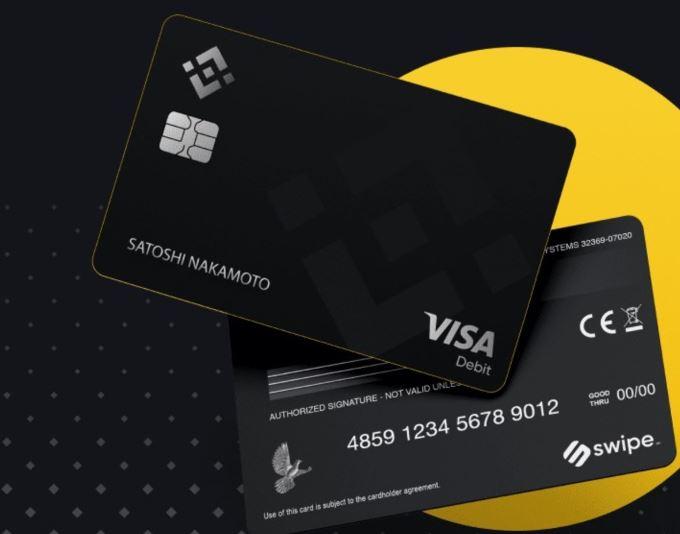
    The Binance Visa Card, issued by the Binance crypto exchange, offers up to 8% back in BNB. It’s one of the highest-paying crypto cards globally. To hit 8%, you’ll need a large BNB balance, but even lower tiers (1–3%) offer solid value for everyday spending.

    It’s available internationally across Asia and the Middle East. Unfortunately, it’s not available in the U.S. and EEA. There’s no foreign transaction fee, and rewards are deposited directly into your Binance account. From there, you can trade them, cash out, or keep stacking BNB.

    If you’re outside the U.S. and EEA and already active on Binance, this is a top-tier crypto rewards option. Especially if you’re comfortable holding BNB for tier benefits.

    Pros:

    • Extremely high reward potential
    • Tied to the biggest crypto exchange
    • No FX fees

    Cons:

    • Requires large BNB holdings for top rate
    • Not available in the US and EEA
    • Rewards tied to BNB price volatility

    5. Nexo Card

    Best for: Using crypto as collateral
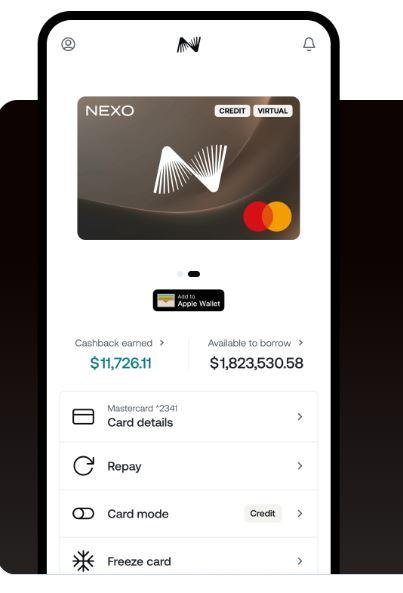
    The Nexo Card is different. It’s a credit line backed by your crypto. You don’t have to sell your assets to spend. Instead, you use them as collateral, and you get a credit line you can tap anywhere Mastercard is accepted. And, it’s all tied to Nexo, a wallet that continually keeps winning fintech awards.

    On top of that, you earn 2% back in BTC or NEXO on every purchase. There are no monthly fees, no FX fees, and no repayment deadlines as long as you stay within your credit limit.

    This card is great for long-term HODLers who want liquidity without losing market exposure. But be careful. If your collateral value drops, you might need to add more to maintain your credit line.

    Pros:

    • Spend without selling crypto
    • Flat 2% crypto rewards
    • No FX or monthly fees

    Cons:

    • Requires collateral in Nexo account
    • Collateral value can trigger margin calls
    • Limited to 2% rewards

    6. Venmo Credit Card

    Best for: Beginners

    The Venmo Credit Card is a mainstream entry point into crypto rewards. You earn 3% back on your top spending category each month, 2% on the second, and 1% on everything else, in USD.

    Technically, this isn’t a crypto-specific card, but you can auto-convert your cash back into crypto right in the Venmo app. This option is called Cash Back to Crypto. Supported options include Bitcoin, Ethereum, and a handful of other major coins. No wallets, exchanges, or extra apps required.

    It’s perfect for someone who’s crypto-curious but wants a familiar card experience. The main trade-off is that reward rates are lower than dedicated crypto cards, and it’s U.S.-only.

    Pros:

    • Easy entry into crypto rewards
    • Auto-conversion in-app
    • No annual fee

    Cons:

    • US-only
    • Lower rewards compared to crypto-focused cards
    • Limited crypto selection

    7. Trustee Card

    Best for: Binance Pay users and EU-based crypto spenders

    The Trustee Card is a virtual payment card linked to the Trustee Plus crypto wallet, allowing users to spend digital assets in real-world situations. It’s especially convenient for Binance users — you can top up your Trustee Plus account with USDT from Binance Pay at zero commission.

    The card supports daily spending up to €5,000 and a monthly cap of €50,000, making it practical for regular use. You’ll need to complete KYC verification before issuance, and while the standard fee is €10, Binance users currently get a discounted €5 rate.

    There’s a 0.5% transaction fee and no other charges. Since the card is virtual-only, ATM withdrawals require NFC support. This makes it more suited for contactless payments rather than physical cash access.

    Pros:

    • Easy Binance Pay integration
    • Low issuance cost (discounted for Binance users)
    • Strong daily and monthly limits

    Cons:

    • Virtual-only (NFC ATM required)
    • Limited to EU regions
    • No cashback or reward program

    8. Uphold Card

    Best for: Frequent travelers and multi-asset users

    The Uphold Card is designed for users who manage multiple assets — from crypto to fiat and even precious metals. It lets you spend directly from your Uphold wallet anywhere in the world, with no setup or annual fees and 0% foreign transaction fees.

    Currency conversions happen automatically, making it a great choice for travelers and global users. The card supports Apple Pay and Google Pay, enabling seamless mobile payments, and allows you to withdraw crypto as cash from ATMs.

    You can spend up to $10,000 per day across 50 transactions, though monthly rewards are capped at $100.

    Pros:

    • No FX or setup fees
    • Spend crypto, fiat, or metals globally
    • Works with Apple Pay and Google Pay

    Cons:

    • Rewards capped at $100/month
    • Limited availability (US + select regions)
    • Requires Uphold account for access

    How to choose the right crypto rewards card

    The best choice for you will depend on where you live, how you spend, and what kind of crypto you actually want to earn.

    Rewards structure

    Look closely at the rates and categories. Some cards offer extra on dining or travel, others are flat-rate. Also check if you can earn the crypto you actually want.

    Fees and staking requirements

    Zero annual fees are common, but some cards require staking a specific token to unlock top rates. For example, the Crypto.com Visa pays up to 5% back, but only if you stake CRO for six months. Decide if that trade-off makes sense.

    Availability (international vs. US)

    Some of the best cards, like Binance and Nexo, are available internationally but not in the US. Others, like Gemini and Venmo, are US-only. Make sure the card you choose is actually issued where you live.

    Conversion and spending

    Some cards automatically convert your crypto to fiat at the point of sale. Others let you spend directly from your crypto balance. Either way, remember: in many countries, crypto rewards are taxable as income the moment you receive them.

    Security and platform trust

    Always stick to cards from reputable exchanges or banks. Consider whether your rewards stay in the issuer’s custody or if you can transfer them to your own wallet.

    The bottom line

    Crypto rewards credit cards in 2026 make it possible to earn Bitcoin, Ethereum, or other cryptocurrencies simply by going about your daily spending

    Whether you want a Bitcoin rewards credit card focused only on BTC or a broader crypto rewards card, maximum cashback, global availability, or a simple way to dip your toes into crypto, there’s now (probably) a card for you.

    If you value variety and instant rewards, Gemini is hard to beat. If you’re after the highest possible rate and don’t mind staking, Crypto.com is your pick. International users can look to Binance or Nexo, while beginners might find Venmo the easiest starting point.

    As the crypto industry matures, these cards are becoming more accessible, more competitive, and easier to use. That means you can combine the familiar perks of a credit card with the potential upside of holding crypto.

  • Can XRP Reach $500 and What Would It Take?

    Can XRP Reach $500 and What Would It Take?

    You’re wondering if XRP can reach a whopping $500 price point — a notion that seems unlikely at first glance (and second and third, to be fair). To achieve this, the market capitalization of XRP would need to skyrocket to over $26 trillion. That would dwarf the GDP of major economies. 

    This would require a monumental shift in the cross-border payments market, with widespread adoption and favorable regulatory outcomes. While this scenario might seem far-fetched, there are factors that could drive significant growth. 

    Let’s explore what it would take for XRP to reach such heights and what industry experts have to say about its potential trajectory.

    Key takeaways

    • Market Cap Requirement: A $500 price point requires a market cap exceeding $26 trillion, making it highly improbable.
    • Growth Necessity: XRP needs an unprecedented increase of over 100,000% from its current price to reach $500.
    • Adoption and Demand: Capturing a larger share of the cross-border payments market and increased adoption by financial institutions are crucial for significant price increases.
    • Realistic Targets: More plausible price targets are between $10 and $50, contingent on favorable market conditions and regulatory clarity.

    XRP market capitalization analysis

    The prospect of XRP reaching a $500 price point hinges heavily on its market capitalization. To put this in perspective, achieving such a price would require a market cap of approximately $26 trillion, which far surpasses the total market cap of all cryptocurrencies combined and is significantly higher than the GDP of major economies like the United States.

    Currently, XRP’s market cap stands around $31 billion, indicating that the asset would need to increase more than 700 times to achieve the proposed $500 price point. We don’t like to make bold predictions here, but… this just isn’t happening any time soon.

    A more realistic analysis suggests that even capturing a significant share of the growing global remittance market would yield a much lower price. For instance, capturing 25% of this market would only yield about $50 billion in revenue, translating to a potential price of $250.

    This shows how impractical it is to expect a $500 price point for XRP under current market dynamics and regulatory environments.

    Thus, a price analysis reveals that the notion of XRP reaching $500 is highly speculative and unlikely without substantial shifts in market conditions and regulatory clarity.

    Ripple project overview

    Ripple’s project encompasses a multifaceted approach to revolutionizing cross-border payments. It leverages its XRP token to provide liquidity and efficiency.

    You can see this reflected in RippleNet, their platform that uses XRP as an intermediary to enable fast international transactions. This strategy aims to provide liquidity services to businesses and financial institutions. Ripple is positioned as a potential disruptor to traditional systems like SWIFT.

    Founded in 2012 by Chris Larsen and Jed McCaleb, Ripple’s XRP has grown to become the 3rd largest cryptocurrency by market capitalization.

    With a maximum supply of 100 billion tokens and a circulating supply of approximately 56 billion XRP, it’s evident that their strategic partnerships with major financial institutions like American Express and Bank of America are working well for them.

    A key part of their success is the Ripple Protocol Consensus Algorithm (RPCA), which enhances decentralization and security, allowing Ripple to process 1,500 transactions per second with a block processing time of just 0.06 seconds.

    This technical capability, combined with strategic partnerships, highlights the Ripple project’s potential to transform cross-border payment efficiency for financial institutions.

    Historical price analysis of XRP

    When examining the historical price movements of XRP, you’ll notice a pattern of significant volatility, marked by dramatic fluctuations since its launch on February 1, 2013. Initially, XRP gained little market attention but eventually reached an all-time high of $3.84 in January 2018 during a bull market. 

    This peak was followed by a steep decline to around $0.20 in November 2020, partly due to the SEC lawsuit against Ripple Labs, which significantly impacted its market performance.

    Analyzing the historical data, you can see that XRP experienced a surge to approximately $1.96 in 2021 but faced instability due to fluctuating market conditions and continued legal challenges.

    More recent data shows that as of March 6, 2026, XRP closed at roughly $1.40. This shows a fairly cautious market sentiment despite a 386% growth in 2024. By the end of the year, our XRP price prediction shows that the token will rise to $1.75, which would be a relatively modest but still very respectable 25% price increase.

    These price movements underscore the volatility of XRP. This historical context provides a foundation for understanding XRP’s potential price trajectories.

    XRP current fundamentals

    XRP’s current market position is built on a foundation of robust fundamentals that show its utility in the global financial ecosystem. You’ll find that XRP’s speed, liquidity provisions, and regulatory clarity play significant roles in its market dynamics.

    Considering its current market cap of approximately $85 billion, XRP is the 5th largest cryptocurrency. The circulating supply of about 61 billion tokens out of a maximum of 100 billion indicates a substantial but controlled supply.

    Key points to note about XRP’s fundamentals include:

    1. Transaction Efficiency: XRP can process 1,500 transactions per second, with a block processing time of just 0.06 seconds, making it significantly faster than many other cryptocurrencies.
    2. Liquidity Solutions: Ripple’s On-Demand Liquidity service eliminates the need for pre-funded accounts, enhancing the efficiency of cross-border transactions and liquidity for financial institutions.
    3. Market Structure: The top 10 addresses hold only 20.5% of the total supply, indicating a relatively decentralized structure.
    4. Regulatory Clarity: A pivotal ruling in the SEC lawsuit clarified that XRP isn’t classified as a security for public sales. This has had a positive impact on its market perception and trading volume.

    These fundamentals suggest that while ambitious targets like $500 are impractical, more realistic predictions, such as $10 to $50 by 2040 or 2050, could be feasible under favorable market conditions.

    Bullish market scenario analysis

    Market momentum and favorable regulatory environments are necessary factors in the bullish market scenario for XRP. To reach a price target of $500, you’d need to see significant shifts in demand and adoption that propel XRP’s market capitalization to approximately $26 trillion, surpassing the combined market cap of major corporations like Microsoft and Apple.

    In a bull market, capturing a substantial share of the growing global remittance market could enhance XRP’s value. If XRP were to capture 25% of the cross-border remittance sector, it could yield around $50 billion in revenue for Ripple, potentially translating to a price of $250 under favorable conditions.

    However, achieving a $500 or even a $250 price point remains highly unlikely without substantial changes in market dynamics and regulatory clarity.

    Still, that doesn’t mean XRP’s price can’t go up. Ripple’s strategic partnerships with over 200 financial institutions, including Bank of America and Santander, increase the likelihood of increased adoption and transaction volumes necessary for a price surge.

    Positive regulatory outcomes, such as the recent ruling deeming XRP not a security for public sales, could also bolster investor confidence and lead to a substantial price increase if market sentiment remains bullish.

    Bearish market scenario analysis

    In a bearish market scenario, the path to a $500 price point for XRP appears insurmountable. The sheer scale of market capitalization required – approximately $31 trillion – far exceeds the total market cap of all cryptocurrencies combined as of March 2026.

    To put this into perspective, consider the following:

    1. Astronomical market cap: Achieving $500 per XRP would necessitate a market capitalization that surpasses the US GDP, an unprecedented and unrealistic target.
    2. Unfeasible price surge: XRP would need to increase by over 100,000% from its current price of around $0.49, a growth trajectory that’s highly improbable given existing market conditions.
    3. Regulatory hurdles: Even a partial victory in the SEC lawsuit may not be enough to drive XRP’s price significantly higher due to ongoing regulatory uncertainties and market sentiment.
      Historical performance: XRP’s historical price peaks, such as its all-time high of $3.84 in 2018, have yet to be replicated, further challenging the likelihood of reaching $500.

    Factors influencing XRP price

    Regulatory and market dynamics have a significant impact on the price of XRP. As an investor, you need to be aware of these factors.

    The SEC lawsuit against Ripple, for instance, has had immediate implications for XRP’s legal status and market confidence. 

    ripple website

    Market sentiment also plays a huge role. The price movements of XRP are often correlated with the performance of major cryptocurrencies like Bitcoin and Ethereum. Positive developments in these markets can have a ripple effect (no pun intended) on XRP’s value.

    Also, increased adoption by financial institutions can raise demand for XRP, which would impact its price positively. For XRP to reach higher price targets, it needs to capture a larger share of the cross-border payments market, which would necessitate a substantial increase in market cap.

    Roadmap to $500 Price Point

    XRP’s roadmap to a $500 price point hinges on a series of highly improbable events and market conditions. The most significant barrier is the astronomical market cap required, estimated at $31 trillion, which far exceeds the current US GDP. 

    For XRP to reach this level, it would need to capture a substantial share of the cross-border payments market, which is projected to reach $250 trillion by 2027.

    Consider the following key factors that could theoretically support such a high price target:

    FactorDescription
    Market ShareCrypto as a whole would need to take off significantly from where it is currently, and XRP would need to be at the forefront of it.
    Market SentimentCrypto as a whole would need to take off significantly from where it’s at currently, and XRP would need to be at the forefront of it.
    PartnershipsEstablishing liquidity and demand through partnerships with over 200 financial institutions.

    Given these conditions, even reaching a 10% market share would be a significant challenge. The historical price pattern suggests that XRP would need an unprecedented increase of over 100,000% from its current levels. This target is highly speculative at best and is likely not rooted in reality.

    Frequently asked questions

    How high can XRP go?

    XRP could potentially reach a price range of $10 to $50 if favorable market conditions and regulatory clarity align, especially with broader adoption in the cross-border payments market. However, reaching a price as high as $500 is highly improbable without monumental shifts in market dynamics.

    How high will XRP go in 2026?

    By the end of 2026, XRP might realistically reach $1.74, but it would require a lot of factors to align perfectly. Reacting higher than that, such as $10, is contingent on increased adoption by financial institutions and very positive crypto market sentiment. This price range accounts for decent growth in cross-border payments and positive legal developments.

    How high will XRP go in 2030?

    By 2030, XRP could potentially reach $50, assuming significant market adoption, widespread use in cross-border payments, and ongoing regulatory clarity. This is a best-case scenario with strong institutional support and expanding use cases.

    Will XRP reach $1,000?

    Reaching $1,000 for XRP is extremely unlikely given the market capitalization required, which would need to surpass the total GDP of many major economies. Such a price would require unprecedented shifts in both financial markets and XRP adoption on a global scale. In short, XRP is very unlikely to reach $1,000 in our lifetime.

    The bottom line

    You’re examining if XRP can reach $500. Given its current market cap and the astronomical increase needed, reaching this price point seems highly improbable. A more realistic goal is between $10 and $50, contingent on favorable market conditions and increased engagement from financial institutions. Even then, it would likely take decades.

    Achieving a $500 valuation would require significant adoption in cross-border payments and would lead to a market cap exceeding $31 trillion. Simply put, this is beyond the realistic scope of current market trends.

    In a similar vein, investors hope XRP will reach $500; some Solana traders believe that SOL has what it takes to reach $1,000.

  • Top 13 DEX Screener Tools in 2026 to Navigate DeFi Successfully

    Top 13 DEX Screener Tools in 2026 to Navigate DeFi Successfully

    We’re constantly seeking ways to stay ahead in the decentralized finance world. One key to success lies in leveraging top-notch DEX screener tools. Platforms like DEX Screener, DexTools, and DexGuru are indispensable for traders and investors, as they offer real-time data and in-depth market insights across multiple decentralized exchanges.

    They feature (relatively) user-friendly interfaces and extensive coverage of various blockchain networks. Thankfully, there are plenty of tools available that make it easy to understand what’s happening in DeFi and quickly identify what’s worth paying attention to. This article will take a look at the top 13 DEX screener tools as of 2026.

    List of Top 13 DEX Screener Tools in 2026

    1. DEX Screener – One of the best tools for analyzing decentralized exchanges
    2. DexTools A DEX analytics platform similar to DEX Screener
    3. Arkham Intelligence – A platform for real-time wallet attribution and DeFi investigation analytics
    4. DexGuru – A comprehensive DEX aggregator and analytics platform
    5. DeFiLlama A comprehensive overview of the DeFi ecosystem 
    6. DexCheck – A rock-solid DEX Screener alternative
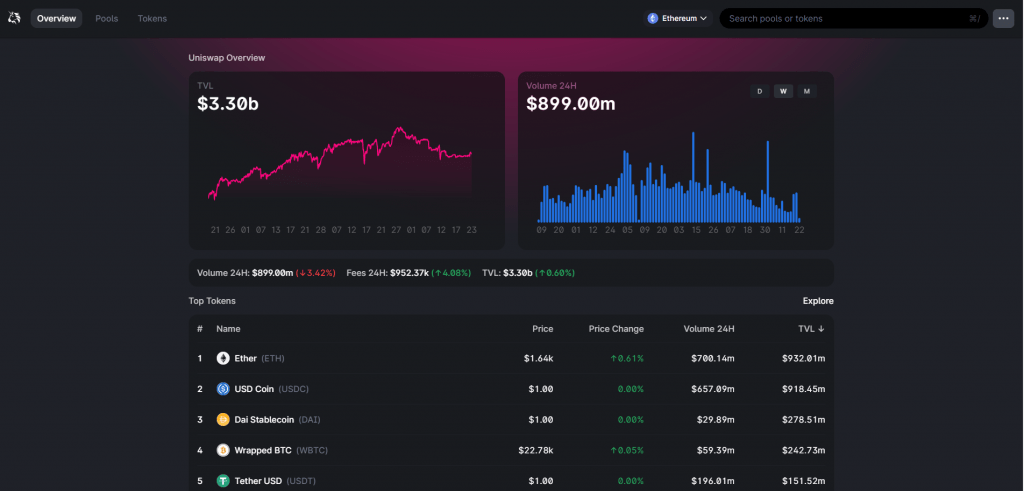
    7. Uniswap Info – Analytics for the Uniswap protocol
    8. Parsec.finance – Professional-grade DeFi data platform
    9. Birdeye – Multi-chain DEX market tracker
    10. CoinBrain Price action “alarm” platform
    11. Defined.fi – Find trending tokens and NFTs
    12. Poocoin.app – Follow token price on Binance Chain DEXes
    13. DappRadar – Support for over 1,500 dApps

    13 Top DEX Screener tools – Exploring the top options in 2026

    In this article, we’ll be showing you the 13 best tools for exploring the DeFi ecosystem. The best feature of these tools is that they aggregate DeFi data under one roof, eliminating the need to jump between different websites and blockchain explorers.

    1. DEX Screener – One of the best tools for analyzing decentralized exchanges

    DEX Screener is one of the top 11 DEX Screener Tools in 2024

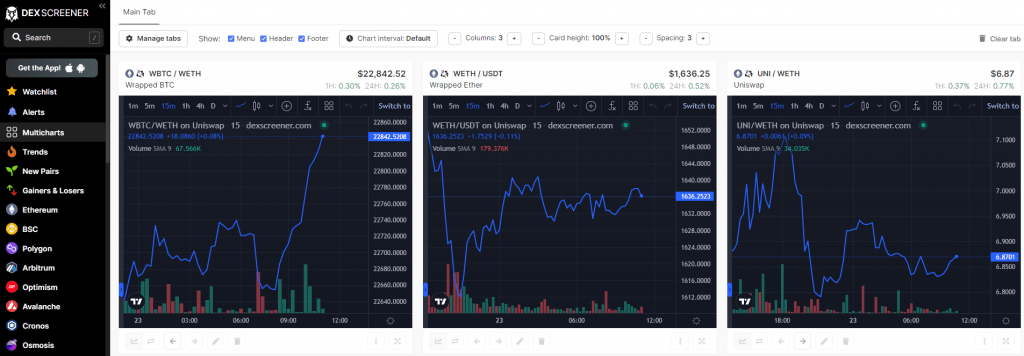
    Our exploration of decentralized exchange analysis begins with the foundational tool known as DEX Screener. This comprehensive platform empowers users to track and analyze real-time data from multiple decentralized exchanges (DEXs) and chains, providing a broad overview of the cryptocurrency market.

    DEX Screener tools offer essential features such as real-time market data on token prices, trading volumes, and liquidity across various assets.

    With advanced filtering options, users can analyze price changes, trading volume, and market volatility. This allows you to set alerts for specific price levels or significant volume changes, facilitating proactive trading strategies.

    By consolidating data from multiple sources, DEX Screener saves time and increases accessibility for traders and investors. It also serves as a valuable educational resource for beginner investors, as it helps them understand market dynamics and develop effective investment strategies.

    You can filter the data to specific blockchains and decentralized exchanges. Then, you can get even more specific and sort DEX trading pairs by the number of transactions, 24-hour trading volume, liquidity and more.

    For example, if we want to know what’s currently the most active trading pair on the Uniswap protocol’s deployment on the Polygon blockchain, we can easily do so with DEX Screener.

    Utilizing DEX Screener tools, we can gain a deeper understanding of market trends and dynamics, which ultimately leads to more effective trading.

    DEX Screener’s comprehensive coverage and user-friendly interface make it a valuable tool for both experienced and novice traders.

    The main downside of DEX Screener is that it’s limited to decentralized exchanges, and doesn’t show information about other kinds of DeFi protocols like Maker or Compound.

    2. DexTools – A DEX analytics platform similar to DEX Screener

    DexTools is one of the top 11 DEX Screener Tools in 2024

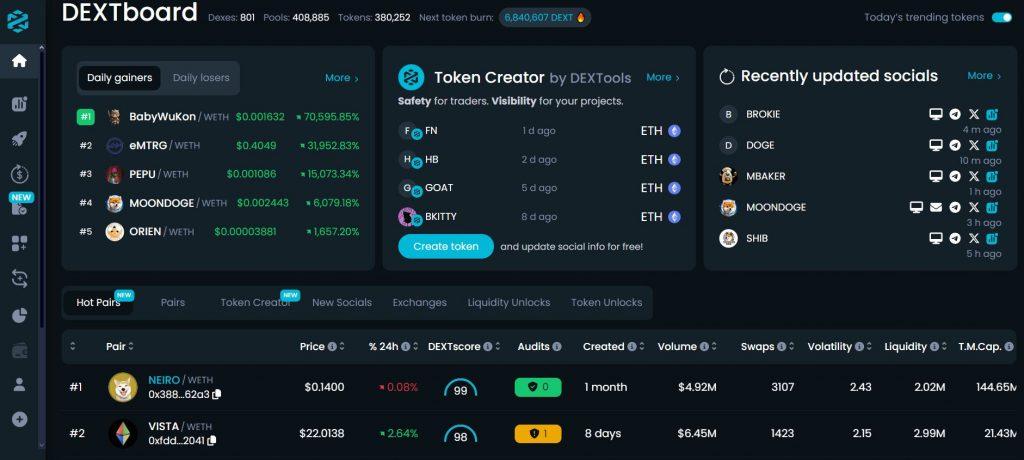
    DexTools is a powerhouse analytics platform. By providing real-time insights into multiple decentralized exchanges across various blockchain networks, DexTools equips traders with the ability to quickly know what’s going on in the DeFi world.

    Key features of DexTools include:

    1. Multi-Blockchain Support: DexTools supports over 90 blockchain networks, allowing users to track asset performance across different ecosystems seamlessly.
    2. Advanced Charting Tools: The platform offers advanced charting tools powered by TradingView, including indicators, multiple charting styles, and timeframes, to enhance technical analysis.
    3. Real-Time Data: DexTools provides real-time information on tokens, including trading volumes, liquidity, and price movements, to inform trading decisions.
    4. Comprehensive Token Insights: The platform offers detailed smart contract information, market trends, and popular trading pairs to enhance market understanding.

    Dextools.io can also be used to find the newest tokens listed on decentralized exchanges, allowing users to potentially identify new opportunities. A good feature of Dextools.io is that it also provides information about smart contracts, including warnings about potentially suspicious smart contracts.

    The functionality of Dextools.io has quite a bit of overlap with DEX Screener. The choice of which to use will simply come down to which platform you find the most comfortable to use. 

    3. Arkham Intelligence – A platform for real-time wallet attribution and DeFi investigation analytics

    Arkham Intelligence is a blockchain analytics platform focused on real-time wallet attribution and on-chain intelligence. It offers a deeper view of the DeFi ecosystem by identifying the entities behind blockchain addresses, helping users better understand how capital moves across different networks.

    The platform allows users to track how funds flow between major market participants such as exchanges, hedge funds, and large individual holders. Arkham labels millions of wallets and connects them to known organizations or individuals, making it easier to identify whale activity, accumulation patterns, and unusual transactions.

    Arkham also provides a suite of investigative tools designed for detailed blockchain analysis. Users can visualize relationships between wallets, follow token transfers between entities, and set alerts for specific addresses. For example, traders can receive notifications when a large fund begins accumulating a new token.

    The platform supports multiple blockchains and is designed for traders, analysts, and researchers who want deeper insights than typical DEX dashboards provide. While Arkham offers some free features, advanced analytics and custom dashboards require either ARKM tokens or a paid subscription. The main downside is that the platform can feel complex at first, especially for users who are not familiar with blockchain analytics tools.

    4. DexGuru – A comprehensive DEX aggregator and analytics platform

    DexGuru is one of the top 11 DEX Screener Tools in 2024

    DexGuru is a powerful platform that combines DEX aggregation and analytics capabilities. It gives us deep insights into trading volumes and market trends across various decentralized exchanges.

    It provides real-time data on trading pairs and market activity. Its advanced filtering options allow us to analyze tokens based on criteria such as liquidity, trading volume, and market cap. This makes it a lot easier to quickly spot new and potentially lucrative opportunities.

    With DexGuru, we can access detailed information on individual tokens, including price changes, historical performance, and liquidity metrics. 

    The user interface of Dex.guru is filled to the brim with information, so the platform might not be the best choice for DeFi beginners. However, if you’re already well-versed in the world of decentralized finance, you’ll likely be able to get a lot of value from Dex.guru.

    5. DeFiLlama – A comprehensive overview of the DeFi ecosystem 

    DeFiLlama is one of the top 11 DEX Screener Tools in 2024

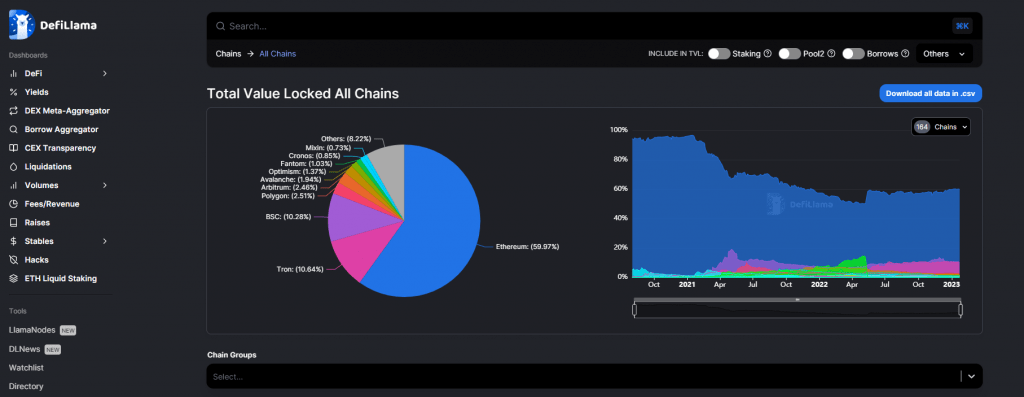
    DeFiLlama is one of the best services if you need a comprehensive overview of the decentralized finance landscape. It’s a leading data aggregator and analytics platform in the DeFi ecosystem, providing unparalleled insights into the total value locked (TVL) across multiple blockchain networks and DeFi protocols.

    This comprehensive platform aggregates data from numerous decentralized exchanges and protocols, making it a valuable resource for investors and analysts looking to evaluate market trends and investment opportunities.

    Key features of DeFiLlama include:

    1. Multi-chain support: Aggregating data from over 242 layer 1 and layer 2 chains.
    2. Real-time updates: Providing historical and current data on TVL changes over time.
    3. Detailed analytics: Offering project-specific dashboards with information on liquidity pools, yield farming activities, and other financial instruments.
    4. Transparent methodology: Ensuring the accuracy and reliability of the data presented.

    As a decentralized exchange aggregator, DeFiLlama’s analytics provides critical insights into the health and growth of the DeFi ecosystem. Its intuitive interface allows you to filter and sort data based on specific criteria.

    With that said, the platform doesn’t provide detailed info about specific trading pairs on decentralized exchanges. If that’s what you need, consider using a tool like DEX Screener. 

    6. DexCheck – A rock-solid DEX Screener alternative

    DexCheck is one of the top 11 DEX Screener Tools in 2024

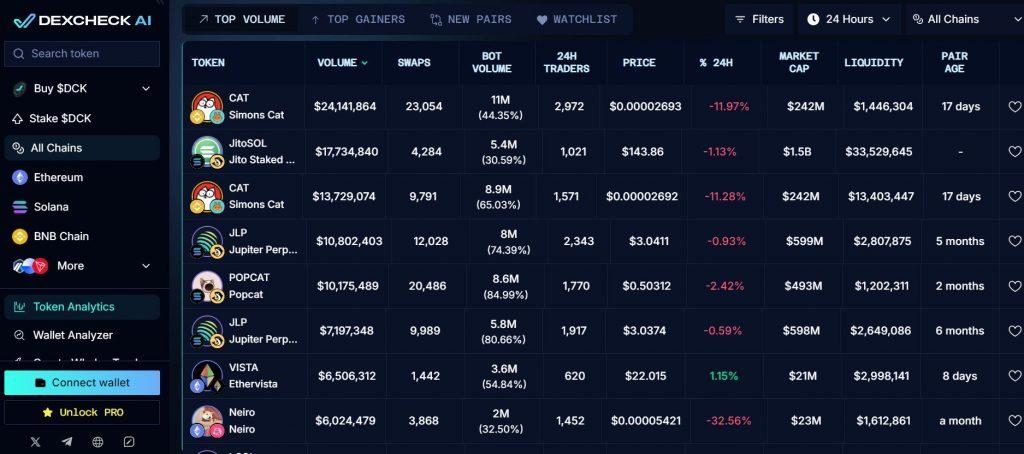
    DexCheck is a platform designed to offer a comprehensive insight into DEXes and blockchain-based crypto transactions. It allows traders to monitor market activity effectively, and it gives real time data.

    A key feature of the platform is its crypto whale tracker. This tool enables users to analyze transactions made by large crypto holders, often referred to as “whales” across various blockchains. It also provides data on the cryptocurrencies that these whales frequently purchase and sell.

    DexCheck’s analytics on trading pairs enable users to identify popular tokens and assess market trends efficiently. Detailed analytical features, including transaction histories and price charts, are also accessible.

    Also, DexCheck makes it possible to monitor the most successful traders active on decentralized exchanges. These traders are assessed based on their realized and unrealized profits. This functionality can be valuable for identifying addresses that are worth monitoring.

    The platform’s user-friendly interface is helpful for beginners to navigate market data easily.

    With its powerful analytics capabilities, DexCheck has a lot to offer. 

    While many of DexCheck’s services are accessible free of charge, certain advanced features are exclusively available to “Pro” members. Access to these features can be obtained by holding the platform’s native DCK token.

    7. Uniswap Info – Analytics for the Uniswap protocol

    Uniswap Info is one of the top 11 DEX Screener Tools in 2024

    For all people who have only ever used one DEX in their life, that DEX has most likely been Uniswap.

    If that’s you, then you would probably benefit from using Uniswap Info (or Uniswap Explore), a specialized analytics platform designed to provide users with in-depth insights into the Uniswap protocol (which has a native token, UNI).

    Uniswap Info offers a comprehensive suite of tools that help traders and investors monitor trading activities, track market trends, and make informed decisions.

    Key features of Uniswap Info include:

    1. Detailed Trading Pair Analytics: Users can access real-time data on trading pairs, including trading volumes and liquidity metrics.
    2. Liquidity Pool Insights: The platform provides detailed statistics on liquidity pools, including total liquidity, fees generated, and historical performance.
    3. Token Performance Tracking: Users can monitor the performance of individual tokens on Uniswap, gaining insights into market dynamics and investor interest.
    4. Customizable Data Views: Uniswap Info features an intuitive interface that allows users to easily access and customize data views to meet their specific needs.

    The main downside of Uniswap Info is that it is limited to only the Uniswap protocol, so you’re out of luck if you’re using any Uniswap alternatives. Also, its price charting functionality is very limited – it will suffice for a quick look at the price, but don’t expect any detailed technical analysis tools.

    8. Parsec.finance – Professional-grade DeFi data platform

    Parsec.finance is one of the top 11 DEX Screener Tools in 2024

    Parsec.finance offers professional-grade on-chain analytics tailored for DeFi enthusiasts. It provides users with deep insights into market dynamics and token performance.

    One of the standout features of Parsec.finance is its customizable interface, which allows us to tailor our experience according to specific trading strategies and preferences.

    We can access real-time data updates to facilitate informed trading decisions and enhance our responsiveness to market changes.

    Advanced analytics tools are available for comprehensive data analysis, enhancing our ability to track market trends and historical performance. This includes on-chain lending positions, AMM liquidity depth, NFT price history, and token flows, among other important data points.

    You can get quite a bit of value out of Parsec.finance’s free plan, but more advanced users might want to subscribe to one of the platform’s paid plans, which unlock access to advanced features. Parsec.finance’s paid plans start at $60 per month, and its most feature-packed “Team” plan costs $500 per month.

    9. Birdeye – Multi-chain DEX market tracker

    For anyone who regularly tracks tokens across multiple chains, Birdeye is one of the most useful tools you can use.

    Birdeye is a multi-chain DEX analytics and price-tracking platform that aggregates data from dozens of decentralized exchanges across ecosystems like Solana, Ethereum, BNB Chain, and Avalanche. It’s designed to give traders real-time insight into token movements, liquidity, and volume across the DeFi space.

    The platform is particularly popular for its speed, clean interface, and extensive multi-chain support, which make it easy to monitor both popular and newly launched tokens.

    Key features of Birdeye include:

    • Multi-Chain Token Tracking: Monitor real-time prices, volume, and liquidity for thousands of tokens across several blockchains.
    • Smart Alerts: Set up notifications for price changes, volume spikes, or new token listings to react quickly to market shifts.
    • Aggregated Market Data: Birdeye combines data from different DEXes to provide accurate and up-to-date information in one place.
    • Trading and Charting Tools: Integrated price charts and trading insights allow users to analyze market trends directly on the platform.

    The only real downside of Birdeye is that its depth of analytics depends on the chain you’re using — some networks have fuller data than others. Also, while its charts are quite detailed, it’s still not as customizable as dedicated tools like DEXTools or TradingView.

    10. CoinBrain – Price action “alarm” platform

    CoinBrain is one of the top 11 DEX Screener Tools in 2024

    We utilize CoinBrain to obtain real-time data and insights on various trading pairs across multiple decentralized exchanges. This tool allows us to filter and analyze tokens based on metrics such as liquidity, volume, and price changes, enhancing our trading strategies.

    CoinBrain supports a wide range of blockchains, facilitating a comprehensive overview of the DeFi ecosystem. Its user-friendly interface caters to both novice and experienced traders, so it’s a very accessible platform to use.

    Key features include customizable watchlists and price alerts, so you can track specific tokens and respond swiftly to market movements in decentralized trading. 

    11. Defined.fi – Find trending tokens and NFTs

    Defined.fi is one of the top 11 DEX Screener Tools in 2024

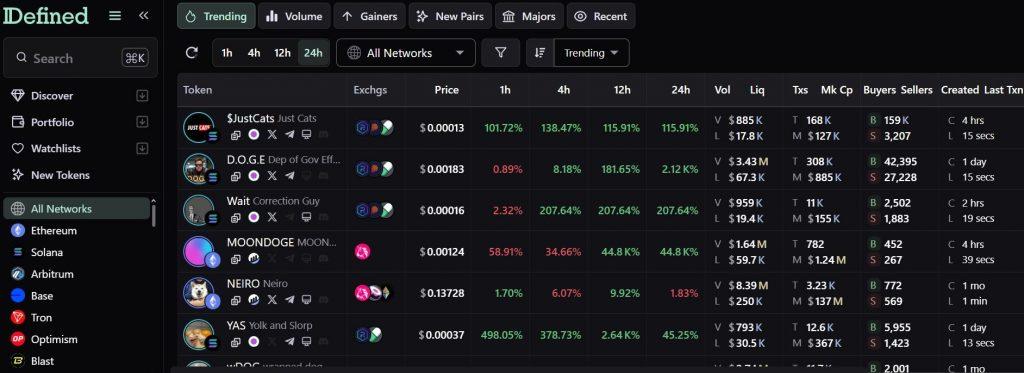
    Defined.fi is an intuitive platform for tracking tokens on more than 40 different blockchain networks. 

    Defined.fi stands out as a comprehensive platform in the DeFi space, offering a wide array of tools for users to navigate the complex decentralized exchange landscape. By tracking tokens across 40+ blockchain networks, Defined.fi provides a rich source of data that helps in discovering trending and new tokens in the DeFi space.

    Key features of Defined.fi include:

    • Comprehensive Data: Provides detailed transaction histories and price charts, enabling users to analyze market movements effectively.
    • Token Performance Insights: Offers insights into token performance, helping users make informed investment decisions based on historical data.
    • User-Friendly Interface: Catering to both novice and experienced investors, Defined.fi enhances the overall user experience in DeFi exploration.
    • Aggregated Data: Simplifies the process of monitoring diverse assets within the decentralized finance ecosystem by aggregating data from multiple networks.
    • NFTs Coverage: The platform provides a ranking of trending NFTs across various blockchain networks. You can sort NFT collections by trading volume, number of trades, price floor appreciation and more.

    These features make Defined.fi a great tool for anyone looking to dive deeper into decentralized exchanges and their associated assets.

    12. Poocoin.app – Follow token price on Binance Chain DEXes

    Poocoin.app is one of the top 11 DEX Screener Tools in 2024

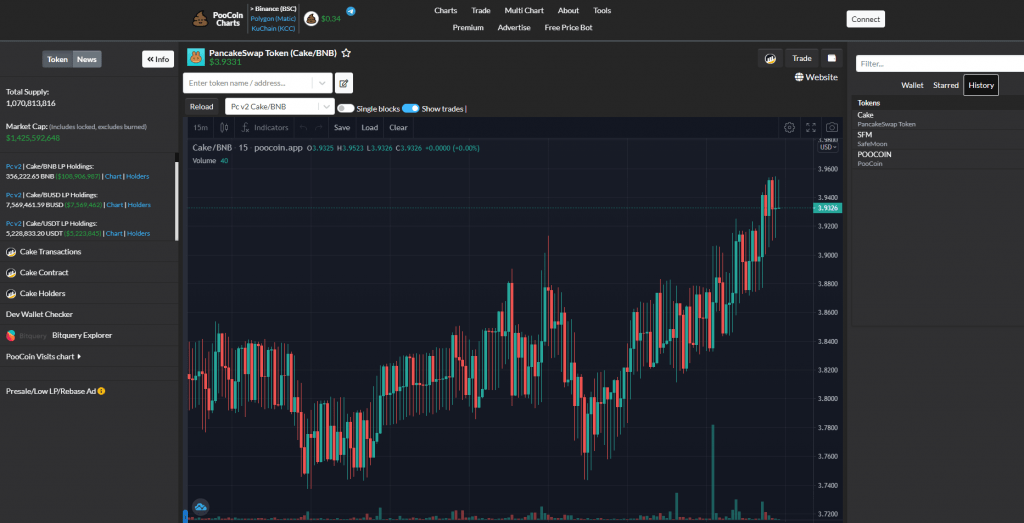
    Poocoin.app is a simple platform geared towards Binance Chain users. You can use it to view price charts for tokens sourced from various decentralized exchanges on the Binance Chain blockchain.

    If you want more convenience, you can also connect your Binance Chain wallet to Poocoin, and the platform will automatically display price charts for the tokens you hold in your wallet.

    The platform features price charts powered by TradingView, which gives you access to technical indicators such as moving averages and RSI.

    Poocoin.app is not as feature-packed as the other tools we’ve highlighted in our list. However, if you’re a Binance Chain users and you’re just looking to quickly check the price movements of your tokens, the platform is worth having a look at.

    13. DappRadar – Support for over 1,500 dApps

    DappRadar is one of the top 11 DEX Screener Tools in 2024

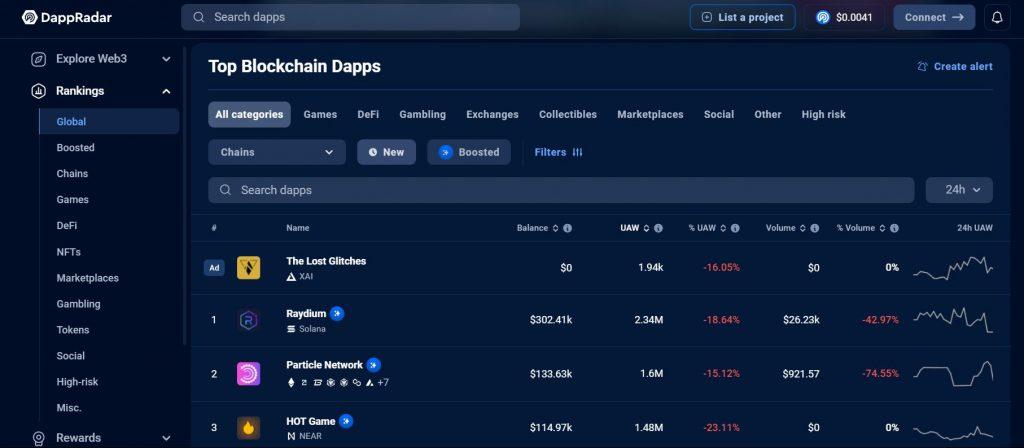
    DappRadar is a comprehensive platform that provides analytics and insights into decentralized applications (dApps) across multiple blockchains, which allows users to track performance, user activity, and transaction volumes.

    This platform supports over 1,500 dApps and offers real-time data on various categories such as DeFi, NFT, and gaming. It’s a valuable resource for investors and developers alike.

    Key features of DappRadar include:

    1. Extensive dApp Coverage: Supports over 1,500 dApps with real-time data.
    2. Customizable Dashboards: Enables users to filter data based on specific criteria and visualize trends effectively.
    3. Multi-Blockchain Data: Aggregates data from numerous blockchain networks for broad coverage.
    4. DeFi Insights: Provides insights into token sales, market capitalization, and liquidity metrics.

    It’s a powerful tool for anyone looking to dive deeper into DeFi analytics and understand the dynamics of various decentralized exchanges.

    The bottom line

    We’ve explored the top DEX screener tools that provide real-time data and comprehensive market insights across multiple decentralized exchanges. These platforms feature advanced analytics and extensive coverage of blockchain networks.

    Traders and investors can use these tools to stay ahead in the decentralized finance world.

  • XRP Airdrops 2026: Here’s How You Can Check If You’re Eligible

    XRP Airdrops 2026: Here’s How You Can Check If You’re Eligible

    If you’re an XRP holder, you might be eligible for airdrops. But how do you know if you qualify? The first step is to check the snapshot date and time specified by the project conducting the airdrop. Use the Bithomp XRP explorer to verify your wallet balance as of that date. 

    If you held a sufficient amount of XRP in an eligible wallet, such as Xumm or another non-custodial option, you might be in line for some free tokens. But there’s more to it – let’s take a closer look at the specifics.

    Key takeaways

    • Verify snapshot date: Check the official project channels for the exact snapshot date to determine eligibility.
    • Use the Bithomp XRP explorer: Utilize Bithomp to verify wallet balance at the snapshot date using its “time machine” feature.
    • Hold XRP in eligible wallets: Store XRP in a personal, non-custodial wallet like Ledger or Xumm to qualify for airdrops.
    • Understand allocation rules: Token allocation is typically based on the amount of XRP held at the snapshot time, with upper limits to prevent excessive rewards.
    • Track official announcements: Follow project-specific channels and reputable news sources to stay updated on airdrop eligibility and claiming procedures.

    XRP airdrop eligibility criteria

    To check if you’re eligible for an airdrop, use tools like the Bithomp XRP explorer to verify your wallet balance as of the snapshot date.

    Many airdrops place limits on allocations to prevent excessive rewards to larger holders, or “whales.” These limits ensure a broader distribution of tokens among smaller holders.

    To secure airdrop tokens, follow official project announcements and utilize supported platforms for claiming the tokens post-airdrop.

    Staying engaged with the community and regularly checking participation metrics can enhance your chances of receiving tokens and provide insights into upcoming opportunities.

    Always verify the information through reliable sources to avoid any potential issues.

    Previous XRP airdrops

    Airdrops have been a significant trend in the cryptocurrency space, and XRP is a part of that. Here are a few examples of airdrops for XRP holders that have already been completed.

    Flare

    One of the most widely known airdrops for XRP holders was carried out by Flare, a project focused on building data acquisition protocols for decentralized application developers. In simple terms, Flare aims to provide blockchain applications with reliable real-world data through a decentralized system.

    The snapshot for the Flare token airdrop was taken on December 12, 2020. However, eligible users didn’t receive their FLR tokens until early January 2023.

    This airdrop was supported by many major cryptocurrency exchanges. Platforms such as Coinbase and Binance distributed FLR tokens to users based on the amount of XRP they held on their exchange accounts at the time of the snapshot.

    Midnight

    Midnight is a data protection project designed as a layer-1 blockchain linked to the Cardano ecosystem. The project distributed its NIGHT tokens to users across eight different blockchains, with more than 37 million wallets qualifying for the airdrop.

    The snapshot for the Midnight airdrop was taken on June 11, 2025. XRP holders were eligible if they held at least $100 worth of XRP in a non-custodial wallet at the time of the snapshot. Holdings on centralized exchanges did not qualify. The amount of NIGHT tokens allocated depended on the USD value of the XRP held during the snapshot, meaning larger balances resulted in larger allocations.

    The claim period for the Midnight airdrop opened on August 5, 2025, and lasted until October 4, 2025.

    The airdrop is now in the “Redemption” phase. Users who claimed their tokens before the October 4 deadline can redeem their allocations in several stages. This phased distribution likely helps prevent a large number of tokens from entering the market at once. By releasing tokens gradually, the Midnight team aims to reduce selling pressure and support a healthier market for the NIGHT token.

    Evernode

    Evernode, a layer 2 project that’s working on introducing smart contract capabilities to the XRP ecosystem, made a snapshot of the XRP blockchain on September 1, 2023. Evernode said that it would use the snapshot to airdrop EVR tokens to users once the Xahau Network platform was ready to launch.

    Uphold and Bitrue, two exchanges who are known to be very XRP-friendly, announced support for the Evernode airdrop. However, most major crypto exchanges did not and most users who held XRP on exchanges at the time of the snapshot were not eligible to receive Evernode’s EVERS tokens.

    In December of 2023, the Evernode project notified users that the Evernode airdrop registration process had finished. In total, 38,478 XRP Ledger addresses in total were eligible from the airdrop. This includes both addresses owned by individual users and addresses controlled by Bitrue and Uphold cryptocurrency exchanges.

    It’s important to note that Evernode relied on the Xumm XRP wallet to release functionality allowing users to claim the EVERS airdrop. According to the Evernode project, this was necessary due to the airdrop’s technical complexity. The airdrop finally happened in early 2024, with Uphold users sharing news of airdroped EVERS.

    Here’s the full timeline of the now-concluded EVR airdrop:

    • August 31, 2023 – Uphold announces support for the EVR airdrop.
    • January 15, 2024 – Evernode network launched.
    • February 20, 2024 – Uphold to process & distribute the airdrop to qualifying customers on February 28th.
    • February 28, 2024 – Uphold processed the airdrop for distribution.

    Checking airdrop eligibility

    Determining your eligibility for XRP airdrops involves verifying that your wallet held a sufficient amount of XRP at the time of the project’s snapshot. This is vital because the snapshot date determines who qualifies for the token distribution.

    To check your eligibility, use tools such as the Bithomp XRP explorer to verify your wallet balance at the specified snapshot time. First, find the exact snapshot date and time on the project’s official website or social media channels.

    Then, enter your XRP Ledger address in the Bithomp XRP explorer and use its “time machine” feature to see your balance at the time of the snapshot. If your wallet balance meets the project’s eligibility criteria, you’re eligible to receive the airdropped tokens.

    Regularly check the project’s official channels and engage with their community. This will keep you updated on any additional requirements or announcements regarding the airdrop distribution process.

    Some projects may publish user eligibility lists detailing accepted wallet addresses for the airdrop, further confirming your eligibility status. Staying informed ensures you don’t miss out on potential token distributions.

    Securing your tokens

    You need to take proactive measures to safeguard your airdrop tokens.

    When it comes to securing your tokens, storing them in a personal, non-custodial wallet such as Ledger or Xumm is a must. These wallets provide enhanced security compared to exchanges, which can be vulnerable to hacking and other security breaches.

    Here are some key steps you should take to secure your tokens:

    1. Regularly backup your wallet data and recovery phrases: This makes sure that you won’t lose access to your tokens in case of emergencies.
    2. Monitor your wallet activity continuously: Regularly checking your wallet activity helps detect any unauthorized transactions, keeping your tokens safe.
    3. Enable two-factor authentication (2FA): Adding an extra layer of security for your wallets with 2FA can significantly reduce the risk of unauthorized access.

    We recommend using a hardware crypto wallet such as the Ledger Nano S to provide the best security for your XRP holdings.

    Protecting yourself from scams and fake XRP airdrops

    With the rise of airdrops in the cryptocurrency space, scammers have become very sophisticated with, among other things, fake airdrop campaigns. You must be able to  recognize potential red flags and take steps to safeguard your assets.

    Here are some essential security tips to protect yourself from scams and fake XRP airdrops:

    • Verify the source: Always ensure that the airdrop is coming from an official and trusted source. Cross-check announcements on the project’s official website or verified social media channels. Beware of unsolicited messages claiming you are eligible for an airdrop. 9 times out of 10, if someone messages you out of the blue, it’s an attempt to phish for personal information.
    • Be cautious with unknown links: Scammers often use fake websites to imitate legitimate projects, asking users to connect their wallets or provide sensitive information. Never click on unfamiliar links, especially those sent via email or social media. Use official sources to access airdrop information directly.
    • Use trusted wallets: Stick to well-established wallets like Ledger or Xumm when storing your XRP. Non-custodial wallets allow you to maintain control over your private keys, which reduces the risk of losing funds to compromised platforms.
    • Enable Two-Factor Authentication (2FA): If available, enable 2FA for added security on your wallet and exchange accounts. This provides an additional layer of protection by requiring a secondary code to authorize transactions or logins.
    • Check for fake airdrop promises: Some scammers promise exaggerated rewards to lure in users. Airdrops aren’t likely to make you rich. If an airdrop offer seems too good to be true, it likely is. Always review the project’s documentation to understand the real airdrop structure and token allocation.
    • Monitor your wallet activity: Regularly check your wallet for any unauthorized transactions. Most scammers aim to access your wallet without your knowledge, so staying vigilant can help detect any suspicious activity early.
    • Use blockchain explorers: Tools like Bithomp XRP Explorer can help you verify wallet balances and transaction history. Before participating in any airdrop, ensure your account meets the eligibility criteria, and be cautious about any discrepancies.

    Project-Specific requirements

    When participating in XRP airdrops, always aim to understand the project-specific requirements that govern eligibility. Each airdrop has its own set of rules that you need to follow to receive the tokens. Here are three key aspects to consider:

    1. Snapshot dates and eligible wallets: Most airdrops require you to hold XRP in eligible wallets at the time of the snapshot. For instance, the Evernode airdrop on September 1, 2023, mandated that users hold XRP in non-custodial wallets like the Xumm wallet.
    2. Token allocation based on XRP holdings: Airdrops typically allocate tokens based on the amount of XRP you hold at the snapshot date, often with upper limits to prevent larger holders from receiving disproportionate rewards.
    3. Additional actions and compliance: Some projects may require you to engage in specific actions, such as joining a community or trading on a particular exchange, and ensure compliance with project guidelines published on official channels.

    Staying updated on airdrops

    Understanding eligibility is just the first step in maximizing your potential gains from XRP airdrops. To truly capitalize on these opportunities, you need to stay updated on airdrops by following official projects and community channels for announcements and eligibility requirements.

    This includes keeping tabs on project-specific requirements, such as snapshot dates and wallet balances, which can be verified using tools like the Bithomp XRP explorer.

    Engage with reputable social media accounts dedicated to cryptocurrency airdrops for timely information about upcoming events.

    For instance, knowing which exchanges support airdrop distributions, such as Uphold and Bitrue for the Evernode airdrop, is obviously necessary. Regularly check trusted cryptocurrency news platforms so that you have access to the latest updates and insights on potential airdrop opportunities.

    FAQs

    How to earn XRP for free?

    You can earn XRP for free by participating in legitimate airdrops, joining crypto reward programs, or completing tasks on websites that offer XRP as a reward, e.g. pay-to-click sites. Always make sure you’re using trusted platforms and avoid scams that promise free XRP.

    How to find legit airdrops?

    To find legitimate airdrops, follow official project channels, reputable cryptocurrency news platforms, and verified social media accounts. Use trusted airdrop tracking sites and always double-check the source to avoid scams. Check out our article on the best crypto airdrops.

    How to claim airdrops?

    To claim airdrops, you typically need to hold a specific cryptocurrency in an eligible wallet at the snapshot date. Follow the project’s instructions for claiming the tokens. They will often require you to connect your wallet to a supported platform or complete specific actions.

    Do airdrops really pay?

    Yes, legitimate airdrops can provide real tokens, but the value of these tokens varies. While some airdrops result in valuable rewards, many offer small amounts, and the tokens may take time to increase in value.

    The bottom line

    At the time of writing this article (March 2026), there are no significant upcoming airdrop snapshots for XRP holders. However, airdrops for XRP holders are relatively frequent, which is certainly a nice perk if you’re a long-term XRP holder.

    Still, airdrops usually don’t translate to a significant amount of value, so it’s probably not wise to invest in XRP just because you’d like to occasionally receive airdrops. 

    It’s important to note that you’ll usually need to hold XRP in your own wallet instead of having it on an exchange if you want to be eligible for airdrops. 

    In addition, you should be very careful about scams. Since XRP is a very popular cryptocurrency, XRP holders are often targeted by scammers and fake projects. For example, a fake project might try to lure users onto a malicious website under the pretense that they’re conducting an XRP airdrop.

    Before trying to participate in any airdrop campaigns, make sure to conduct very thorough research so you know if you’re dealing with a legitimate project or not. If you also want to benefit from more cryptocurrency airdrops and not just XRP airdrops, check out our list of the best airdrop sites for free crypto airdrops.

  • XRP Price Prediction for 2040 and 2050: How High Can It Go?

    XRP Price Prediction for 2040 and 2050: How High Can It Go?

    There are many conflicted opinions on XRP’s long-term potential, as some still consider XRP “not a real crypto” because of its implications in banking. However, XRP could see a significant surge over the long term, with estimates ranging from $2.50 to $9.15 in 2040. Projections for 2050 are even more varied, suggesting maximum prices between $7.32 and $15.70. 

    What fuels this spectacular growth potential? Factors like regulatory outcomes, market conditions, and potential increased use in financial services all play a role. Let’s uncover the catalysts behind XRP’s predicted ascension and what this might mean for the future of cryptocurrency investing.

    Key takeaways:

    • The resolution of the SEC lawsuit, the launch of a USD-backed stablecoin, and increased adoption by financial institutions could drive XRP price appreciation.
    • Regulatory clarity and resolution of legal challenges will significantly influence XRP’s price trajectory and market confidence.
    • Historical growth rates and market dynamics suggest significant long-term potential, with emphasis on cautious, ongoing market analysis.

    XRP price history

    The journey of XRP’s price history is marked by significant milestones and dramatic fluctuations. If you’ve been following XRP, you know it was launched in 2012 at an initial trading price of less than 1 cent. It’s astonishing to see how far it has come, experiencing a surge of over 5,100% from its inception to its current price of $1.44 as of March 2026.

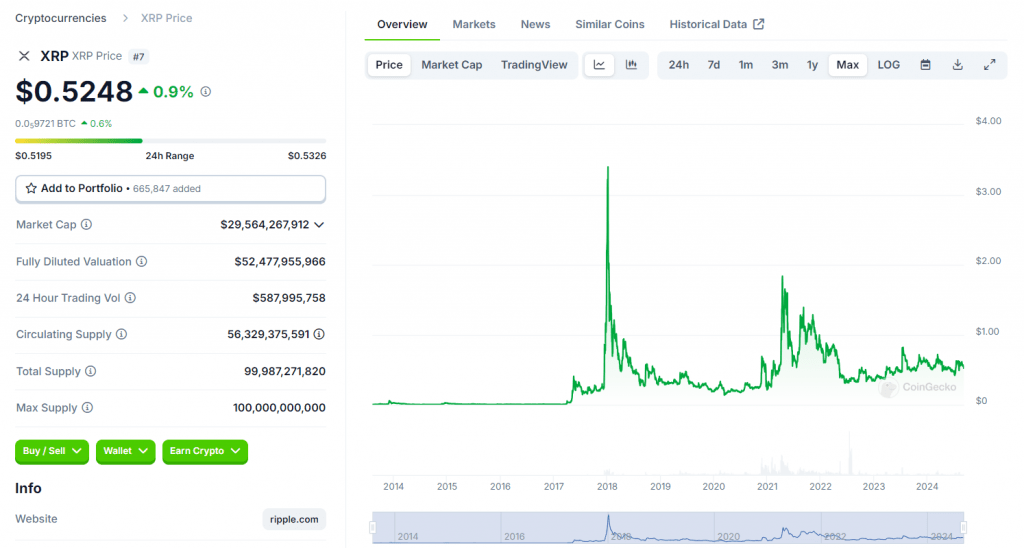
    The strongest year for XRP was undoubtedly 2017, where it gained over 35,000%, reaching an all-time high of $3.40 in January 2018.

    Source: CoinCodex

    The road to success was anything but smooth, though. Following the SEC lawsuit announcement in late 2020, XRP faced considerable price volatility, dropping to around $0.20 in 2019 before ultimately recovering.

    Despite these challenges, it managed to end 2023 trading at around $0.62 after fluctuating due to market conditions and legal developments. After the SEC dropped the lawsuit against Ripple, the cryptocurrency reached $3.64, though it has been dropping since then, all the way to $1.44 as of March 2026.

    These historical patterns are important to understand future price predictions, which suggest a potential range of $2.50 to $9.15 by 2040, and even higher in 2050, based on historical growth trends.

    Long-term XRP growth catalysts

    When examining long-term XRP growth catalysts, you’ll notice several key factors that could significantly propel the cryptocurrency’s price.

    Let’s break down what these are and why they matter.

    • Firstly, the resolution of the ongoing SEC lawsuit could be impactful. The lawsuit was finally ruled on in August 2024, and although some of SEC’s claims were denied, Ripple was still fined $125 million. Regardless, investor confidence and market acceptance were apparently reinvigorated by the mere fact that the lawsuit was over. Moving forward, it will be crucial to monitor the XRP rich list for any notable changes made by large investors.
    • Also, Ripple launched a USD-backed stablecoin in 2025, improving liquidity and broadening the use cases for XRP as a digital asset, further driving demand and price appreciation.
    • Moreover, increased adoption of XRP by financial institutions for cross-border transactions is vital. As more institutions integrate XRP into their operations, demand will increase, supporting long-term price appreciation.
    • Market dynamics also play a significant role in XRP’s future price. Historical growth projections suggest that XRP could reach a maximum price of $9.15 by 2040 and $15.70 by 2050, driven by market dynamics and adoption rates.

    To sustain the long-term growth projections, XRP is already making strategic moves in 2024.

    XRP price prediction 2040

    Predicting the future price of XRP in 2040 involves considering various growth scenarios and market factors. You need to look at multiple data points and forecasts.

    The maximum potential of XRP in 2040 varies significantly among analysts. 

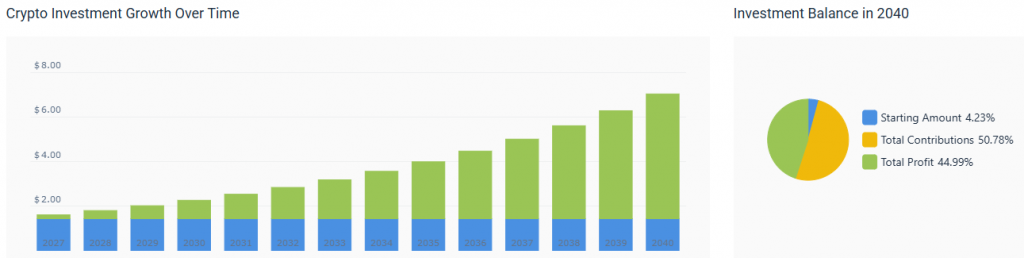
    For instance, based on the historical growth of the S&P 500, XRP could reach approximately $7.03, representing a 488% increase from current levels.

    Here are key predictions to consider:

    1. Conservative estimates: Some analysts predict a more modest growth, with the maximum price potentially hitting $5.96 and an average price exceeding $4.90. However, these predictions are less commonly cited compared to more optimistic forecasts.
    2. S&P 500 growth model: Based on the S&P 500’s historical ROI, XRP could reach approximately $7.03 by 2040.
    3. Long-term potential: Some forecasts suggest that XRP’s price in 2040 could range from $13 to $22, driven by increasing global trade and partnerships, but these estimates are more speculative in nature and should be taken with extreme caution.

    XRP price prediction 2050

    When you look at XRP price forecasts for 2050, you’ll notice an even wider range of possibilities (not unlike price forecasts for 2040). 

    On one hand, based on the historical growth of the S&P 500, XRP could reach approximately a maximum price of $21.81 by 2050.

    This bullish outlook depends on the successful resolution of regulatory challenges and increased adoption of the Ripple network.

    Market dynamics, including demand from financial institutions and technological advancements, will play a big role in determining XRP’s future price trajectory. If these favorable conditions are met, XRP’s market cap could potentially exceed $3 trillion, similar to Bitcoin’s peak valuation.

    Factors influencing XRP price

    XRP’s long-term prospects may suggest significant price growth, but understanding what drives this potential is important for investors. 

    Market dynamics, particularly supply and demand, play a big part in determining XRP’s price. A rise in usage, driven by its fast transaction speed and low fees, can lead to price appreciation. Also, regulatory developments will help increase (or reduce) investor confidence and XRP’s market valuation.

    Here are the key factors to consider:

    1. Transaction speed: XRP’s ability to settle transactions in just 3-5 seconds increases its attractiveness for cross-border payments.
    2. Low transaction fees: Averaging around $0.0002 per transaction, these fees contribute to increased demand from financial institutions and users.
    3. Regulatory developments: Future regulatory decisions can significantly impact investor confidence and XRP’s market valuation.
    4. Technological advancements: Updates to the XRP Ledger are expected to enhance scalability and security, which would make XRP more appealing in the competitive cryptocurrency landscape.

    Historical performance and trends

    Have you ever heard the expression “History doesn’t always repeat, but it does rhyme”? To understand what XRP is likely to do in the coming years and decades, we should also take a look at what it has done so far.

    The rollercoaster ride of XRP’s price history shows its volatile nature, yet it also reveals growth and resilience. As you look into its historical performance, you notice that XRP’s price has experienced significant surges and downturns since its inception in 2012, but it’s always managed to survive and come back up.

    Initially trading at $0.01, it reached an all-time high of $3.40 in January 2018, only to decline and trade below $1 by 2019.

    Examining historical price patterns, you see that XRP’s fluctuations are often influenced by broader market trends and regulatory developments. 

    Many cryptocurrencies, such as Bitcoin and Ethereum, set new all-time highs in the bullrun in 2021; however, XRP was unable to beat its all-time high from 2018. Was this because of the SEC lawsuit? Possibly. How will XRP perform in the next bull rally? It’s looking pretty decent for now, but nothing is 100% certain. 

    Despite this volatility, XRP has increased in value and price a lot since its inception, and it serves as a reflection of its growth potential and market interest over the years.

    Its price history is a testament to the cryptocurrency’s ability to adapt and evolve, despite facing numerous challenges.

    Future adoption and regulatory impact

    Looking ahead to the future of XRP, regulatory clarity and adoption by financial institutions will be pivotal factors in shaping its price trajectory. 

    Here’s how future developments and adoption could influence XRP’s price:

    1. Adoption by financial institutions: Widespread adoption by banks and payment providers could significantly drive up demand for XRP, which would push its price higher.
    2. Technological advancements: Improvements in the XRP Ledger and the introduction of a USD-backed stablecoin could enhance XRP’s liquidity and efficiency and make it more attractive to financial institutions.
    3. Market dynamics: Supply and demand factors, along with broader market trends, will play a crucial role in determining XRP’s price trajectory by 2040 and 2050.

    Frequently asked questions

    How high can XRP go in 10 years?

    XRP’s price in the next decade could range significantly, with some analysts predicting values between $10 and $22 by 2036. A lot depends on the overall market conditions as well as XRP’s adoption.

    How much will 1 XRP be worth in 2030?

    By 2030, XRP’s price predictions vary widely. Estimates range from $3 to $15. Some analysts remain cautious, suggesting it may struggle to exceed $2.

    What would it take for XRP to reach $100?

    For XRP to reach a price of $100, it would require a monumental shift in both market conditions and adoption rates. This scenario would likely require XRP to become a dominant player in the financial services sector, possibly as a primary bridge currency for international transactions. 

    Can XRP reach 20 USD?

    Reaching $20 is considered speculative and would depend on several factors, including widespread adoption by financial institutions. While some analysts see potential, achieving this price point would require extraordinary market conditions. While everything is possible, it’s not likely to happen in the near future. 

    The bottom line

    You’ve seen the vast range of XRP price predictions for 2040 and 2050, from a conservative $2.50 to an ambitious $21.81. These forecasts are heavily influenced by market dynamics, adoption rates, and regulatory outcomes

    As you consider investing, remember that XRP’s future is marked by volatility and uncertainty, not unlike most of the crypto market. Its growth potential is significant, but so are the risks. Keep a close eye on market trends and regulatory changes, and as always, stay in control of your emotions and remain cautious.

    If you would like to learn more about XRP’s chances of major gains in the future, check out our article exploring if XRP can reach $10,000.

  • Will Solana Recover & Can SOL Reach $1,000?

    Will Solana Recover & Can SOL Reach $1,000?

    solana logo

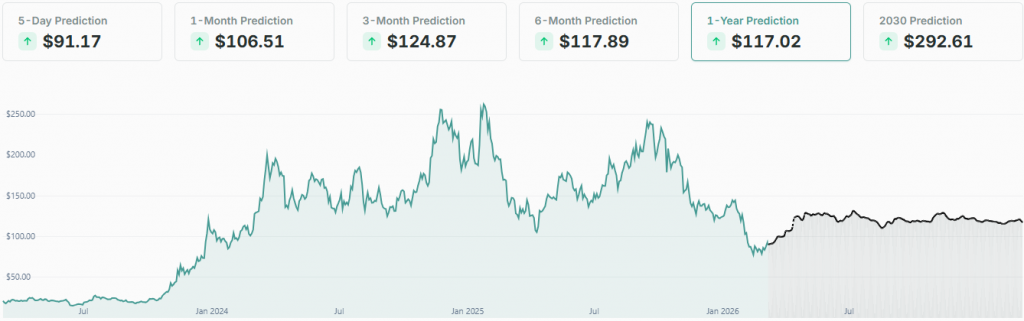
    You’re likely wondering if Solana can recover and eventually reach the ambitious target of $1,000. Some analysts project significant growth, but getting to such heights won’t be easy. Solana’s increase in DeFi activity, competitive advantages in transaction capacity, and low fees offer a promising outlook. However, a dramatic market cap increase from its current $52.56 billion is necessary. 

    The question is, can Solana overcome ongoing challenges and market uncertainties to achieve this goal? The answer, much like the cryptocurrency market itself, is impossible to predict with 100% certainty, but we can look at what some of the most likely scenarios are. That’s what this article is about.

    Key takeaways

    • Analysts predict Solana can reach $400 by 2030, driven by market and ecosystem growth.
    • Historical performance shows a significant recovery of 343% since March 2023, supporting a bullish outlook for Solana.
    • Achieving $1,000 requires a market cap of almost $570 billion, which is a challenging target given the current market cap of $52.63 billion.
    • Solana’s growth potential is mostly driven by blockchain innovation, community support, and an impressive transaction capacity.
    • Some projections indicate potential price peaks of $130 in early to mid-2026.

    Solana price prediction overview

    Frequently, investors seem very interested in Solana’s recovery prospects, with recent market trends and long-term predictions painting a picture of potential growth. To assess these prospects, we need to look at Solana price predictions, which vary widely depending on the source, timeframe, and methodology used.

    Historical performance shows significant price fluctuations, with a peak at $260 in November 2021 and a subsequent drop to below $10 in late 2022 and early 2023. In 2024, the price recovered to $257, and it continued that momentum to 2025, when it reached an ATH of $295.

    The growth of the Solana ecosystem, of course, plays a huge role in these predictions, with many analysts forecasting a continued increase in adoption and value. By 2030, predictions indicate prices between $100 and $400, though this is contingent on market conditions and the ecosystem’s continued growth.

    Can Solana scale new heights?

    To assess Solana’s potential, we need to analyze its market dynamics and long-term predictions. The path to reaching a price of $1,000 is steep, as it would require a market cap of approximately $570 billion, far beyond its current $52.60 billion. 

    A significant climb is needed, not just from the current price but also from the all-time high. With the ATH of $295.40 in January 2025, needing a 338% increase to approach the $1,000 mark.

    However, analysts suggest that by the end of 2026, Solana could see price ranges between $100 and $400. The Solana ecosystem’s growth, particularly in its DeFi TVL, rising from $210 million in 2023 to a peak of $13 billion in November 2025, demonstrates its potential for further expansion.

    Also, Solana’s scalability, processing thousands of transactions per second at low fees, positions it competitively in the blockchain market, which increases its chances for future price increases.

    These factors suggest that Solana has a robust foundation to scale new heights, although, again, it’s dependent on broader market trends and investor confidence

    The bull case for Solana

    The bull case for Solana hinges on several key indicators. These include recent growth in its decentralized finance (DeFi) total value locked (TVL) and its competitive technological advantages.

    Source: DeFiLlama

    We should note that Solana’s TVL has surged from $210 million in January 2023 to a current $6.88 billion as of September 2024, marking a 32,762% increase. This significant boost in user engagement and recovery potential underpins optimistic Solana price predictions.

    Looking forward to Solana’s future, its high transaction capacity and low fees position it as a strong alternative to Ethereum. It may potentially attract more users.

    This competitive edge, combined with innovative projects like Helium’s migration and the Access Protocol launch, increases Solana’s utility and could drive further adoption – and, therefore, price appreciation.

    Historical data also supports this bullish outlook. Solana has shown resilience, not just for having high price potential but also for surviving a hard bear market and coming out swinging. 

    This suggests that Solana can rebound from market downturns and capitalize on future bullish trends. It reinforces the potential for significant growth towards $150 by 2026 and possibly even exceeding $400 by the end of the decade.

    The bear case for Solana

    Some investors are wary of Solana’s prospects, given its tumultuous past and the challenges it faces in a competitive cryptocurrency landscape. You’re not alone if you’re skeptical about Solana’s ability to reach $1,000. Let’s dive into the specifics.

    You should consider that Solana’s price suffered a significant decline in late 2022 and dropped from $38.50 to $9.40 due to the collapse of the FTX exchange, a major supporter of the token. The network also experienced multiple outages in 2022, which raised concerns about its reliability and long-term viability.

    During the NFT craziness in 2021, Solana was not able to provide a stable, solid environment for a high number of users looking to trade on Solana NFT marketplaces such as MagicEden and Solanart. Glitches and bugs were fairly commonplace, and while Solana has upgraded since then, there’s still uncertainty about what will happen the next time there’s a huge influx of users simultaneously.

    Price predictions from various analysts highlight the challenges Solana faces, particularly from Ethereum’s layer 2 solutions, such as Arbitrum or Optimism. As of now, Solana’s speed and low transaction fees are advantages over Ethereum, but not over its L2s.

    Considering these factors, it’s clear that a $1,000 Solana is not a guaranteed thing, especially in the near future. 

    Is Solana a good investment?

    While the current market volatility and bearish sentiment don’t bode well for bullish sentiment, Solana’s innovative blockchain technology and strong community support suggest it could be a worthwhile investment opportunity, assuming you’re willing to navigate its associated risks.

    With a current price of approximately $91.79 and a market cap of $52.29 billion, Solana has significant growth potential from its all-time high of $295.40. Long-term predictions indicate a potential ROI of 178.9% for investors, with some analysts forecasting a minimum price of $292.49 before the end of 2026.

    Solana’s DeFi ecosystem growth, combined with its ability to handle up to 65,000 transactions per second at low fees, positions it favorably against competitors.

    Those considering investing in Solana should make sure to do thorough research. Solana price predictions, including a predicted potential maximum of $400 by 2030, highlight its potential as a good investment for those with a long-term perspective.

    Still, the current market conditions warrant caution and continuous monitoring of the cryptocurrency market. To put it simply, in the short term, pretty much anything can happen.

    Solana recovery prospects

    Solana’s recovery prospects are at a critical juncture, with recent market fluctuations raising both optimism and caution among investors. Despite the current bearish sentiment, long-term predictions suggest significant growth, with forecasts indicating a maximum price of $400 by 2030. 

    This optimism is (for the most part) backed by Solana’s innovative blockchain technology and strong community support, which could drive future demand.

    Here are four key points that illustrate Solana’s recovery prospects:

    1. Historical Growth: Solana has shown remarkable resilience historically, and it wouldn’t be the first time it experiences a huge surge.
    2. DeFi Expansion: The DeFi ecosystem on Solana has significantly expanded.
    3. Near-term Peaks: Analysts predict a potential price peak for SOL at around $140 in early 2026.
    4. Previous Highs: Solana has previously reached an all-time high of $295, and there’s a good chance it will be significantly surpassed in the next run.

    Solana’s all-time price chart.

    Solana price forecast for 2026

    The unfolding narrative of Solana’s price trajectory is marked by significant fluctuations and speculation. If you’re considering investing in Solana, you’ll want to stay informed about the latest price predictions for 2026.

    Analysts forecast that Solana’s price will fluctuate between $100 and $130 throughout and until the end of 2026. With that said though, market sentiment and external factors, including Bitcoin’s performance and regulatory developments, will significantly influence Solana’s price trajectory in 2026. Virtually all of the crypto market is still closely tied to Bitcoin and the overall psychological sentiment, so Solana’s price action doesn’t depend only on Solana.

    Solana price prediction by CoinCheckup.

    Long-term Solana projections

    Long-term projections for Solana (SOL) point to significant growth, with some analysts forecasting prices could reach between $200 and $400 by 2030. Achieving such lofty valuations will depend on broader market trends and investor confidence.

    Key projections for Solana:

    1. 2028 Recovery: Analysts predict Solana will experience an upward trend, trading between $420 and $480 by the end of 2028.
    2. 2029 Growth: A significant price increase is anticipated in 2029, with projections indicating SOL could trade within a range of $530 to $550 by year-end.
    3. Market Cap: To achieve a price target of $1,000, Solana’s market cap would need to exceed $470 billion, which would necessitate widespread adoption and technological advancements in its ecosystem.
    4. Challenges Ahead: Speculations regarding Solana reaching $1,000 highlight the challenges of a 3.85x price increase from its previous all-time high. This would require sustained growth and market confidence.

    Given these projections, it’s clear that Solana’s long-term prospects are driven by its innovative blockchain technology and strong community support, which could drive future demand and help it reach the $1,000 mark.

    Frequently asked questions

    Can Solana reach $1000?

    Solana has the potential to reach $1,000, but it would require a market cap of approximately $570 billion. While this is a challenging target, its strong ecosystem growth and technological advantages could drive long-term price appreciation.

    How much will Solana be worth in 2026?

    Analysts predict Solana could reach price ranges between $100 and $130 by 2026, with some projections as high as $140. The trajectory will depend on market conditions, adoption rates, and external factors like Bitcoin’s performance.

    Can Solana reach $5000?

    Reaching $5,000 would be a steep climb for Solana, requiring an extraordinary market cap increase. While its technological innovations and ecosystem growth are impressive, such a price level seems highly unlikely in the foreseeable future.

    Is Solana worth investing in 2024?

    In 2024, Solana remains a promising investment for those with a long-term perspective, driven by its high transaction capacity and DeFi growth. However, market volatility advises caution, especially in the short term.

    Will Solana survive long term?

    Solana has shown resilience, recovered from past challenges, and continues to expand its ecosystem. While long-term survival seems likely, it will depend on continued innovation, market adoption, and competition from other blockchain platforms.

    The bottom line

    You’re facing a critical juncture in evaluating Solana’s recovery prospects. Despite significant growth projections, with price targets up to $400, achieving such heights necessitates a substantial market cap increase from where it is currently. 

    Solana’s competitive advantages in transaction capacity and low fees present a bullish outlook. However, ongoing challenges and market conditions remain closely tied to this journey.

  • Shiba Inu Coin Burn Mechanics: How Many SHIB Coins Have Been Burned so Far?

    Shiba Inu Coin Burn Mechanics: How Many SHIB Coins Have Been Burned so Far?

    You’re about to explore the fascinating mechanics behind the Shiba Inu coin burn, a process that’s been going on since Shiba’s launch in 2020. With over 410 trillion SHIB tokens already removed from circulation, the journey of how these burns influence the coin’s dynamics is far from over. 

    As we go over strategies and community efforts that drive these burns, you’ll gain a better understanding of the broader implications for SHIB’s future. Let’s explore the scale and significance of these burns, and what they mean for the Shiba Inu ecosystem.

    Key takeaways

    • Over 410 trillion SHIB tokens burned, approximately 41% of the initial supply.
    • The total value of burned SHIB tokens exceeds $2.35 billion as of March 2026.
    • Community-driven initiatives contribute to the burn, with over 180 billion SHIB tokens burned.
    • Shibarium Layer-2 solution automates SHIB burning, potentially increasing the burn rate and affecting supply.

    What is the Shiba Inu coin burn?

    The Shiba Inu Coin burn mechanism is a strategic process designed to reduce the total supply of SHIB tokens by sending them to “burner” addresses, which are fundamentally unspendable wallets without private keys, thereby permanently removing these tokens from circulation. For practical purposes, these tokens disappear forever. 

    This deflationary tactic is essential for creating scarcity in the Shiba Inu ecosystem. Since its inception in 2020, the SHIB burn rate has been significant, with over 410 trillion SHIB tokens already removed from the initial total supply of 1 quadrillion tokens. Other meme coins that are trying to be the next Shiba Inu have also adopted similar strategies.

    This accounts for approximately 41% of the total supply, which makes it one of the largest coin burns in the cryptocurrency space. The current total supply now stands at approximately 589 trillion tokens after accounting for these burns.

    The effectiveness of the burn mechanism is continuously monitored, and recent statistics show a notable increase in the Shiba Inu coins being burned, particularly through community-led initiatives and the introduction of new mechanisms like Shibarium. This indicates a strong desire to sustain the burn rate and continue with the deflationary practice. 

    Let’s explain what Shibarium is.

    Shibarium and automatic burns

    Shibarium is an innovative Layer-2 solution launched in 2023, which is a great addition to the Shiba Inu Coin burn dynamics. Essentially, it automates the process. This blockchain technology boosts transaction speeds and systematically facilitates the burning of SHIB tokens through its built-in mechanisms.

    With 70% of base transaction fees on Shibarium allocated to SHIB burns and priority fees directed to validators, every transaction contributes to reducing SHIB’s circulating supply.

    Also, BONE tokens accumulated in Shibarium’s burn contracts are converted to SHIB for burning upon reaching predetermined thresholds. This is good news because it makes the SHIB token even more scarce.

    As more applications leverage Shibarium’s infrastructure, the burn rate is anticipated to escalate.

    While early indications show Shibarium’s effectiveness in automating burns, the extensive impact on SHIB’s market value is still unfolding. A lot of it depends on broader adoption and sustained community-driven initiatives.

    Benefits of burning SHIB tokens

    Burning SHIB tokens offers several key benefits that contribute to the token’s long-term value and market stability.

    Burning causes a significant reduction in supply, which promotes scarcity. This makes SHIB potentially more attractive to investors who seek limited assets. New investors then buy more SHIB tokens, which means there’s more SHIB burned, and you can start to see the pattern.

    Furthermore, regular burning activities help mitigate market volatility due to its deflationary effect.

    Overall, the burning mechanic is a good sign for the Shiba Inu price prediction, but there are still various other factors at play. 

    History of the Shiba Inu coin burn

    Over 410 trillion SHIB tokens have been burned since the coin’s inception in 2020. The most notable burn event was initiated by Vitalik Buterin, who single-handedly removed 41% of SHIB tokens from circulation. 

    Obviously, this drastically alters the supply dynamics.

    Community-driven initiatives have also played a fundamental role, which have contributed to over 180 billion SHIB tokens being burned. 

    Shiba Inu burn addresses explained

    As mentioned, Shiba Inu employs a burning mechanism by which SHIB tokens are sent to burn addresses. This basically removes them from the circulating supply, since those tokens can never be recovered from those addresses. These addresses are essential for controlling the token’s scarcity and value perception.

    • Burn addresses are wallets without private keys, making the tokens sent to them inaccessible forever.
    • Vitalik Buterin and the Shiba Inu team have utilized three primary burn addresses to incinerate SHIB tokens.
    • Over 410 trillion SHIB tokens have been burned, considerably impacting the original quadrillion token supply.

    The three burn addresses are:

    1. Burn Address 1 (used by Vitalik Buterin to burn his SHIB)
    2. Burn Address 2 (also used by the Shiba Inu team for ShibaSwap listings)
    3. Burn Address 3 (this address is sometimes called the Black Hole)

    Be warned: any tokens you send to these addresses will be lost forever. 

    SHIB tokens burned so far

    The significant reduction in supply has been due to the initial burn by Vitalik Buterin, but also by collective efforts through community initiatives that have contributed to over 750 billion SHIB tokens burned. 

    The total value of burned SHIB coins exceeds $2.35 billion as of March 2026.

    Recent statistics highlight an increasing burn rate, with a 299.60% increase compared to previous periods.

    Impact on SHIB price and scarcity

    The burning of SHIB tokens impacts the scarcity and potentially the price of the cryptocurrency. Here’s how:

    • Reduced Supply: With over 410 trillion SHIB tokens burned, representing about 41% of the initial supply, the burning mechanism noticeably reduces the available supply. This creates scarcity.
    • Market Dynamics: Despite the massive burning efforts, SHIB’s price remains volatile, recently seeing a 8% decrease over the week. This shows us that while burning can influence scarcity, other market factors still play a more relevant role in price action.
    • Economic Impact: The total value of burned SHIB exceeds $2.35 billion. However, the relationship between burning and price isn’t straightforward.

    The bottom line

    You’ve seen how the Shiba Inu community has actively burned over 410 trillion SHIB tokens, worth more than $2.35 billion. This process, involving sending tokens to inaccessible addresses, aims to reduce circulating supply and potentially increase scarcity and value. The introduction of Shibarium has further streamlined burns, making the process more efficient. As the community continues to engage in these strategic burns, it is likely that the deflationary effect these burns have will continue to take its toll.

    If you’re looking to learn more about meme coins, make sure to check out our article explaining how to find new meme coins early.

  • Bitcoin Price History in 2009, 2010, 2011, 2012, 2013, 2014 & Beyond

    Bitcoin Price History in 2009, 2010, 2011, 2012, 2013, 2014 & Beyond

    Bitcoin’s beginnings go back to 2009, which means it’s been around for over 15 years. Imagine buying Bitcoin for a fraction of a cent back then, only to see it skyrocket to tens of thousands of dollars in the years that followed, with the current price over $120,000. 

    Let’s take a journey through the key milestones in Bitcoin’s price evolution, year by year, and uncover the factors that drove its dramatic fluctuations. We are going to examine Bitcoin’s eventful past and highlight the most important events and developments in its 16-year history. 

    Key takeaways:

    • Bitcoin started in 2009 with an initial value of effectively $0 and saw its first recorded market price at $0.00099 per coin in October.
    • In 2010, the price fluctuated from $0.0008 to a peak of $0.39, ending the year at $0.30.
    • Bitcoin’s price in 2011 began at $0.30, peaked at $29.60, and ended at $5.27, showcasing high volatility.
    • The year 2012 saw a 152% increase, starting at $5.27 and ending at $13.30, with the first Bitcoin halving event in November.
    • Bitcoin’s price surged significantly in 2013, from $13 to a peak of $1,156, a rise of over 8,800% within the year.

    What was the price of Bitcoin in 2009?

    Bitcoin’s journey began in 2009 with an initial value of effectively $0, as it hadn’t yet been traded on exchanges. You might be wondering what the first “above zero” price of Bitcoin was in 2009.

    Well, the first recorded market price for Bitcoin occurred in October 2009, when it was valued at about $0.00099 per coin for a small transaction. Just for perspective’s sake, if you had invested only $10 in Bitcoin back then and kept it until now, that investment would now be worth around $5 million.

    In Bitcoin’s early years, there was minimal public awareness of it and there was very little trading involved. In fact, the first real-world transaction didn’t happen until May 2010, which we will talk about in the next section.

    What was the price of Bitcoin in 2010?

    In 2010, the price of Bitcoin began to show signs of life, starting the year at approximately $0.0008 and demonstrating noteworthy early volatility.

    For most of 2010, Bitcoin traded under $0.10, with its price peaking at $0.39 in early November 2010. This marked a notable increase from its starting value earlier in the year. By the end of 2010, Bitcoin closed the year at about $0.30, which was a remarkable increase of approximately 500% since the beginning of the year.

    bitcoin price 2010

    One of the most notable events in 2010 was the first real-world transaction, where 10,000 Bitcoins were used to purchase two pizzas, effectively pricing Bitcoin at $0.0025 each at that time. This transaction highlighted Bitcoin’s potential as a medium of exchange and marked an early step toward broader adoption.

    Throughout 2010, Bitcoin’s price fluctuated considerably. It was a reflection of the asset’s speculative nature during its early days. The price movements of Bitcoin in 2010 laid the groundwork for its future growth and the increasing interest in this digital currency.

    What was the price of Bitcoin in 2011?

    The year 2011 was a vital moment for Bitcoin, as it experienced its first major rally. You see, Bitcoin’s price history in 2011 began with a value of around $0.30 and ended the year at approximately $5.27. Throughout the year, Bitcoin’s price was characterized by significant volatility, including fluctuations between $0.30 and $30.

    bitcoin price 2011

    The price surged to a peak of about $29.60 in June 2011, marking a substantial increase from its starting point. This volatility was influenced by various factors, including market sentiment and regulatory shifts.

    As Bitcoin gained wider attention beyond early adopters, its market cap increased substantially. This, in turn, prompted more public and media interest in the cryptocurrency. This increased visibility contributed to Bitcoin’s price surge in 2011.

    The year witnessed notable price fluctuations, reflecting the inherent volatility of cryptocurrency markets. Despite the fluctuations, Bitcoin’s price history in 2011 laid the groundwork for its future growth and adoption.

    What was the price of Bitcoin in 2012?

    From the significant price fluctuations of 2011, where Bitcoin’s value surged to a peak of about $29.60 in June and ended the year at approximately $5.27, we move to the following year, which saw a different trend.

    bitcoin price 2012

    In 2012, Bitcoin’s price started the year at approximately $5.27 and ended at around $13.30. This was a growth of about 152% over the year, which would be considered astronomical in any market that isn’t crypto.

    This price increase was influenced by the first Bitcoin halving event in November 2012, which reduced mining rewards from 50 BTC to 25 BTC.

    Throughout 2012, Bitcoin experienced fluctuations between approximately $4 and $16 as it gained traction among early adopters and investors.

    What was the price of Bitcoin in 2013?

    2013 was an absolutely pivotal year for Bitcoin. Its price skyrocketed from around $13 to a peak of approximately $1,100 in December. This was an astonishing increase of over 8,800% within the year, a truly ludicrous amount even by crypto standards. 

    bitcoin price 2013

    This significant growth was partly due to increased media exposure and the rise of cryptocurrency exchanges, which contributed to Bitcoin’s market popularity surge.

    By the end of April, Bitcoin’s price had surpassed $200, and by December, the price hit the peak of $1,100. The year ended with Bitcoin closing at around $730 after experiencing substantial volatility throughout the year.

    The price movements in 2013 were heavily influenced by several events, including the shutdown of the Silk Road marketplace and growing interest from both retail and institutional investors. 

    As part of Bitcoin’s price history, 2013 stands out as a year of remarkable growth and increased recognition in the financial and technological communities. Arguably, this was the first time the term Bitcoin was starting to be ushered by regular people who aren’t investors or finance professionals.

    What was the price of Bitcoin in 2014-2015?

    The years 2014-2015 are mostly a part of Bitcoin’s story that shows resilience and gradual recovery.

    bitcoin price 2014-2015

    In 2014, Bitcoin’s price started at approximately $770 but fell considerably throughout the year, ending around $315. This decline was largely due to the Mt. Gox exchange hack and increased regulatory scrutiny.

    The price fluctuation in 2014 saw Bitcoin dip to a low of about $200 before initiating a small recovery towards year-end. 

    At the end of 2015, Bitcoin’s price closed out at around $425, a significant decrease from the highs of 2013, but still much higher than where it first started.

    What was the price of Bitcoin in 2016-2017?

    In 2016, we saw the price of Bitcoin grow steadily throughout the year. It starts at around $430 and closes at approximately $960. Unlike previous increases in price, 2016 was quite tame by Bitcoin’s standards, without much in the way of volatility that crypto is known for.

    This steady growth was a reflection of increasing confidence in Bitcoin’s potential and improving market conditions.

    In 2017, Bitcoin’s price history took a dramatic turn.

    By January, the price had surpassed $1,000, a significant psychological milestone. The year witnessed a massive bull run, with Bitcoin soaring to nearly $20,000 by December 2017. This surge was fueled by rising public interest, media coverage, and increased investment, both institutional and retail.

    bitcoin price 2016-2017

    The dramatic price swings during this period also reflected expansion into alternative cryptocurrencies, and it is at this point that the term “altcoins” started to be more widely used.

    2017 was a perfect example of the aggressive volatility of Bitcoin.

    What was the price of Bitcoin in 2018-2023?

    By 2018, Bitcoin’s price was near $13,880 but saw a significant decline to around $3,200 by December, marking a drop of nearly 77%. The following year, Bitcoin recovered some ground, fluctuating between $3,200 and $14,000 before closing at approximately $7,200.

    In 2020, Bitcoin’s price surged dramatically, driven by increased institutional interest and a favorable macroeconomic environment, ending the year at around $28,993, which was a 416% increase from the beginning of the year.

    bitcoin price 2018-2023

    It reached new all-time highs in 2021, peaking at around $69,000 in November before experiencing notable corrections, ultimately closing at around $46,200.

    2022 and 2023 have, for the most part, not been great for Bitcoin’s price. For the better part of those 24 months, the price was oscillating between $16,000 and $40,000, roughly. However, towards the end of 2023, specifically in November and December, the price finally started gaining upwards momentum and broke above $40,000.

    Bitcoin’s 2024 bull run to $100,000

    Bitcoin 2024 price

    Bitcoin’s price in the first 3 months of 2024 has seen significant increases and even broke the previous all-time high in March, setting a new ATH of around $73,000.

    The second and third quarters were not as impressive, though they were far from disappointing either. The price had been ranging between $57,000 and $71,000 for most of the mid-year.

    This early surge in 2024 can be attributed to the continued growth of institutional interest and regulatory changes that positively impacted the market. The peak itself was likely influenced by the approval of several spot Bitcoin ETFs early in the year, which helped boost investor confidence and drive up demand. Also, the aftermath of the banking crisis in early 2023 saw Bitcoin experience a notable rebound, climbing from around $28,038 to its mid-2024 levels.

    However, the final months of 2024 completely changed the narrative. In November, Bitcoin’s price surged again following the U.S. presidential election, which sparked renewed optimism in the crypto markets. BTC quickly climbed to a new all-time high of $94,837, before breaking the $100,000 barrier in December, reaching a record $106,052.

    By the end of 2024, Bitcoin had established a new price floor, holding above $90,000 and closing the year at around $93,647 — marking a remarkable 222% increase from the start of the year.

    Bitcoin’s price in 2025

    Bitcoin carried over the momentum from 2024, reaching a new local high of $106,198 in January. However, that rally was short-lived. Over the following months, Bitcoin entered a sharp correction, dropping to levels many believed were no longer possible – first falling below $95,000, then $80,000 just two weeks later, and eventually bottoming out at $76,352 in April. Many analysts proclaimed this to be the end of Bitcoin’s bull run, while a few contrarian investors saw it as a rare opportunity to accumulate Bitcoin at a discount.

    Those investors turned out to be right. Bitcoin shocked the market with a massive reversal shortly afterward. By May, the price had regained the psychological $100,000 level, signaling renewed market strength. The momentum didn’t stop there — Bitcoin’s rally accelerated, breaking through $110,000, briefly pulling back to $100,000, and then surging past $120,000.

    After another short dip to $110,000, Bitcoin climbed once again to reach a new all-time high of $126,000 in October. The rally was driven by continued institutional demand, ETF inflows, and growing retail participation fueled by positive macroeconomic sentiment.

    As 2025 drew to a close, many investors believed it could reach $150,000 or even higher by year’s end. However, the price would begin dropping sharply after the $126,000 peak. It fell below the $100,000 mark in November and headed into 2026 below the $90,000 level, effectively bringing Bitcoin back to roughly the same price range where it started 2025.

    Bitcoin’s price in 2026 so far

    Bitcoin continued the bearish momentum from 2025 to the current year. The price held steady around $90,000 until February. In a mere week, the price dropped to $65,000 levels, where it has been trading for the rest of February. It remains to be seen where the price of Bitcoin will go later in the year, but many analysts are optimistic about Bitcoin’s future and see the current price drop as a mere road bump.

    If you want to check algorithmically generated forecasts, make sure to visit our Bitcoin price prediction page.

    The bottom line: Bitcoin started at less than a tenth of a cent, now comfortably above $120k

    You’ve seen Bitcoin’s price history, from its negligible value in 2009 to its meteoric rise over the years. In 2010, it peaked at $0.39, then hit $30 in mid-2011. The price has continued to fluctuate, reaching above $1,100 in 2013, dropping, and then growing again to almost $20,000 through 2016-2018. 

    Despite volatility, Bitcoin has shown steady growth, with its price continuing to rise through 2026 and (very likely) beyond.

  • 10 Best Bitcoin Miners (Crypto Mining Rigs) in 2026

    10 Best Bitcoin Miners (Crypto Mining Rigs) in 2026

    a man characterized as a bitcoin miner

    Although more and more altcoins are created daily,Bitcoin remains a huge force in the overall crypto market, and at the moment of writing this, Bitcoin accounts for around 59% of the total crypto market cap. You want to mine crypto? Might as well go for the big one.

    But what are the best Bitcoin miners out there? And, more importantly, how do you know which one is right for you? That’s what this article will cover.

    List of the best Bitcoin miners in 2026:

    1. Bitmain Antminer S23 Hyd – The most powerful Bitcoin miner
    2. Bitmain Antminer S19j Pro+ – A great perfomer from Bitmain
    3. Bitmain Antimer S21 – Best value for the money
    4. Bitmain Antminer S19 XP Hyd – Top of the line hydro cooled miner from Bitmain
    5. MicroBT Whatsminer M50S – A popular crypto mining rig from MicroBT
    6. Bitmain Antminer S19 XP – Slightly older but still capable miner
    7. MicroBT Whatsminer M30S++ – A proven option for Bitcoin miners
    8. Bitmain AntMiner S19 Pro  – An older crypto miner with excellent power efficiency
    9. Whatsminer M63S – Whatsminer’s latest-gen SHA-256 miner
    10. Canaan Avalon Made A1466 – An efficient and stable Bitcoin miner from Canaan

    Best Bitcoin miners for 2026

    You’ll need to select the best Bitcoin miners for 2026 to maximize your mining efficiency.

    These mining rigs are engineered to provide optimal performance and potential returns based on Bitcoin price fluctuations and mining difficulty levels.

    1. Bitmain Antminer S23 Hyd – The most powerful Bitcoin miner

    The Bitmain Antminer S23 Hyd is a next-generation, water-cooled Bitcoin miner designed for large-scale and industrial mining operations. It delivers a hash rate of 580 TH/s while consuming 5,510W of power, achieving an efficiency of 9.5 J/TH. This places it among the most energy-efficient SHA-256 miners available at the time of its release.

    Launched in January 2026, the S23 Hyd uses Bitmain’s liquid-cooling technology to provide quieter operation and improved thermal management compared to traditional air-cooled miners. The device is built for professional mining setups that aim to maximize output while keeping operating costs under control.

    Price$17,400
    Release DateJanuary 2026
    Hash Rate580 TH/s
    Power Consumption5,510W
    Noise Level50dB

    2. Bitmain Antminer S19j Pro+ – A great perfomer from Bitmain

    Bitmain Antminer S19j Pro+ Bitcoin miner

    The Bitmain Antminer S19j Pro+ remains one of the most reliable and efficient Bitcoin miners in 2026, offering an impressive hash rate of 122 TH/s that balances strong performance with dependable stability.

    This versatile model consumes around 3,355 watts and includes advanced cooling mechanisms that help sustain consistent operation over long mining periods.

    While it’s not the most powerful miner on the market, the S19j Pro+ provides an attractive balance of efficiency, cost, and durability—making it a smart choice for miners seeking steady returns without the premium price tag of newer models.

    Price$1,895
    Release DateDecember 2022
    Hash Rate122 TH/s
    Power Consumption3,355W
    Noise Level75dB

    3. Bitmain Antminer S21 – Best value for the money

    Bitmain Antminer S21 Bitcoin miner

    The Bitmain Antminer S21 stands out as the best value-for-money BTC mining rig on the list.

    As one of the latest models in Bitmain’s lineup of ASIC miners, the Antminer S21 delivers outstanding computational power and easily outperforms most units from the previous S19 series. Despite its strong performance, it offers a solid efficiency-to-cost ratio, making it an appealing option for miners seeking high returns without overspending.

    It’s worth noting that the Antminer S21 performs best in cooler environments, ideally between 0 and 30 degrees Celsius. Operating above this range can lead to increased power consumption and reduced overall efficiency.

    Price$5,126
    Release DateFebruary 2024
    Hash Rate200 TH/s
    Power Consumption3,550W
    Noise Level75dB

    3. Bitmain Antminer S19 XP Hyd – A Bitcoin mining powerhouse

    Bitmain Antminer S19 XP Hyd Bitcoin miner

    The Bitmain Antminer S19 XP Hyd offers a remarkable hash rate of 255 TH/s, which makes it one of the most powerful Bitcoin mining rigs available in 2026. This rig is very efficient, so it allows for optimal energy consumption while maximizing mining output.

    The innovative hydro-cooling technology significantly reduces operational noise levels, and as a result, this miner is quieter than you’d expect for a miner of this power. Launched in October 2022, it has quickly garnered a reputation for reliability and advanced performance in the competitive mining market.

    The Antminer S19 XP Hyd is typically priced under $7,000. It’s a premium yet sought-after option for serious miners. 

    Price$6,651
    Release DateOctober 2022
    Hash Rate255TH/s
    Power5,346W
    Noise Level50dB

    4. MicroBT Whatsminer M50S – A popular crypto mining rig from MicroBT

    MicroBT Whatsminer M50S Bitcoin miner

    Among the top Bitcoin miners in 2026, The MicroBT Whatsminer M50S is another impressive crypto machine from MicroBT’s line of Bitcoin mining rigs. This mining rig operates at a hash rate of 127 TH/s, so it’s more than suitable for competitive Bitcoin mining operations.

    Its power consumption is approximately 3,276 watts, which is a nice balance between performance and energy efficiency. The efficiency rating of the M50S is roughly 26 J/TH, indicating a moderate level of energy usage relative to its hashing capability.

    Priced around $2,000, it positions itself as an appealing choice for miners who want effective performance without excessive costs.

    Price$2,055
    Release DateJuly 2022
    Hash Rate127TH/s
    Power Consumption3,276W
    Noise Level75dB

    5. Bitmain Antminer S19 XP – Slightly older but still capable miner

    Bitmain Antminer S19 XP Bitcoin miner

    Yes, we’re back to Bitmain, but what can we say – there’s a reason they dominate the Bitcoin miners field. Their Bitmain Antminer S19 XP is a mining rig with an excellent price-to-performance ratio.

    This powerful miner achieves a high hash rate of 141 TH/s and is one of the most efficient options available, despite it’s age. 
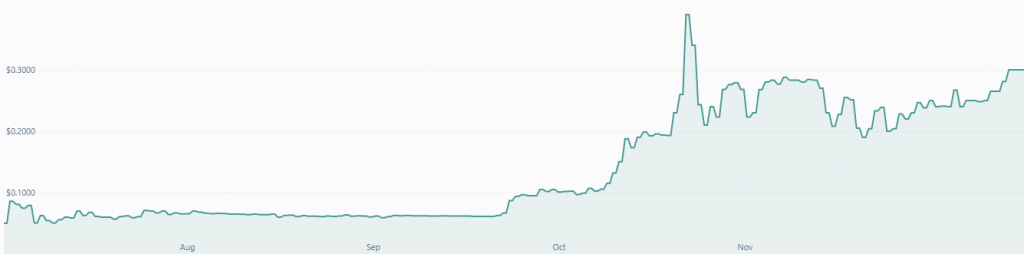
    You can expect to pay around $3,000 to $4,000 for the Antminer S19 XP. This is a very appealing price-to-performance ratio compared to most other options on the market.

    This mining rig incorporates advanced cooling solutions to maintain optimal performance, ensuring durability and reliability during extensive mining operations.

    Where the S19 XP excels is low power consumption while maintaining a high hashrate and excellent connectivity, which allows numerous S19 XPs to be used simultaneously for maximum mining output. 

    The S19 XP can be an excellent choice if you are thinking about joining a mining pool to secure the Bitcoin network (or Dogecoin, Litecoin, and other supported PoW networks).

    Price$3,589
    Release DateJuly 2022
    Hash Rate141TH/s
    Power Consumption3,032
    Noise Level75dB

    6. MicroBT Whatsminer M30S++ – A proven option for Bitcoin miners

    MicroBT Whatsminer M30S++ Bitcoin miner

    The MicroBT Whatsminer M30S++ miner boasts a hash rate of 112 TH/s, and has been one of the most popular MicroBT’s miners. Using the SHA-256 algorithm, the machine can be used to mine Bitcoin, Bitcoin Cash, and other cryptocurrencies that rely on the SHA-256 algorithm.

    The Whatsminer M30S++ operates with a power consumption of 3,392 W, at an efficiency of 31.00 J/TH, which shows high effectiveness in terms of energy usage relative to its performance.

    The Whatsminer M30S++ is known for its ease of use, allowing you to quickly set up and begin mining with minimal technical knowledge.

    While the product has been in the market for almost four full years, it is still considered one of the best solutions out there in terms of the price-to-performance ratio.Its specifications make it a competitive choice in the market.

    Price$1,992
    Release DateOctober 2020
    Hash Rate112TH/s
    Power Consumption3,392W
    Noise Level75dB

    7. Bitmain AntMiner S19 Pro – An oldie but a goodie

    Bitmain AntMiner S19 Pro Bitcoin miner

    Introduced in 2020, the Bitmain AntMiner S19 Pro remains a viable option for Bitcoin mining in 2026, thanks to its excellent power efficiency. With a hash rate of 110 TH/s, it operates at a power consumption of 3250 Watts, yielding an energy efficiency of approximately 29.5 J/TH. 

    This miner is designed with built-in power supply features, simplifying the setup process for users. It’s powered by the Bitmain BM1397 chip, which is a custom-designed ASIC chip for Bitcoin ASIC miners. Bitmain AntMiner S19 Pro also features a quadruple-fan cooling system that helps to keep it cool during operation.

    The Bitmain AntMiner S19 Pro is recognized for its established reliability and performance metrics. Its average payback period ranges from 6 to 12 months, positioning it as a solid investment in the competitive mining landscape.

    The only downside of the S19 Pro is that it is a bit older than some other products on our list and that it doesn’t necessarily boast the best ratio between power consumption and hash rate out there.

    Price$1,715
    Release DateMay 2020
    Hash Rate110 TH/s
    Power Consumption3,245W
    Noise Level75dB

    8. MicroBT Whatsminer M63S – MicroBT’s latest-gen SHA-256 miner

    MicroBT Whatsminer M63S Bitcoin miner

    The Whatsminer M63S is the latest generation of MicroBT’s miners for the SHA-256 algorithm. The M63S generates between 406 – 416 TH/s of hashrate, making it one of the most powerful options on the market. 

    Utilizing the SHA-256 algorithm, the M63S is designed for serious miners looking to maximize their output while managing energy costs effectively. With a power consumption of 7308 watts, it achieves a power efficiency of approximately 18.5 J/T.

    One of the most innovative features of the WhatsMiner M63S is its hydro-cooling system, which enhances cooling efficiency and operational stability. This system allows the miner to maintain optimal performance even under heavy workloads. This makes it suitable for large-scale mining operations. 

    The physical dimensions of the M63S are 86mm x 483mm x 663mm, and it weighs 27.5 kg, which is manageable for installation in various mining setups. The miner operates effectively within a temperature range of -5°C to 35°C.

    While this is one of the most performant miners on the market, the M63S’ power comes at a price. At the time of writing, you can purchase the M63S for between $6,800 and $7,500.

    Price~ $7,000
    Release DateOctober 2023
    Hash Rate406-416 TH/s
    Power Consumption7,215W
    Noise Level50 dB

    9. Canaan Avalon Made A1466 – An efficient and stable Bitcoin miner from Canaan

    Canaan Avalon Made A1466 Bitcoin miner

    The only item on our list that doesn’t come from Bitmain and MicroBT, the Canaan Avalon Made A1466 is the most profitable Bitcoin miner from Canaan at the time of writing. 

    It sports a hashrate output of roughly 150 TH/s, and its power consumption is rated at 3,230 watts. The power efficiency of the Avalon Made A1466 is 21.5 J/TH.

    The miner’s design is robust, measuring 271 x 192 x 292mm and weighing 13kg. It makes sure that it can withstand the rigors of continuous operation in demanding environments.

    The Avalon A1466 is equipped with a state-of-the-art cooling system that includes two powerful 12050 fans, ensuring optimal performance even in hot conditions. Its wide operating temperature range of -5°C to 35°C and humidity tolerance of 10% to 90% further demonstrate the miner’s versatility and reliability.

    While Bitmain and MicroBT continue to dominate the Bitcoin mining space, Canaan’s Avalon Made A1466 could be a sign that competitors are beginning to catch up. Even though the Avalon Made A1466 can’t currently compete with the other top dogs in terms of efficiency, it might still be a good choice if you can get it for a good price.

    Bitcoin mining profitability: Is mining Bitcoin still worth it

    Bitcoin mining profitability hinges on several critical factors. These include: 

    • Bitcoin price fluctuations
    • Hardware costs
    • Electricity expenses
    • Network difficulty

    You need to consider these variables to determine if mining Bitcoin is still worth it.

    The ongoing fluctuations in Bitcoin prices significantly affect miners’ earnings, especially during bear or bull markets. High-end mining rigs typically have a payback period of 6 to 12 months, depending on the initial investment, operational costs, and market dynamics.

    Electricity costs are another obvious factor. With average U.S. rates at approximately 16-17 cents per kWh, they significantly impact overall margins and potential profitability for miners.

    Also, mining difficulty adjusts every two weeks based on network hash rates, so you must regularly monitor these metrics to assess your position within the competitive landscape.

    Use mining profitability calculators, as these can help you accurately estimate returns based on your specific hash rates, power consumption, and current Bitcoin market conditions. These tools provide a clearer picture of whether mining Bitcoin remains profitable for you.

    Choosing the right mining rig

    Choosing the right mining rig is a vital step in making sure your Bitcoin mining operation is profitable and sustainable. 

    When selecting a mining rig, you should consider the hash rate, which directly affects your chances of successfully mining Bitcoin and is measured in terahashes per second (TH/s). A higher hash rate increases your likelihood of solving the complex math problems required for Bitcoin mining.

    You also need to evaluate the energy efficiency of the rig, indicated by joules per terahash (J/TH), to minimize electricity costs, as this represents a significant portion of your overall operational expenses.

    Assess the total cost of ownership, including the initial purchase price, electricity costs, and maintenance, to determine the rig’s long-term profitability. Also, consider noise levels, especially for home setups, as some mining rigs can be quite loud and may require additional soundproofing solutions.

    Frequently Asked Questions

    What factors should I consider when choosing a Bitcoin miner?

    When choosing a Bitcoin miner, consider the following key factors:

    • Hash Rate: This measures the computational power of the miner and directly affects your chances of successfully mining Bitcoin. The higher the hash rate, the better.
    • Energy Efficiency: Look for a miner with a low energy consumption rate, measured in joules per terahash (J/TH). This minimizes electricity costs.
    • Cost of Ownership: Consider the initial purchase price, electricity costs, and maintenance. The total cost of ownership will help you determine the long-term profitability of the mining rig.
    • Noise Levels: Some mining rigs can be very loud, making them unsuitable for home setups without proper soundproofing.

    How profitable is Bitcoin mining in 2026?

    This really depends on several factors:

    • Bitcoin Price Fluctuations: The volatile nature of Bitcoin prices can greatly influence your earnings. The higher the price – the more profitable it is.
    • Electricity Costs: High electricity rates can reduce profitability, especially in regions where electricity is expensive. The average electricity cost in the U.S. is around 16-17 cents per kWh.
    • Mining Difficulty: This adjusts every two weeks based on the total network hash rate. A higher difficulty means it’s harder to mine Bitcoin.
    • Hardware Efficiency: High-end mining rigs usually have a payback period of 6 to 12 months, depending on the initial investment and operational costs.

    Is it possible to mine Bitcoin using a mobile phone?

    Yes, it’s technically possible to mine cryptocurrencies using a mobile phone, but it’s not really feasible due to the high computational power required. Bitcoin mining today requires specialized hardware, such as ASIC miners, which are far more powerful and energy-efficient than mobile devices. Mining on a mobile phone is more suited to altcoins using crypto mining apps.

    The bottom line

    Long away are the days when you could mine Bitcoin using your own personal computer with a regulator GPU or even CPU. Today, you’ll need powerful specialized hardware to mine BTC, and even with that hardware, mining a single Bitcoin can take a lot of time.

    If you want to try mining crypto but don’t necessarily have the resources for a Bitcoin mining machine, you can consider trying out mining crypto on your mobile phone.

    In 2026, the best ASIC miners showcase advanced technology and efficiency. Models like the Bitmain Antminer S21 XP Hyd and the Bitmain Antminer S21 lead in performance. The Antminer S19 XP Hyd offers innovative hydro-cooling technology, while the MicroBT Whatsminer M50S and the Antminer S19 XP provide excellent price-to-performance ratios. These rigs offer reliable operational capabilities, making them top choices for crypto mining.