Tether Operations Limited (“Tether”) has launched a Mexican Peso-pegged stablecoin called Tether MXNt (MXNT)
The new fiat-pegged crypto joins Tether’s existing offering of Euro, US Dollar, and Chinese Yuan-pegged stablecoins
The company has said that the launch of MXNT comes as a response to a growing rate of cryptocurrency users in Latin America
Tether MXN joins Euro, US dollar, and Chinese Yuan-pegged stablecoins
On Thursday, Tether Operations Limited, the company behind the leading stablecoin Tether (USDT), announced the launch of Tether MXNt (MXNT). According to the company’s press release, the new fiat-pegged stable digital currency was launched in response to a growing cryptocurrency usage across Latin America.
The new stablecoin joins Tether’s existing offering of fiat-pegged digital currencies, including the U.S. dollar-pegged USDT, the Euro-pegged EURT, and the offshore Chinese Yuan-pegged CNHT. It is worth noting that USDT sports by far the largest market cap out of the stablecoin trio – more than $80 billion at press time. EURT and CNHT collectively have a market cap of roughly $45 million.
Tether CTO Paolo Ardoino had this to say about the launch of the new stablecoin:
“Introducing a Peso-pegged stablecoin will provide a store of value for those in the emerging markets and in particular Mexico. MXN₮ can minimize volatility for those looking to convert their assets and investments from fiat to digital currencies.”
Ardoino added that the move to launch a Peso-based stable currency has been made apparent over the last year, due to a “rise in cryptocurrency usage” in the region. Countries like Mexico, Brazil, Colombia, and Venezuela are home to some of the largest populations of crypto owners according to the per capita numbers curated by Triple-A.
Tether’s MXNT is currently available to users of Ethereum, Tron, and Polygon blockchain platforms.
Cryptocurrency exchange Bybit has launched USDT-paired Bitcoin, Ethereum, and BitDAO Liquidity mining pools
Liquidity providers can earn up to 30% APY on their digital asset deposit or pursue higher rewards levels by collateralizing their crypto for up to 3x leverage
Bybit users can supply liquidity on either or both sides of the liquidity pair
Bybit launches BTC, ETH, and BIT liquidity pools, allowing users to generate up to 30% APY in USDT rewards
Bybit, one of the leading digital asset trading platforms and the second largest BTC Futures exchange, launched three new USDT-paired liquidity pools. As of May 19, Bybit users have the option to provide liquidity in Bitcoin, Ethereum, and BitDAO pools. Bybit allows users to earn up to 30% APY on their crypto deposit, with even higher reward tiers available when using up to 3x leverage.
Users participating in the new liquidity mining pools can supply liquidity on both sides of the liquidity pair. Rewards are distributed in the form of USDT, with investors having the option to withdraw their earnings or reinvest them to reach higher returns. In addition, the assets invested in the pools are automatically rebalanced to reduce the risk of impermanent loss.
Bybit is using an optimized automated market maker (AMM) model, which allows low slippage crypto swaps and provides users with the ability to earn a share of trading fees. Also, users can increase their pools exposure via leverage by collateralizing their existing crypto funds.
To protect investors from incurring excessive losses, Bybit employs a series of safeguards. Namely, the multi-layered liquidation protocols provide an added layer of investment safety, while advanced profit and losses managing strategies shield liquidity providers from potential market manipulation as well as unexpected and significant negative price movements.
Co-founder and CEO of Bybit Ben Zhou had this to say about the company’s Liquidity Mining offering:
“We are very excited about the opportunities Bybit’s Liquidity Mining will open up for all Bybit users. As traders ourselves, we understand the importance of having a diversified trading and investment strategy optimized for earning passive income on your assets.”
Zhou added that Bybit’s offering provides competitive “yield-earning opportunities” and is an important stepping stone towards a “future of DeFi and personal financial freedom.”
With the launch of new Liquidity Mining pools, Bybit has expanded its “Earn” suite of products and services, which allow cryptocurrency investors to pursue lucrative investment opportunities and generate passive income with their digital asset holdings with varying degrees of risk exposure.
Looking for a place to kick-start your ride to the moon? Look no further than Bybit because they are making the ride real sweet!
From now till May 31, 2022, 10 AM UTC, make a first-time deposit of any amount and earn a coupon worth 10 USDT.
And do you know what’s even sweeter? Additional rewards of up to 3,000 USDT in bonus! That’s right, just make additional deposits to unlock these rewards.
Psst… simply deposit at least $500 in any asset(s) to earn an extra 15 USDT bonus. The more you deposit, the larger your rewards! Awesome, eh?
The total cryptocurrency market cap has decreased by over 15% to $1.22 trillion in the last 24 hours
Bitcoin slipped to the $27,000 price level on a 10% negative change, while Ethereum and other altcoins plummeted by over 20%
The selling pressure has seen the largest stablecoins, Tether’s USDT, losing its $1 peg
Tether loses its $1 peg amidst a broader market sell-off
The sell-off in the cryptocurrency markets sparked by macroeconomic drivers such as rising interest rates and high inflation, as well as yesterday’s Terra collapse, have shaken the peg of the world’s largest stablecoin, Tether’s USDT.
According to CoinCheckup data, USDT dropped to $0.9691 earlier on Thursday, which means that the third largest market cap digital currency was trading over 3 percentage points removed from its intended $1 peg. USDT has reapproached its one-dollar peg by press time and is currently changing hands at $0.9879.
It is worth noting that there could be some discrepancies in price data between different tracking sites. TradingView for instance shows that USDT dropped as low as $0.9490 earlier today.
The market pullback has left virtually no digital asset unaffected – Bitcoin is trading in the $27,000 to $28,000 range, its lowest price level since December 2020. Altcoins are performing even worse – Ethereum, BNB, XRP, Solana, and Cardano are all down more than 20% each in the last 24 hours.
Bitcoin 7-day price chart.
Yesterday’s sudden collapse of the Terra ecosystem, which saw LUNA drop from $60 to below $1 and UST trading as low as 70% removed from its stablecoin peg, had a profoundly negative effect on crypto as a whole. The total cryptocurrency market shrunk by over 15% to $1.22 trillion as people were trying to exit their positions in large numbers.
What could Tether’s collapse mean for crypto?
At its highest point, UST had a market capitalization of over $18 billion (now $6.9 billion). In terms of market cap, USDT is a much bigger player in the sector, with an $82 billion valuation. However, the market capitalization figure, in a way, undersells how important USDT is for the whole crypto ecosystem.
USDT is used across virtually all crypto exchanges as a primary trading pair for digital assets. It provides liquidity for the majority of decentralized finance (DeFi) services and ensures large sums of funds can be moved between crypto products, services, and networks without incurring losses due to price volatility.
Due to its outsized presence in the sector, USDT regularly tops the charts of most traded crypto assets, with its daily trading volume often surpassing the combined volume of Bitcoin and Ethereum. If it were to collapse, it would very likely tank the whole cryptocurrency market, and UST’s downfall would seem minuscule in comparison.
Tether losing its $1 peg is not an isolated occurrence
Today’s de-pegging of USDT is not the first time that the largest stablecoin had problems maintaining the $1 price. Shortly after it started trading in 2015, Tether hit its lowest price point of $0.57. At the time, low demand for the stablecoin and low liquidity resulted in high price fluctuations. Case in point, USDT traded as high as $1.32 at one point in 2015.
In October 2018, USDT’s peg dropped to $0.95 amidst a broader market crash that saw Bitcoin lose over 50% of its value during the month. In May 2019, USDT’s price fell to the $0.94 level due to concerns of Bitfinex–a company behind USDT–not having enough funds in Tether reserves. After a coalition of prominent traders bailed out Bitfinex with a $1 billion investment, the trust in Tether was reestablished and the stablecoin re-pegged.
Unfortunately, the concerns about Tether reserves were never put to rest. The company issuing USDT, Tether Limited, claims 100% of its stablecoins are backed by cash and liquid assets that will ensure USDT can withstand even the worst bear market conditions. However, the company has been accused of not being transparent about its reserves in the past and settled with the New York attorney general in a lawsuit that accused Tether Limited of not having sufficient backing for USDT.
Aurigami (PLY) is the 12th cryptocurrency project featured on Bybit Launchpad, a platform that allows verified Bybit users to participate in the Initial Exchange Offering (IEO) of promising blockchain projects. 200 million PLY tokens will be distributed in the latest Launchpad program, at an initial token sale price of 0.005 USDT. Bybit will distribute 160 million PLY to users subscribing with BitDAO (BIT) and 40 million PLY to users participating in the lottery draw with their Tether (USDT).
Aurigami is a lending and borrowing protocol open to the users of the Aurora ecosystem. As a decentralized money market featuring a comprehensive suite of investment products and services, Aurigami has attracted the attention of some of the leading venture investors in the space, including Dragonfly Capital and Polychain Capital.
The platform offers several notable features to investors. For starters, Aurigami users are rewarded for HODLing with PLY tokens as a part of an innovative The Papermill gamified system. Users can also make use of yield-bearing collaterals that enable self-repaying loans collateralized with yield generating digital assets such as stNEAR and LP tokens. Undercollaterlized lending allows users to increase their capital efficiency and gain access to a broader decentralized lending audience. The platform also features fixed lending rates, Flash Loans, and collateral swapping. Last but not least, the Aurigami team also runs a so-called innovation zone program that aggregates liquidity for promising start-up decentralized projects.
Aurigami is the second project to be featured on the revamped version of Bybit’s Launchpad platform. Whereas previously, verified Bybit users were able to participate in IEOs only with their BIT holdings, they can now participate using their USDT as well. However, using USDT doesn’t grant direct access to PLY tokens. Instead, USDT participants will be randomly selected in a lottery draw, which will award 10,000 separate allocations, each worth 4,000 PLY.
Here’s an overview of important dates pertaining to the Aurigami IEO:
Start
End
Snapshot Period
April 30 (00:00 UTC)
May 4 (23:59 UTC)
Subscription Period
May 5 (03:30 UTC)
May 5 (10:59 UTC)
Distribution Period
May 5 (11:00 UTC)
May 5 (11:59 UTC)
Launch Period
May 5 (12:00 UTC)
/
How to invest in the Aurigami (PLY) IEO on Bybit Launchpad?
In this guide, we will show you how to participate in the Aurigami Launchpad program. Keep in mind that only users who have completed the necessary KYC steps and hold BIT or USDT in their accounts are eligible to participate.
1. Create an account on Bybit and verify your account
In order to participate in the PLY IEO, you will first need to create an account on Bybit. You can skip this step if you are already a registered Bybit user.
Once the account registration process is successfully completed, you can proceed to the account verification procedure. Bybit offers two verification tiers, which primarily differ in the amount of daily Bitcoin withdrawals. It is worth noting that both KYC levels unlock access to Launchpad functionality.
Once you’ve supplied the required personal information and completed the KYC process, you can proceed to the Launchpad section, which can be found by navigating to the bottom of the “More” drop-down menu on the Bybit homepage.
2. Select Aurigami from the list of Launchpad projects
Locate Aurigami from the list of ongoing and finished Launchpad projects. The most recent and typically the only active project is listed at the top of the list.
3. Aurigami IEO requirements and token distribution
As mentioned before, Bybit users get a chance to take part in public sales by committing an amount of BIT or USDT that will be used to buy new tokens as soon as they are first available on the exchange. The amount of new tokens a user receives in the sale is directly proportional to the amount of BIT committed. You will need at least an average of 50 BIT or 100 USDT in your Spot, ByFi, or Derivatives account during the 5-day snapshot period, to be eligible for the public sale.
In order to give each user a fair chance at obtaining PLY, Bybit has set a hard cap of 80,000 PLY for users committing BIT. Moreover, each USDT lottery winner will receive a 4,000 PLY allocation. Users that won’t be selected in the lottery draw will receive the full amount of USDT committed back once the program ends.
Do note that participation in the Aurigami public sale is restricted to residents of the following jurisdictions: the United States, mainland China, Singapore, Quebec (Canada), North Korea, Cuba, Iran, Crimea, Sevastopol, Sudan, and Syria.
4. Aurigami IEO Timeline
The Aurigami IEO will follow a strict Launchpad schedule; below, you will find a complete overview of the important dates you will have to keep in mind, as explained by Bybit:
April 30 (00:00 UTC) to May 4 (23:59 UTC) – Snapshot Period: The average daily amount of BIT in your Spot Account, ByFi Account, and Derivatives Account during the snapshot period must be equal to or greater than 50 in order to participate in the token sale. Likewise, the daily average to participate in the lottery draw must be equal to or greater than 100 USDT.
May 5 (03:30 UTC) to May 5 (10:59 UTC) – Subscription Period: You can commit a certain number of BIT or USDT in your Spot Account towards the new project. The number of BIT or USDT you’ve committed will be locked until the public sale ends.
May 5 (11:00 UTC) to May 5 (11:59 UTC)– Distribution Period: Based on your final APEX allocation result, the corresponding BIT or USDT equivalent will be deducted from your committed amount, while your PLY allocation and the remaining BIT will be credited back to your Spot Account. The remaining amount of USDT will be credited back to your Spot Account. Non-winning lottery participants will get the full amount of USDT back.
May 5 (12:00 UTC) – Launch Period: The new Spot pair, PLY/USDT, will open for trading as long as liquidity conditions are met.
5. Aurigami step-by-step Launchpad guide
Now that you are familiar with the project and the intricacies of Bybit’s Launchpad program, follow our step-by-step instructions to learn how to commit your BIT or USDT holdings. Do note that some of the following images are from a previous Launchpad.
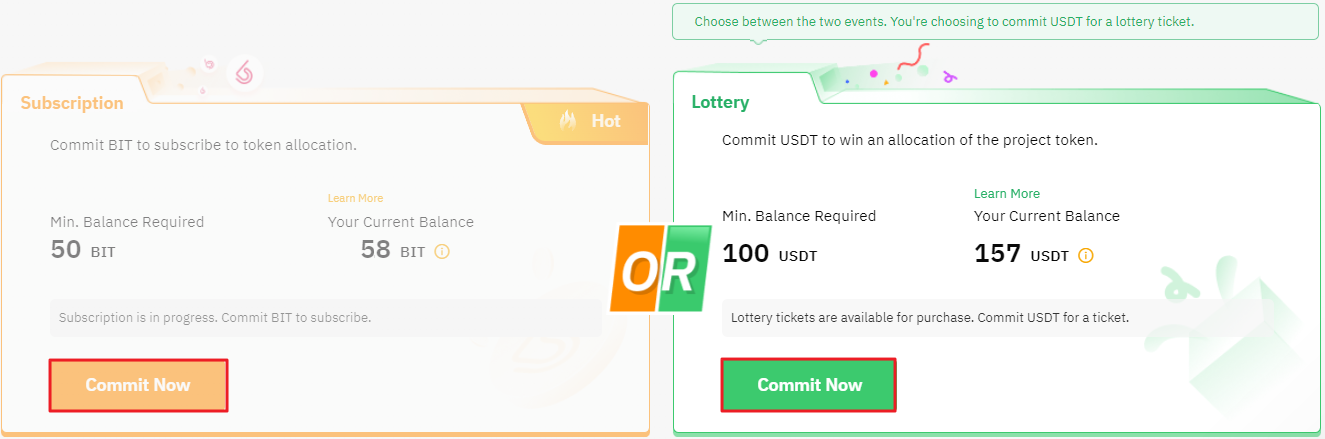
Step 1 – Select to subscribe with your BIT holdings or commit USDT to gain a chance of being one of the lottery draw winners. The process for committing BIT and USDT is very similar.
Select the “Subscription” option to participate in the Launchpad with BIT and the “Lottery” to participate with USDT.
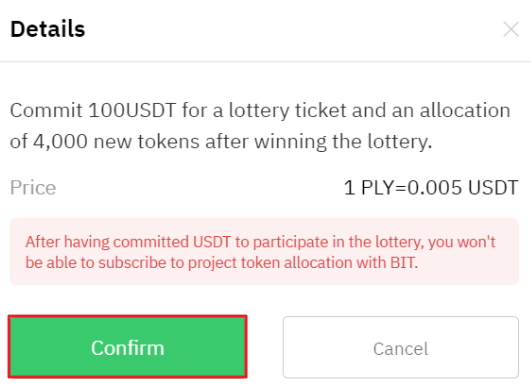
Step 2 – Proceed by entering the amount of BIT you wish to commit to the sale and click on the “Commit Now” button. Committing USDT doesn’t involve entering your precise token amount, since every lottery ticket costs 100 USDT. Keep in mind that you can’t participate in the Launchpad with BIT after you’ve decided to enroll in the lottery draw.
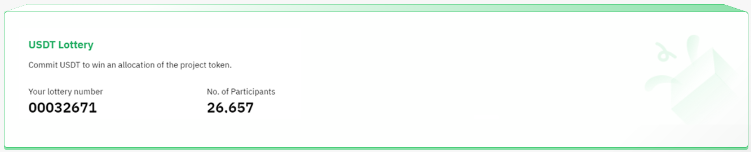
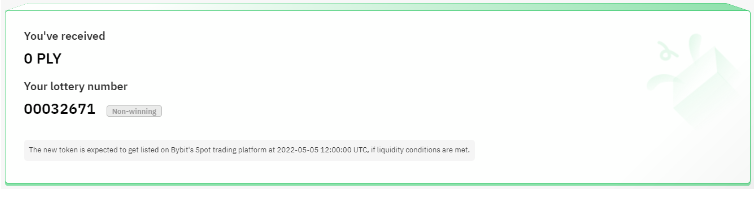
After committing USDT, you will be given a lottery number and see how many participants are currently in the draw.
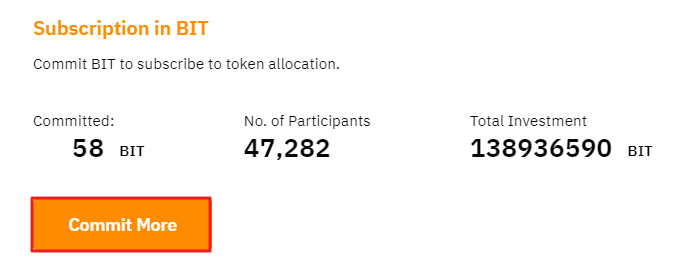
Step 3 – When using BIT, you can choose to commit additional funds after the initial investment has been made. You can increase your investment up to your daily average BIT balance, which was calculated during the Snapshot Period.
When the Launchpad period ends you will be notified about your lottery draw status. The first image below shows what you can expect to see in the event of a lottery win, while the second image shows what to expect if you were unfortunate in the draw.
Winning lottery message.Lossing lottery message.
6. Performance of past Bybit Launchpad projects and closing thoughts
Projects listed on the Bybit Launchpad have historically performed very well and have enjoyed a markedly positive market reception once they’ve started trading. With a revamped program, Bybit looks to expand the service to users who might not be inclined to hold BIT but have USDT readily available. Here’s an overview of the five most lucrative Bybit Launchpad projects and their USD adjust returns:
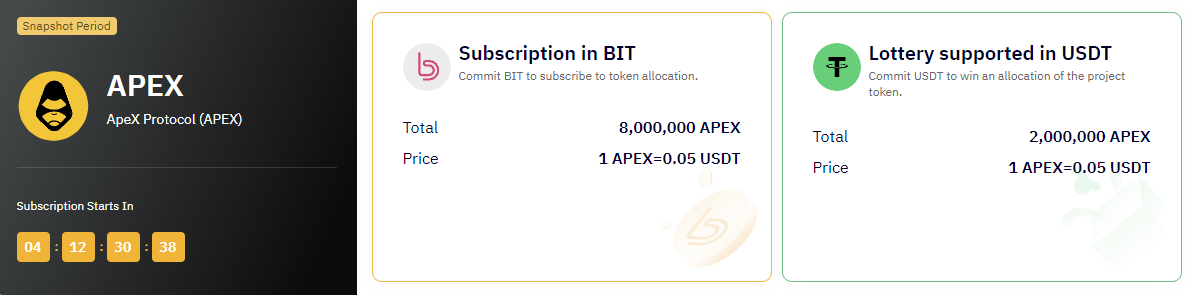
ApeX Protocol (APEX) is the 11th cryptocurrency project featured on Bybit Launchpad, a platform that allows verified Bybit users to participate in the Initial Exchange Offering (IEO) of promising blockchain projects. 10 million APEX tokens will be distributed in the latest Launchpad program, at an initial token sale price of 0.05 USDT. Bybit will distribute 8 million APEX to users subscribing with BitDAO (BIT) and 2 million APEX to users participating in the lottery draw with their Tether (USDT).
ApeX Protocol is a decentralized derivatives trading protocol that uses Elastic Automated Market Maker (eAMM) method to price digital assets using advanced mathematical algorithms. In addition to providing access to perpetual swaps and other derivatives, the platform allows users to earn passive income via liquidity providing, staking, and a referral program. APEX stakers can look forward to earning as much as 30% of all trading fees collected by the decentralized trading platform.
ApeX Protocol is the first project to be featured on the revamped version of Bybit’s Launchpad platform. Whereas previously, verified Bybit users were able to participate in IEOs only with their BIT holdings, they can now participate using their USDT as well. However, using USDT doesn’t grant direct access to APEX tokens. Instead, USDT participants will be randomly selected in a lottery draw, which will award 5000 separate APEX token allocations, each worth 400 APEX.
Here’s an overview of important dates pertaining to the ApeX Protocol IEO:
Start
End
Snapshot Period
April 22 (00:00 UTC)
April 26 (23:59 UTC)
Subscription Period
April 27 (03:30 UTC)
April 27 (10:59 UTC)
Distribution Period
April 27 (11:00 UTC)
April 27 (11:59 UTC)
Launch Period
April 27 (12:00 UTC)
/
How to invest in the ApeX Protocol (APEX) IEO on Bybit Launchpad?
In this guide, we will show you how to participate in the Apex Protocol Launchpad program. Keep in mind that only users who have completed the necessary KYC steps and hold BIT or USDT in their accounts are eligible to participate.
1. Create an account on Bybit and verify your account
In order to participate in the APEX IEO, you will first need to create an account on Bybit. You can skip this step if you are already a registered Bybit user.
Once the account registration process is successfully completed, you can proceed to the account verification procedure. Bybit offers two verification tiers, which primarily differ in the amount of daily Bitcoin withdrawals. It is worth noting that both KYC levels unlock access to Launchpad functionality.
Once you’ve supplied the required personal information and completed the KYC process, you can proceed to the Launchpad section, which can be found by navigating to the bottom of the “More” drop-down menu on the Bybit homepage.
2. Select ApeX Protocol from the list of Launchpad projects
Locate Monster Galaxy from the list of ongoing and finished Launchpad projects. The most recent and typically the only active project is listed at the top of the list.
3. ApeX Protocol IEO requirements and token distribution
As mentioned before, Bybit users get a chance to take part in public sales by committing an amount of BIT or USDT that will be used to buy new tokens as soon as they are first available on the exchange. The amount of new tokens a user receives in the sale is directly proportional to the amount of BIT committed. You will need at least an average of 50 BIT or 100 USDT in your Spot, ByFi, or Derivatives account during the 4-day snapshot period, to be eligible for the public sale.
In order to give each user a fair chance at obtaining APEX, Bybit has set a hard cap of 7,000 APEX for users committing BIT. Moreover, each USDT lottery winner will receive a 400 APEX allocation. Users that won’t be selected in the lottery draw will receive the full amount of USDT committed back once the program ends.
Do note that participation in the ApeX Protocol public sale is restricted to residents of the following jurisdictions: the United States, mainland China, Singapore, Quebec (Canada), North Korea, Cuba, Iran, Crimea, Sevastopol, Sudan, and Syria.
4. ApeX Protocol IEO Timeline
The Monster Galaxy IEO will follow a strict Launchpad schedule; below you will find a complete overview of the important dates you will have to keep in mind, as explained by Bybit:
April 22 (00:00 UTC) to April 26 (23:59 UTC) – Snapshot Period: The daily average amount of BIT in your Spot Account, ByFi Account, and Derivatives Account during the snapshot period must be equal to or greater than 50 in order to participate in the token sale. Likewise, the daily average to participate in the lottery draw must be equal or greater than 100 USDT.
April 27 (03:30 UTC) to April 27 (10:59 UTC) – Subscription Period: You can commit a certain number of BIT or USDT in your Spot Account towards the new project. The number of BIT or USDT you’ve committed will be locked until the public sale ends.
April 27 (11:00 UTC) to April 27 (11:59 UTC)– Distribution Period: Based on your final APEX allocation result, the corresponding BIT or USDT equivalent will be deducted from your committed amount, while your APEX allocation and the remaining BIT will be credited back to your Spot Account. The remaining amount of USDT will be credited back to your Spot Account. Non-winning lottery participants will get the full amount of USDT back.
April 27 (12:00 UTC) – Launch Period: The new Spot pair, APEX/USDT, will open for trading as long as liquidity conditions are met.
5. ApeX Protocol step-by-step Launchpad guide
Now that you are familiar with the project and the intricacies of Bybit’s Launchpad program, follow our step-by-step instructions to learn how to commit your BIT or USDT holdings. Do note that some of the following images are from a previous Launchpad.
Step 1 – Select to subscribe with your BIT holdings or commit USDT to gain a chance of being one of the lottery draw winners. The process for committing BIT and USDT is very similar.
Step 2 – Proceed by entering the amount of BIT you wish to commit to the sale and click on the “Commit Now” button. Committing USDT doesn’t involve entering your precise token amount, since every lottery ticket costs 100 USDT. Keep in mind that you can’t participate in the Launchap with BIT after you’ve decided to enroll in the lottery draw.
Step 3 – When using BIT, you can choose to commit additional funds after the initial investment has been made. You can increase your investment up to your daily average BIT balance, which was calculated during the Snapshot Period.
6. Performance of past Bybit Launchpad projects and closing thoughts
Projects listed on the Bybit Launchpad have historically performed very well and have enjoyed a markedly positive market reception once they’ve started trading. With a revamped program, Bybit looks to expand the service to users who might not be inclined to hold BIT but have USDT readily available. Here’s an overview of five of the most recent Bybit Launchpad project and their USD adjust returns:
Tether has announced the launch of USDT on Kusama, the leading stablecoin’s tenth supported blockchain
USDT is the largest dollar-pegged stablecoin in the marketplace, accounting for $83 billion of the roughly $180 billion total stablecoin supply
The launch on Kusama indicates that USDT on Polkadot is likely coming soon
USDT’s expansion to Kusama suggests the Polkadot launch is imminent
Tether, the operator of the most liquid and widely-used stablecoin USDT, has announced the launch of its dollar-pegged digital currency on Kusama, a “canary network” of Polkadot. As of Wednesday, USDT is available on ten different blockchain platforms, including Ethereum, TRON, Algorand, and EOS, to name a few.
More specifically, USDT initially launched on Kusama’s first parachain, Statemine, a public chain that can host both fungible and non-fungible tokens and allows low-cost transfers of KSM and DOT. The availability of USDT in the Kusama ecosystem will allow developers of decentralized applications easier access to liquidity, which means a likely increase in the user numbers as well.
Tether CTO Paolo Ardoino commented on USDT’s expansion to the Kusama network in a statement:
“We’re excited to launch USD₮ on Kusama, offering its community access to the most liquid, stable, and trusted stablecoin in the digital token space. For those who believe in the importance of decentralized, permissionless ecosystems, Kusama is a perfect representation of that ethos.”
Although not confirmed, the launch of USDT on the canary network means that the stablecoin could rollout on Kusama’s parent network in the near future. The access to USDT would allow Polkadot developers to take full advantage of the parachain capabilities of the network that went live at the tail end of 2022. Head of public affairs at Parity Technologies commented on the likelihood of USDT launching on Polkadot:
“Tether’s deployment on Kusama is a clear indication that there is interest in having it available to builders in the Polkadot ecosystem alongside the Polkadot-native options that are launching as well.”
The stablecoin sector has seen tremendous growth over the past two years. According to data from The Block, the total stablecoin supply has increased from $5.9B in January 2020, to over $180 billion in April 2022. With $82 billion, USDT accounts for the biggest share of the total supply, followed by USDC ($50 billion) and UST ($17 billion).
Circle, the crypto payments company behind USD Coin, has announced a $400 funding round
BlackRock, Fidelity, and other prominent financial institutions will be investing in the stablecoin company
In addition to financial backing, BlackRock has formed a strategic partnership with Circle and will explore “capital market applications for USDC”
Circle to raise $400M from BlackRock, Fidelity, and other investors
Circle, a global payments technology company and the issuer of USD Coin (USDC), has announced it is raising $400 million in new capital in a funding round that is slated to conclude sometime in the second quarter of this year.
Circle, a founding member of The Centre Consortium along with Coinbase, has penned a deal for the new funding round with some of the biggest financial companies in the world, including BlackRock, Fidelity, Marshall Wace, and Fin Capital.
Beyond backing Circle with a considerable capital injection, BlackRock will become a primary asset manager of USDC cash reserves and Circle’s strategic partner, “exploring capital market applications for USDC,” according to the company’s statement.
Circle co-founder and CEO Jeremy Allaire said the new funding round will fuel the next stage of the company’s expansion. “It’s particularly gratifying to add BlackRock as a strategic investor in the company. We look forward to developing our partnership.”
With 16,500 employees across offices in 30 countries, BlackRock is the world’s largest asset manager, with a staggering $10 trillion in assets under management as of January 2022.
The cooperation between Circle and the financial services behemoth comes just two weeks after the stablecoin company announced BNY Mellon, one of the oldest financial institutions and the largest custodian bank ($46.7 trillion in assets under custody), has been selected as the primary custodian for USDC reserves.
The stablecoin sector has exploded in the last two years. Source: The Block
USDC has been one of the fastest-growing stablecoins in recent months. In mid-January, it overtook Tether (USDT) as the largest stable digital currency on Ethereum. Less than a month later, USDC surpassed $50 billion in circulating supply for the first time ever. At the time, Circle announced that USDC’s supply had increased by a whopping 10,000% since the start of 2020.
As a whole, the stablecoin sector has seen tremendous growth in the last two years. According to data from The Block, the total stablecoin supply has increased from $5.9B in January 2020, to over $180 billion in April 2022.
Lugano, the 9th largest Swiss city, is moving to adopt crypto as “de facto” legal tender
Lugano-based businesses and individuals will be able to make everyday transactions and pay taxes with Bitcoin, Tether, and LVGA
For the time being, the Swiss franc will remain the only “de iure” legal tender in the city
Lugano will allow citizens to use crypto for everyday transactions and to pay taxes
On Thursday, the mayor of Lugano, Michele Folleti, hosted the “Plan B” event where the announcement for the “de facto” legalization of crypto within city limits was made.
Lugano’s city officials have partnered with the largest stablecoin issuer, Tether, to facilitate a seamless transition to crypto. According to the USDT creators, the city of Lugano will allow its citizens and businesses to conduct their financial transactions in Bitcoin, USDT, and the city’s own LVGA token.
Lugano’s recent move is reminiscent of last year’s historic decision by El Salvador, to become the first country in the world to adopt Bitcoin as legal tender. However, unlike El Salvador, which enacted special crypto legislation, the so-called “Bitcoin Law,” in order to pave the way for legal crypto payments, Lugano is doing so without federal legal backing.
A brief promotional video shared on Twitter by Paolo Ardoino, CTO of both Bitfinex and Tether, shows that Lugano’s residents and businesses will be able to pay personal and corporate taxes with the trio of supported currencies. Additionally, all public services, construction permit fees, tuition, and more, will be payable with crypto “within few months.”
In related news, Lugano is set to host this year’s Bitcoin World Forum, which is slated for October 26.