Tag: staking

  • Yield Farming vs. Staking

    Yield Farming vs. Staking

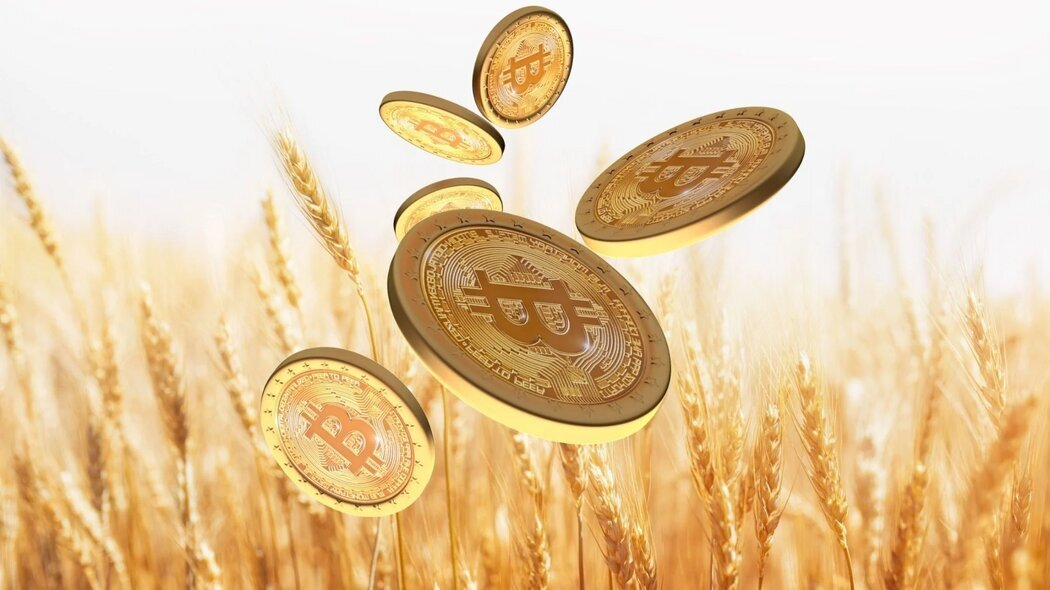
    Bitcoin Crops Yield Farming

    The importance and popularity that active trading used to hold has transitioned over to passive income strategies. The eternal debate of yield farming vs. staking is one example of such strategies.

    Holding one’s digital assets safe and hoping their value increases is no longer as attractive as it used to be. Nowadays, people usually look to the markets for opportunities that would allow them to put their crypto to good (and lucrative) use. That’s where staking vs. yield farming comes in — both make it possible to earn from your crypto passively, but what’s the difference? Join us below as we explain.

    What is Yield Farming?

    At first glance, the origin of the term “yield farming” may sound strange. “Yield” is a measure of the return to the holder on a security/crypto, while “farming” refers to the process of generating that cryptocurrency. Therefore, yield farming is basically a new way to “grow” your own cryptocurrency (much like farmers grow food).

    More specifically, this process means individuals lend their crypto assets to DeFi platforms, which lock them in liquidity pools. While your assets are locked, they actually provide liquidity to DeFi protocols by making it possible to trade, borrow, and lend. In return for using your crypto assets to facilitate these operations, the platform earns fees, which it then pays back to investors depending on their share in the overall liquidity pool.

    However, this is where it gets a bit more technical. Liquidity pools are necessary to ensure AMMs (Automated Market Makers) can function. Why are AMMs important? Rather than using traditional sellers and buyers, AMMs allow automated, permissionless trading thanks to liquidity pools.

    On the other end of the spectrum, liquidity providers get LP (Liquidity Provider) tokens that track individual contributions to the liquidity pool. Therefore, the rewards are higher for liquidity providers who contribute more capital to the pool and vice versa.

    Yield Farming Advantages

    If you’re looking to become a yield farmer, one way to go about it is to lend your digital assets through a DApp. When doing so, the DApp lends your coins to borrowers, allowing you to earn payment in the form of new coins. However, keep in mind that the interest rates depend on the demand for digital assets, and also that your earned interest accrues every day.

    In other words, it’s not as if it’s mandatory to merely keep your crypto assets in a wallet, especially when you consider that you can potentially earn more through yield farming. Revenue streams for yield farmers range from token rewards and transaction fees to price appreciation and interest. Additionally, this strategy also helps with affordability, since it’s less costly than mining (you don’t have to invest in costly mining equipment or pay for electricity used in the mining process).

    Moreover, if you’re looking into more sophisticated yield farming strategies, you can consider smart contracts or depositing different tokens on a crypto platform. But most of all, yield farming protocols are usually focused on allowing farmers to maximize returns while simultaneously taking security and liquidity into account.

    What is Staking?

    Staking is the more traditional of the two strategies. If you’re looking into staking, you’ll need to commit your crypto assets to a network (such as Ethereum, for example), and participate in validating its transactions. The term “staking” is behind the Proof of Stake (PoS) consensus mechanism that numerous blockchain networks use. Basically, this strategy enables you to earn interest while you’re waiting for the release of block rewards.

    PoS vs. PoW

    Most astute investors and individuals who are still new to the industry wonder why PoS exists. After all, Bitcoin uses the Proof of Work (PoW) consensus mechanism, so what’s the point of having another one? The answer is that PoS blockchains are much less resource-intensive than PoW ones. PoW networks need massive computing power for validating new blocks.

    On the other hand, PoS blockchains have nodes — servers that process and verify transactions, and also serve as checkpoints. Users who set up these nodes are commonly referred to as “validators.” These individuals are selected randomly to sign blocks and are rewarded for their role.

    So, how does staking as a crypto strategy factor into everything mentioned above? While it’s prudent to understand the technicalities involved in how PoS works and setting up a node, it is not a requirement. Thanks to technology in the form of crypto exchanges, you can simply send your crypto assets to an exchange, after which the network will handle the node setup and validation.

    Additionally, the more stakes there are on the blockchain network, the more decentralized and safer it will be against attacks. Overall, it’s a convenient system: keeping the network safe and in working order means that stakers receive rewards. These rewards typically offer higher returns compared to investing in other financial markets. Regardless, remember that there are also risks associated with staking, since networks’ stability may fluctuate over time.

    Difference Between Staking and Yield Farming

    The differences between staking and yield farming include the following:

    • Safety
    • Fees related to transactions
    • Lock-in periods
    • Profitability
    • Level of complexity

    Safety

    Hacking is always a risk in all things online, including crypto. Susceptibility to hackers is higher with yield farming that relies on more recent DeFi protocols. Additionally, if there are flaws in the programming of the smart contract, this risk increases even more.

    Generally speaking, staking is safer than yield farming because stakers actively participate in the strict consensus process of the underlying blockchain. Therefore, shady individuals typically lose their staked funds if they’re caught attempting to trick the system.

    Fees Related to Transactions

    Gas costs are an inherent (and significant) concern for yield farmers. On the one hand, yield farmers can switch liquidity pools at their leisure, but on the other, they also must pay transaction fees every time they do so. Considering these costs is critical even if you expect a higher return on another platform.

    With staking, you don’t need to solve complex math problems like in a PoW blockchain network. Consequently, the upfront staking and ongoing maintenance costs are lower when staking.

    Lock-In Periods

    When looking into yield farming vs. staking, the winning strategy for liquidity-seeking investors may seem evident at first glance. Why? It seems straightforward: locking in your funds for a more extended period of time typically leads to higher returns (or APY) from staking.

    However, there’s also the fact that yield farming does not require investors to lock in their funds.

    Profitability

    The relationship between risk and reward is simple to understand: riskier investments usually offer higher returns, and vice versa. Therefore, the higher your returns, the more funds you have to reinvest. The APY (Annual Percentage Yield) is a traditional method for measuring returns. Conventional staking on exchanges typically offers steadier APY returns than yield farming.

    Case in point, staking rewards usually range from 5% to 14%. On the other hand, yield farmers can generate massive profits by adopting a new strategy or project early in the process, allowing their returns to go as high as 1000%.

    Level of Complexity

    The staking process and strategy is easier compared to yield farming. When looking at passive income, staking means that investors simply choose the staking pool and lock in their assets.

    Conversely, yield farming is usually more complex because investors have to choose which tokens they want to lend and on which platforms. Down the line, there’s also the possibility that they will continue switching tokens or platforms.

    Periodically switching between different yield farming pools may increase your APY, but there’s also the matter of paying additional gas fees in the process. Overall, yield farming is more complex compared to staking, but it may result in more lucrative returns if you possess the knowledge, time, and resources you’re willing to devote to this strategy.

    Start Earning Passive Income Today

    Investors have numerous opportunities when they step into the crypto world. Knowing the factors and risks that can influence staking gives investors an advantage in designing yield-based strategies.

    CEX.IO’s products allow users to earn staking rewards of between 2.6% and 23% on a variety of coins without lock-up periods. CEX.IO’s Staking product — including the straightforward CEX.IO staking calculator — is low-risk and aligns with the technology’s core principle of inclusivity.

    Consequently, users can stake whatever amount is most comfortable for them and allows everyone to reap potential benefits from the growth of the crypto space.

  • KuCoin Earn – a One-Stop Platform for Earning Passive Income with Crypto

    KuCoin Earn – a One-Stop Platform for Earning Passive Income with Crypto

    Key takeaways:

    • With over 700 supported cryptocurrencies and over 10 million users, KuCoin is among the top 5 crypto trading platforms
    • The exchange’s native financial products platform – KuCoin Earn offers a wide range of passive income opportunities such as earning yield through flexible savings, staking, and various promotion products
    • KuCoin Earn supports over 50 coins and boasts with APRs of up to 150%

    KuCoin is a cryptocurrency exchange that launched in September 2017. In 2018, the platform secured $20 million in Round A funding round led by IDG Capital and Matrix Partners. The company saw continued growth in the following years, and raised $150 million at a valuation of $10 billion in 2022. Today, this Seychelles-headquartered exchange caters the needs of more than 10 million crypto traders from 207 countries and regions around the world.

    KuCoin is among the top 5 cryptocurrency exchanges

    Over 700 supported digital assets and over 1,200 trading pairs make KuCoin one of the biggest altcoin exchanges, while the platform’s trading volumes place KuCoin among the top 5 most popular crypto exchanges. This centralized exchange offers product ranging from spot trading and margin trading all the way to P2P fiat trading, futures trading, staking, and lending.

    The KuCoin exchange is secure, simple, and easy-to-use, which is why the platform is sometimes referred to as the “people’s exchange”.

    What is KuCoin Earn?

    KuCoin Earn is KuCoin’s native one-stop wealth management service that allows users to earn passive income on top of their crypto holdings by locking their crypto assets in various savings and staking deals. KuCoin Earn currently supports over 50 coins and tokens.

    KuCoin Earn Products

    KuCoin offers both flexible deals, where users can redeem their funds at any time, as well as products with fixed terms, which means that the funds are redeemed automatically at the product’s maturity. As on other platforms, the yields of fixed term products are usually higher than that of flexible term products.

    The highest APRs, however, are offered on promotional products, which are usually quickly sold out because of their high popularity and limited availability. In addition, KuCoin Earn also allows users to participate in Polkadot parachain auctions and ETH2.0 staking.

    Savings Products

    KuCoin Earn savings products are like a savings account for your crypto assets. These products allow investors to move their crypto assets to flexible or fixed savings products and earn rewards on crypto that would have otherwise been idle.

    At the time of writing, KuCoin offers a 2.87% APR on USDT deposits with a flexible term. The platform also offers a 6% APR on KSM deposits, 10% APR on OLT, 20% APR on DFI and an astonishing high 45% APR on HYDRA deposits. Please note that the rewards are paid out in the same token that’s deposited.

    Staking Products

    KuCoin also facilitates easy one-click staking of coins and tokens. Naturally, the staking products are only offered for coins and tokens belonging to proof-of-stake blockchains. Again, the highest APR of 47.17% is offered for staking HYDRA. Other APRs are as follows: XPRT (27.44%), ZIL (11.17%), KSM (10.26%), VSYS (8.17%), ATOM and DOT (both 7.44%). KuCoin earn also supports staking for coins like MATIC, TRX and ADA.

    Promotions

    Exceptionally high APRs are offered through promotions, but the number of participants or rewards to be distributed among them is usually capped. These products are available on a first come, first served basis, and the ones with the most lucrative rewards are often sold out quickly. KuCoin offers both fixed term promotions, where token holders must lock their tokens for the displayed duration to get rewards, and flexible term promotions, where tokens can be subscribed and redeemed at any time.

    At the time of writing, there are 3 available flexible terms promotions offering an APR of over 50% and 9 flexible terms promotions with an APR of over 30%.

    BurningDrop Token Distribution Platform

    BurningDrop is KuCoin’s fair token distribution platform, where users can lock their crypto assets to access a share of tokens, usually belonging to a newly launched project or blockchain. After locking up their crypto assets, participants can additionally increase their end reward by burning KuCoin Earn’s native Proof of Liquidity (POL) tokens.

    Several blockchain start-ups have already successfully distributed their tokens through KuCoin’s BurningDrop. In the past HORD, TCP, LOCG, LNCHX and XCAD were distributed, while there is an ongoing FreshCut (FCD) distribution at the time of writing.

    Polkadot Parachain Auctions

    KuCoin Earn also allows DOT holders to participate in Polkadot’s parachain auctions. If the project to which a user allocates his DOT stake wins the auction, the user receives on-chain rewards plus a share of the exclusive KuCoin Rewards Pool, while the staked DOT are gradually returned after the lease period. However, if the project fails to win the parachain auction, the user will receive their full DOT stake back immediately.

    ETH 2.0 Staking

    As Ethereum 2.0 staking went live in November 2020 many centralized cryptocurrency exchanges offered an easier way to stake on the new Ethereum chain secured by the proof-of-stake consensus.

    KuCoin is no exception, as it offers an ETH 2.0 staking service which allows users to earn staking ewards on their ETH. The feature makes Ethereum staking much more accessible, since “solo staking” ETH requires a lot of capital upfront (32 ETH) and technical knowledge.

    Users that stake their ETH on KuCoin Earn receive an equal amount of ETH2 tokens, which are issued by KuCoin and represent the rights to an ETH 2.0 token plus the corresponding staking rewards. By holding specific amounts of ETH2 in their main and trading accounts, ETH stakers can earn additional POL mining rewards on top of ETH staking rewards.

    The advantages of using KuCoin Earn

    KuCoin Earn helps you boost your earnings by receiving savings and staking rewards on crypto assets that would otherwise sit idle on your trading account. All assets held in Earn products also count towards the POL mining power, for which you receive some extra income in the form of the POL token. In addition, the suite of products on KuCoin Earn is extremely diverse and flexible. If you subscribe to flexible products, you will be able to immediately withdraw your coins at any time, should the need arise.

    The bottom line

    KuCoin Earn is an easy-to-use platform that offers a wide variety of passive income products. Every user can pick between savings, staking, promotion products and BurningDrop – KuCoin’s token distribution platform based on his needs, expectations, and risk tolerance.

    The platform offers competitive yields while maintaining high flexibility and asset liquidity. It supports over 50 coins and tokens, including BTC, USDT, USDC, ETH, ATOM, SOL, KSM, ZIL and more. Furthermore, the platform’s native POL token enables unique features and can provide additional income in the form of mining rewards.

  • What Are the Top Staking Trends to Watch for in 2022?

    What Are the Top Staking Trends to Watch for in 2022?

    Crypto future of staking & what are the staking trends in 2022 

    The role of staking in the crypto market has been growing over the past couple of years, and there’s no doubt it will keep rising in 2022. Why? More people get interested in crypto sales since the news about El Salvador officially made Bitcoin legal tender in September 2021 and the number of coins keeps growing. In addition, more people can afford to invest in crypto since the introduction of the PoS consensus mechanism. Numerous crypto investment sites emerge every year making it more lucrative to stake crypto coins. We believe that in 2022, MyCointainer.com will hit the list of the best crypto staking sites. Where will you be at that time?

    Top crypto staking trends in 2022 

    Regulations in crypto

    It’s not a secret that governments are discussing possible opportunities and threats of the cryptocurrencies. That’s why, several US Senate Committee hearings took place in 2021. Crypto investors need to get ready to provide more details about their income in their tax reports and for $10K transactions. This will not be implemented until 2024, but we should get ready for more regulations in 2022.

    Those who live outside the United States shouldn’t relax too much, since a lot of countries will follow suit. The European Union has already adopted MiCA in March this year. MiCA or Markets in Crypto Assets Regulation, introduced in 2020, is a legal framework in the EU created to promote innovation and fair competition in the crypto market, secure cryptocurrency investment and address risks that might arise in the process of wide use of crypto assets. More regulations are expected in Turkey, South Korea and Japan.

    NFT staking’s popularity might drop

    NFT has seen skyrocketing growth in a very short time and now the question remains whether the growth continues or the mania reaches stagnation. The demand for NFTs is still strong on the marketplace and a lot of buzz around it is because of NFT’s refreshing potential to transform art. Recently we’ve even come across a cartoon collection of Zelensky vs Putin NFTs. Our advice is, if you haven’t tried NFTs yet, don’t rush to throw all your money there, since investing 2022 might be not as promising and this year is going to test whether the hype around them can match the usage.

    Ethereum moves toward Proof-of-Stake model

    Ethereum’s roadmap for 2022 includes some important steps to the transition from PoW to PoS. The Beacon Chain introduced proof-of-stake to the Ethereum ecosystem, but it hasn’t changed the way Ethereum essentially works yet. The plans for 2022 include merging with the mainnet which means dramatic consensus change reducing energy consumption by 99.95%.

    Other altcoins are predicted to keep growing in 2022, surely, with some volatility. Go to MyCoinitainter staking crypto assets page to find top currencies to invest in this year.

    Crypto potential and how it’s going to affect the cryptocurrency market

    Any reputable platform with cryptocurrency market analysis will provide the list of altcoins that have seen the biggest growth in the past couple of years. Most of the time, they include Ethereum, Polkadot, Litecoin, Cardano, Stellar. Thus, altcoin price prediction for 2022 can be made for those most well-known and relatively stable coins. As for numerous other assets, the degree of volatility can be enormous. That’s why crypto staking is so compelling – you can literally make a fortune overnight.

    Some altcoins have been endorsed for having newer features than Bitcoin, for example, handling more transactions per second. Being decentralized and less regulated, they have more space for innovation and, consequently, a big potential for transforming the crypto market.

    Crypto market research report – rise of altcoins and its impact on future cryptocurrency markets

    As you may already know, altcoin means any cryptocurrency other than Bitcoin. Ethereum is the most well-known altcoin, but these days there are numerous popular coins that have seen a steady ascent for a decent period of time. To be more precise, in February 2022, 17,000 cryptocurrencies were known. All altcoins available, make up 40% of the crypto market cap.

    Ethereum is the best-known altcoin. Ether, its native token, has grown immensely since it was launched in 2015. Despite all the price fluctuations, it’s highest in 2021 was $4,800 and altcoin price prediction 2022 by some experts states it can grow by 400% this year.

    Future cryptocurrency predictions: Where will cryptocurrency be in 5 years?

    There’s no doubt that in five years the crypto market will be more legally limited than now. Countries are actively looking for ways to both regulate and secure the crypto market. In 2021, we noticed that the prices of altcoins are more or less tied to the price of Bitcoin. Surely, it might change, but future coin predictions for altcoins are connected to the coin price prediction of Bitcoin. Cryptocurrencies have huge degrees of fluctuation but one thing remains clear – constant growth. Wall-Street investors’ future cryptocurrency predictions state that Bitcoin’s value is going to reach at least $200,000 by spring 2027, and we believe that altcoins will follow suit.