Tag: Mining

  • The 9 Best ASIC Miners in 2026 – The Most Profitable ASIC Mining Rigs

    The 9 Best ASIC Miners in 2026 – The Most Profitable ASIC Mining Rigs

    Cryptocurrency mining can be a very profitable business, but succeeding in this sector requires a well-thought-out plan, a significant amount of invested capital, and knowledge of the latest trends in cryptocurrency mining. We have selected the best ASIC miners available in 2026 to help you get started on the right foot. 

    Although Bitcoin mining is the largest sector of the cryptocurrency mining industry by far, we’ve decided to also feature ASIC miners designed for algorithms other than SHA-256. This is because mining cryptocurrencies other than Bitcoin can be more profitable if timed right, and we also wanted to highlight the diversity of options in the ASIC miner space. 

    Without further ado, here is our selection of the best ASIC miners in 2026: 

    1. Bitmain Antminer S23 Hyd – Ultra-efficient hydro-cooled flagship from Bitmain
    2. Bitmain Antminer S21 XP Hyd – High-performance water-cooled miner for professional setups
    3. Bitmain Antmines S21 – A well-rounded Bitcoin miner
    4. Bitmain Antminer KS5 Pro – Best Kaspa ASIC miner
    5. Canaan Avalon Made A1466 – High-performance Bitcoin miner by Canaan
    6. MicroBT WhatsMiner M66 – Powerful SHA-256 ASIC miner by MicroBT
    7. Bitmain Antminer L9 – Best Scrypt ASIC miner
    8. Bitmain Antminer X5 – Best RandomX ASIC miner
    9. Innosilicon A10 Pro ETH – Solid EtHash miner

    The Best ASIC miners in 2026 – A closer look

    Now, let’s take a closer look at each miner that made our list of the best ASIC miners in 2026.

    1. Bitmain Antminer S23 Hyd – Ultra-efficient hydro-cooled flagship from Bitmain
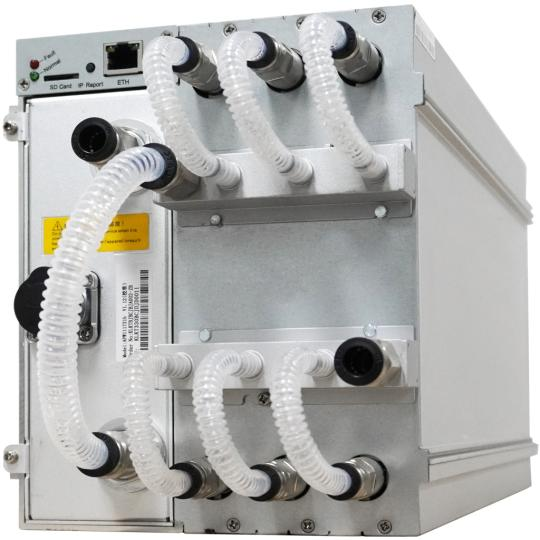
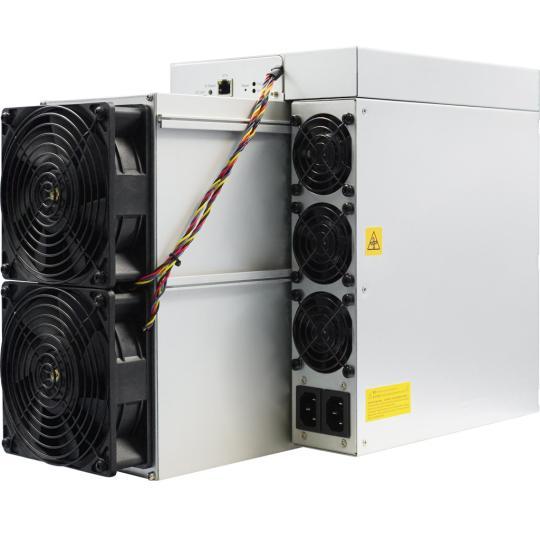
      The Bitmain Antminer S23 Hyd is a next-generation, water-cooled Bitcoin miner designed for large-scale and industrial mining setups. It delivers a powerful hash rate of 580 TH/s while drawing 5,510W of power, achieving an efficiency of 9.5 J/TH. This makes it one of the most energy-efficient SHA-256 miners available at launch.

      Released in January 2026, the S23 Hyd builds on Bitmain’s advanced liquid-cooling technology to provide improved thermal control and reduced noise compared to traditional air-cooled machines. Its design is aimed at professional mining farms that prioritize high performance, stability, and lower long-term operating costs.

      Price$17,400
      Release DateJanuary 2026
      Hash Rate580 TH/s
      Power Consumption5,510W
      Efficiency9.5 J/T

      2. Bitmain Antminer S21 XP Hyd – The most profitable Bitcoin miner

      Bitmain’s Antminer S21 XP Hyd is one of the most profitable ASIC miners for the SHA-256 hashing algorithm used by Bitcoin, Bitcoin Cash, Bitcoin SV, and other popular cryptocurrencies. This hydro-cooled miner can be cooled with antifreeze or water and outputs a hashrate of 473 TH/s with a power efficiency of 12 J/T.

      Currently, Bitmain is accepting orders for the Antminer S21 XP Hyd at a price of $10,170 per unit. Although the price per unit is high, the Antminer S21 XP Hyd still represents a large chunk of the Bitcoin mining industry, which has become much harsher after the fourth Bitcoin halving

      Price$10,170
      Release DateQ4 2025
      Hash Rate473 TH/s
      Power Consumption5,676W
      Efficiency12 J/T

      3. Bitmain Antminer S21 XP Hyd – The most profitable Bitcoin miner

      The Bitmain Antminer S21 is one of the best all-around ASIC miners for the SHA-256 algorithm, making it suitable for mining Bitcoin, Bitcoin Cash, and similar cryptocurrencies. It delivers a hash rate of 200 TH/s while maintaining strong power efficiency at 17.5 W/Th, offering a solid combination of performance and energy savings.

      Priced at around $4,599, the Antminer S21 is a great choice for both beginners entering Bitcoin mining and experienced users looking to upgrade their setups. With its efficiency-focused design and reliable output, it provides consistent profitability potential even amid rising network difficulty.

      Price$4,599
      Release DateFebruary 2024
      Hash Rate200 TH/s
      Power Consumption3,500W
      Efficiency17.5 J/T

      4. Bitmain Antminer KS5 Pro – Best Kaspa ASIC miner

      The Bitmain Antminer KS5 Pro is currently the most powerful ASIC miner specialized for KHeavyHash, the hashing algorithm used by the Kaspa cryptocurrency. This air-cooled miner generates 21 TH/s, is rated at 3,150W and has a power efficiency of 150 J/T. 

      The Antminer KS5 Pro’s impressive power comes with a substantial price tag, as Bitmain is selling the miner at a price of $15,000 per unit.

      With Kaspa being the most profitable cryptocurrency to mine at the moment, we can expect the competition in the Kaspa ASIC miner industry to intensify significantly in the coming months.

      Price$15,000
      Release DateOctober 2024
      Hash Rate21 TH/s
      Power Consumption3,150W
      Efficiency150 J/T

      5. Canaan Avalon Made A1466 – High-performance Bitcoin miner by Canaan

      The Avalon Made A1466 is a powerful Bitcoin ASIC miner produced by Canaan. This miner outputs 150 TH/s at a power efficiency of 21.5 J/T. The Avalon Made A1466, which is the flagship model of Canaan’s A14 series, is sold for roughly $1,800 by the manufacturer.

      The Avalon Made A1466 is a solid choice for those who require a powerful Bitcoin miner at a relatively low price per unit.

      Price$1,500
      Release DateSeptember 2023
      Hash Rate150 TH/s
      Power Consumption3,230W
      Efficiency21.5 J/TH

      6. MicroBT WhatsMiner M66 – Powerful SHA-256 ASIC miner by MicroBT
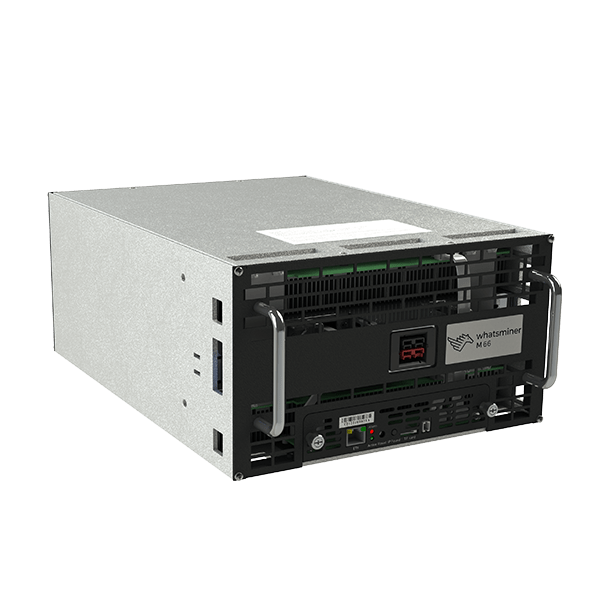
      One of the best alternatives to Bitmain’s Antminer series is the WhatsMiner series produced by MicroBT. One of the company’s most powerful miners is the WhatsMiner M66. This immersion-cooled miner is sold for $4,767 by the manufacturer and outputs a hashrate of 247 TH/s. The miner has a power consumption of 5,452W and a power efficiency rating of 19.9 J/T. 

      Although this ASIC miner is certainly among the more powerful options available on the market, it also has a hefty price tag, which might not make it suitable for all miners.

      Price$4,767
      Release DateOctober 2023
      Hash Rate247 TH/s
      Power Consumption5,452W
      Efficiency19.9 J/T

      7. Bitmain Antminer L9 – Best Scrypt ASIC miner
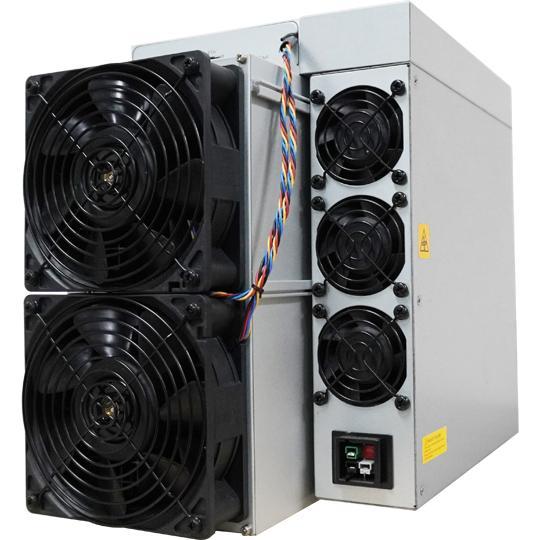
      The Scrypt hashing algorithm is used by two of the most popular cryptocurrencies on the market – Litecoin and Dogecoin. Currently, the most effective ASIC miner for the Scrypt algorithm is Bitmain’s Antminer L9.

      The Antminer L9 generates 16 GH/s at a power consumption 3,360W and an efficiency of 210 J/G. This air-cooled miner is designed to function at an operating temperature of 75 degrees Celsius. 

      Bitmain was selling the Antminer L9 at $5,584 per unit, though the miners sold out shortly after it’s September 2025 release. 

      Price$5,584
      Release DateSeptember 2025
      Hash Rate16 GH/s
      Power Consumption3,360W
      Efficiency210 J/G

      8. Bitmain Antminer X5 – Best RandomX ASIC miner

      Although Monero’s RandomX hashing algorithm was designed to be mineable by consumer-grade computer hardware, it can also be mined with specialized hardware. Bitmain’s Antminer X5 is currently the most powerful ASIC miner for Monero.

      This miner, which Bitmain is selling for $2,999 per unit, outputs 212 KH/s and has a power consumption of 1,350W. In terms of power efficiency, this air-cooled miner is rated at 6.37 J/K. Notably, this miner features the first RISC-V architecture CPU ever produced by Bitmain. 

      Price$2,999
      Release DateSeptember 2023
      Hash Rate212 KH/s
      Power Consumption1,350W
      Efficiency6.37 J/K

      9. Innosilicon A10 Pro ETH – Solid EtHash miner
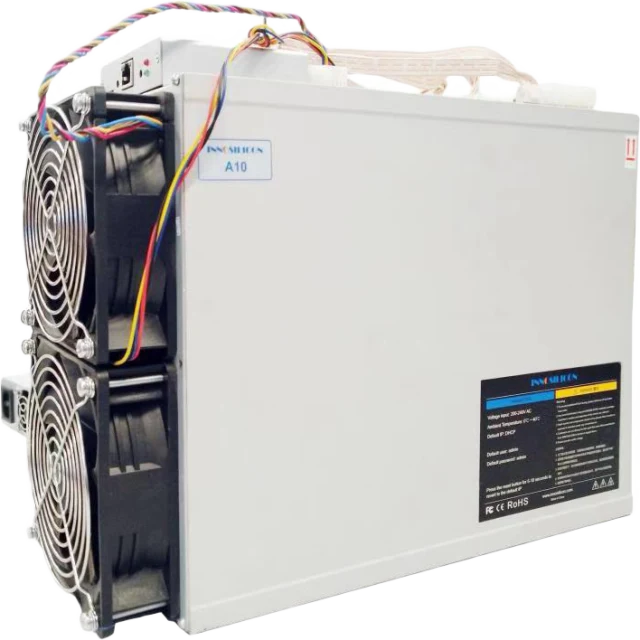
      Although Ethereum no longer uses a Proof-of-Work consensus mechanism, there are still some notable cryptocurrencies using the EtHash hashing algorithm, for example Ethereum Classic. Innosilicon’s A10 Pro ETH is one of the most compelling options for miners that need an ASIC tailored for the EtHash algorithm. 

      The A10 Pro ETH outputs a hashrate of 500 MH/s and has a power consumption of 860W. The miner has an efficiency rating of 1.92 J/MH.

      Price$1,900
      Release DateMay 2020
      Hash Rate500 MH/s
      Power Consumption860W
      Efficiency1.92 J/MH

      FAQs

      Now that we have showcased the best ASIC miners available on the market today, let’s answer some of the most common questions users have on the topic of ASIC miners. 

      What is an ASIC mining rig?

      An ASIC mining rig is a device that is specialized to mine a specific type of cryptocurrency as efficiently as possible. ASICs (application-specific integrated circuits) are chips that are designed for a very narrow range of tasks, in contrast to the chips found in desktop computers, laptops and smartphones, which are capable of performing a variety of tasks. 

      When it comes to ASIC miners, ensuring a safe operating temperature is crucial. Depending on their design, ASIC miners can use air cooling, liquid cooling or immersion cooling.

      Are ASIC miners profitable?

      The profitability of ASIC miners depends on many different factors. This includes the cost of the ASIC miner itself, the cost of hosting and maintenance, electricity costs, the price trend of the cryptocurrency that’s being mined, and more factors. 

      Some cryptocurrencies such as Bitcoin can only be profitably mined with ASICs since consumer-grade computer hardware is not powerful enough to mine them effectively.  

      Can ASIC miners be used for anything else?

      The chips powering ASIC miners are designed specifically to mine a certain hashing algorithm as efficiently as possible. Therefore, ASIC miners can not be used for any other purpose than mining the cryptocurrency / hashing algorithm they were designed for. 

      The bottom line

      We hope that our roundup of the best ASIC miners has helped you find the best models for mining popular cryptocurrencies such as Bitcoin, Litecoin, Dogecoin, and Kaspa. Although cryptocurrency mining can certainly be profitable, running a successful mining operation requires a significant amount of capital, resources, and knowledge. 

      If you want to learn more about the topic of cryptocurrency mining, make sure to take a look at our list of the best Bitcoin mining companies to invest in.


    1. How Long Does It Take to Mine 1 Bitcoin?

      How Long Does It Take to Mine 1 Bitcoin?

      Theoretically, you can mine 1 Bitcoin in roughly 10 minutes. This is because the Bitcoin blockchain adds a new block (and releases the associated block reward) about every 10 minutes. Realistically, however, you need to make a significant investment in ASIC miners to mine 1 BTC in a reasonable period of time.

      Currently, the Bitcoin block reward is 3.25 BTC. If you set up a solo Bitcoin miner and got extremely lucky, you would be able to earn 3.25 BTC in about 10 minutes after you started mining. However, it’s important to understand that this scenario is highly unlikely unless you made a very large investment into Bitcoin mining hardware.

      Since Bitcoin mining is extremely competitive and the Bitcoin protocol releases 100% of the block reward to a single miner, most miners would never earn any BTC if they didn’t join a mining pool.

      If a miner that’s part of a given mining pool receives a block reward, the reward is split across all miners in that pool, proportional to the amount of hashrate they are contributing to the pool. For example, if you contributed 10% of the pool’s hashrate and another miner in your pool found a block, you would receive 10% of the 3.125 BTC reward (0.3125 BTC). 

      So, how long does it take to mine 1 Bitcoin realistically?

      The Bitcoin blockchain is entirely public, which means we have access to all the information required to calculate roughly how long it would take to mine 1 Bitcoin in various scenarios.

      By knowing a mining pool’s average hashrate in a given time period and how many Bitcoin blocks they mined during that period, we can arrive at a rough estimate of how much hashrate is required to mine 1 BTC in that period. 

      Market share of Bitcoin mining pools based on number of blocks mined in the last 7 days as of February 2026. Image source: HashrateIndex.com

      For example, let’s calculate how much hashrate we would need to mine 1 BTC in 1 day on average.

      Foundry, which is currently the biggest Bitcoin mining pool in the world, mined 319 blocks in the last 7 days, which translates to 997 BTC in rewards. By dividing this figure by 7, we see that they earned 142 BTC per day on average in the last week.

      Therefore, you would need 1 / 142 (equivalent to 0.7%) of Foundry’s hashrate if you wanted to mine 1 BTC per day on average. The average hashrate of the Foundry mining pool in the last 7 days was 310.6 EH/s, and 0.7% of that figure is 2.17 EH/s. This is how much hashrate you would need to be able to mine 1 BTC per day on average.

      Reaching that level of hashrate requires a very large investment. As an example, let’s take the Bitmain Antminer S21 ASIC miner, which produces 200 TH/s and is listed at a price of $5,400 by the manufacturer (prices can vary depending on the merchant). 

      To achieve the 2.17 EH/s that is currently required to mine 1 BTC in a day on average, you would need 10,375 Antminer S21 miners, which would require an investment of $35 million.

      Your computing power determines how long it takes to mine 1 Bitcoin

      Now, let’s take a quick look at the following table to get a better idea of how fast you can mine Bitcoin, assuming different investment amounts into ASIC miners:

      Amount of Bitmain Antminer S21 ASIC minersHashrateInvestment amountTime to mine 1 Bitcoin
      51,000 TH/s$27,0001,310 days 
      102,000 TH/s$54,000655 days 
      5010,000 TH/s$270,000131 days
      10020,000 TH/s$540,00065 days
      500100,000 TH/s$2.7 million13 days
      1,000200,000 TH/s$5.4 million6.5 days
      5,0001 EH/s$27 million1.3 days
      10,0002 EH/s$54 million0.65 days

      These calculations are based on the difficulty of mining Bitcoin as of February 2026 and the assumption that the miner being used is the Antminer S21, which produces 200 TH/s and is listed at a price of $5,400 by the manufacturer. 

      It’s also important to stress that the calculations above don’t account for other costs of mining Bitcoin, such as electricity, maintenance, cooling, and the space where the miners are located. Accounting for these costs would drive the investment amounts required to mine 1 BTC in a given time period substantially higher.

      The Bitcoin mining landscape has become even more competitive lately following the Bitcoin halving, which happened on April 19, 2024. The halving reduced the block reward from 6.25 BTC to 3.125 BTC. 

      Even though the Bitcoin mining difficulty has dropped recently, it’s still roughly at the levels we saw in March. This means that mining a Bitcoin block still requires about the same amount of resources as it did in March, but yields half the rewards, which puts significant pressure on less efficient Bitcoin mining operations.

      Why Bitcoin miners join mining pools

      Without specialized Bitcoin mining hardware, it’s nearly impossible to mine 1 Bitcoin in any reasonable timeframe. For example, trying to mine Bitcoin with a standard gaming GPU won’t work due to the high level of competition in Bitcoin mining.

      Solo mining (mining Bitcoin without joining a mining pool) is more akin to gambling in a lottery than a reliable income source, unless you operate a large-scale mining farm with hundreds or thousands of rigs. The most feasible way to earn through Bitcoin mining is by joining a mining pool, which still requires a significant investment in proper mining hardware to make sense financially.

      The reason why it’s so difficult to make any profits with solo mining is that the Bitcoin protocol awards each block reward to only one miner. For example, if you controlled just 0.0001% of the total Bitcoin network’s hashrate, you would only have a 0.0001% chance of receiving a reward as each block is added to the Bitcoin blockchain. 

      Joining a mining pool provides a much more predictable stream of revenue. When any miner in your pool successfully mines a block, you would receive a portion of the Bitcoin reward, proportional to the amount of hashrate you contribute. 

      The bottom line

      With Bitcoin being priced north of $66,000 at the time of writing this article, it’s no surprise that mining 1 Bitcoin is far from a trivial task. 

      The recent Bitcoin halving has heated up the competition in the Bitcoin mining industry even further, which means that mining only makes sense for miners that can achieve the highest levels of efficiency through low electricity costs, highly effective cooling solutions, or other competitive advantages. 

      If you don’t want to make a significant investment of money and time into Bitcoin mining, it will likely result in a financial loss. Of course, if you want to engage in mining simply from a hobbyist perspective, the financial aspect is less important.

      If you want to explore an alternative way of investing into Bitcoin mining, make sure to take a look at our list of the best Bitcoin mining companies to invest in for 2026.

    2. Top 6 Bitcoin Mining Stocks – The Best Bitcoin Mining Companies to Invest in for 2026

      Top 6 Bitcoin Mining Stocks – The Best Bitcoin Mining Companies to Invest in for 2026

      Bitcoin mining stocks can be an interesting option for the portfolio of investors that are bullish on cryptocurrency. These stocks provide an alternative way of gaining exposure to Bitcoin, and can even outperform BTC in certain contexts. 

      The 6 best Bitcoin mining stocks to invest in 2026:

      1. Marathon Digital Holdings – The biggest US-listed Bitcoin miner
      2. CleanSpark – A Bitcoin miner focused on low-carbon energy sources
      3. Riot Blockchain – A major Bitcoin miner with a fleet of over 100,000 miners
      4. Cipher Mining – A Bitcoin mining company launched by Bitfury
      5. Core Scientific – A Bitcoin miner that has re-emerged from bankruptcy 
      6. Hut 8 Mining – A diversified Bitcoin mining company with strong infrastructure

      Exploring the top 6 Bitcoin mining stocks in 2026

      As the next Bitcoin halving approaches, the subject of Bitcoin mining is likely to get a significant boost in exposure. Therefore, it’s important to stay up to date with the latest developments in the Bitcoin mining industry.

      Without further ado, let’s explore our list of the best Bitcoin mining stocks in 2026. We’ve focused on Bitcoin mining companies that are publicly traded in the United States, which makes it possible for any US investor to invest in them.

      1. Marathon Digital Holdings – The biggest US-listed Bitcoin miner

      Marathon is a major United States-based Bitcoin mining company, sporting 28.7 EH/s of operational hash rate as of February 17, 2026. Marathon’s mining fleet, which is distributed across 11 mining facilities, has an impressive efficiency of 18.6 J/TH.

      The company is listed on the NASDAQ stock exchange under the ticker MARA. As of February 2026, Marathon has a market capitalization of roughly $2.82 billion, which makes it the most valuable US-listed Bitcoin mining company. 

      Marathon is also notable for the significant Bitcoin holdings in its treasury. As of October 2, 2025, Marathon owned 52,850 BTC, which translates to $3.58 billion at the current Bitcoin price ($67,700). 

      In March of 2024, Marathon unveiled a new two-phase immersion cooling system for data centers called MARA 2PIC700.

      TickerMARA
      Stock price$7.55*
      LocationUnited States
      Hashrate66.5 EH/s (Feb 2026)
      *As of February 17, 2026.

      2. CleanSpark – A Bitcoin miner focused on low-carbon energy sources

      CleanSpark is a United States-based Bitcoin mining company that places an emphasis on mining with the use of low-carbon energy sources such as wind, solar, nuclear, and hydro power. 

      The company is fostering a sustainable energy framework by buying premium renewable energy credits and connecting to low-carbon power sources on the grid.

      The company mines Bitcoin across 9 operations, primarily in the Southern part of the United States. CleanSpark owns and operates 8 mining operations and uses co-location services offered by one mining operation. 

      CleanSpark is publicly traded, as it’s listed on the NASDAQ stock exchange under the ticker CLSK. At the time of writing, CleanSpark has a market cap of $2.41 billion. 

      As of January 2026, CleanSpark had 133,963 ASIC miners in its fleet, and achieved an efficiency of 16.1 J/TH. The company’s fleet had a hashrate capacity of 50.0 EH/s. The company also had Bitcoin holdings of over 13,500 BTC.

      TickerCLSK
      Stock price$16.93*
      LocationUnited States
      Hashrate16.4 EH/s (Mar 2024)
      *As of February 17, 2026

      3. Riot Blockchain – A major Bitcoin miner with a fleet of over 100,000 miners

      Riot Platforms, previously known as Riot Blockchain, is one of the leading Bitcoin mining entities in the United States, boasting more than 100,000 ASIC miners. The company has demonstrated a consistent ability to generate profit and has been on a fast track of expansion. 

      In addition to mining Bitcoin with their own ASIC miners, Riot Blockchain also provides infrastructure for Bitcoin mining and data center hosting. This is particularly aimed at institutional clients, facilitated through its inaugural large-scale Bitcoin mining center located in Rockdale, Texas. 

      This facility boasts a total developed capacity of 1.2 gigawatts, showcasing Riot Blockchain’s commitment to supporting the broader Bitcoin mining ecosystem and its scalability for institutional needs.

      Riot has a purchase agreement with ASIC miner manufacturer MicroBT through which the company has purchased 8,320 M56S++ miners and 24,960 M56S++ miners.

      TickerRIOT
      Stock price$14.49*
      LocationUnited States
      Hashrate30.8 EH/s (Nov 2024)
      *As of February 17, 2026

      4. Cipher Mining – A Bitcoin mining company launched by Bitfury

      Cipher Mining is a Bitcoin mining company in the US that’s focused on operating data centers used in Bitcoin mining and strengthening the infrastructure powering the Bitcoin network. Cipher Mining is a subsidiary of Bitfury. 

      As of June 2025, Cipher Mining had roughly 70,000 deployed mining rigs and an operating hash rate of 16.8 EH/s. This allowed the company to mine 234 BTC during the month. 

      Cipher Mining is listed on the NASDAQ, where it trades under the ticker CIFR. The company has a relatively small market capitalization of $6.09 billion, which could make it a compelling option for those who want to invest in a smaller Bitcoin mining company. 

      TickerCIFR
      Stock price$15.37*
      LocationUnited States
      Hashrate16.8 EH/s (July 2025)
      *As of February 17, 2026

      5. Core Scientific – A Bitcoin miner that has re-emerged from bankruptcy

      Core Scientific is a Bitcoin mining company founded in 2017. The company is listed on the NASDAQ stock exchange, trading under the ticker symbol CORZ. 

      Core Scientific operates 6 data centers across the United States. Besides using the data centers to mine Bitcoin, the company also offers premium hosting services. 

      Core Scientific has a market capitalization of $5.48 billion, which makes it one of the bigger US-listed Bitcoin mining companies in terms of market cap. 

      It’s worth noting that Core Scientific filed for bankruptcy in December of 2022, citing low Bitcoin prices and surging energy costs, among other factors. However, the rising Bitcoin prices in 2023 allowed the company to re-emerge from bankruptcy. In January of 2024, Core Scientific received approval to exit bankruptcy and implement a restructuring plan. 

      TickerCORZ
      Stock price$17.67*
      LocationUnited States
      Hashrate18.1 EH/s (March 2025)
      *As of February 17, 2026

      6. Hut 8 Mining – A diversified Bitcoin mining company with strong infrastructure

      Hut 8 Mining (HUT) is a Canada-based Bitcoin mining company operating a fleet of more than 115,000 ASIC miners. The company is considered well-positioned ahead of the next halving thanks to its solid balance sheet and strong gross margins. Hut 8 has also been broadening its geographic footprint, expanding into markets such as the United States and Germany.

      In 2025, Hut 8 is expected to acquire up to four natural gas–powered power plants in Canada with a combined capacity of 310 megawatts (MW). The company also plans to purchase a new mining site from Validus Power Corp. These developments follow its merger with US Bitcoin Corp., which was completed in December 2023. CEO Jaime Leverton said the acquisitions align with Hut 8’s infrastructure-first strategy and provide the company with added flexibility heading into the halving.

      In November 2024, Hut 8 revealed plans to modernize its ASIC fleet by ordering 31,145 BITMAIN Antminer S21+ units at $15.00 per terahash, with delivery scheduled for early Q1 2025. The upgrade is expected to increase the company’s self-mining capacity by roughly 3.7 EH/s.

      TickerCORZ
      Stock price$17.67*
      LocationUnited States
      Hashrate18.1 EH/s (March 2025)
      *As of February 17, 2026

      The bottom line

      In 2023, the Bitcoin mining industry experienced significant growth, with many leading companies in the sector witnessing their values more than double over the course of the year. Although the Bitcoin halving will decrease the amount of BTC earned by miners, it could also help boost the price of BTC, which would work in favor of mining companies.

      If you want to explore deeper into the world of investing, make sure to check out our article comparing crypto vs stocks

    3. exSat Network Launches Mainnet With $281M TVL

      exSat Network Launches Mainnet With $281M TVL

      exSat mainnet launch

      Key takeaways:

      • exSat Network launched its mainnet with 41 validators and $281M in total value locked.
      • The platform integrates both Proof of Work and Proof of Stake, with the native XSAT token earned through mining and network validation.
      • Industry partners like Matrixport are expected to boost the ecosystem through staking and dApp development.

      exSat Network goes live with over $281 million in TVL

      Bitcoin-based exSat Network, a scaling solution aimed at improving Bitcoin‘s functionality, has officially launched its mainnet, marking a significant milestone for both its community and the broader blockchain ecosystem. They confirmed the launch on their official X/Twitter page.

      The platform is designed to expand the utility of Bitcoin by providing a more scalable infrastructure, a vision originally set by Bitcoin’s creator, Satoshi Nakamoto.

      While most of Bitcoin has already been mined, exSat is working to fulfill the promise of decentralized finance by integrating new layers of functionality. This launch, secured by a network of 41 validators, kicks off with more than $281 million in total value locked (TVL), positioning exSat as one of the largest projects in the Bitcoin ecosystem.

      A robust network secured by validators and synchronizers

      exSat’s mainnet launch introduces the XSAT token, which follows Bitcoin’s fair launch principles, ensuring transparency with no pre-mining or pre-allocations. The network combines the security of Proof of Work (PoW) with the flexibility of Proof of Stake (PoS), offering participants the chance to earn XSAT through mining and validating native Bitcoin blocks.

      The platform’s security is further reinforced by key synchronizers such as Antpool, Spiderpool, viaBTC, and F2Pool, which collectively represent more than 53.4% of Bitcoin’s hash rate. These synchronizers ensure that Bitcoin’s UTXO data is consistently mirrored on-chain, maintaining trust and improving the platform’s security.

      Strategic partnerships to boost growth

      Matrixport, one of the industry’s leading names, has played a pivotal role in the network’s early success. The company, which recently announced a partnership with exSat at Token2049, has committed to staking between 5,000 and 10,000 nBTC into the network. In addition to staking, Matrixport will contribute to decentralized app (dApp) development, helping to expand exSat’s ecosystem.

      As a result of this collaboration, the exSat network is expected to see significant growth in the coming months. The platform’s ability to mirror Bitcoin’s UTXO data on-chain sets it apart from other scaling solutions, enabling new applications like BTCFi (Bitcoin Finance) to expand Bitcoin’s utility while maintaining its inherent trust and security.

      Conclusion

      The launch of exSat’s mainnet marks an important development in the Bitcoin ecosystem, bringing both scalability and security enhancements. With over $281 million in TVL and strong backing from industry partners like Matrixport, the network is positioned to unlock new opportunities for decentralized finance on Bitcoin. The innovative combination of PoW and PoS, along with its unique UTXO data indexing, opens the door for new applications and long-term growth in the blockchain space.

    4. NiceHash Introduces First Firmware for Kaspa ASIC Miners, Offering Up to 20% Performance Boost

      NiceHash Introduces First Firmware for Kaspa ASIC Miners, Offering Up to 20% Performance Boost

      nicehash

      Key takeaways:

      • NiceHash’s custom firmware for Kaspa mining offers a performance boost of up to 20% for compatible Antminer ASICs.
      • The firmware supports Antminer KS models, enhancing mining efficiency by reducing power consumption and improving hashrate.
      • NiceHash introduces a dynamic fee structure, ranging from 1-4%, based on the device’s overclock level.

      NiceHash delivers the first ASIC firmware for Kaspa miners

      NiceHash has announced its first-ever firmware dedicated to Kaspa mining, designed to improve the performance of ASIC miners by up to 20%. This marks a significant development for miners operating on the Kaspa network, a decentralized blockchain known for its scalability and low energy consumption.

      Kaspa’s innovative GhostDAG protocol, which enables multiple blocks to coexist simultaneously, has attracted attention in the mining community for its fair and decentralized Proof-of-Work (PoW) system. NiceHash’s new firmware further optimizes the Kaspa mining experience by lowering power consumption while increasing overall hashrate—boosting the profitability of miners using supported Antminer models.

      Compatible with antminer KS series

      The NiceHash Kaspa firmware is compatible with several models of the Antminer KS series, including the KS5 Pro, KS5, KS3 (9.4 TH), and KS3 (8.3 TH). A key feature of the firmware is its intelligent thermal protection, which helps prevent overheating during extended mining periods. This not only prolongs the lifespan of mining devices but also ensures stable performance over time.

      Tackling CVITech control board restrictions

      One of the technical challenges addressed by NiceHash is the limitation posed by CVITech control boards, which prevent the persistent installation of custom firmware on many Antminer devices. To overcome this, NiceHash developed the Cracker Card—a hardware add-on that connects to the control board and enables miners to install the custom firmware over-the-air. Once installed, the firmware allows miners to optimize their devices for Kaspa mining without the limitations of stock firmware.

      Dynamic fee structure and support for overclocking

      The firmware introduces a flexible fee structure, with miners charged between 1-4% based on the level of overclocking applied to their device. This dynamic pricing model ensures that miners only pay for the additional performance they choose to leverage, offering flexibility in managing operational costs.

      Guides and support for miners

      To assist miners in upgrading their Antminer devices, NiceHash has developed detailed installation guides and resources. For those looking for mining solutions on mobile devices, you can explore more options with crypto mining apps for Android. The release of this Kaspa-specific firmware follows the successful launch of NiceHash’s firmware for Bitcoin miners, underscoring the company’s commitment to driving efficiency across various blockchain networks.

      About NiceHash

      Founded in 2014, NiceHash is a leader in the cryptocurrency mining industry, offering a comprehensive marketplace for hashrate trading. The platform serves millions of users globally, providing tools and resources for Bitcoin mining, hashrate purchasing, and cryptocurrency payments. NiceHash is dedicated to fostering Bitcoin adoption by continually advancing mining technology and providing innovative solutions across blockchain networks.

      Conclusion

      NiceHash’s new firmware for Kaspa miners is a step forward in the optimization of ASIC mining devices. By improving performance, reducing power consumption, and offering flexible pricing, the firmware becomes a must-have for miners looking to capitalize on Kaspa’s growing ecosystem. For those already invested in the Antminer KS series, this new solution presents a valuable opportunity to boost revenue while maintaining efficiency.

    5. The Hashrate Industry is Still Going Strong. Here’s What to Know

      The Hashrate Industry is Still Going Strong. Here’s What to Know

      what to know about the hashrate industry

      Of all the many millions of self-declared bitcoiners out there, how many truly understand hashrate? Probably less than half. Which isn’t a bad thing, necessarily. After all, only a comparative few car enthusiasts understand the workings of an internal combustion engine.

      The truth is, there are many moving parts to the Bitcoin industry and many specialists whose area of expertise is confined to one of them. For example, there is a booming Bitcoin Layer-2 scene, Bitcoin security service providers, Bitcoin mining companies, and so on. The so-called Bitcoin hashrate industry relates to the workings of the eponymous blockchain. So, what is hashrate and how does it fit into the picture of the world’s leading cryptocurrency?

      Defining Bitcoin Hashrate

      In the context of Bitcoin’s Proof-of-Work (PoW) blockchain, hashrate refers to the computational power of the network and is typically calculated as hashes per second (h/s). While market cap describes the total value of all bitcoin in circulation, hashrate enumerates the collective computational might of the network’s miners.

      Considered a key security metric, hashrate correlates with the chain’s resistance to attack and is calculated based on the number of blocks being mined as well as the block difficulty: with a high difficulty score, greater computational power must be expended to mine the same number of blocks which bolsters network security. 

      Although a high hashrate implies strong investor confidence, the figure can fall based on negative news. For example in 2021, when China banned bitcoin mining, the hashrate fell by over 50% as miners based in the country powered down their machines. Happily, the hashrate recovered over the following months as Chinese miners relocated their rigs to friendlier jurisdictions. 

      At the time of writing, Bitcoin’s hashrate has recently hit an all-time high (ATH).

      How Hashrate Can Be Bought and Sold

      The Bitcoin mining or hashrate industry is fiercely competitive. A cursory glance at the hashrate distribution metrics shows that the key players are major international mining pools like AntPool, ViaBTC, F2Pool and MaraPool with many others jostling for market share. Despite the intense competition, more miners than ever before are actively working to secure the network. 

      Interestingly, network hashrate can actually be purchased and sold just like BTC itself. This is unsurprising given the fact that mining profits are dependent upon how much hashpower the miner controls relative to the network. Several platforms offer only a buy-side service, meaning they are willing to pay for additional hashing power to remain competitive with their mining rivals, while others function as marketplaces that facilitate transactions between buyers and sellers.

      Naturally, the value of network hashrate correlates with the underlying value of BTC itself. As the price of bitcoin rises, more hashpower is brought into the network as miners chase profits. Conversely, if the price nosedives mining may become unprofitable and cause the hashrate to fall. While it is often said that the profitability of mining bitcoin is on the wane, the fact that total mining activity remains near all-time highs suggests strategic and efficient miners are still managing to make good returns.

      The Hashrate Industry is Going Strong 

      With the hashrate having recently hit an ATH, the mining industry is in rude health. 

      Although the mining world might appear daunting to novices, who are of the opinion that only mighty pools can earn revenue from confirming blocks, the existence of hashrate marketplaces make it easier to participate. In fact, with marketplaces like NiceHash you can set the price you are willing to pay for the hashpower and join your pool of your choice. Moverover, the system automatically targets the most profitable coin for higher earnings.

      NiceHash acts as a middleman to connect hardware renters with hashrate buyers, with the latter able to make a minimum order of just 0.001 BTC – about $60 at the time of writing. Order durations, meanwhile, can be longer or shorter than a single day. Miners, meanwhile, will be interested to know that ASIC, GPU and CPU mining is supported, along with over 30 different algorithms. The NiceHash marketplace has been operational since 2014, its goal to accelerate bitcoin adoption worldwide.
      While no-one can predict the future of Bitcoin, let alone Bitcoin mining, there are positive signs for the hashrate industry. The Russian mining market is currently experiencing unprecedented growth, while US Presidential hopeful Donald Trump has thrown his support behind American-based miners, indicating he wants all future bitcoin to be mined on US soil. Interestingly, US-listed miners’ share of network hashrate recently set a new record after increasing for the fifth straight month.