Tag: Exchanges

  • Problems Beginners May Face With Cryptocurrency Exchanges

    Problems Beginners May Face With Cryptocurrency Exchanges

    The recent Bitcoin bull run not only resulted in gains for the HODLers but also many new users entered the market. While some may feel comfortable with the tools currently available, there are still many issues. Let us address some of the problems beginners may face with cryptocurrency exchanges.

    An Influx

    In the last year, Bitcoin grew more than 300%, and Altcoins (cryptocurrencies other than Bitcoin) followed. The impressive bull run gained a great deal of attention from all sets of people.

    We have seen large companies like Microstrategy, Square, Tesla, Grayscale Investments and BlackRock investing in cryptocurrencies. On the other hand, El Salvador making Bitcoin a legal tender and other countries showing similar interest fueled the growth of adoption.

    Recently, Chainalysis reported that the global cryptocurrency adoption rate grew by 880%. Research conducted by Crypto.com showed that the number of crypto users doubled between February and May. As of June 2021, there were over 220 million active users of crypto.

    Wait, isn’t adoption great?

    It is indeed great, and it’s a good time to be in the cryptocurrency industry. And the new entrants have plenty of resources at their disposal to get to know the basics.

    But, it’s a completely different game when it comes to exchanging cryptocurrencies. There are several problems beginners may face with cryptocurrency exchanges.

    Problems Beginners May Face With Cryptocurrency Exchanges

    Complicated User Interface

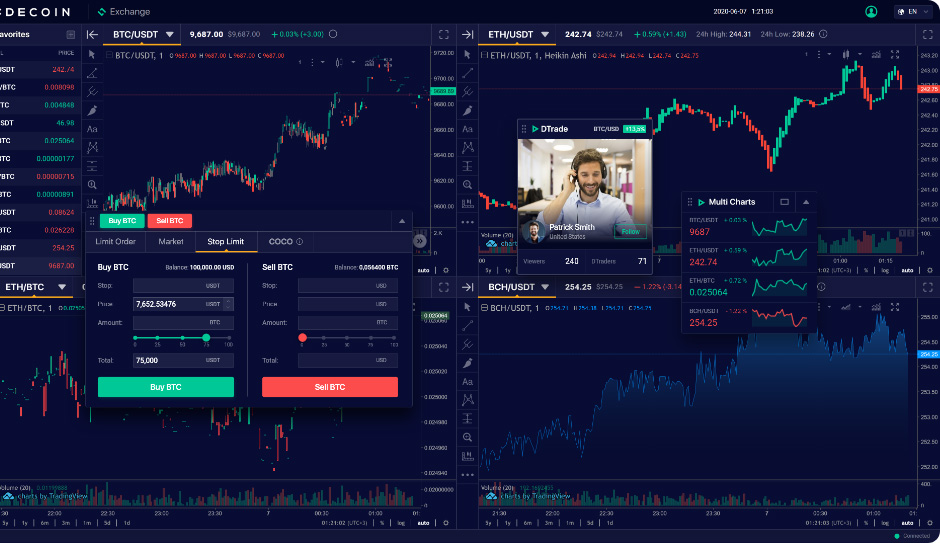
    There is a notion that cryptocurrencies are complicated, and using the exchanges can be overwhelming at times. Almost all the trading platforms interface includes a market candlestick chart, order book, trading pairs and several other advanced features.

    Many are doing a great job at simplifying this. Still, we cannot remove some of the essential tools required for trading. Despite the advantages these tools offer, the complicated user interface may scare off beginners.

    Accounts and Custody

    Most cryptocurrency exchanges require users to create an account to access their services. Furthermore, KYC verification is a mandatory requirement to trade cryptocurrencies on the platforms.

    In some cases, the verification may take a few days to complete, which may result in the loss of opportunities for the users.

    Cryptocurrencies go on the narrative of financial freedom and complete control of an individuals’ wealth by themselves. Whereas exchanges are custodial and hold the cryptocurrencies of the users. This is the biggest problem beginners may face with cryptocurrency exchanges.

    Every beginner should ask themselves why is it bad to keep cryptocurrency on exchanges.

    Because as long as the cryptocurrencies are in the exchange accounts, the user does not fully have control over them. In other words, not your keys, not your coins. Beginners looking to trade while keeping full control over their funds may not find centralized exchanges suitable.

    Technical Issues and Security Breaches
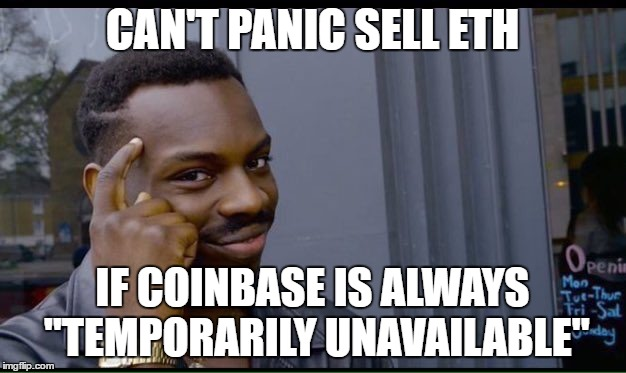
    Source: A deleted user on Reddit

    You must’ve seen the memes on some exchanges going offline when there is a big movement in the market. Not only the exchange is offline, but your cryptocurrencies in the exchange account will not be accessible.

    Also, several hacks resulted in the loss of user funds in the past. Data breaches also took place in which bad actors used the user data to run phishing attacks.

    Fees and Pairs

    To conduct a trade on a cryptocurrency exchange, a user would need to deposit cryptocurrencies, place the orders, then finally withdraw the funds. All these steps may include fees, and that’s how exchanges make money.

    Also, a user has to go through multiple transactions to achieve their preferred pair if the exchange doesn’t offer it. The multiple transactions also add up to the fees. 

    Besides, the selection of cryptocurrencies may not be huge on the exchanges.

    But, what’s the solution to the problems with exchanges?

    Enter ChangeHero

    Unlike the traditional trading platforms, ChangeHero is an instant cryptocurrency exchange that mostly solves the problems beginners may face with cryptocurrency exchanges. The user interface of ChangeHero eliminates complicated aspects of trading and delivers a clean UI with all the necessary information. 

    There is no requirement to create an account on ChangeHero to exchange cryptocurrency. Also, no need to worry about order books, charts, ChangeHero takes care of everything.

    Source: ChangeHero

    A user can start exchanging cryptocurrencies right from the homepage. ChangeHero offers 70 cryptocurrencies for instant exchanges, and there are over 4000 exchange pairs.

    In terms of fees, ChangeHero is non-custodial, and you don’t have to create an account. This, in turn, eliminates the deposit and withdrawal fees when conducting an exchange.

    The only fee ChangeHero charges are the commission to process an exchange. For the Best Rate transaction, the fee will be 0.5% and 0.7% in case of a Fixed Rate transaction. The platform does comply with the AML and KYC regulations and follows a risk-based ranking approach. A KYC verification will be implemented if a transaction is flagged by the system.

    As ChangeHero is integrated into various exchanges, even if one is down, it will not affect the functioning of the service. Users of ChangeHero get uninterrupted service.

    An Alternative

    ChangeHero does offer a possible solution to the problems beginners may face with cryptocurrency exchanges. But, the platform does have limitations such as no advanced charting tools, margin trading, etc.

    However, ChangeHero and other instant cryptocurrencies exchanges function as an alternative to the traditional trading platforms. 

    ChangeHero is on a mission to simplify the cryptocurrency exchanges and contribute to mass adoption. If you are a beginner looking to quickly exchange cryptocurrencies without any complications, then ChangeHero is the place to go.

  • Cryptocurrency Buying and Selling Strategy

    Cryptocurrency Buying and Selling Strategy

    Cryptocurrency is a volatile asset class and can switch directions in a blink of an eye. It is great news for those looking to make fast profits. However, it can also cause catastrophic losses if you don’t manage your portfolio correctly.

    Whether you are a seasoned trader or an absolute beginner, this guide will give you valuable insight into the art of buying and selling coins for a profit. 

    Managing risk and your portfolio will be a struggle if you don’t understand trading basics. This guide will help you understand essential trading practices as well as elaborate on some of the more advanced techniques. 

    Choosing the right exchange

    Before we begin talking about when to buy or sell coins, it is important to make sure that you have picked an exchange that you can rely on for your daily needs. The criteria you should be looking for are:

    • Transparent fee structure and low fees. The last thing you want is to cash out a coin thinking you’re in profit, only to realize that the profit is eaten by exchange fees. Many exchanges charge fees on the back end (when you cash out), so make sure you pick an exchange that clearly states what fees are applicable.
    • Ease of use. You want an exchange that is easy to navigate, allows you to trade seamlessly, and displays the benefits of holding or staking any prospective token or coin.
    • Fiat support. Lastly, some exchanges don’t provide fiat (conventional currency) support, which means they don’t allow you to buy with a debit or credit card. If you’re looking to transact between your local currency and have earnings paid directly into your bank account, make sure your exchange does so. You will be surprised at how many exchanges don’t have this feature.

    Once you have selected the exchange that works for you (there is no one size fits all here, every trader will have a different preferred exchange), you can begin to look at coins and tokens to invest in.

    Coin selection

    The next most important thing is to look for coins and projects to invest in. It does not have to be a project that sounds good to you or that you believe in. If you’re a crypto trader and you’re looking to maximize profits, you will often have to balance your portfolio with coins and projects that aren’t necessarily of interest to you.

    To avoid investing in scams or bad projects, you want to look for five crucial things when picking your coins:

    • White paper. Always read the currency’s white paper before deciding to invest. Look at it with a critical eye and remember that developers use these to sell their projects. Question the information contained within the white paper, and if it adds up, that counts as the first tick in your investment box.
    • Crypto forums and blogs. There are tons of valuable insights on forums like Reddit. Look at all the information other users post about the project — good and bad. Don’t just read the information that confirms your opinions. Read bad experiences, too, so you’re prepared for what could happen.
    • Tokenomics. Every coin or token has different tokenomics. Look at whether you can earn passive income through your investment by staking or simply holding a token. Understand the fees of transacting with a token and budget that into your investment.
    • Forecasts. No one has a crystal ball in cryptocurrency, but there are certain things that tend to enhance a crypto’s value. Look for major development upgrades, looming partnerships or the potential to disrupt existing industries. Consider real-world use cases and pick tokens that have value because they can be used. 
    • Track record. Alongside your prediction work, look at how the currency has performed in the past. Has it got a good track record or is it disturbing? Many tokens reach highs initially after launch and then crash never to recover — be cautious about investing in these types of cryptocurrencies.

    Defining a trend

    Trends shape the market. You will hear terms like “bull market,” “bear market,” “dip” and “resistance” thrown around a lot. You can work out a bullish or bearish trend yourself by using the support and resistance levels outlined below.

    Most importantly, understand the market moves on emotion. If the general mood is that crypto is going up or a project is going up, then people will buy into that. It can become extreme, as prices surge when amateur investors experience FOMO (fear of missing out). 

    A smart trader will realize that when FOMO starts controlling the market, it is probably time to sell because a project will only gain so much before the bubble bursts and people panic-sell.

    Support and resistance levels

    A support level is a general baseline that a currency trades above. This baseline is calculated over time, and if the support level is increasing, then the market is considered a bull market. If the support level is broken and falls, the market is a bear market.

    Likewise, a resistance level is the upper ceiling of a crypto’s value, and a token needs to break it to become extremely bullish. This is often referred to as a breakout.

    Typically, a stagnant or crablike market will trade somewhere consistently between these levels.

    When to buy and sell

    The biggest barrier to profit for investors is the complexity of choosing when to buy or sell coins. If you’re looking to buy and hold a currency over a long term (3+ months), it is best to use dollar-cost averaging. This is a technique whereby you split your total investment in a coin and invest it regularly in increments. It is useful to ensure you don’t buy in at a bad price, because any bad buy-ins are averaged out by good buy-ins.

    More frequent traders will want to analyze the market using the support and resistance data. Smart traders will evaluate whether they are in a bull market, and if they feel they are, then they will do something commonly known as “buying the dip”. This is where a trader takes advantage of a small market downtrend to buy in at a lower price.

    Selling is another thing altogether. If you have a target price, then it is always best to execute your sale at your desired value. Don’t hold on longer than you need to if your coin has met the target. You can always buy back in at a later point if you wish to reinvest.

    Selling when FOMO is prevalent is also a good idea as the likelihood of a crash or significant dip is high when new traders are rushing in. Lastly, only sell when you have met your target price, don’t sell if a crash occurs or if the market dips — provided you took the research steps above, you should be confident your target price is eventually reachable regardless of the current market movement.

    Conclusion

    Trading isn’t foolproof, and even seasoned investors make mistakes when they buy or sell coins that can be costly. By being diligent and picking good currencies to fill your portfolio, you will find you can often counteract any mistakes you make. 

    Do your own research and always remember your decision to trade depends on your attitude to risk, your expertise in this market, the spread of your investment portfolio and how comfortable you feel about losing money. Never invest more than you can afford to lose.

    Good luck!

  • Decoin Exchange Launches its Dtrade Feature to Bring in Traditional Investors

    Decoin Exchange Launches its Dtrade Feature to Bring in Traditional Investors

    Earlier this year, the crypto industry grew to proportions many did not think were possible, with the total market cap exceeding $2 trillion. Crypto trends like DeFi are stronger than ever, and 2021 even brought a new one — the NFT market. All of this combined started bringing in an entire army of new investors who kept pushing the figures further and further up.

    With the industry’s growth, new developers came as well, rolling out new projects, new features for existing projects, and new improvements to existing features. But, as it is often the case, once the innovative wave starts, it doesn’t stop for a long time, and there have been numerous new projects recently with massive amounts of potential.

    One of the most notable ones is Decoin exchange’s newly-launched Dtrade feature, which promises to revolutionize social trading. As such, it also stands as one of the best gateways for new traders who wish to enter the crypto industry and reduce the risks to a minimum.

    How does Dtrade’s Social Trading Reduce Trading Risks?

    First things first — Dtrade is a brand new, highly innovative, and 100% transparent social trading platform that aims to disrupt crypto trading as most people know it. Of course, social trading itself is not the innovative part. It has existed for a long time, even in traditional finance, and it helped new traders get into trading by copying experts with a high success rate.

    The problem with the old social trading, however, is that newcomers can’t really be certain which traders are true professionals, and which ones got to the top of the list thanks to a lucky streak. Of course, relying on luck in trading is a bad idea. Most people will advise new traders not to try trading unless they have educated themselves enough to know what they are doing.

    But, there are always those who ignore this advice, and have a lucky streak. While luck is not something that traders should rely on, having a lucky break a few times in a row still does happen, and the trouble rises when newcomers start thinking that the lucky trader is a reliable person to copy.

    How Dtrade Changes Things

    Dtrade fights against this by increasing the transparency levels around these professionals who offer to act as guides for newcomers. Unlike other platforms that offer social trading, it provides traders with more than a simple rank list. It offers a deep insight into the top-ranking traders’ activities and actions, and it allows novices to understand why traders made the moves they made.

    It might seem like a simple and small difference, but it can change the way social trading works, simply by improving communication and increasing transparency. It allows traders to watch live sessions, where professionals make and explain their moves, and it also lets novices trade at the same time, which allows them to copy those moves as professionals themselves make them.

    Of course, there is also an auto-trade feature that is available for specific traders as they trade live, and all of it combined offers new crypto traders to earn money from the cryptocurrency industry even without knowing what they are doing. And, of course, professionals are heavily incentivized to be at their best, and help their less experienced colleagues.

    The platform is also very easy to use, so that new traders could easily navigate it and use it. Its developers are well aware of the fact that the crypto industry can be intimidating on its own, which is why they specifically designed Dtrade not to be.

  • XTEMCoin Analysis: A New Coin for Africa’s First Consolidated Exchange

    XTEMCoin Analysis: A New Coin for Africa’s First Consolidated Exchange

    The cryptocurrency industry is growing around the world, with the adoption still surging, even though the bull run that pushed it ended some two months ago, now. One surprising development, however, is the enthusiasm regarding coins like Bitcoin that African countries have expressed over the past several months.

    Still, for countries that live in extreme poverty, for the most part, and whose people do not have another option to become a part of the global economy, it is not surprising that they are so willing to turn to any new way of earning, even one as risky as crypto.  With that said, there are plenty of opportunities for crypto businesses in Africa, too. One project even found the need for the first consolidated exchange on the continent, and it is in the process of holding a token sale right now.

    Introducing African Consolidated Exchange and its XTEMCoin

    Africa’s first consolidated exchange is being launched by a company called T.E Markets Limited, whose goal is to build the exchange that would be developed as a synthetically indexed exchange. As such, it will open major investment opportunities for investors and traders alike.

    Simply put, the goal here is to create an exchange that would solve one major problem noticed by the project’s founder and CEO, Ian Mvula. That problem lies in the fact that there is no one-stop shop for trading agricultural commodities of African origin, but also stocks, indices, cryptocurrencies, forex, and alike.

    This lack is getting more and more noticeable as the rest of the world continues to see a number of platforms that are solving such problems emerge. Africa, where such platforms would be able to do the most good for its people, on the other hand, lacks them.

    With the power of cryptocurrency and blockchain, however, not only can this be solved, but it can be solved in a decentralized way, which is where XTEMCoin comes in.

    What is XTEMCoin?

    XTEMCoin is an upcoming cryptocurrency that will act as a native coin for the platform, as well as a utility coin used for paying goods, services, and transaction settlements. XTEMCoin will also be used for a variety of other operations, such as staking, micro-finance, and mining, but also things like real estate, exploration, and beneficiation.

    The project’s founder said that XTEMCoin will not be just another naked cryptocurrency with no real use cases, and he meant it. XTEMCoin seeks to offer safety and security in the local digital payment sector, and to finally give the people of Africa an opportunity to grow and profit by joining the global economy by using these emerging technologies.

    As mentioned, the project is in the middle of its private sale, which started on Monday, June 28th, and it will last until 31st July. The coin is being sold at the price of $1.15 per unit, and the project hopes to raise $500 million by the time the sale ends. Once it goes live, it will slowly start receiving the mentioned use cases. Meanwhile, there are over 200 million potential users in Africa and beyond, all of which can be served thanks to the borderless nature of crypto. The project also has massive transaction speeds, so there shouldn’t be Ethereum-like problems, where transaction fees might skyrocket if too many people start using it.

    In fact, the project has done a lot of research of other cryptocurrencies to figure out their mistakes and how to avoid them, the end result being XTEMCoin as it is right now — a project that aims to rewrite Africa’s story, and transform the continent from a struggling one into a prosperous one.

  • FCA Warns Traders Against Trading With Unregistered Crypto Platforms

    FCA Warns Traders Against Trading With Unregistered Crypto Platforms

    The Financial Conduct Authority of the United Kingdom has issued out a memo warning traders against carrying out trading activities with over 100 cryptocurrency companies. According to the FCA, the companies mentioned have not undergone the required testing and have not registered as licensed service providers in the country. This recent news is coming off the back of the Ontario Securities Commission calling out Bybit and other cryptocurrency exchanges for failing to register their exchanges.

    The FCA says more than 100 platforms are unregistered

    According to the FCA, they previously rolled out a list of guidelines that crypto exchanges and companies operating in crypto-related activities should follow. In the released guidelines on January 10, the FCA pointed out that it mandated the crypto firms to follow the anti-money laundering and CFT laws. 

    Furthermore, the agency noted that it also ordered the companies in the region to register with the FCA. At this moment, a considerable part of the population has failed to register with them. In a statement by the head of enforcement of the FCA, Mark Steward, he posited that crypto entities that are yet to be regulated put their users and business partners under risk.

    The FCA is worried about FOMO

    Steward also noted that they had compiled a list of the companies that are yet to be registered, and investors and traders can check and be sure before using the platforms. This shows that the FCA, in light of the growing numbers of cryptocurrency investors across the United Kingdom, wants to ensure that they are closely monitoring the industry’s activities. 

    In a recent survey carried out by the agency, about 2.3 million residents of the United Kingdom now hold at least one form of crypto. Also, the survey showed that the proportion of people who are well versed or familiar with digital assets is gradually taking a downturn. Steward also mentioned that the fear of missing out is one factor driving most of the population in the country towards adopting digital assets. 

    The United Kingdom government has taken a subtle approach to regulate crypto across the country after it recently announced the banning of cryptocurrency derivatives in January. 

  • As Hathor Builds on Its 2021 Roadmap, HTR/BTC Pair Goes Live on KuCoin

    As Hathor Builds on Its 2021 Roadmap, HTR/BTC Pair Goes Live on KuCoin

    Key highlights:

    • KuCoin has listed the HTR/BTC trading pair
    • HTR is the native asset of the Hathor Network, a distributed ledger platform that combines the blockchain and DAG data structures
    • Hathor features merged mining with Bitcoin and Litecoin

    HTR/BTC pair goes live on KuCoin

    The popular KuCoin cryptocurrency exchange has added a new trading pair for HTR, the native asset of the Hathor Network. In addition to the HTR/USDT trading pair, KuCoin users can now also trade HTR against Bitcoin. 

    As a relatively fresh blockchain project (the Hathor mainnet launched in early 2020), the HTR/BTC listing will go a long way towards ensured that the HTR markets are easily accessible and sufficiently liquid. In January, KuCoin became the first major cryptocurrency exchange to list HTR.

    The pair is already seeing some solid activity, despite only launching yesterday – HTR/BTC saw $382,000 worth of trading in the last 24 hours. For now, the HTR/USDT pair on KuCoin is still more popular, as it saw $2.5 million worth of trades in the same time period.

    Hathor combines the blockchain and DAG data structures

    Hathor is a distributed ledger platform that employs both a blockchain and a directed acyclic graph (DAG) in its design. The network is maintained through Proof-of-Work consensus, and is merged mined with Bitcoin and Litecoin. 

    Thanks to its unique design, Hathor provides very quick and feeless transactions. The platform also features a very straightforward process for issuing custom tokens, which is one of the most widely used features of blockchains today. 

    Hathor will also Nano Contracts, which the project describes as a simplified version of smart contracts. These Nano Contracts can determine how assets on the Hathor Network will be distributed among different users at a later point. 

    According to the Hathor roadmap, the project is currently working on implementing this functionality, and plans to implement extended Nano Contracts capabilities in the third quarter of this year. In the same quarter, the Hathor team also plans to introduce NFT support to the Hathor Network.

    HTR has been able to ride the cryptocurrency market’s positive momentum, and the coin has produced substantial gains as of late – in the last 30 days, the token is up about 227%.