Tag: Crypto mining

  • Ethereum 101: a Beginner’s Guide to Mining

    Ethereum 101: a Beginner’s Guide to Mining

    Mining cryptocurrencies always seems too complicated, but as technology evolved, some blockchains made it easy for users to mine without spending too much money on complex hardware and using a lot of energy. Among these cryptocurrencies, Ethereum has made the most advancements regarding these aspects. Ethereum has just switch to Proof-of-Stake (PoS) from Proof-of-Work (PoW).

    If you want to earn ether, you must learn how to mine. And you can do many things with ether, from buying and selling goods and services to creating apps and NFTs. The blockchain offers plenty of opportunities for miners, so here’s a short introduction to how to mine Ethereum.
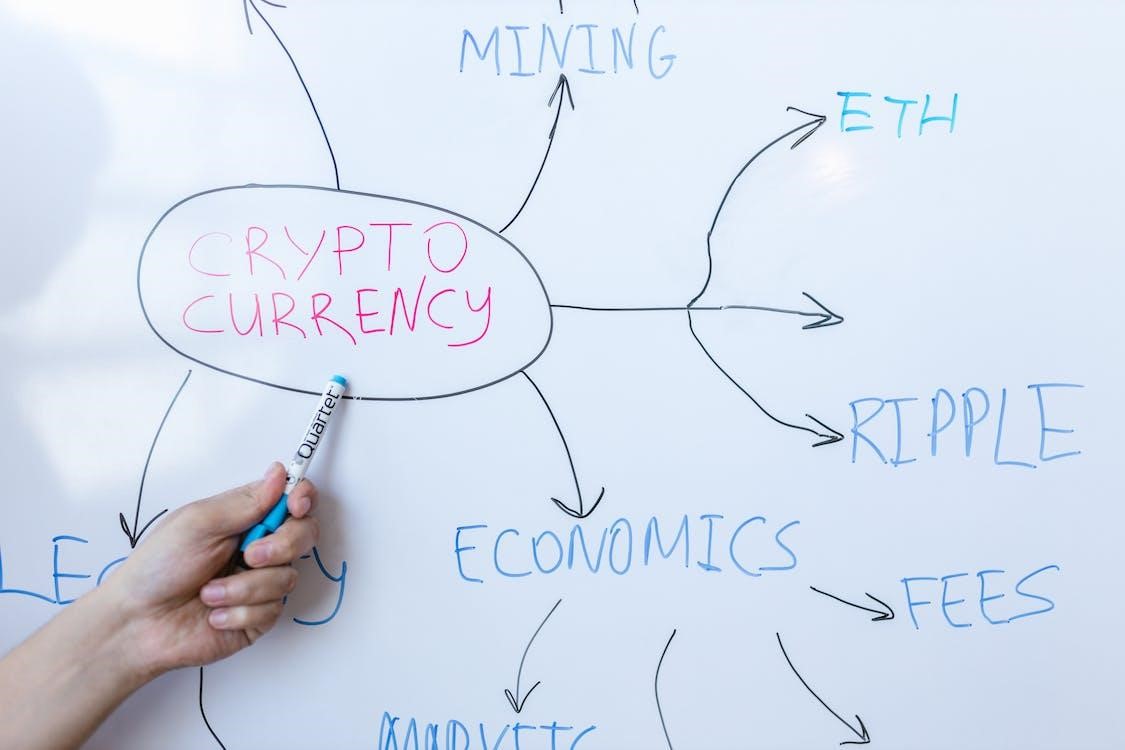
    Cryptocurrency Mind Map Flow Chart

    How can you mine/stake Ethereum?

    Mining is a computerized process of solving complex mathematical problems to earn coins. It involves validating transactions on the blockchain network, powered mainly by a proof-of-work system.

    Although PoW is the most common system, it has made it harder to mine, as it’s not energy efficient and does not allow for more scalability. On the other hand, Proof-of-Stake is gaining popularity for cryptocurrencies, and Ethereum has decided to adopt this system.

    Through such systems, you need to solve mathematical equations using cryptographic hashes generated to secure data transferred on a public network. Each block you’ll be mining uses a hash function from the previous block, thus forming a chain of blocks. 

    This process makes the blockchain:

    • Immutable, meaning that the blocks can’t be changed or altered;
    • Decentralized because the system doesn’t require any governing authority;
    • Secure due to the fact that the blocks are hashed cryptographically;

    Mining is an exciting process to unfold and discuss, and you can make it in a few ways.

    Pool Mining

    Starting with mining for beginners, pool mining is a method that previous miners came up with to help inexperienced people who are not willing to invest considerable computational power to mine. It’s based on the idea that more participants who contribute to computing power are more successful at solving the hash function than individually.

    Each participant will be rewarded proportionally to the computational power supplied. This is why pool mining is efficient for beginners because it allows them to earn coins and get more experience in a team of people with the same goal. Here are the basic steps for mining in a mining pool:

    1. Check your GPU and drivers. To begin mining, a GPU with at least 3GB of RAM is required, and you need to ensure it’s updated to the latest version.
    2. Create a crypto wallet. You’ll need to store the coins somewhere after earning them, and a crypto wallet is what you need; you have plenty to choose from.
    3. Install the mining software. Make some research on the trusted sites before downloading anything to avoid viruses and spyware infecting your computer. You could start with GitHub as a source for your downloadable mining software.
    4. Join a mining pool. Consider pool fees, pool size and minimum payouts the pool requires before joining.
    5. Run the program and calculate profitability to see what are the potential mining rewards and benefits. This way, you can see clearly if mining is profitable for you and worth investing in high-end hardware.

    Solo mining

    Solo mining means you’ll mine alone. But that’s not feasible enough, even if it sounds like you’ll get rich overnight. Solo mining requires a lot of mining power to get a single block reward on your own. You can try it if the computational power, GPUs, and electricity costs don’t exceed the coins earned.

    Cloud mining

    Cloud computing is also not recommended for beginners, as it’s pretty risky. This method allows you to rent out computing capacity or mining rings on the cloud, which you will use for mining. You’ll pay a fixed monthly or annual fee, but it’s not a profitable approach because while the price of a cryptocurrency can fluctuate, the fee you have to pay is fixed.

    If you’re interested about the Ethereum price, know that, like any other cryptocurrency, its price can fluctuate due to its supply and demand, investor and user sentiments and media coverage. This is called price volatility, which also applies to commodities, assets or investments.

    Should you mine Ethereum or Bitcoin?

    You may know that Bitcoin and Ethereum are the first two most important cryptocurrencies at the moment, so you may be wondering which is best to start mining or staking as a beginner. Since their arrival on the market until now, solving mathematical problems has been harder, and it might become even more difficult in the future. The conclusion is that you may need to upgrade your hardware at some point to keep up with the requirements for both blockchains.

    But since Bitcoin has been here for a while, it’s now the most difficult cryptocurrency to mine. To earn coins, you need specialized hardware, which is not quite affordable, so it’s not recommended for beginners. On the other hand, you could mine Ethereum on a reasonably powerful laptop in the beginning, even though you weren’t earning that much. With staking, you can stake ETH in a pool or deposit 32 ETH to activate a validator software.

    However, you should be aware of the potential risks of not using better hardware. Plus, computers can become a potential fire hazard due to their constant usage and high energy outputs. For example, it’s important not to overload the electric grid with an excessive power draw. You’d need to evaluate your setup’s safety and ensure there wouldn’t be any risks of overheating.

    For staking, it’s important to keep your software updated and to check that there are no errors when confirming transactions.

    You can still look for other cryptocurrencies to mine or stake, as there are more than 19,000 in existence, with more to come. Some other promising blockchains include Cardano, Solana, Dogecoin and Polkadot, and they all have distinct features.

    Final thoughts

    Although mining is not as easy compared to how it used to be in the beginning, people can still do it as newcomers, with decent computational hardware and the will to learn a thing or two. Mining Ethereum also allows you to use your ether on many things, and the blockchain is the perfect space for creators, developers and investors.

  • Intel Unveils “Bonanza Mine,” Its First Dedicated Crypto Mining Chip

    Intel Unveils “Bonanza Mine,” Its First Dedicated Crypto Mining Chip

    Chip manufacturing giant Intel has revealed details on its first mining chip, aptly called “Bonanza Mine.” The new hardware was put on display at the annual International Solid-State Circuits Conference (ISSCC) held in downtown San Francisco. For the time being, it seems that hardware solutions by Bitmain and MicroBT retain the edge over Intel’s offering.

    Key takeaways:

    • Intel’s entrance into the crypto mining sector will bid the tech giant against Bitmain and MicroBT, the current top dogs in the industry. 
    • According to Tom’s Hardware, which first reported on Bonanza Mine’s hardware capabilities, Intel’s first crypto mining offering trails its ASIC competitors. 
    • Bonanza Mine can deliver up to 40 terahash/second (TH/s) with a power consumption of 3,600 watts. For context, Bitmain’s flagship offering, Antminer S19j XP, can generate 140 TH/s, while consuming only 3,010 watts of power. MicroBT’s Whatsminer M30s++ is a bit less efficient, generating 112 TH/s at 3,472W.
    • Bonanza Mine has four hash boards, each packing 75 ASICs (Application-specific integrated circuits). Intel’s new offering can operate at “ultra-low” voltage mode, which allows the circuit to run at its maximum power while not surpassing the 75° Celsius mark.
    • Intel is reportedly already working on the second generation of crypto mining hardware which is slated to come later this year. Tom’s Hardware noted that there is currently no information publicly available about the upcoming second-gen ASICs, other than they are coming.
    • Intel’s first gen-miner comes amidst a multi-month hashrate growth. For context, Bitcoin Network’s hashrate reached an all-time high of 248 EH/s on February 13, having grown by more than 400% since its last July bottom of 58 EH/s.
  • Intel to Enter Bitcoin Mining Industry, Plans to Unveil Energy-Efficient ASIC at ISSCC Conference

    Intel to Enter Bitcoin Mining Industry, Plans to Unveil Energy-Efficient ASIC at ISSCC Conference

    The leading desktop chip manufacturer Intel is looking to unveil a new type of ASIC at the upcoming International Solid-State Circuits Conference (ISSCC) during the demonstration session scheduled for February 23, titled “Bonanza Mine: An Ultra-Low-Voltage Energy-Efficient Bitcoin Mining ASIC.”

    Key takeaways:

    • ISSCC is an annually held international forum where companies and hardware engineers can present advancements made in solid-state circuits and “Systems-on-a-Chip.” This year’s ISSCC will be held in downtown San Francisco and will last from Feb. 20 to Feb. 24.
    • According to Tom’s Hardware report, Intel’s demonstration session will likely include a video presentation of the new processor codenamed “Bonanza Mine.” It is not yet known how far along is the new ASIC in terms of development and whether will we see a consumer-grade product or an early prototype at the ISSCC.
    • While Ethereum and the majority of other digital currencies can be profitably mined with regular desktop GPUs and CPUs, Bitcoin requires far more computing power and specialized ASICs (Application-specific integrated circuits) to meet the demands of the power-hungry Proof-of-Work (PoW) network.
    • Intel’s foray into the BTC mining market will likely make the space, currently dominated by companies such as Bitmain and MicroBT, far more competitive.
    • The North American region has become the leading BTC mining hub after Chinese authorities effectively shut down the cryptocurrency mining industry within the country last year. In early January, Marathon announced it is expanding its BTC mining operation with the acquisition of $900 million worth of Bitmain’s mining equipment, which is one of the biggest deals of its kind to date.
  • Marathon is Expanding its BTC Mining Operation With Nearly $900 Million Worth of Mining Machines

    Marathon is Expanding its BTC Mining Operation With Nearly $900 Million Worth of Mining Machines

    Marathon Digital Holdings, a Las Vegas-based Nasdaq-traded company aiming to build the largest mining operation in North America, has ordered 78,000 ANTMINER S19 XP Bitcoin miners, each capable of processing 140 terahashes per second (TH/s).

    Key takeaways:

    • Marathon initially announced the order on December 23, while the pricing information and further details were made public last Tuesday.
    • Marathon has agreed to pay roughly $11,200 per mining rig. The whole order includes 78,000 units, for a grand total of $879 million.
    • According to Marathon CEO Fred Thiel, the recently penned deal with Bitman represents the largest order of ANTMINER S19 XP machines to date.
    • The BTC miners will be delivered in six batches – 13,000 units per month from July to December. Likewise, the massive $879 million sum will be paid out in several phases, following each subsequent shipment of Bitmain’s machines.
    • In the press release detailing the notable mining expansion, Thiel noted that the massive order of S19 XPs will increase Marathon’s total hash rate by 600%, to 23.3 EH/s by early 2023.
    • The North American region has become the leading mining hub after Chinese authorities effectively shut down the cryptocurrency mining industry within the country last year. According to data from CBECI, the US commands a 35% share of hash rate ahead of Kazakhstan’s 18% and Russia’s 11%.
    • The Bitcoin hash rate had achieved a new historic peak of 207.5 exahashes per second (EH/s) on Saturday, just a few days before Bitcoin celebrated its 13th anniversary.
  • 90% of all BTC to Ever Exist Have Been Created in the Last 12 Years, but it Will Take an Estimated 118 Years to Mine the Rest

    90% of all BTC to Ever Exist Have Been Created in the Last 12 Years, but it Will Take an Estimated 118 Years to Mine the Rest

    Key takeaways:

    • Block 714,000 marks 90% issuance of the total Bitcoin supply
    • Bitcoin has an artificially set total supply capped at 21 million coins
    • The last bit of Bitcoin supply is projected to be mined in 2139

    Bitcoin reached a historical milestone on Monday – with the completion of block 714,000, precisely 90% of Bitcoin supply has been mined. While it took only 12 years to create the vast majority of coins that will ever exist, the last BTC is projected to be mined in 2139.

    With each Bitcoin halving, the computational power required to create new BTC significantly increases, while the mining rewards get halved

    Bitcoin network utilizes a so-called Proof-of-Work (PoW) consensus mechanism, which requires exuberant amounts of electricity to process transactions on the blockchain and keep the network secure.

    To make the Bitcoin network secure and impenetrable to attackers, Bitcoin miners are tasked with solving mathematical problems linked with each block. In short, a block is a part of the blockchain with immutable records of past transactions made on the BTC network. Once a new block is produced, the first transaction recorded is the BTC reward given to the miner that completed (solved) the new block. As of the last Bitcoin halving that took place in May 2020, each block creation is awarded with 6.25 newly minted BTC.

    It is worth noting that Bitcoin rewards get halved with each Bitcoin halving, which is a scheduled event integrated into the blockchain that drops mining rewards by 50% on a periodic basis in order to cut inflationary monetary effects and slow the rate at which new coins enter circulation. Bitcoin will undergo 32 halvings throughout its life cycle, with the last one dropping the block reward to zero. From that point on, BTC miners will no longer receive new BTC for their efforts but will be instead incentivized to provide their computational capabilities with earning transaction fees.

    The computational power of crypto miners participating in the process of securing the network is called Bitcoin hashrate, and it is measured in exahashes per second (EH/s). The Bitcoin hashrate experienced wild swings throughout 2021 – it reached the all-time high of 198.51 EH/s on April 15, dropped to a two-year low of 57.47 EH/s following China crypto mining crackdowns in June, and recovered close to its ATH earlier in the month. 

    To mitigate the effects of BTC hashrate fluctuations, mining difficulty automatically increases when the hashrate is high and, vice-versa, decreases when the hashrate drops. Thanks to these mining difficulty adjustments, the future BTC supply can be projected with a high degree of certainty even on time scales longer than 100 years.

    According to blockchain expert and Bitcoin on-chain analytic Clark Moody, we will see 5% of BTC supply mined in the next four years. However, due to the exponential difficulty of solving each subsequent Bitcoin block, the remaining 5% of the BTC supply will be mined by 2139.

    Per Moody’s helpful Bitcoin dashboard, it will take a whopping 91 years to mine the last 0.1% of BTC supply. 

    While the past 30 days have been rough for crypto markets and Bitcoin, the world’s oldest digital currency is still up more than 70% since the start of the year.

  • Bitcoin Hashrate Improves to Pre-China Crackdown Levels

    Bitcoin Hashrate Improves to Pre-China Crackdown Levels

    Key takeaways

    • Bitcoin hashrate on December 6 surpassed the network’s peak computational capabilities from May 2021, before Beijing began its clampdown on the mining industry
    • Following the shut down of China-based mining operations, the BTC hashrate dropped by 70%, which was coincidentally the share of global hashrate originating from China at the time
    • The US accounts for the biggest share of BTC computational power, ahead of Kazakhstan and Russia

    Bitcoin hashrate, which is based on the computational power of crypto miners participating in the process of securing the network, has reached numbers not seen since China shut down its cryptocurrency mining in a series of regulatory clampdowns earlier this year.

    Bitcoin miners were forced to migrate to new locations to evade Chinese authorities

    When Beijing began an extensive operation to shutdown crypto mining facilities within the country’s borders back in May, the hashrate output of China-based miners accounted for more than 70% of the global Bitcoin network computational power. Today, the share of China-generated BTC hashrate is virtually zero.

    According to data from BTC.com, in the time period between May and June, when Bitcoin mining operations were slowly going offline one after another, the Bitcoin hashrate had dropped from May’s peak of 190.55 exahashes per second (EH/s) to a two-year low of 57.47 EH/s on June 27.

    Global Bitcoin hashrate production since January 2021. Image source: BTC.com

    Since then, countries around the world have picked up the slack, and in the span of six months, the global Bitcoin hashrate has recovered and reached 190.97 EH/s on December 6. For reference, the all-time peak hashrate production was recorded on April 15 at 198.51 EH/s.

    At the moment, the biggest share of Bitcoin computational power resides within the United States, which has become the top spot for new mining operations due to the abundance of cheap energy and massive infrastructure investments. According to data from Cambridge Bitcoin Electricity Consumption Index (CBECI), the US leads global hashrate output with a 35% share ahead of Kazakhstan’s 18% and Russia’s 11%.

    Bitcoin is by far the biggest proof-of-work (PoW) network, requiring an exuberant amount of electricity to stay online. The second-largest crypto, and still running on PoW consensus mechanism, Ethereum’s power requirements and computational capabilities pale compared to Bitcoin. For reference, Ethereum hashrate output on December 6 was 902.88 TH/s, over 200,000 times smaller than Bitcoin’s hashrate production on the same day.

  • Crypto Lending Firm Celsius Invests Additional $300 Million into Bitcoin Mining

    Crypto Lending Firm Celsius Invests Additional $300 Million into Bitcoin Mining

    Key takeaways:

    • Celsius’ $300 million allotment puts the firm’s total investment into Bitcoin mining at over $500 million
    • The North American crypto mining sector is booming since China effectively eradicated its hashrate capacities in a series of clampdowns
    • BTC miners can stake their hashrate to secure BTC loans by Celsius 

    Celsius Network, a centralized provider of cryptocurrency loans, has announced a $300 million investment into Bitcoin (BTC) mining equipment and related services. With over $200 million invested in BTC mining facilities in North America (NA) earlier in the year, Celsius has now allocated more than $500 million to complement its lending business with a Bitcoin mining venture.

    Celsius is capitalizing on the North American BTC mining boom

    Speaking to The Block, Celsius CEO Alex Mashinsky told the crypto news outlet that the company would use the newly allocated funds to expand its hash rate production in NA over the coming months. The CEO noted that the firm currently owns about 22,000 BTC ASIC miners and plans to buy the newest Bitmain’s AntiMiner S19XP models with a throughput of 140 terahashes per second (TH/s).

    Investment into the North American BTC mining infrastructure has picked up the pace drastically following China’s crackdowns on crypto mining and the cryptocurrency industry in general, and Celsius is riding the wave of a new trend.

    In the months following a series of clampdowns on the mining industry, China’s hash rate production has fallen to zero, according to data collected by the Cambridge Bitcoin Electricity Consumption Index (CBECI). According to analytics firm Blockchain.com, despite the former mining superpower being entirely out of the picture, the total hash rate output has recovered close to its all-time high in record time.

    Miners looking for a new home have in large numbers chosen the United States as their preferred destination due to easy access to cheap energy and especially the ability to select from a myriad of renewable energy sources. By the end of August 2021, US miners’ average monthly hashrate share has increased to 35.4%, up more than 100% since earlier in the year.

    Mashinsky is aware that the competition is getting stiffer in the crowded NA market, which is why Celsius is making investments that will secure its position as a leading crypto mining company. “A lot of people that are buying machines, they think the competition is just not gonna be there, but obviously now there are a lot more participants, more players, so you really have to be good at this business,” the CEO of Celsius elaborated.

    In addition to mining a traditional mining operation, Celsius is also providing access to Bitcoin loans in return for hash power. Mashinsky went on to explain: 

    “We are catering to miners who don’t want to sell their bitcoin and we lend them against their bitcoin or their hash power so they can basically send us bitcoin [as collateral] when they mine it.”

    Celsius’s crypto lending core business grew immensely following its founding in 2017. As of November 12, the company has processed $8.2 worth of loans, controls more than $28.6 billion worth of community assets by more than 1 million strong user base. Celsius announced it had raised over $400 million in its latest funding round in mid-October, good for a $3 billion valuation.

  • Chinese Inner Mongolia Region Passes Harsh Crypto Mining Rules

    Chinese Inner Mongolia Region Passes Harsh Crypto Mining Rules

    Bitcoin mining farm. IT hardware. Electronic devices with fans. Cryptocurrency miners.

    The government of the Inner Mongolia region is cracking down on cryptocurrency mining

    Cryptocurrency mining activity in the Inner Mongolia region of China is set to take a beating after the region’s government rolled out eight measures to crack down on miners.

    The recent proposal is scheduled to undergo a public consultation period which will run through June 1. The proposal’s details show that the laws are targeting facilities that use fossil fuels for mining, and they are also going after the power stations that provide the facilities with the power to operate. Cafes that use their computers for mining purposes are not left out as the proposal entails sanctions against them.

    In addition to the strict rules against mining activities, the proposal also mentioned that individuals or entities choose to use digital assets for money laundering activities or raise funds with sanctions. The proposal also mentioned that any company or business that chooses to get involved with crypto mining would be added to the Social Credit Dishonesty List of China. With this, such a company or business would not be able to carry out various social activities, including having access to banking services and booking travel tickets by air or train.

    China is aiming for carbon neutrality

    The region took this latest move to effect the goal of China, which is to make sure that majority of the carbon produced is neutralized. The local government had already announced that a measure to rid the region of crypto mining activities would be undertaken in March. This latest proposal would see that the plan would be effected in the coming months with specific sanctioins for those who fail to comply. Since the proposal’s release, miners around the Inner Mongolia region have taken swift action.

    Many miners are now relocating their mining businesses to other regions while others are going out of the country. The question on everyone’s lips is whether Sichuan and Yunan, provinces that are known for their mining prowess with hydroelectric power, would follow Inner Mongolia’s lead. A brief run-through of the proposal document shows that there would be an explicit legal sanctions for any power station that either openly or secretly provides power to miners according to the country’s Energy Conservation Law.

    The second part of the proposal pointed out that any policy favoring power stations that provides power to miners would instantly be revoked. The third and fourth part says that Communications companies found in breach of the law would have their license seized while Cafe’s would be suspended by the overseeing agency. The fifth part of the proposal mentioned that Private power stations would also be dealt with according to the law. The last two parts talked about adding businesses to the Dishonesty List and specified sanctions for individuals.

  • How to Earn Passive Income at Home

    How to Earn Passive Income at Home

    The cryptocurrency market has blossomed in the past few months as Bitcoin hit an all-time high of $61,000, which has in turn increased the demand to mine these digital assets. However, crypto mining remains way out of reach to most investors due to the cost of mining equipment and electricity costs. 

    In an aim to give everyone a chance to mine Bitcoin and other proof-of-work (PoW) coins, Miner Plus, offers a cloud mining service allowing cost-friendly “pooled mining”. The platform pays out daily rewards too. 

    Cloud Mining is the process of cryptocurrency mining utilizing a remote datacenter with shared processing power. Miner Plus enables users to mine bitcoins and PoW altcoins without the challenges of managing the hardware. The Las Vegas-based firm currently provides a cloud mining service for Bitcoin (BTC), Bitcoin Cash (BCH), Litecoin (LTC), Bitcoin SV (BSV), and Decred (DCR). 

    Unlike managing your own mining rig (hardware), cloud mining offers users several advantages such as low electricity costs, reduces mining rig management costs, no excessive heat and you don’t need to wait for late deliveries on mining hardware.

    According to Miner Plus, the mining rigs are housed and maintained in a facility owned by mining company and the customer simply needs to register and purchase mining contracts. The service combines SSL encryption communication and multi-layer cold storage of coins to ensure high security. Additionally, they provide daily payouts, use the newest ASICs/ GPU miners, and a high value performance to users. 

    Founded in 2015, Miner Plus boasts as one of the earliest crypto cloud mining companies having racked up over 120,000 customers, as of writing. The company integrated HashNest, a cloud mining market, allowing users to create cloud mining contracts that can last a lifetime – an advantage for users who want to mine long term. 

    Miner Plus also has short term cloud mining contracts for miners who wish to mine for a day, 7 days, 12 days and 17 days too. Bitcoin hashrate for 1 day is charged at $50 with a fixed return of 10%, the 12 day hashrate is charged $500 with a fixed return of 12.4% during the period and the 17-day hashrate at $800 providing an 18.15% fixed return. You can calculate your expected return using the mining calculator that gives a rough estimate of the returns expected on mining the available cryptocurrencies. 

    Users can start earning on the platform through an easy three-step sign up process to start earning daily payout rewards.  

    Have many friends wanting to join crypto mining? Miner Plus gives you the opportunity to earn passive income through referral commissions. Users can earn up to 2% commission on their referral investment payouts. 

    As the world embraces crypto, cloud mining could be the gateway to increase miner adoption, providing access to a once “rich-man” only investment adventure.