The Binance Launchpool Hashflow campaign started yesterday
Binance users will able to farm HFT tokens with their BNB and BUSD until November 30
Hashflow (HFT) will be listed in Binance’s Innovation Zone on November 7
Hashflow (HFT) gets listed as the 31st Binance Launchpool project
After a several months long hiatus, Binance has revealed the 31st blockchain project to get featured on Binance Launchpool, a platform that lets early investors generate liquidity for innovative, up-and-coming crypto projects, and earn crypto tokens in exchange.
The Launchpool for Hashflow (HFT) started on November 1, at 00:00 UTC, and is slated to run for 30 days. On November 7, at 13:00 UTC, Binance will list HFT, the project’s native utility and governance token in the Innovation Zone, and open HFT/BTC, HFT/BUSD, and HFT/USDT trading pairs.
The token generation event will see 1,000,000,000 HFT minted, with 1.5% of the genesis supply being allocated for Launchpool investors. In other words, 15,000,000 HFT will be distributed to Hashflow ICO investors staking their BNB and BUSD on Binance. 80% of the entire HFT farm amount will go towards BNB farmers, while the remaining 20% will be distributed to BUSD users. The Hashflow farm campaign is available exclusively to registered Binance users.
Hashflow is an interoperable decentralized trading protocol supporting Ethereum, BNB Chain, Polygon, Avalanche, Arbitrum, and Optimism. The zero-slippage interoperability trading platform has facilitated $10 billion in trading volume since its launch last year.
Governance rights in the Hashflow network are determined by the amount and duration of HFT staked. “Staking tokens will grant users the right to vote and manage the future of the protocol. This includes decisions relating to protocol fees, marketing, and code development,” wrote Binance in its Hashflow research piece.
The latest project to get featured on Binance Launchpool, Hashflow enables DeFi users to swap crypto assets between chains in minutes without the need for external token bridges.
It is worth noting that HFT tokens have been available to private investors at a Hashflow price of $0.02, $0.10, and $0.40 during three rounds of private sales. In total, the team raised roughly $28 million in the sale of 25% of the total supply to private investors.
Binance’s Hashflow Launchpool is the exchange’s first farming event in six months
The listing of Hashflow on Binance Launchpool comes roughly six months after the conclusion of the Project Galaxy framing campaign. The reason for the long hiatus likely lies in the fact that the crypto markets have been facing severe bearish activity in the second half of 2022.
The price of the BNB token, which can be used to farm Hashflow crypto tokens, increased by more than +10% in the last 24 hours, largely ignoring the broader negative market trend.
In recent years, cryptocurrency loans have become a popular method of magnifying exposure to crypto markets. The ease of use, a broad selection of supported loanable and borrowable digital assets, and competitive borrowing rates are just some of the hallmarks of Binance’s loan offering.
While I cannot claim I am a very frequent user of crypto loans, I have, on several occasions, taken out crypto loans, which allowed me to pursue investment opportunities that would otherwise be out of my reach.
Read along and find out what Binance crypto loans are all about and how they can be used to your advantage.
Binance Crypto Loans is a financial service that enables digital asset investors to obtain additional crypto capital by staking their existing crypto assets as collateral. Binance supports a selection of over 60 borrowable cryptos and more than 20 types of coins that can be used as collateral.
Binance provides crypto loans with collateral, which means that for any loan taken out, a user must provide a certain amount of their spot crypto, a type of security deposit, if you will.
While crypto loans without collateral – commonly referred to as crypto flash loans – do exist, I suggest you steer away from such offerings as they typically charge exuberant fees, or aim to defraud their customers in other ways. For more information about the importance of crypto collateral, check our previous article on the topic.
Why you should give Binance Loans a try?
If you are deciding between different platforms and are unsure which one to choose, a strong case can be made that Binance offers the best crypto loan solution in the market. Take a look at the main benefits of Binance Loans listed below and see for yourself.
Competitive interest rates
Crypto lending services have become very popular recently, with both centralized and decentralized finance solutions popping into existence left and right. However, there are few that come close to the low fees offered by Binance.
For example, borrowing $1,000 worth of Bitcoin (BTC) with BUSD costs roughly 0.00624% per day, which is about 2.27% in yearly interest. It is worth noting that, as a rule of thumb, longer loan terms result in higher interest rates. Case in point, Binance charges roughly a 3.60% yearly interest rate when borrowing Bitcoin using a 180-day loan term.
Stake collateral to reduce interest rates
The second benefit of Binance Loans goes hand in hand with the first one on our list. Loans Staking is a unique feature used by Binance that allows users to offset costs associated with borrowed funds. Supplied crypto collateral is used to support the operation of underlying blockchain networks – for example, BNB supplied as collateral, is used to secure the Proof-of-Stake (PoS) blockchain and generate rewards. Said staking rewards are then used to cover some of the interest rate costs.
The same goes for any other collateral asset that supports this feature, not just BNB. You can filter specifically for coins and tokens that support it by navigating to the “Staking” tab when searching for collateral assets.
Binance explains the feature in the following way:
“The collateral assets you use for borrowing will be deposited in a specific crypto wallet to support the operation of the blockchain network, and you will receive corresponding rewards to reduce interest rates.”
Using Loans Staking can result in up to a 100% fee reduction on certain borrowing/collateral pairings.
Flexibility and streamlined repayment management
Another advantage of taking out a Binance crypto loan is the ability to borrow crypto with different terms, ranging from 7 to 180 days. That’s not all, however, as Binance allows users to repay their debt before the loan term expires. This can be very beneficial when the market turns, and users want to offload their debt at opportune times. On top of that, early repayments incur no additional costs.
Transparency
Cryptocurrency loan data is available in real-time through the Loan Data dashboard. The in-depth chart showcases all loanable assets and their respective interest rates organized by different loan terms. In addition, you can quickly see Initial LTV, Margin Call, Liquidation LTV, and Collateral Limit data for each of the supported collateral assets, along with the borrow limit of all supported cryptos.
VIP Tier Rates
Long-term users of the Binance platform will be happy to find out that the platform-wide VIP program comes into play when using crypto loans as well. The difference between interest rates paid by regular and VIP users can be quite stark – for example, regular users must pay 0.0099% daily interest when borrowing Bitcoin via the 180-day loan contract. Meanwhile, the highest-tiered VIP users pay just 0.0054% for the same product, which is more than a 45% difference in favor of loyal customers.
How have I used Binance Loans to pursue lucrative opportunities?
From this writer’s perspective, Binance Loans shines as a tool to enlarge one’s crypto exposure without requiring one to sell or swap digital assets.
In the past, I’ve repeatedly taken advantage of this opportunity to invest in initial exchange offerings (IEOs) on the Binance Launchpad platform. Similarly, I’ve also participated in Launchpool programs with tokens I’d borrow via cryptocurrency loans.
Without crypto loans, I’d be forced to sell my existing spot holdings to participate in the above-mentioned programs. Since I am very reluctant to part ways with my Bitcoin, I would have most probably steered away from any opportunities that would have required me to do that.
However, with crypto loans, I was able to borrow BNB and BUSD (or any project-specific coin, depending on the IEO/Launchpool campaign) against my BTC.
Since the cost of interest rates was far lower than the returns accrued by farming new tokens, I ended up pocketing nice returns. What’s more, these investments were virtually risk-free.
Earlier this year, I used this approach to participate in Launhcpool and Launchpad programs of successful crypto projects such as Project Galaxy, STEPN, and League of Kingdoms, to name a few.
The same approach can be applied to other passive-income-generating products from Binance’s Simple Earn suite. For example, you could borrow BUSD to earn 8% interest on deposits of up to $1,000 and use the proceeds to offset the costs of the loan.
Obviously, you could also pursue trading in a more direct way with borrowed funds – remember, borrowed crypto can be used whichever way you want. The only requirement is that the funds are paid back upon the expiration date.
How to get a crypto loan on Binance?
To take out a cryštp loan on Binance, you must first register an account and then navigate to the crypto loans section. You can do so by clicking on the button below.
After that, you must pick the cryptocurrency you would like to borrow, decide on the collateral type and loan duration, and enter the borrowing amount.
At this point, it is worth noting that, as a general rule, Binance Loans have an initial LTV of 65%. Binance explains LTV as the “value of your loan to the value of your collateral.” In practice, this means that users are able to borrow at most 65% of the value of their collateral.
After clicking on the “StartBorrowing Now” button, you will be greeted with an order confirmation window populated with all relevant information pertaining to the loan. Click “Confirm” to borrow crypto.
The balance between the collateral’s value and the value of borrowed funds – known as initial LTV – must be maintained at all times. Once the ratio increases to 75%, a margin call is issued automatically, prompting the borrower to top up the collateral asset.
If the collateral is not topped up, liquidation will trigger once the LTV reaches 83%, at which point the system will automatically sell the collateral to repay the loan.
Wrapping up
Binance Loans is a platform that is particularly beneficial to investors who require additional short-term liquidity for various investments, ranging from trading to passive-income products. The ability to set aside a certain amount of spot balance to gain access to extra funds is an enticing proposition for experienced traders and crypto newbies alike. Using Binance Loans is a great way to increase the utility of your existing spot crypto holdings by using them to secure instantly accessible funds at low rates with no paperwork required.
Binance wrote that the list of stablecoins eligible for auto-conversion could change in the future.
According to a Monday announcement, Binance hopes the move to consolidate four different stablecoins under a single balance will help “enhance liquidity and capital-efficiency for users.”
As a part of the newly announced changes, Binance will be removing all USDC, TUSD, and USDP trading pairs, 25 in total. All open spot, futures, and margin orders and balances denominated in one of the three stablecoins will be either converted to BUSD or canceled. Other products supporting one of the three stablecoins in question, such as locked and flexible savings products, will also be discontinued.
The auto-convert policy will not impact the way users are able to withdraw their funds from the platform – they will still be able to execute USDC, TUSD, and USDP withdrawals if they so choose.
Binance USD is the third largest stablecoin by market capitalization in the industry, controlling a market share worth $19.48 billion at the time of writing. Tether (USDT) and USDC boast a market cap of $67.55 billion and $51.78 billion, respectively.
Over the last couple of years, fiat-backed stablecoins have absolutely exploded in popularity, which is reflected in the exponential market capitalization increase that can be seen in the chart from The Block below.
Due to Binance’s overwhelming lead as the number one crypto exchange in terms of trading volume, the move to convert competing stablecoins to BUSD could be perceived as a strategy to help it’s stablecoin gain a larger share of the stablecoin market.
Buying crypto can be stressful, in large part due to the nascent market being prone to high volatility. This holds doubly true for investors who are buying coins and tokens with no underlying strategy.
Binance Auto-Invest enables traders to introduce the concept of dollar-cost averaging (DCA) into their crypto purchases. DCA is a type of investment strategy that advocates for periodic, equally sized buys of an asset over time. Over time, DCA alleviates short-term market swings and prevents investors from rushing to buy at the top or selling their holdings at the bottom. The approach has been lauded by many investors over decades since its been first properly introduced by Benjamin Graham in his book The Intelligent Investor.
Recently, Binance revamped its flagship DCA product by unveiling Auto-Invest 2.0. The new version features many improvements, which we will discuss in more detail later in the continuation of this article. But first, let’s start by explaining the mechanics of Binance Auto-Invest 2.0 and DCA in more detail.
As mentioned in the brief introduction, Binance Auto-Invest is an investment tool that enables users to automate their crypto purchases based on a predefined set of parameters (like purchase frequency, amount, cryptocurrency type, and more). Binance Auto-Invest 2.0 is currently available only for users of the Binance mobile app on Android and iOS devices.
With Binance Auto-Invest 2.0, users can make use of the old and proven DCA strategy by scheduling buys of Bitcoin, Ethereum, and dozens of other crypto assets. For instance, you could decide to buy $100 worth of BTC every second Monday in the month, and Auto-Invest would automatically trigger the order.
What separates Binance’s offering from other similar products in the sector is the ability to create so-called “Portfolios”. They enable users to simultaneously buy more than one currency (up to 10) and set different weights for each currency – for example, allocating 40% of the recurring investment for BNB and 60% for BTC (for more information, see “Plan Creation” section below).
Binance Auto-Invest users can buy crypto using BUSD and USDT stablecoins. For those looking to DCA their investments using fiat, Binance offers the Recurring Buy service.
New features introduced with Auto-Invest 2.0
Building on the success of the first iteration of Auto-Invest, Binance has rolled out the second iteration of the product in July 2022. Here are the main improvements:
The minimum investment amount has been lowered
Whereas previously, the minimum investment amount for scheduled buys was $10 worth of BUSD/USDT, the new version of Auto-Invest allows users to make orders with as little as 1 BUSD/USDT.
Improved user experience
A redesigned menu allows users to more easily take advantage of Auto-Invest’s features. The new navigation bar combines plan creation, order history, subscription management, and a dedicated educational section.
New educational resources
Located under the “Learn More” menu, users can find educational resources about Auto-Invest and the dollar cost averaging strategy.
Track portfolio performance more easily
Another aspect of the product redesign is the improved Profit & Loss section, which now more clearly showcases the performance of users’ Auto-Invest portfolios.
Pre-set Selection of cryptos to buy
With the launch of Auto-Invest 2.0, Binance has provided another useful investment feature, mostly geared toward newcomers. Using Pre-set selection, users can auto-populate their Auto-Invest portfolios with coins categorized by different categories (i.e. Top 5 coins by market cap, Most popular coins by trading volume, etc.).
Access Auto-Invest via the Trade menu
In an effort to make Auto-Invest more accessible and to give it more exposure, Binance has decided to feature the “Auto-Invest” option in the default trading page, next to Spot, Margin, P2P, Fiat, and Convert tabs.
How to create a Binance Auto Invest plan?
With a brief overview of Auto-Invest’s features and improvements behind us, let’s take a look at how to set up recurring cryptocurrency purchases. First, we’re going to showcase how to make a single-coin plan using ETH, and then we’ll move on to the multi-coin option.
To get started, log in to your Binance account. You can click on the button below to start DCAing in crypto with Auto-Invest.
Follow the steps below to create a DCA plan for a single token.
Step 1
After logging into your Binance account, continue by clicking on the “More” tab on the app’s home screen.
Step 2
Proceed by clicking on the “Auto-Invest” button.
Step 3
Search for the crypto you would like to invest in on a periodic basis. In our example, we’ll be using ETH. Continue by tapping on the token’s name.
Step 4
Enter the “Subscription amount” and other parameters of the Auto Invest plan.
Step 5
Scroll down to the bottom of the screen, tick the box next to the user agreement, and click “Confirm”. You can cancel or adjust your plans’ settings at any time.
How to create a multi-token plan
The process of setting up a multi-token plan is very similar to the one setting up a single-token plan.
Step 1
Begin by selecting the “Portfolio” option at the top of the screen and click on “Create a portfolioplan” to proceed.
Step 2
Select cryptocurrencies you would like to populate your portfolio with. The minimum amount is 2, whereas the maximum amount of tokens is 10. Click “Confirm” to proceed.
Step 3
Pick your plan’s parameters and adjust the share of your total investment in each coin according to your preference.
Step 4
Scroll down and click “Confirm” to start your multi-coin DCA plan. It is worth noting that you can choose to make recurring payments using BUSD and USDT deposited in Flexible Savings, by clicking the check mark next to the “UseFlexible Savings Balance?” option.
Closing thoughts
With its latest update, Binance has revamped the Auto-Invest product with useful features and a user experience redesign. The new iteration makes it easier than ever to create automatic cryptocurrency investment plans that make use of the dollar cost averaging strategy, and track the performance of your investments. Check this helpful blog post by Binance for more information about Auto-Invest 2.0.
Binance remains the number-one cryptocurrency exchange in the world because of its many helpful tools, rewarding products, and services, as well as other cutting-edge features
Binance Futures presents several opportunities, and there are five tools that traders can leverage to improve chances of making higher profits and minimize losses
Using the different Binance Features tools is easy and straightforward
Any crypto user can take advantage of Binance Futures, and it is most beneficial for people who understand the tools and knows the right strategies to employ while using them
Binance is the number-one ranked cryptocurrency exchange in the world. Established in 2017, Binance has surpassed all crypto exchanges formed before it in terms of the number of users and volume of trade. All these are attributable to its various attractive features. Binance currently has over 30 million users, and its growth rate is outstanding. For instance, its spot trading in 2021 was 7x bigger than the value in 2020.
Binance offers 24 hours peak trading. It has the highest trading volume among crypto exchanges, and this can also be attributed to the fact that it lists a wide variety of alt-coins. Binance is also attractive because it employs different security mechanisms to safeguard users’ digital assets. Binance has a native BNB Smart Chain as well as a dedicated $1 billion insurance fund.
Another major reason crypto traders and investors choose Binance ahead of other exchanges is the number of products and services it offers. Binance Futures is one of such products, and we are going to discuss five trading options a trader should explore in it.
5 Things You Need To Trade Like A Pro in Binance Futures
Without wasting time, let’s jump straight to the five things you need to trade like a pro in Binance Futures:
1. Grid Trading on Binance
Grid trading is an automated trading tool that buys and sells Futures contracts at predetermined intervals and at specified price ranges. It is a trading strategy that executes trade through the use of grids created by placing orders above or below a set price. As the orders increases and decrease at different intervals, a grid is formed.
When a trader creates a grid trade, the system divides the set price range into different grids or levels based on the parameters specified by the trader. Based on the parameter, when the price of the digital asset decreases, a buy order is launched, and a sell order is immediately placed at a higher price. When the price of the asset increases, a buy order is set immediately at a lower price as soon as the sell order is executed. The process goes on and on without any effort on the part of the trader.
Why you should use Grid Trading
Grid trading helps traders to make the most out of different trading conditions. Specifically, Grid Trading will help you to:
Perform well during market fluctuations: Grid trading is best used during periods of high market volatility to make small profits as the prices changes at frequent intervals. The more frequently the market fluctuates within the price range, the more profit the trader can potentially make. Either way, it is a win-win situation for the trader.
Execute trade as many times as possible: Grid trading automatically trades for you, which means you do not need to set up trades manually, stay glued to your phone monitoring the market, or lose sleep.
Other major reasons to use Grid trading are:
It is easy to set up and is user-friendly
Grid Trading sets a trader up to buy low and sell high
If you are a new trader, Grid Trading will help you trade automatically
How to Set Up Grid Trading on Binance
Open the Binance App → Click on Futures → Click on USDⓈ-M Futures → Click on the 3 dots by the top right corner → Click on Trading strategy (This takes you to Futures Grid) → Click on Manual → Choose a contract (for example BTC, ETH, SOL, USDT, etc.) → Choose Long or Short → Choose Cross or Isolated → Adjust leverage (3x, 10x, 20x, etc) → Choose a predefined mode (either Arithmetic or Geometric) → Click on grid, set the number of grid and enter the lower and upper price ranges (the margin value will be calculated by the system based on chosen leverage ratio and grid density) → Confirm that the available balance and maintenance margin is higher than the initial margin → Click “Create” to create a grid order.
To manage the trading activities, click on the Running or Active Grid Tab to view trading details. Still on the “Running or Active Grid Tab”, you can upgrade the grading strategy or include a stop trigger by clicking “view”. The “Terminate” icon on the Running or Active Grid Tab is used to end the trading grid. The “History” tab gives a breakdown of all trade history on the account.
Note that:
The Arithmetic Mode constructs each grid on an equal price difference, while the Geometric Mode constructs each grid within an equal price ratio difference
A minimum initial margin is required to start the grid trading system
The denser the grid, the greater the corresponding initial margin
2. Time-Weighted Average Price (TWAP) Algorithmic Trading
Time-Weighted Average Price (TWAP) is an algorithmic trade strategy that permits users to buy certain digital assets over a specified time frame, usually 5 minutes to 24 hours. TWAP is best used when:
A trader wants to execute large trades
The order size is larger than the presently available liquidity
There is an anticipation of a high price fluctuation period
What TWAP basically does is share large orders into smaller bits and execute them at pre-set regular intervals. TWAP is very easy to set up.
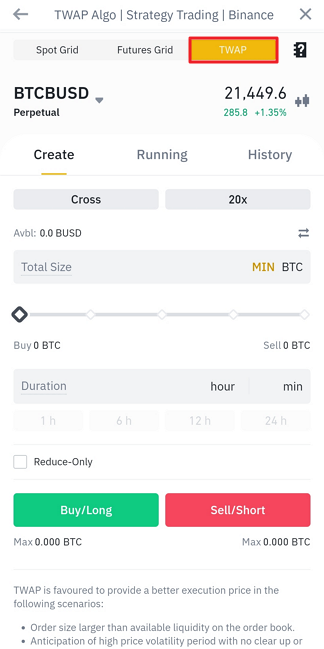
To set up TWAP on your Binance App, click on Futures → Click on the three dots at the top right corner of your screen → Click on TWAP → Select asset→ Click to select Mode (Cross or Isolated) → Adjust leverage (1x, 20x, 50x, etc.) → Enter Size or the amount you intend to trade with → Enter duration → Click on Buy/Long or Sell Short to place order → Click on confirm.
3. Take Profit/Stop Loss (TP/SL) and Advanced TP/SL on Binance Futures
What is the Stop Loss (SL) order?
A Stop Loss is an automatic injunction placed by a trader to sell if there is a significant downward movement in the price of a digital asset. A Stop Loss prevents a trader from incurring huge losses and being liquidated. For example, if a trader buys ZEC at $200 and the price comes down to $105, a loss of $95 will be incurred. But the trader can set an SL to sell the ZEC once the price comes down to $190, thereby preventing further loss of $85 in this case.
How to set up a SL order on Binance Futures
On the Futures Interface of your Binance App, Click on Buy and proceed to purchase a digital asset you want to trade with → Click Cross Or Isolated → Adjust Leverage → Set Entry Price, and trade is initiated → Click on the Pen Icon → Enter Stop Loss Price, and it automatically shows the amount you would lose if you sell at that price in the Mark Price → Click Confirm, and it will reflect on your Open Orders Tab as Stop Market.
What is the Take Profit (TP) order?
Take Profit (TP) is an order that prompts an automatic sale of a trade once it accrues a particular amount of profit and registers the profit in the trader’s account. On Binance Futures, SL and TP can be set simultaneously.
How to Set TP on Binance Futures
On the Futures Interface on your Binance App → Click on Buy and proceed to buy a digital asset you want to trade with → Click Cross Or Isolated → Adjust Leverage → Set Entry Price, and trade is initiated → Click on the two boxes right beside the -/- icon → Enter the price you want to take profit in the first box → Enter how much of the trade you want to be sold at a given price in the second box (it can be 50%, 60%, etc.) → Click on Limit, and your TP is set and will be reflected on the Open Order Tab as Limit.
This can be done more than once using different prices for a particular trade position. So, anytime it reaches any of the price set, it automatically takes profit and closes the trade.
What is the Advanced Stop Loss (SL) and Take Profit (TP) order
Advanced SL/TP, as a risk management tool, gives more accurate control over the execution price than the normal SL/TP. It permits traders to enter a percentage of expected loss or gain and can set up TP/SL using predetermined Last Price or Mark Price. It equally shows estimated profit and loss.
How to set up Advanced SL/TL on Binance Futures
To set Advanced Take Profit, Click on Advanced under TP/SL → Set Trigger Price by entering expected profit or loss percentage → Set gain → Enter Price → Confirm.
To set Advanced Stop Loss, Click on Advanced Under TP/SL → Set Trigger Price → Set Loss → Enter Price → Confirm. These two features are on the same page and can be set up simultaneously in less than a minute.
4. The Multi Symbol Trading Page
The Multi-symbol Trading Page is a feature that gives traders a centralized location where they can access, analyze and trade many digital assets on one screen instead of alternating between different assets and their set-up peculiarities. Traders can trade up to six assets like BTC, ETH, BNB, etc. in one place, thereby reducing the chances of missing trading opportunities.
To enable the Multi-symbol Trading Page; Go to Binance Futures → Click on the settings Icon at the top right corner of the trading interface → Select Multi-symbol as the Layout, and you are good to go.
5. The Multi-asset Mode
TheMulti-asset Mode is a feature supported only by the cross margin mode, which allows traders to trade USDⓈ-M Futures contracts with different digital assets as margin assets. By activating the Multi-asset Mode, the cross margin is automatically shared across all different assets like BTC, USDT, and others. This makes them easy to be transferred up to a certain limit. If, for instance, you have BTC on your Spot wallet and want to use it as a margin on your Futures account, the Multi-asset Mode brings them together without you moving from one page to another.
How to set up the Multi-asset Mode
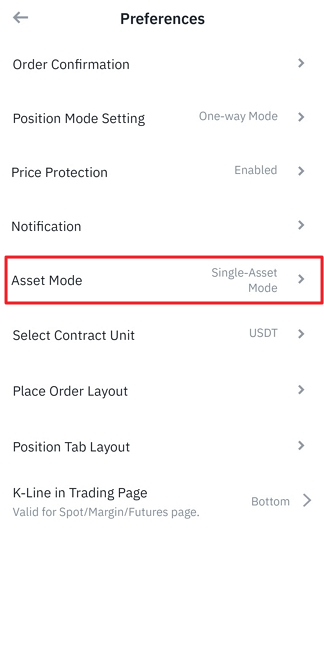
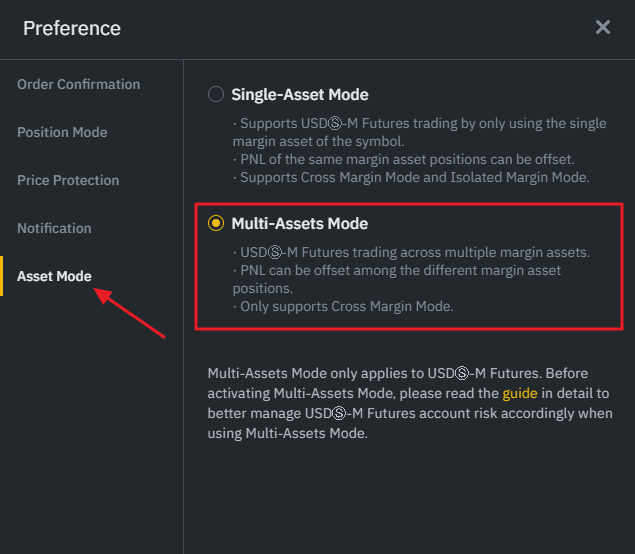
On your Binance App → Click on Futures → Click on the 3 dots at the top right corner of the screen → Click on Preferences → Click on Asset Mode → Click on Multi-asset Mode, and that’s it.
Final thoughts
With Binance Futures, trading cryptocurrencies becomes easier and more profitable. It offers several features that make life easier for crypto traders. You don’t need to exert so much energy to set up trades repeatedly or stay glued to your screen. One set-up can execute many numbers of trades over a long period of time. The features also improve your chances of making more profits and help you minimize losses.
There’s no doubt that utilizing features like Grid Trading, TWAP, Stop Loss and Take Profit, Multi-symbol Trading Page, and the Multi-asset Mode makes trading more exciting. Thanks to the various user-friendly features, you can earn passive income even while you sleep. However, it is important that you understand how to use these features and adopt the right strategies before trading with significant funds.
PIP, a provider of Web3 payment solutions, has announced the launch of its services in the BNB Chain ecosystem. The platform will enable BNB Chain users to maximize the potential of BNB (BNB) and the Binance USD (BUSD) stablecoin.
PIP’s integration into the BNB Chain ecosystem is a strategic, win-win move for both sides. For PIP, it will allow the platform to tap into the growing number of users that are using BNB Chain. In turn, this will enable PIP to expand its reach and coverage. For BNB Chain, taking the BUSD and BNB tokens to the mainstream will further boost its use cases beyond token pairing.
The platform’s PIP Extension product will provide the advanced service that connects the Web3 ecosystem with a range of connected Web2 social media platforms.
PIP makes crypto payments easier
With PIP, payment is made more convenient as users don’t need to use alphanumeric and case-sensitive wallet addresses, which aren’t human-readable. The PIP tag, a unique method of identifying addresses, simplifies the whole method of sending and receiving payments, no matter how large or small.
PIP uses a consumer-centric user interface, and this allows social media accounts to easily receive tips and send payments. Users can also seamlessly transact or reward their favorite social media for putting out content, without divulging a lot of information on their bank details or cryptocurrency wallets.
Businesses are not excluded. They can share their PIP tags on their websites or their social media pages and get paid seamlessly, compared to legacy payment services.
PIP is not an untested service. Over 60,000 users have already been onboarded via mainstream social media platforms like Twitter, Twitch, Reddit, and Discord and $15 million worth of crypto payments have been processed by the platform. Users can connect PIP to their social media accounts and unlock donations, tips, and payments. It is also possible to participate without a PIP account, but only through an escrow service.
PIP’s CEO and Co-Founder, Jeff Baek responded to the BNB and BUSD integration by saying:
“We believe that PIP will help $17 billion BUSD to expand beyond a trading pair to become a means of global payment, flouring micropayment economy.”
In the future, PIP.ME and PIP Button will also support BNB and BUSD coins. PIP.ME is a Web3 profile link that may be customized and distributed in order to exchange content, show or sell user-owned NFTs, and take payments.
PIP has started making additional plans to expand its array of consumer-focused Web3 services since securing seed round funding from Alameda Research, Coinbase Ventures, CMS Holdings, Galaxy Digital Hong Kong, and Genesis Block Ventures. Additionally, as part of its goal for the upcoming quarters, PIP plans to include support for additional blockchains, currencies, and social media sites.
Futures are a type of financial derivatives that oblige parties to buy or sell a specific commodity, asset, or security at a predetermined future date for a set price. Since the financial contract allows investors to make a profit regardless of the way the market prices move, it is not surprising that futures are one of the most popular investment instruments, both in traditional finance and in crypto.
Binance Futures is the largest futures trading platform in the blockchain industry in terms of trading volume, user activity, and the sheer number of supported crypto assets. According to data from crypto tracking website CoinCodex, Binance’s futures trading platform regularly facilitates more trading volume per day than the next four exchanges combined.
In this article, we are going to examine the benefits of Binance Futures and take a look at its core features. But first, we will explain what are stablecoins and why are they important when it comes to futures trading.
Stablecoins are digital currencies that have their value pegged to the price of another currency, asset, or commodity. In some cases, their peg can be managed by smart contracts which automatically control their circulating supply based on supply and demand dynamics.
While fiat-pegged stablecoins, like Binance USD (BUSD) and Tether (USDT), are the most popular, precious metals- and crypto asset-pegged stablecoins are gaming in popularity, especially in recent years.
Stablecoins can at all times be redeemed at a 1:1 ratio for the assets they are tracking. For instance, 1 BUSD can be redeemed for 1 USD, 1 PAX Gold for 1 fine troy ounce of gold, and so on. Their price stability makes stablecoins an excellent choice when transacting value across cryptocurrency platforms, exiting cryptocurrency positions, earning interest on crypto savings, and when in need of stable collateral while derivatives trading.
In general, stablecoins belong to one of the three categories when it comes to the asset they are collateralized with. Fiat-collateralized stablecoins are – as the name suggests – backed by fiat currencies and cash-like reserves. Crypto-collateralized stablecoins are backed by one or a collection of crypto assets.
Last but not least, algorithmic stablecoins are backed by arbitrage and other market mechanisms. In practice, this can make algorithmic stablecoins more prone to lose their peg, as was the case in May 2022, when Terra Classic (LUNC) ecosystem’s leading stablecoin USTC collapsed due to increased selling pressure.
What is BUSD?
BUSD is a fiat-collateralized stablecoin pegged to the value of the US dollar. First launched in September 2019, the BUSD stablecoin has since emerged as one of the most popular stable digital currencies in the industry. As of June 2022, BUSD is the third largest stablecoin, boasting a market capitalization of over $17 billion.
BUSD was developed in partnership with Binance and Paxos, a New York-based financial institution and technology company specializing in blockchain. The USD-denominated stablecoin received a regulatory stamp of approval from the New York State Department of Financial Services (NYDFS).
Here’s a quick summary of BUSD’s main features:
Developed in a joint effort by Binance and Paxos
One unit of BUSD is equivalent to one US dollar
BUSD is fully redeemable for USD at all times
Each BUSD in circulation is backed by a corresponding amount of USD reserves
The BUSD stablecoin is audited on a monthly basis in accordance with strict regulatory standards
Supported on more than 60 cryptocurrency exchanges and over 20 blockchain wallets
Can be used to trade with multiple contracts simultaneously thanks to Binance’s Multi-Assets Mode
Using BUSD as collateral when trading with Binance Futures
Binacne allows futures traders to invest in derivative contracts of USDⓈ-M Futures and COINⓈ-M Futures variety. The latter are denominated and settled in digital currencies (think BTC, ETH, etc.), while the former are denominated and settled in stablecoins. There are two types of USD-M futures available to Binance traders – USDT- and BUSD-margined.
The benefits of using BUSD-margined contracts include lower maker and taker fees and support for going long (predicting a future price increase) or short (predicting a future price decrease) on a wide variety of supported cryptocurrencies:
Here’s a table comparing potential savings when using BUSD-margined contracts instead of USDT-margined contracts. Note that the example below shows a position worth $100,000. For a complete breakdown of USDT and BUSD Futures trading fees, click here.
Maker Fee
Taker Fee
BUSD Pairs
-0.01% (Rebate $10)
0.017% (Cost $17)
USDT Pairs
0.02% (Cost $20)
0.04% (Cost 40%)
Total Savings
$30
$23
In addition to unlocking lower trading fees, BUSD can be used to generate passive income streams via Binance’s suite of Flexible and Fixed savings products, to participate in yield farming liquidity pools, and as an investment vehicle for promising blockchain projects hosted on Binance’s Launchpad and Launchpool platforms.
How to trade BUSD-margined futures?
In order to trade BUSD-margined futures, or use any of Binance’s products and services, you need to create an account on Binance. After that, you can proceed to the Binance Futures marketplace.
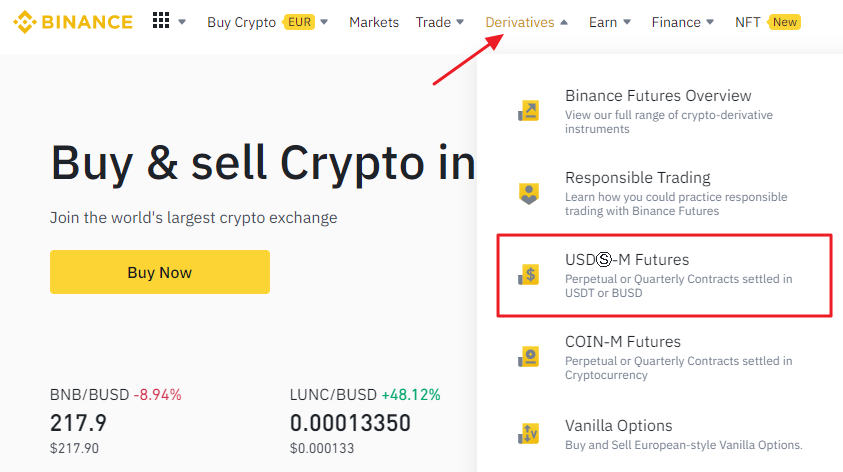
The BUSD-M Futures can be accessed right from the Binance homepage (see the image below). Keep in mind that perpetual contracts (futures contracts without expiry date) are the only type of futures available when using BUSD as a settlement asset.
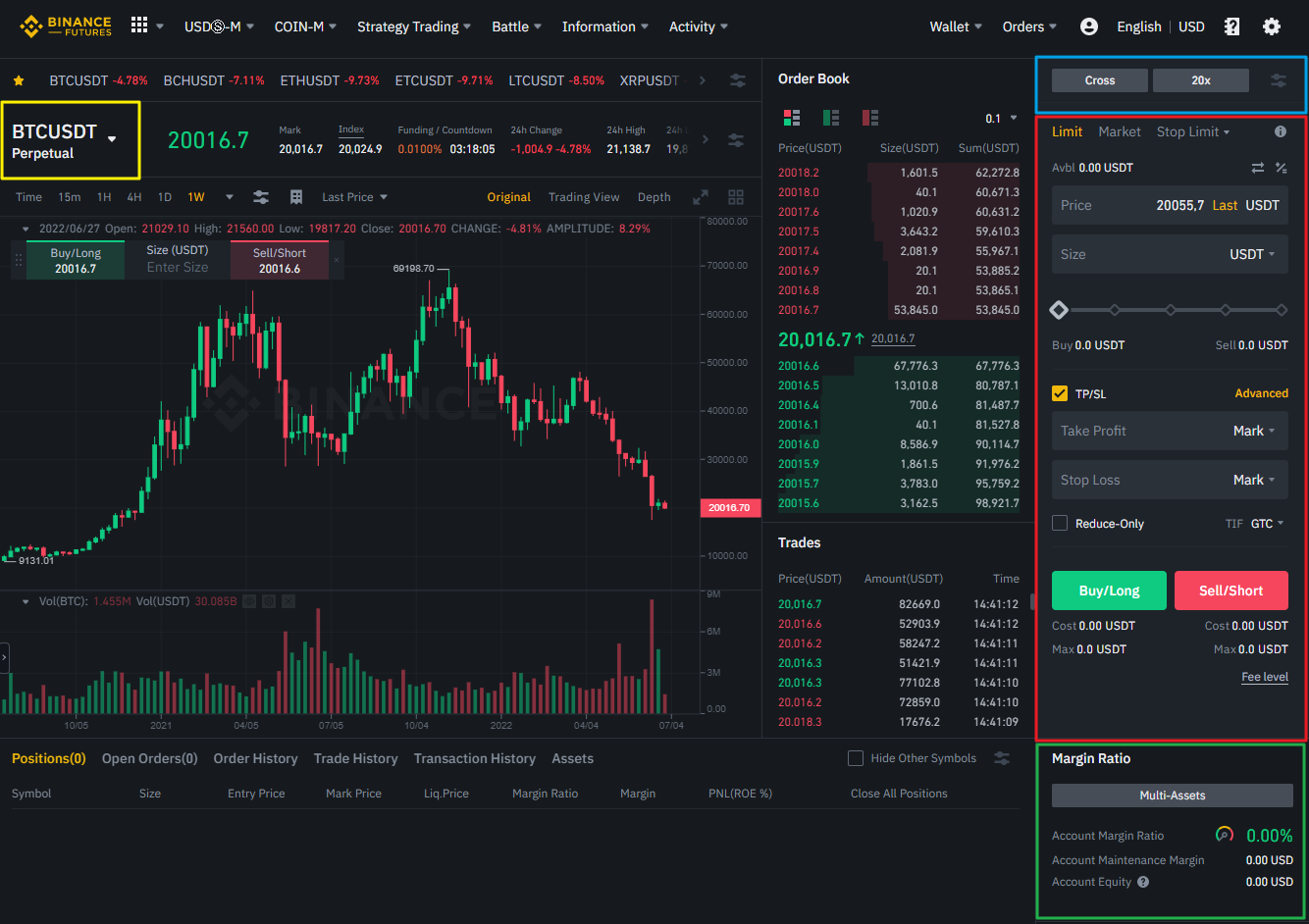
When on the Futures main trading screen, you will find different crypto/BUSD pairs in the upper left corner of the screen (highlighted in yellow in the image below). When entering a futures position, you can pick between Cross margin and Isolated margin modes (highlighted in blue). To trade with leverage and magnify exposure to market volatility, Binance lets traders select a leverage level between 1x and up to 125x.
In the section on the right side of the trading screen (highlighted in red), users can specify various order paraments, including order types, take profit and stop loss levels, and more. Last but not least, in the Margin Ratio section located in the bottom right corner (highlighted in green), users can monitor their risk of liquidation and turn on Multi-Assets Mode (more on that in the following section).
Multi-Assets Mode – Easily manage BUSD- and USDT-margined positions
Launched in 2021, Multi-Assets Mode allows traders to share liquidity and margin across BUSD- and USDT-margined futures contracts, giving investors greater flexibility and more control over their risk exposure.
With Multi-Assets Mode enabled, collateral is automatically shared between futures collateralized with either BUSD or USDT. This eliminates the need to manually manage BUSD and USDT collateral and makes it easier for traders to avoid liquidations. Also, the feature allows traders to pursue potential arbitrage opportunities that arise from time to time – for instance, a trader may notice BTC/USDT is trading at a lower price than BTC/BUSD. In such a case, the position can be sold in the latter trading pair to take advantage of minute price differences and make a risk-free profit.
To turn Multi-Assets Mode on, go to the Margin Ratio section (see the “How to trade BUSD-margined futures?” section), navigate to the bottom of the menu, and select “AssetMode”. Proceed by clicking on the “Multi–AssetsMode” to turn the liquidity sharing feature on.
For more information about the Multi-Assets mode, including a step-by-step guide to turning on the feature on desktop as well as on mobile clients, click here.
Mock Trading – Put your trading strategies to the test without risking real money
For traders who lack the experience, or simply want to try out new investment strategies in a risk-free environment, Binance launched the so-called Mock Trading feature. Each Mock Trading account starts with 3,000 in imaginary USDT, which can be used just as on the real version of the Binance Futures platform. Users can try different order types, leverage levels, and more.
Mock Trading can be found by going to the Binance homepage, clicking on the user icon in the upper right corner, and then clicking on the “MockTrading” button.
Final Thoughts
Using BUSD-margined futures contracts on Binance Futures comes with several benefits. For starters, lower fees and the ability to predict future prices of more than a dozen major cryptocurrencies allow investors to make a profit regardless of which direction the market moves. In addition, the ability to share liquidity and margin between USDT and BUSD-margined positions allows Binance users to pursue additional trading opportunities and more easily manage risks. Hopefully, this article helped answer your questions regarding BUSD-margined futures.
Stablecoins are important in the crypto market and they come in different classes and offer several benefits
It is possible to buy stablecoins with credit cards
Binance is one of the best places to buy stablecoins
In five simple steps, you can buy stablecoins from Binance with your credit card
Stablecoins are very important in the cryptocurrency market. They offer a high level of stability in a market that is notoriously volatile. They also bring liquidity and volume to the market. Stablecoins also allow traders to move fast in the crypto market, serving as media to move assets quickly and easily. Regardless of your experience or position in the market, there are many benefits you can derive from stablecoins.
Are you planning to buy stablecoins anytime soon? Do you know you can do that with a credit card? Yes, credit cards serve as one of the major payment methods to buy crypto, along with fiat deposits and e-wallets. For most people, credit cards offer the easiest path to owning cryptocurrencies, including stablecoins.
To ensure that this article is as helpful as possible, we will discuss some of the most important things you need to know about stablecoins before providing a detailed guide on how you can buy them with credit cards in five simple steps.
What Are Stablecoins?
Stablecoins are a class of cryptocurrencies that have their values tied to an outside asset for the sake of stability. Unlike unpegged cryptocurrencies like Bitcoin and Ethereum, stablecoins are designed to offer price stability. A stablecoin can be pegged against a fiat currency like the U.S. dollar, a reserve commodity like Gold, or another high-value cryptocurrency.
Stablecoins maintain price stability because they are backed by the specific asset they are tied to. When an organization issues a stablecoin, for instance, it is required to set up a reserve at a financial institution to hold the underlying asset. The value of the stablecoin issued is not expected to surpass the value of the asset kept in reserve. This helps to keep the price of the stablecoin relatively stable.
The 4 Types of Stablecoins
Stablecoins are of different types, though they share the same fundamental principle. There are four different types of stablecoins and we will briefly explain them right away:
Commodity Backed Stablecoins
As the name suggests, commodity-backed stablecoins are cryptocurrencies pegged against a commodity or physical assets such as gold and other acceptable precious metals, oil, and real estate. Of course, gold is the most collateralized commodity in this asset class. Examples of commodity-backed stablecoins are Tether Gold (XAUT) and Pax Gold (PAXG).
Fiat Collateralized Stablecoins
Fiat collateralized stablecoins are cryptocurrencies that are pegged against fiat currencies like the U.S. dollar and Euro. It is the most popular class of stablecoins. The U.S. dollar is also the most collateralized fiat currency in the crypto universe. Some examples of this type of stablecoins are Tether (USDT), TrueUSD (TUSD), and Binance USD (BUSD).
Algorithmic Stablecoins
Algorithmic stablecoins are stablecoins that are not particularly pegged to any asset class, rather, their price stability results from the use of specialized algorithms and smart contracts. An algorithm stablecoin tracks the price of a fiat currency, though it is not backed by the currency. The system automatically manages the circulatory supply of the stablecoin in response to price changes.
Cryptocurrency Backed Stablecoins
As the name clearly suggests, these are stablecoins that are pegged against other cryptocurrencies. In other words, these stablecoins are backed by other cryptocurrencies. In most cases, this class of stablecoins are not dependent on central issuers. Rather, the system employs smart contracts and depends on individual users to put their cryptocurrencies into the smart contract (as collateral) to generate stablecoins and then return the stablecoins to the original smart contract to withdraw the same collateral amount at any given time.
The Main Benefits of Stablecoins
As mentioned in the introductory part of this post, stablecoins are incredibly helpful and beneficial in the cryptocurrency universe. Here are some of the prominent benefits they offer:
Price Stability in a Volatile Market
The first and most obvious benefit offered by stablecoins is price stability in a rather volatile market. As we all know, cryptocurrencies are generally volatile and rightly considered risky. Stablecoins bring price stability, which helps many traders to manage risks.
Quick and Easy Way to Trade and Move Assets within the Crypto Market
Stablecoins help active traders and investors to make quick moves when the need arises. Since their value can neither rise nor drop suddenly, traders can use them to move assets easily and complete trades faster without wasting days trying to deposit fiat currencies. It offers improved convenience and flexibility.
Interest-Yielding Assets
Stablecoins are incredibly beneficial to users who intend to earn interest with their crypto investment. While they can’t gain value quickly like volatile assets, they yield reasonable interest when used for lending and staking activities. With Binance, for instance, traders can buy Binance USD and generate compound interest through Binance Earn. There are several other ways to generate interest and passive income from stablecoins.
Top 3 Most Popular Stablecoins
Are you considering buying stablecoins anytime soon? Then you need to know the popular ones that are considered reliable. Here are three of the most popular stablecoins:
Tether (USDT)
Tether is undoubtedly the most popular stablecoin. It is pegged against the U.S. dollar, so the price is approximately $1 at all times. Its market cap stands at $66.90 Billion at the time of writing.
Binance USD (BUSD)
Binance USD is among the most popular stablecoins. It is also pegged against the U.S. dollar and its market cap stands at $17.55 Billion at the time of writing.
USD Coin (USDC)
USD Coin is another incredibly popular stablecoin pegged against the U.S. dollar, also. Its market capitalization at the time of writing was $55.86 billion.
How to Buy Stablecoins on Binance in Five Simple Steps
Are you willing and ready to start buying stablecoins with your credit card? Binance is one of the best platforms to do that. The processes are simple and straightforward.
Here are just five steps you can take to purchase any of the popular stablecoins with your credit card:
Step 1
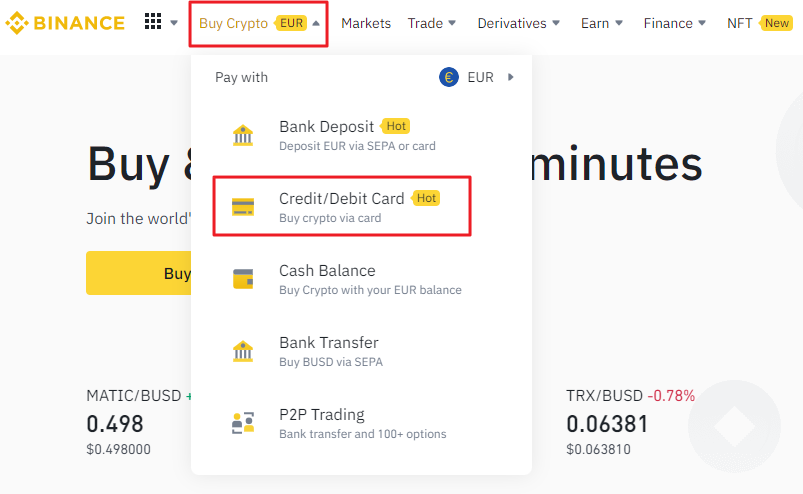
Log in to your Binance Account. Click [Buy Crypto] and select [Credit/Debit Card].
Step 2
Choose the fiat currency you intend to buy stablecoin with (could be the US dollar, Euro, or other supported currencies. Enter the amount you wish to spend – the system will automatically calculate and display the amount of crypto you will get.
Step 3
Select one of your existing credit card options, or click [Add New Card], then enter the credit card details. (Note that you can only pay with a credit card in your name). Enter your billing address and click [Add Card].
Step 4
Check your payment details carefully to confirm that everything is in order, then click [Confirm].
Step 5
The system will redirect you to your bank’s OPT Transaction Page. Verify your payment.
Wrapping Up
Stablecoins can be helpful in many ways and you can buy them with a credit card. As the biggest cryptocurrency exchange, Binance makes it easy for anyone to buy crypto with a credit card. You can also choose to buy crypto with a cash balance using EUR or any other supported fiat currency, or deposit your local currency through a bank transfer or using a third-party payment processor.
FAQs
Q: Can I link more than one bank card to my Binance account?
A: Yes, on Binance, you can link as many as five bank cards to your account.
Q: What type of Credit Cards are supported by Binance?
A: Binance generally supports Visa and MasterCard payments. However, your country/region may determine the acceptable cards you can use.
Q: If my purchase fails, will I get a full refund?
A: Yes, you will get back the full amount you paid if your purchase fails. No charge or fee is applied.
Q: After buying stablecoin with a credit card, where can I find them?
A: You will find your purchased stablecoin in your wallet. Just go to [Wallet], then click [Overview]. You will see if the stablecoin has arrived.
Q: Can I check my purchase history at any time?
A: Yes, you can always check your purchase history to be sure that transactions are completed. Simply click [Orders], then [Buy Crypto History], and your order history will be displayed.
Binance Dual Investment is a unique product offered by the Binance cryptocurrency exchange. It’s designed to give users who want to buy a cryptocurrency at a lower price or sell a cryptocurrency at a higher price the chance to do so—all while earning interest at the same time.
When subscribing to a Dual Investment program on Binance, users have two main options. We’ll use Bitcoin and USDT in our example to help make it clearer.
“Buy Low”: Deposit USDT and use it to buy Bitcoin at the Settlement Date if it reaches the Target Price or lower. The deposit is earning interest in the meantime. If the price is above the Target Price on the Settlement Date, the USDT (plus accrued interest) is returned to the user.
“Sell High”: Deposit Bitcoin and sell it for a stablecoin at the Settlement Date if it reaches the Target Price or higher. The deposit is earning interest in the meantime. If the price is below the Target Price on the Settlement Date, the BTC (plus accrued interest) is returned to the user.
Before we delve deeper into Binance Dual Investment, we should clarify that Dual Investment is not a principal-guaranteed product, and there are risks associated with using it. For example, if your Target Price to buy Bitcoin is set at $30,000 and the market price drops to $29,000 on the Settlement Date, you will be buying BTC at $30,000 instead of the more favorable $29,000 price. The reverse is true if you’re using Dual Investment to sell at a higher price.
Due to the market volatility of cryptocurrencies, it’s possible that the value of your investment when your Dual Investment program ends can be lower than the value of your investment when you subscribe to the Dual Investment program.
Binance Dual Investment explained
Now that we’ve introduced Binance Dual Investment and the risks associated at the product, let’s take a closer look at how the product functions. First, let’s get familiar with five key concepts you will encounter when using the product.
Target Price
When you’re subscribing to a Dual Investment product to either “Buy Low” or “Sell High”, the Target Price refers to the price at which the deposited assets will be bought or sold on the Settlement Date (if the Target Price is reached).
Settlement Date
On the Settlement Date, the deposited assets will either be bought/sold or returned to you. This will depend on the relation between the Target Price and the price of the asset on the Settlement Date.
Please note that once you subscribe to a Binance Dual Investment product, you will not be able to edit or cancel your subscription. You will receive your funds on the Settlement Date—either the invested funds will be returned to you (plus interest), or you will receive the Target Currency.
Deposit Currency
The Deposit Currency is the asset you deposited into a Binance Dual Investment product. If you’re looking to “Buy Low”, you will be depositing stablecoins. If you’re looking to “Sell High”, you will be depositing “standard” crypto assets like Bitcoin, Ethereum or BNB.
Target Currency
The Target Currency is the asset that will be bought/sold automatically on the Settlement Date if the Target Price is reached. This will be a stablecoin if you’re looking to “Sell High”, and a “standard” cryptocurrency if you’re looking to “Buy Low”.
Subscription Amount
The amount that was deposited in the subscription to the Dual Investment product. If the Target Price is reached on the Settlement Date, this will be the amount used to buy or sell the Target Currency.
Dual Investment example and scenarios
Now that we know the most important concepts of the Dual Investment product, we’ll be going through an example of subscribing to Dual Investment and outline some of the possible scenarios that could happen.
In our hypothetical example, we hold Bitcoin and would like to sell if it reaches a higher price. We would also like to earn some interest on our BTC holdings in the meantime, so we choose Binance Dual Investment.
TIP: We selected “Beginner Mode” for our example, which will provide a clearer subscription process that’s suitable for users that don’t have experience with the Dual Investment product.
Now, we choose the “Sell BTC” option, since we’re trying to sell our BTC at a higher price.
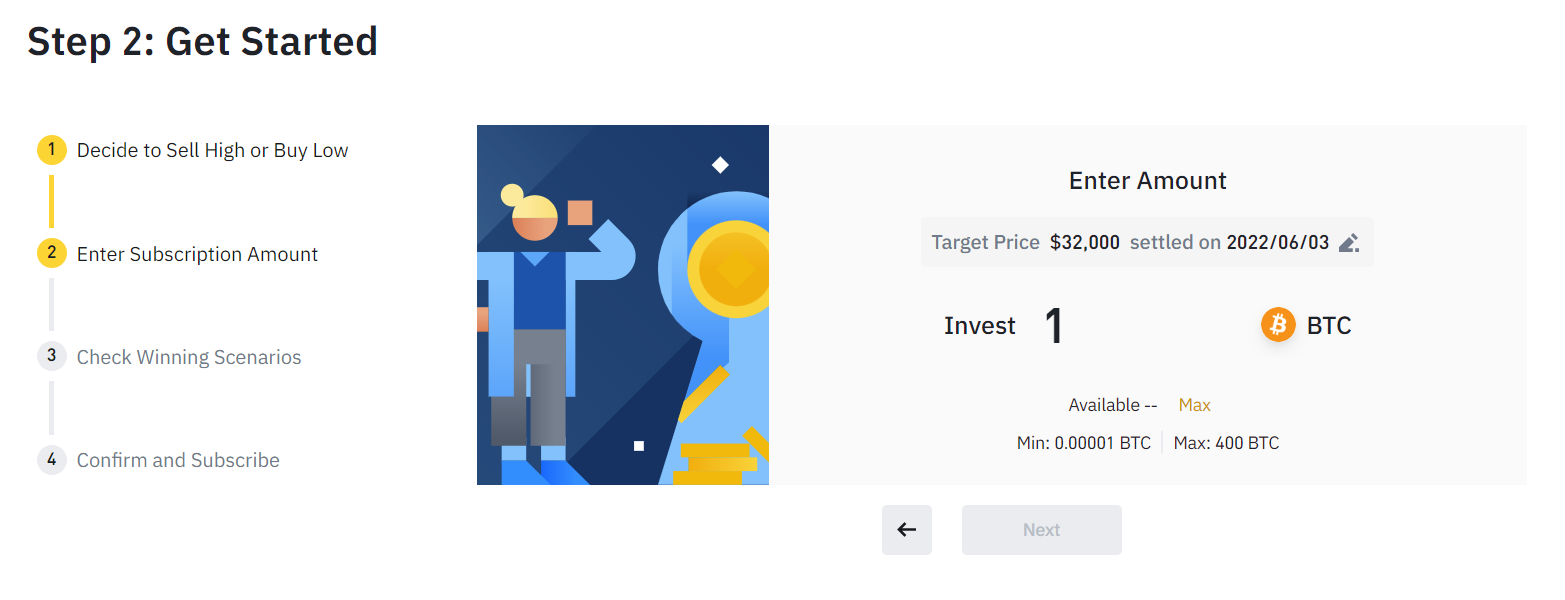
By clicking the pencil icon, we can select between the different Dual Investment plans for BTC that Binance currently has on offer. The three parameters are Target Price, Settlement Date and APY.
The APY that’s offered depends on how close the Target Price is to the current price, how far into the future the Settlement Date is, and other factors. If two products have the same Settlement Date, the one with the Target Price closer to the current price will have a higher APY.
Please note that APY means Annual Percentage Yield. This shows the percentage of your principal that you would earn as interest in a year. The programs offered on Binance Dual Investment typically last a lot less than one year.
Let’s say that it’s May 30, 2022, and the current price of Bitcoin is $30,000. We’ll choose a plan with a Target Price of $32,000, a June 3, 2022 Settlement Date, and an APY of 22.77%.
This is not investment advice. This example is only meant to explain how the Dual Investment product functions.
We’ll deposit 1 BTC into the product.
Let’s check out three hypothetical scenarios that could happen once the Settlement Date comes around.
Scenario 1
On the Settlement Date, the price of Bitcoin is at $31,500, which is below the $32,000 Target Price. The product is not exercised. We receive back our 1 BTC, plus 0,00311 BTC that we earned as interest. This is a better outcome than if we simply held our 1 BTC.
Scenario 2
On the Settlement Date, the price of Bitcoin is at $32,050, which is above our $32,000 Target Price. Our 1 BTC, plus the interest we earned on the BTC, is automatically sold for the BUSD stablecoin at the Target Price.
During the five days that our BTC was deposited, it accumulated 0,00311 BTC in interest, which equals about $99.5 at the Target Price. So, after all is said and done, we get 32,099 BUSD. This is more than we’d get if we simply held our BTC and sold it at $32,050.
Scenario 3
On the Settlement Date, the price of Bitcoin is at $32,200, which is above our $32,000 Target Price. Our 1 BTC, plus the interest we earned on the BTC, is automatically sold for the BUSD stablecoin at the Target Price.
During the five days that our BTC was deposited, it accumulated 0,00311 BTC in interest, which equals about $99.5 at the Target Price. So, after all is said and done, we get 32,099 BUSD. This is less than we’d get if we simply held our BTC and sold it at $32,200.
Why not just use a limit order?
A pretty common question when it comes to the Dual Investment product is:
“If you want to buy or sell a cryptocurrency at a different price than the current price, why not just use a limit order?”
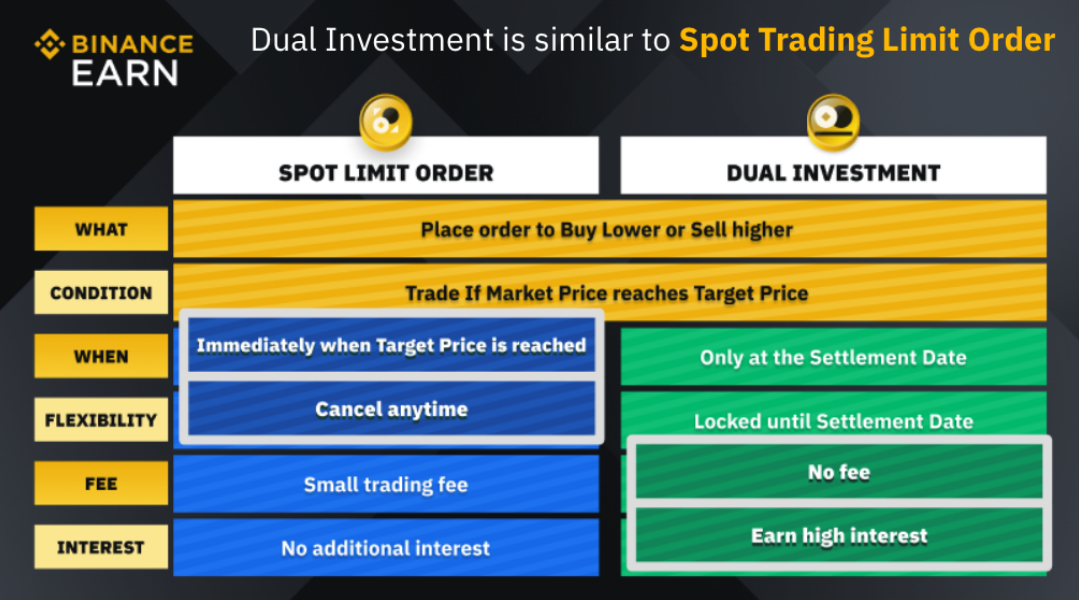
This infographic provided by Binance provides a nice summary of how Dual Investment compares to simply using a limit order on the spot market. From it, you can clearly see that each method has its own advantages and disadvantages—the choice will ultimately depend on what you prioritize.
Recap – the pros and cons of Binance Dual Investment
To sum up, let’s lay out the main advantages and disadvantages of Binance Dual Investment:
Pros:
The product doesn’t charge any trading fees
APY can be very high
Users can choose between many different Target Prices, APYs and Settlement Dates
Cons:
Deposited funds are locked until the Settlement Date
Can underperform a simple HODL strategy if the market price significantly deviates from the Target Price