In 2026, you’ll find numerous promising penny cryptos under 1 cent offering exciting investment opportunities. Shiba Inu (SHIB), with its robust community and potential tied to ShibaSwap, can’t be ignored. Amp (AMP), essential for secure digital payments, and Sia (SIA), which offers decentralized data storage, also hold significant promise.
Additionally, projects like SIDUS (SIDUS) in the Web3 gaming sector and meme coins such as Pepe Coin (PEPE) and Bonk (BONK) leverage cutting-edge technologies and entertainment value to deliver diverse avenues for growth.
But which ones of all the numerous penny cryptos are most likely to yield huge returns? That’s what this article aims to help with.
List of the best penny cryptos under 1 cent in 2026
- Shiba Inu – All-encompassing crypto ecosystem with meme beginnings
- Pepe Coin – Popular meme coin based on the Pepe meme
- Bonk – Solana’s top meme coin
- Amp – Collateralizing digital payments with AMP
- Sia – Decentralized data storage powered by smart contracts
- Ravencoin – Blockchain specialized for efficient asset transfers
- BitTorrent – Decentralized file sharing powered by BTT
- eCash – Blockchain payments on a “mankind scale”
- Jasmy – IoT-focused project bringing data sovereignty to users through blockchain
- Baby Doge Coin – Taking on Dogecoin with transaction and tokenomics improvements
- Holo – Avoiding centralized Internet authorities with Holochain apps
- DigiByte – DeFi ecosystem with a long and successful track record
- Zilliqa – A powerful dApp platform powered by ZIL
- Access Protocol – A web3 approach to premium content and subscriptions
The 14 best penny crypto projects: Examining crypto coins under 1 cent with huge upside potential
When examining the best penny crypto projects under 1 cent, there are multiple categories and types that comprise our list. They include DeFi projects, NFTs, Meme coins, Gaming, and even Launchpads.
Each of these cryptocurrencies offers unique value propositions and high upside potential, and we believe them to be viable options for investors seeking substantial returns.
1. Shiba Inu (SHIB) – All-encompassing crypto ecosystem with meme beginnings

Shiba Inu (SHIB), currently priced at approximately $0.000005443, stands as a prime example of a penny cryptocurrency with substantial growth potential.
SHIB boasts a market cap of $3.21 billion, which shows significant investment and liquidity. Its strong community and ecosystem differentiate it from other penny cryptos, and its success has spawned a large number of copycats that are trying to be the next Shiba Inu. It’s also by far the largest cap on our list, and it has consistently stayed among the top 30 cryptocurrencies.
Future developments include integration within the ShibaSwap decentralized exchange, which aims to increase utility and use cases for the token.
SHIB exhibits high volatility, with a 24-hour trading volume of approximately 40%, appealing to risk-seeking investors.
As a prominent meme coin, Shiba Inu leverages community-driven growth strategies, making it a coveted investment with many positive price predictions for Shiba Inu.
2. Pepe Coin (PEPE) – Popular meme coin based on the Pepe meme
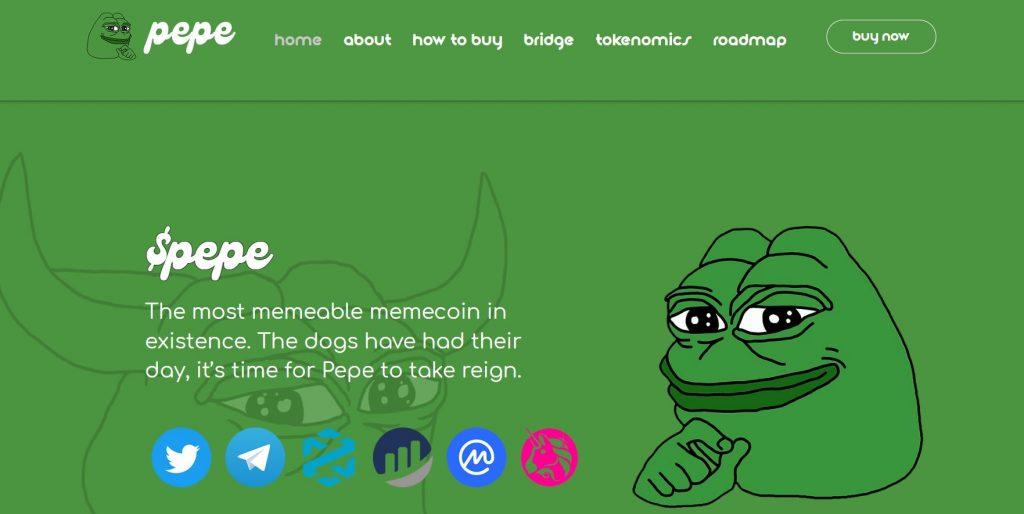
Pepe Coin (PEPE) has garnered significant attention in the meme cryptocurrency space since its April 2023 launch. As an ERC-20 token, Pepe Coin allows investors to participate in a vibrant ecosystem despite lacking unique utility among its meme coin counterparts.
Built around the popular Pepe the Frog meme, which has been a cherished part of internet culture since around 2008, Pepe Coin gained popularity within the cryptocurrency community shortly after its official release.
The Pepe Coin team describes PEPE as “the most memeable memecoin in existence” on their official website, presenting it as a competitor to other meme coins like Dogecoin and Shiba Inu. Notably, the team behind Pepecoin consists of anonymous members.
Pepecoin doesn’t offer any unique utility, as highlighted on its website. The team describes Pepe as being “fueled by pure memetic power” and emphasizes that the coin is “completely useless and for entertainment purposes only.”
Despite not having any major ambitions, Pepe Coin is the third most successful meme coin on the market, behind only Dogecoin and Shiba Inu.
3. Bonk (BONK) – Solana’s top meme coin

Bonk is a meme coin on the Solana blockchain, gaining major attention during its late 2022 launch when it was freely distributed to the Solana community. As outlined on the Bonk website, the project aims to diminish the influence of venture capital investors within the Solana ecosystem and restore power to “the people.”
The Bonk team reports over 130 integrations spanning gaming, gambling, decentralized finance, and NFTs. Notably, the Bonk community has developed multiple games where users can both spend and earn BONK.
Additionally, users can deposit their BONK into various DeFi tools to earn yield, participate in no-loss lotteries, and engage in other activities. Solana’s recent resurgence has also had a positive impact on BONK. In July 2025 alone, the token saw gains of over 300% against the US dollar. If Solana continues to build on its momentum, we could see Bonk becoming one of the best-performing meme coins on the market.
4. Amp (AMP) – Collateralizing digital payments with AMP

Amp (AMP) is a collateral token designed to facilitate secure and instant transactions in digital payments, making it a pivotal part of the Flexa payments network.
Currently valued at around $0.001, Amp has a market capitalization that reflects its growing adoption in mainstream payment systems.
The token’s functionality includes providing collateral to protect blockchain transactions against fraud and enabling instant transaction speeds. Amp’s unique utility in bridging crypto and fiat currencies positions it favorably for potential growth as more businesses adopt digital payment solutions.
As a penny crypto to buy, Amp offers substantial upside potential. This may make it an attractive investment with increasing demand for reliable financing mechanisms in the DeFi ecosystem.
5. Sia (SIA) – Decentralized data storage powered by smart contracts

Sia (SIA) stands out as a decentralized storage platform where users can monetize their unused hard drive space.
As a penny crypto currently priced at $0.001078, SIA offers an accessible entry point for investors.
Leveraging smart contracts, Sia guarantees secure and transparent transactions between storage providers and users.
With the growing demand for data storage, especially in cloud services, Sia’s cost-effective solutions position it for potential future appreciation.
6. Ravencoin (RVN) – Blockchain specialized for efficient asset issuance and transfers

Ravencoin (RVN), a fork of Bitcoin, has been crafted to streamline the creation and transfer of digital assets. We will admit, this is slight cheating, considering that RVN is priced slightly above 1 cent. Still, we feel RVN offers a good investment opportunity for those seeking significant upside potential with smaller investments.
It employs the KAWPOW algorithm, enhancing mining efficiency and decentralization. As of October 2026, Ravencoin has seen increased community engagement and adoption, signaling growing interest and practical use cases.
Ravencoin can fulfill a variety of use cases. The blockchain can be used to issue tokenized securities such as stocks, digital collectibles, fungible tokens, tokens representing physical items such as gold bars, and more.
Anyone who wants to create a new crypto asset on the Ravencoin network has to burn a specified amount of RVN coins. Assets issued on Ravencoin can have many parameters (such as the amount of decimal numbers, fungibility, etc.), allowing users to fine-tune the assets they issue for specific use cases.
Its strong focus on asset tokenization positions it favorably in the evolving blockchain environment, potentially driving demand and value appreciation. With its innovative technology and increasing adoption, Ravencoin stands out as a promising penny crypto under 1 cent with huge upside potential.
7. BitTorrent (BTT) – Decentralized file sharing powered by BTT

BitTorrent (BTT) is the epitome of a high-risk, high-reward investment opportunity. If you’re into tech at all and haven’t been living under a rock for the past decade, you’ve heard of BitTorrent.
What you may not have heard is that it was bought by Justin Sun (the controversial founder of Tron), and that ever since then, BitTorent has been focusing on using blockchain technology.
This decentralized file-sharing protocol leverages blockchain technology to enhance speed and efficiency. Essentially, it incentivizes users to share files via P2P (peer-to-peer) mechanisms, while utilizing a decentralized filing system.
With a substantial user base of millions, BTT boasts a robust ecosystem. The recent integration with TRON’s blockchain has streamlined transactions and enhanced service offerings.
8. eCash (XEC) – Blockchain payments on a “mankind scale”
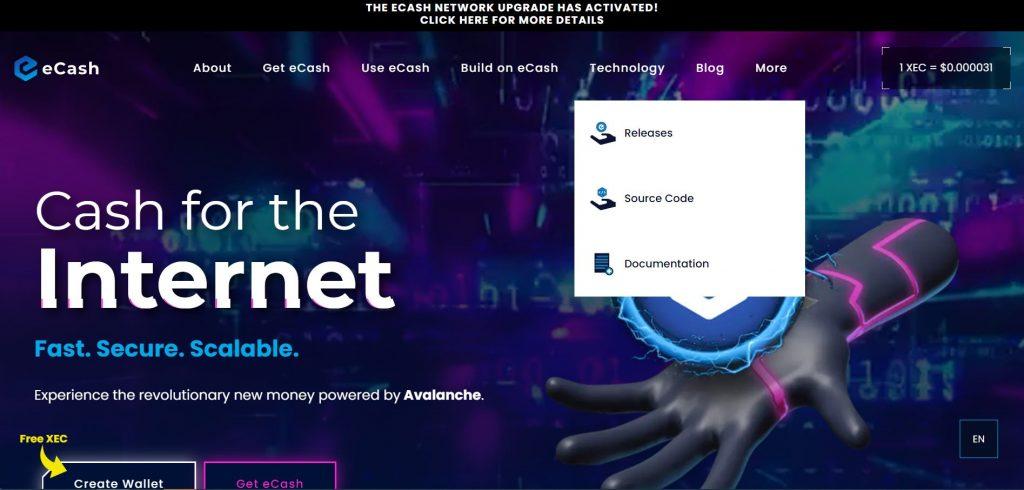
eCash (XEC) is targeted at enhancing transaction efficiency while utilizing a unique consensus protocol.
It features instant transactions and secure payment functionalities, positioning it favorably in the evolving landscape of digital assets.
The project’s roadmap suggests continuous developments and huge ambitions. The eCash team is focused on a lofty goal – building a blockchain network on the so-called “Mankind Scale”, which would be able to process over 5,000,000 transactions per second (TPS).
Easier said than done, of course, but if the team comes anywhere close to that adoption goal, XEC, the native token of the eCash platform, could easily earn the title of the most promising crypto under a penny.
With a current price below 1 cent, eCash presents an accessible investment opportunity for those seeking exposure to cryptocurrencies with high upside potential.
9. Jasmy – IoT-focused project bringing data sovereignty to users through blockchain
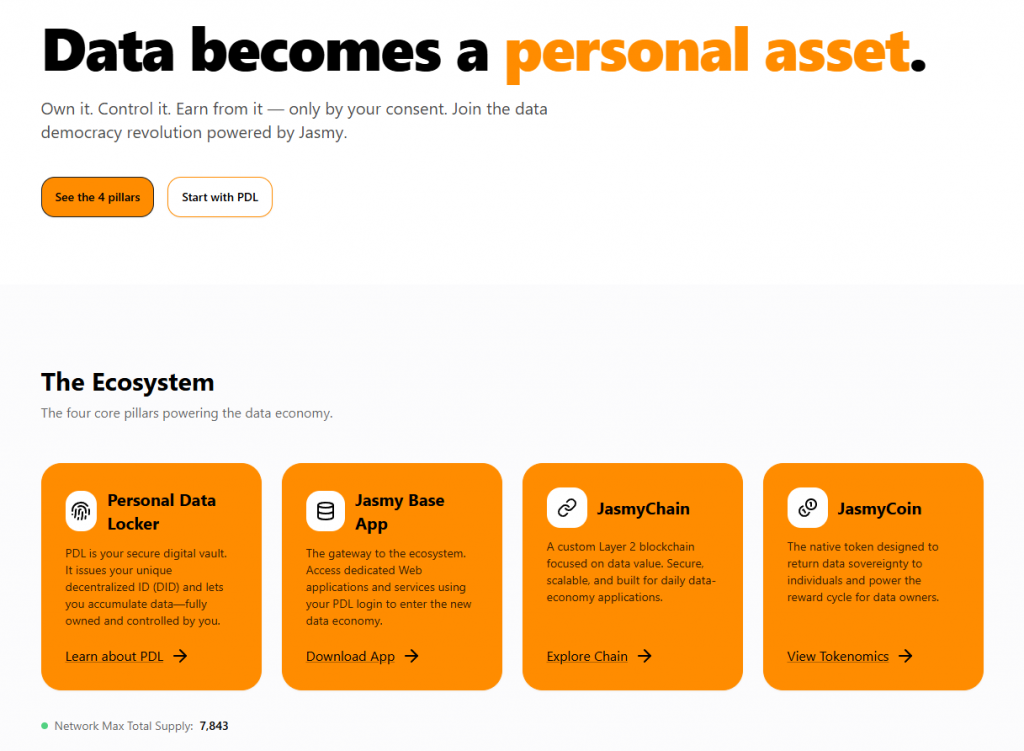
JASMY (JASMY) is the native token of the Jasmy platform, a project focused on redefining data ownership in the era of the Internet of Things (IoT). Founded by former Sony executives, Jasmy combines blockchain and IoT technology to give individuals full control over their personal data. Instead of allowing large corporations to collect and monetize user information, Jasmy aims to build a decentralized system where users can securely manage and benefit from their own data.
One of the core ideas behind Jasmy is data sovereignty. The platform enables users to store personal information in secure, decentralized environments and decide who can access it. By shifting control from centralized tech giants to individuals, Jasmy seeks to create a fairer digital economy where data becomes a personal asset rather than a corporate commodity.
Jasmy operates on the Ethereum blockchain and introduces tools such as the Secure Knowledge Communicator (SKC) and the Smart Guardian (SG). These components are designed to facilitate secure communication between IoT devices while protecting sensitive information. This infrastructure supports practical use cases, particularly in industries where secure data exchange between devices is critical.
The JASMY token plays a central role within the ecosystem, powering transactions and incentivizing data sharing between users and businesses. Companies that want to access user data must compensate individuals through the platform, creating a marketplace for trusted data exchange.
We think JASMY stands out by targeting the growing intersection of blockchain and IoT, offering a clear real-world use case centered on data ownership and privacy in an increasingly connected world.
10. Baby Doge Coin (BabyDoge) – Taking on Dogecoin with transaction and tokenomics improvements

Launched in June 2021, BabyDoge operates with a deflationary token model, where 5% of each transaction is redistributed to existing holders, incentivizing long-term holding.
Baby Doge Coin (BABYDOGE) is a Dogecoin-inspired cryptocurrency (we know, who would have thought right) that seeks to improve upon the original meme coin with greater transaction speeds, hyper deflationary tokenomics, integrated staking system, and, well, adorableness.
During the 2022-2023 bear market, Baby Doge Coin added several new features, including a chess game and an AI image generator, revamped its website and token burning portal, and more. The token also outperformed more than 50% of the top 100 largest market-cap digital assets, including the likes of Dogecoin, Solana, and Shiba Inu.
If its performance during the past crypto winter is any indication, the meme coin could see a major price boost once the market trend reverses.
BabyDoge’s commitment to supporting charitable causes, particularly in pet rescue organizations, enhances its appeal to socially conscious investors.
With secured partnerships and marketing initiatives, this meme coin holds potential for significant price appreciation as community engagement grows.
All these reasons make it one of the likeliest meme coins to explode candidates.
11. Holo (HOT) – Avoiding centralized Internet authorities with Holochain apps
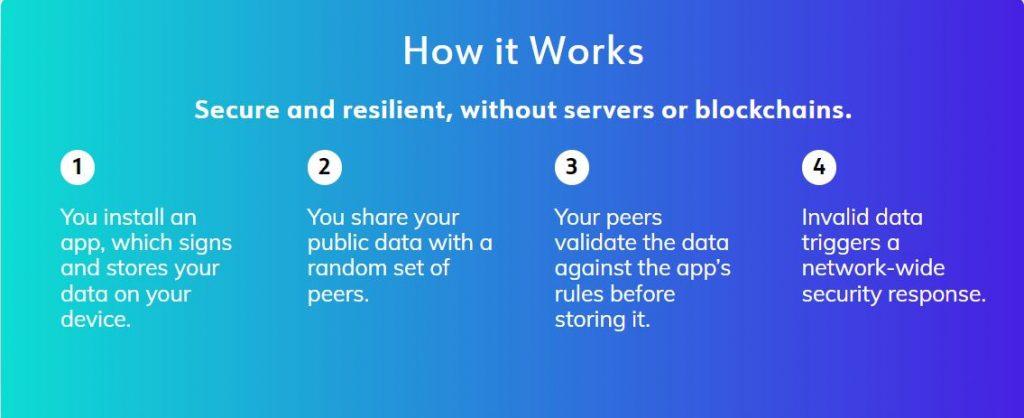
Holo (HOT) stands out in this space, serving as the native cryptocurrency of the Holochain platform. Specifically designed to support decentralized applications (dApps) with a focus on scalability and efficiency, HOT facilitates transactions within the Holo ecosystem while doing away with centralized entities.
With all aspects of our lives moving online at an increasing pace, we rely more and more on centralized entities like Google, Amazon, and Microsoft for both computational power and cloud storage. Holo (HOT) is the native token of the Holochain platform, which aims to disrupt the established paradigm.
At its core, Holochain is an open-source P2P framework that allows users to take advantage of hApps (Holochain apps) that connect their devices among themselves without having to rely on centralized servers.
Applications run on users’ devices, putting them in charge of their identities and data. Users who host hApps are rewarded with HOT, which creates clear and natural adoption mechanics that could help the token grow in price drastically as the network expands.
12. DigiByte (DGB) – DeFi ecosystem with a long and successful track record

DigiByte (DGB) is the oldest project on our list, launched more than a decade ago, in January 2014. That makes it older than Ethereum, crazy to think about.
DigiByte is a community-driven project that places emphasis on secure payments and communications. The DGB token acts as a medium of exchange between dApps and smart contracts on the DigiByte platform.
The DigiByte blockchain platform is split into three layers. The top layer acts as an app store of sorts and allows for the development and hosting of decentralized applications (dApps). The middle layer ensures security and administration as well as stores the public ledger.
Finally, the bottom layer facilitates communication and operating processes. DGB could turn out to be one of the cryptos under a penny that will explode as long as the DigiByte network continues expanding.
Despite its low price, DigiByte’s active development and increasing partnerships in various sectors make it a promising candidate for investors looking for high upside potential in penny cryptos.
13. Zilliqa (ZIL) – A powerful dApp platform powered by ZIL

Zilliqa (ZIL) is known for its sharding technology, which considerably enhances scalability. It’s a public blockchain platform designed to address the scalability limitations of other blockchains, such as Ethereum and Bitcoin.
With a focus on smart contracts and decentralized applications, Zilliqa’s innovative approach positions it favorably in the rapidly growing blockchain ecosystem.
The current market cap for Zilliqa is approximately $250 million, and yes, once again, the price is slightly higher than 1 cent, it’s currently standing at $0.0133.
Zilliqa has demonstrated promising partnerships and collaborations that could drive adoption, particularly in sectors like gaming and finance.
As blockchain scalability becomes increasingly necessary, Zilliqa’s solutions may enable broader utilization and adoption, leading to potential price appreciation under 1 cent.
This makes Zilliqa a strong contender.
14. Access Protocol (ACS) – A web3 approach to premium content and subscriptions

Access Protocol (ACS) presents a compelling opportunity focusing on a new day to monetize digital content.
ACS offers a decentralized platform where users access premium content through token deposits, fostering community engagement and support for content creators.
Each time a user deposits ACS into a creator pool, a 2% fee is collected, and the tokens collected in this way are burned. Initially deployed on the Solana blockchain, Access Protocol also has plans to launch on the StarkNet layer 2 platform.
By leveraging partnerships, ACS aims to boost user experience and drive token adoption, positioning it favorably in emerging market trends.
As the digital age demands innovative solutions for content consumption, ACS’s unique model and growing ecosystem make it an attractive investment option, especially for those who are sick of stifling rules of other content platforms, such as Youtube, Twitch or Kick.
Penny cryptos under 1 cent comparison chart
| Ticker | Launched in | Description | Market cap | |
| Shiba Inu | SHIB | 2020 | All-encompassing crypto ecosystem with meme beginnings | $3.22 billion |
| Pepe Coin | PEPE | 2023 | Popular meme coin based on the Pepe meme | $1.44 billion |
| Bonk | BONK | 2022 | Solana’s top meme coin | $520 billion |
| Amp | AMP | 2020 | Collateralizing digital payments with AMP | $119 million |
| Sia | SIA | 2015 | Decentralized data storage powered by smart contracts | $60.21 million |
| Ravencoin | RVN | 2018 | Blockchain specialized for efficient asset issuance and transfers | $90.21 million |
| BitTorrent | BTT | 2019 | Decentralized file sharing powered by BTT | $327 million |
| eCash | XEC | 2021 | Blockchain payments on a “mankind scale” | $141 million |
| Jasmy | JASMY | 2021 | IoT-focused project bringing data sovereignty to users through blockchain | $269 million |
| Baby Doge Coin | BABYDOGE | 2021 | Taking on Dogecoin with transaction and tokenomics improvements | $149 million |
| Holo | HOT | 2018 | Avoiding centralized Internet authorities with Holochain apps | $239 million |
| DigiByte | DGB | 2014 | DeFi ecosystem with a long and successful track record | $123 million |
| Zilliqa | ZIL | 2019 | A powerful dApp platform powered by ZIL | $250 million |
| Access Protocol | ACS | 2023 | A web3 approach to premium content and subscriptions | $51 million |
The bottom line
When investing in penny cryptos under 1 cent in 2026, you should know that usually, it means you are entering a high-risk proposition. Yes, there is a chance for huge returns, and getting that 10x, 100x, or even a 1000x is not impossible if you know how to find new crypto with huge potential.
However, you should never allocate a big chunk of your portfolio into these kinds of projects. Try to aim to have no more than 3-5% of your portfolio in penny cryptos, as a way to counter the high-risk investments with safer ones.


