Tag: BTC

  • 7 Best Crypto Mining Apps For Android in 2026: The Ultimate Mobile Mining Guide

    7 Best Crypto Mining Apps For Android in 2026: The Ultimate Mobile Mining Guide

    In 2026, exploring the world of cryptocurrency has never been easier, and part of that innovation includes mobile crypto mining apps for Android. As you get more into it, you’ll discover that some of those apps are simply better (and safer) than others.

    But here’s something you should know before we start: No Android app is actually mining crypto in the traditional sense. Real mining involves hefty computing power, like what’s used with Bitcoin or Dogecoin through Proof-of-Work (PoW). Instead, these apps reward you with tokens for engaging with the app, following their own set rules for distribution.

    Best crypto mining apps for Android in 2026

    1. Pi Network – A crypto project distributing Pi coins through their app using a modified version of the Stellar Consensus Protocol
    2. Binance – The world’s top crypto exchange has a cloud mining feature
    3. Brave Browser – The most popular crypto-friendly browser featuring BAT token rewards
    4. NiceHash – Leading mining platform and marketplace for buying and selling hashpower
    5. CryptoTab Browser – Integrates Bitcoin mining with web browsing and offers referral bonuses
    6. F2Pool – Mobile app from one of the world’s top crypto mining pools
    7. Hive OS – A Comprehensive App for Managing Mining Rigs

    How do crypto mining apps for Android really work?

    Before diving into the different crypto mining apps for Android, let’s clear up some misconceptions.

    The term “mining” might be a bit misleading when it comes to these apps. The truth is, mobile phones just don’t have the muscle to mine popular cryptocurrencies like Bitcoin in any meaningful way.

    Let’s take Bitcoin, for example. Your smartphone doesn’t stand a chance against the supercharged ASIC miners that dominate the BTC mining scene. Trying to mine Bitcoin on your phone would result in two things: wasted electricity and a device that’s probably overheating and struggling to keep up. 

    Mining crypto is a hardware-heavy task, and mobile devices just aren’t built for that kind of work.

    Even if we look at other Proof-of-Work coins like Litecoin, mining them on a mobile phone just isn’t profitable.

    So, if an app claims it’s mining a Proof-of-Work coin, there’s probably something else happening behind the scenes. Most likely, you’re earning tiny bits of crypto for watching ads or completing surveys. These rewards are usually so small that it’s hardly worth your time.

    That said, the crypto community often throws around the term “mining” loosely to describe getting rewards through an app, even when no real mining is happening.

    Some projects use this idea of “mobile mining” as a way to distribute their coins to a lot of users. These apps don’t actually help with blockchain consensus; they just distribute coins to users over time.

    On the flip side, there are legit apps that let you manage your crypto mining rigs remotely or even get involved in cloud mining or buying hashrate through a marketplace. That is what this article will look at.

    Best crypto mining apps for Android in 2026

    In the following section, we’re going to list our top 7 crypto mining apps for Android available in 2026.

    1. Pi Network – A crypto project distributing Pi coins through their app
    Pi network

    Pi Network is a cryptocurrency project that allows users to “mine” Pi coins using their app. The term “mining” is used in a confusing manner by Pi Network, as the Pi cryptocurrency doesn’t use a Proof-of-Work consensus mechanism. 

    Instead, it utilizes a modified version of the Stellar Consensus Protocol, which allows users to participate in consensus without requiring a lot of computational resources. This is why the Pi Network app uses roughly the same amount of energy as any other normal Android app. 

    You can install the Pi Network app to start “mining” Pi coins. The Pi Network app can even “mine” Pi when it’s closed, as you can close it after starting a mining session. You can increase your Pi mining rate by using various Pi apps or making other contributions to the network. 

    However, don’t expect to make any major profits from this process unless the Pi coin price increases significantly in the future. Still, the Pi Network app is definitely legit, and you could potentially make some profits with it. After years of anticipation, Pi is finally in its Open Network phase, meaning users can sell their Pi Coins on major exchanges.

    2. Binance – The world’s top crypto exchange has a cloud mining feature

    The mobile app offered by the Binance cryptocurrency exchange doesn’t just allow you to access a large number of trading products, but it also offers the exchange’s cloud mining feature.

    Cloud mining allows users who don’t have mining hardware to indirectly participate in cryptocurrency mining. In the case of Binance, you can purchase a certain amount of hashrate from the Binance Pool mining pool and receive BTC mining rewards to your Funding Wallet on Binance.

    On Binance, you can purchase cloud mining products of varying durations, for example 60 days or 100 days. If you want to buy hashrate on Binance, you’ll have to pay with the USDT stablecoin. 

    3. Brave Browser – The most popular crypto-friendly browser featuring BAT token rewards

    Brave is a privacy-focused web browser that blocks invasive ads, cross-site trackers, and third-party cookies by default. Its built-in protections create a safer and less distracting browsing experience without requiring extra extensions. Since it’s built on the Chromium engine—the same one used by Google Chrome—Brave offers fast performance and strong website compatibility.

    The browser also includes a built-in cryptocurrency wallet and an optional reward system for users who choose to view ads. Android users, in particular, may be eligible to earn BAT tokens through the Brave Rewards program. These tokens can be used to support participating creators, exchanged for gift cards, or swapped for other cryptocurrencies.

    Brave Rewards shouldn’t be seen as a way to earn significant income, but it can be a nice bonus for users already interested in privacy-first browsing. Its core privacy features make Brave worth using even without the token incentives, and you can check the official Brave website to confirm whether your country supports the rewards program.

    4. NiceHash – Leading mining platform and hashrate marketplace
    NiceHash is a popular cryptocurrency mining platform that offers a variety of mining solutions for GPU and CPU miners, as well as ASIC miners. One of the most interesting aspects of NiceHash is that it can be used to purchase and sell hashpower.

    The NiceHash mobile app can be used to manage cryptocurrency wallets, mining rigs, and your NiceHash account. You can of course also use it to stay on top of your mining rewards. The app also features the NiceHash hashpower marketplace and allows you to place new orders for hashrate or cancel your existing orders.

    5. CryptoTab Browser – Crypto mining app for “actual mining”

    CryptoTab Browser lets users earn small amounts of Bitcoin while browsing the web. It may also include optional features such as cloud boosts and multi-device syncing. Unlike traditional Bitcoin mining, which requires specialized hardware and significant computing power, CryptoTab uses a modified browser experience to distribute modest cryptocurrency rewards.

    Your Android phone isn’t performing competitive Bitcoin mining on its own. Instead, CryptoTab serves as a lightweight way to earn small crypto rewards while using the browser, making it one of many apps that combine everyday browsing with cryptocurrency incentives.

    Before using the app or purchasing any upgrades, review the current reward rate, advertising settings, required permissions, minimum withdrawal threshold, and the cost of boost features. While your in-app balance may grow steadily, compare your potential earnings against any money you spend, especially since the earning potential is limited by the capabilities of mobile hardware.

    6. F2Pool – Mobile app from one of the world’s top crypto mining pools

    The F2Pool app is a mobile application created by F2Pool, which is one of the world’s leading cryptocurrency mining pools. The mining pool supports Bitcoin, Litecoin, Dogecoin and more than 40 other mineable cryptocurrencies. 

    To be clear, the F2Pool app does not actually use the user’s mobile phone to mine cryptocurrency. It’s meant as a companion app for users that mine cryptocurrency through F2Pool and want to stay updated with all the relevant information. 

    You can use the F2Pool app to view real-time information about the profitability of mining hardware, and monitor the hashrate and revenue of your miners. Of course, the app also provides key mining data about different cryptocurrencies, such as the current network hashrate and mining difficulty. 

    The F2Pool app can also be used to set up alerts which will automatically notify you of important events related to your workers. 

    7. Hive OS – A Comprehensive App for Managing Mining Rigs

    Hive OS is a mobile companion app that gives cryptocurrency miners remote access to their mining operations. Built to work with the Hive OS platform, it allows users to monitor and manage GPU and ASIC mining rigs from virtually anywhere.

    The app displays key performance metrics, including hashrate, temperature, power consumption, and device status. It also helps users identify hardware issues, monitor mining pools, manage flight sheets, and oversee multiple workers from a single interface.

    Hive OS supports remote configuration, allowing users to overclock GPUs, adjust fan speeds, update ASIC firmware, switch wallets, change mining algorithms, and deploy settings across multiple rigs at once. Built-in scheduling tools make it easy to automate routine tasks and maintain consistent performance.

    To reduce downtime, the app includes smart notifications that alert users to hardware failures, offline miners, and other critical events. Features such as Autofan and the Hashrate Watchdog help maintain stable operating conditions by automatically responding to overheating or declining mining performance.

    FAQs

    Can I mine crypto on my phone?

    While it is possible to mine crypto on your phone, don’t expect to make any profits. Mobile phones are not powerful enough to mine popular Proof-of-Work cryptocurrencies profitably.

    There are also “mining” apps that don’t actually mine crypto, but pay users a small amount of crypto in exchange for viewing advertisements or completing surveys. The rewards offered by such apps are usually too small for them to be worth your time. 

    Can you mine Bitcoin with an Android phone?

    Theoretically, it is possible to mine Bitcoin with an Android phone. In practice, however, you will just be wasting electricity and potentially harming your mobile device without making any profits. This is because mobile phones are nowhere near powerful enough to compete with the highly optimized ASIC chips used in Bitcoin mining. 

    Are there any real crypto mining apps?

    There are apps that actually mine crypto, although they are not profitable because mobile phones are not powerful enough to mine crypto profitably.

    Is mobile cloud mining profitable?

    Mobile cloud mining can be more profitable than direct mining on a phone, but returns are generally low. Profits depend on factors like the cost of cloud mining services and cryptocurrency prices. While it’s less risky for your device, the overall earnings are usually modest.

    What are the risks of using crypto mining apps on Android?

    Crypto mining apps can overheat your device, drain battery life, and reduce its lifespan. Some apps may even pose security risks, including malware or scams. The earnings are usually far from impressive, and energy costs might outweigh any profits. Always use reputable apps and do proper research.

    The bottom line

    Using your mobile phone’s hardware for actual crypto mining (participating in PoW consensus) is not a viable option. You won’t be able to make a profit, and mining could harm your mobile device.

    There are “mining” apps that will pay you a small amount of crypto in exchange for viewing advertisements or completing surveys. The rewards offered by such apps are usually too small for them to be worth your time.

    Some projects, such as Pi Network, slowly distribute coins to users who install their mobile apps. This kind of distribution method is often called “mining”, but it’s not actual mining.

    Mobile apps can be used to manage cryptocurrency mining rigs or participate in cloud mining.

    The bottom line is that mobile mining is not the best approach to mining cryptocurrency. If you want to learn more about how to mine profitably, make sure to check out our ultimate guide on cryptocurrency mining.

  • GoBTC Pay Review: Can Bitcoin Payments Work at the Point of Sale?

    GoBTC Pay Review: Can Bitcoin Payments Work at the Point of Sale?

    Key Highlights

    • GoBTC Pay enables instant payment confirmation while settling transactions directly on the Bitcoin base layer, without Lightning channels, wrapped assets, or automatic fiat conversion.
    • Users pay no transaction fee and retain shared control of their Bitcoin through a 2-of-3 multisignature wallet structure, while merchants are charged a 0.2% acquiring fee.
    • The protocol offers an interesting alternative to Lightning-based payment systems, but its reliance on GoMining’s infrastructure means it has yet to prove its performance at scale.

    Bitcoin was introduced as a peer-to-peer electronic cash system, but its use as an everyday payment method has remained limited. Base-layer transactions can be expensive and unpredictable, while faster alternatives often require users and merchants to rely on custodians, payment channels, or automatic conversion into fiat currency.

    GoBTC Pay is GoMining’s attempt to address those limitations without moving payments away from the Bitcoin base layer. The protocol combines instant point-of-sale confirmation with delayed on-chain settlement, using GoMining’s mining infrastructure to prioritize transactions.

    The resulting system presents a potentially attractive proposition for Bitcoin users who want to spend BTC directly and for merchants willing to receive and retain Bitcoin. However, GoBTC Pay also introduces infrastructure dependencies and operational trade-offs that distinguish it from both conventional self-custody and decentralized base-layer transactions.

    Before we take a closer look at what GoBTC Pay has to offer in more detail, here’s a quick breakdown of the protocol’s most important benefits and disadvantages.

    GoBTC Pay pros:

    • Instant payment confirmation at checkout.
    • Transactions settle directly on Bitcoin’s base layer.
    • No transaction fees for users.
    • Low 0.2% acquiring fee for merchants.
    • Open SDK and API support integrations with wallets, merchants, banks, and POS providers.

    GoBTC Pay cons: 

    • Merchants must handle fiat conversion themselves.
    • The protocol depends heavily on GoMining’s mining infrastructure.
    • Scalability and reliability remain unproven due to the limited initial rollout.

    What is GoBTC Pay?

    GoBTC Pay is a Bitcoin payment protocol developed by Bitcoin mining company GoMining. It is designed to let customers pay merchants with BTC while keeping the transaction denominated and settled entirely in Bitcoin.

    Unlike payment processors that accept Bitcoin from the customer but deliver dollars or another fiat currency to the merchant, GoBTC Pay does not automatically convert the payment. The merchant ultimately receives BTC and must arrange a separate conversion if it prefers to hold fiat.

    The protocol also differs from Lightning-based systems. GoBTC Pay does not require merchants or customers to open payment channels, manage liquidity, or maintain off-chain balances. Transactions are instead sent through GoMining’s dedicated transaction infrastructure and prioritized for inclusion in blocks mined by its pool.

    At checkout, the merchant receives an immediate confirmation so that the sale can be completed without waiting for an on-chain block. Final settlement takes place directly on Bitcoin, with GoMining targeting an average settlement window of approximately 12 hours.

    GoMining has released a Gen1 software development kit and API that includes merchant onboarding tools, payment management features, online checkout integrations, a web-based dashboard, and support for wallet providers and institutional partners.

    Advantages for Bitcoin users

    The clearest benefit for customers is that GoBTC Pay attempts to make Bitcoin spending resemble a conventional card or mobile-wallet payment.

    A customer can initiate a transaction and receive an immediate checkout confirmation instead of waiting for one or more Bitcoin blocks. This is important for physical retail environments, where even a ten-minute confirmation delay would generally be impractical.

    GoBTC Pay also says users are not charged transaction fees, spreads, or other payment costs. The merchant pays the protocol’s acquiring fee, allowing the customer to spend the displayed BTC amount without an additional network fee being added at checkout.

    Another advantage is that payments remain Bitcoin-native. Users do not need to acquire wrapped BTC, deposit funds into a Lightning channel, or convert their coins into a platform-specific balance. The transaction ultimately settles on Bitcoin’s base layer.

    The wallet security structure is more nuanced. GoBTC wallets use a 2-of-3 multisignature arrangement:

    • One key is stored on the user’s device.
    • One key is held by GoMining as a co-signer.
    • One key is held by an independent regulated custodian.

    Because two keys are required to move funds, GoMining cannot unilaterally access the user’s Bitcoin. The custodian can also provide a recovery path if the user loses a device.

    This arrangement may be more forgiving than traditional self-custody, where losing a seed phrase can permanently destroy access to funds. However, it is not equivalent to a setup in which the user independently controls every key needed to spend their Bitcoin. Users must still depend on at least one external co-signer.

    Advantages for merchants

    For merchants, GoBTC Pay’s most significant selling point is its 0.2% acquiring fee.

    That is considerably lower than the typical percentage charged by card processors. On a $100 transaction, the merchant would retain $99.80 before considering any later cost associated with converting BTC into fiat.

    The protocol’s fee distribution could also help expand adoption. Half of the 0.2% fee goes to miners participating in the GoBTC pool, while the other half goes to the wallet provider that initiated the transaction. GoMining says it does not retain the fee on qualifying third-party transactions.

    This structure gives external wallets a direct financial incentive to integrate the protocol. A wallet that originates a GoBTC Pay transaction can earn 0.1% of its value, potentially creating a distribution network beyond GoMining’s existing applications.

    Merchants also benefit from Bitcoin’s transaction finality. Once a GoBTC Pay transaction has settled on-chain, it cannot be reversed through a conventional card chargeback process. This could reduce exposure to fraudulent disputes, rolling reserves, and delayed payment reversals.

    There is nevertheless a distinction between instant payment confirmation and final settlement. A merchant can treat the transaction as approved at the point of sale, but the corresponding Bitcoin transaction may not be finalized on-chain for several hours. Merchants will therefore need to understand what guarantees GoMining provides during the period between checkout confirmation and blockchain settlement.

    How GoBTC Pay compares with Square and Lightning

    GoBTC Pay is entering a market that already includes established payment processors and Lightning-based solutions.

    Block’s Square has been expanding support for Bitcoin payments using the Lightning Network. In Square’s model, merchants can accept a customer’s Bitcoin payment while receiving the proceeds in U.S. dollars by default. Merchants can choose to retain BTC, but the system is designed to fit relatively easily into existing fiat-based business operations.

    GoBTC Pay takes the opposite approach. Its default assumption is that the merchant wants to receive Bitcoin. This preserves the Bitcoin-denominated nature of the transaction but transfers the responsibility for tax accounting, treasury management, and any eventual fiat conversion to the merchant.

    Compared with Lightning, GoBTC Pay removes the need to open channels or manage inbound and outbound liquidity. Settlement also appears directly on the Bitcoin blockchain rather than being maintained as off-chain channel state.

    However, Lightning is supported by a broad and increasingly diverse network of nodes, wallets, payment processors, and liquidity providers. GoBTC Pay currently depends much more heavily on GoMining’s mining pool, transaction-prioritization system, and co-signing infrastructure.

    The two systems are not necessarily direct substitutes. Lightning may be more suitable for users who prioritize rapid, decentralized off-chain payments, while GoBTC Pay could appeal to merchants and wallets that want a simpler integration combined with eventual base-layer settlement.

    GoMining’s mining advantage

    GoBTC Pay’s core technical and economic proposition depends on GoMining being both a payment infrastructure provider and a Bitcoin miner.

    A payment-only company generally submits transactions to the public mempool and competes for block space under prevailing fee conditions. It cannot guarantee when a third-party mining pool will include a particular transaction.

    GoMining says it can instead send GoBTC Pay transactions through its dedicated infrastructure, prioritize them within its own pool, and recover part of the network economics through its mining operations.

    This creates a closed-loop model that would be difficult for a conventional payment processor to reproduce without access to substantial mining capacity.

    The model also creates concentration risk. GoBTC Pay’s service quality depends on GoMining maintaining sufficient hashrate, operating its pool reliably, and continuing to prioritize payment transactions. If its share of block production falls or its infrastructure becomes unavailable, settlement performance could deteriorate.

    The targeted 12-hour settlement period should therefore be viewed as an operational objective rather than the fixed block-level guarantee associated with a centralized payment ledger.

    Integration and API documentation

    GoBTC Pay is designed as open infrastructure rather than a payment feature restricted to GoMining’s own users.

    The protocol can be integrated by software wallets, hardware wallet providers, exchanges, banks, fintech applications, merchants, and point-of-sale operators. It supports both custodial implementations and non-custodial wallet models.

    GoBTC Pay also provides an extensive API documentation section covering the information wallet developers, merchants, and point-of-sale operators need to implement the protocol.

    This developer-focused approach is essential to GoBTC Pay’s strategy. A payment network becomes more useful as more wallets and merchants support it, and the revenue-sharing model is intended to encourage third-party integrations.

    The main question is whether the available tooling is sufficient to translate developer interest into active merchant adoption. The initial rollout is expected to involve up to ten merchants and ecosystem partners, meaning the protocol is still at an early stage despite reportedly having a larger integration waiting list.

    Limitations and open questions

    GoBTC Pay addresses several genuine problems associated with Bitcoin commerce, but its model comes with important limitations.

    First, merchants receive Bitcoin rather than fiat. This is an advantage for businesses that want BTC exposure, but it may be a barrier for those that need predictable fiat revenue to pay employees, suppliers, taxes, and rent.

    Second, the protocol is non-custodial in the sense that GoMining cannot move funds alone, but users still rely on a multisignature system involving GoMining and a regulated custodian. Its security model should not be confused with fully independent self-custody.

    Third, instant merchant confirmation occurs before final on-chain settlement. More detail is needed on how double-spend attempts, failed settlement, prolonged block delays, and temporary pool outages are handled.

    Finally, GoBTC Pay has not yet demonstrated its performance across a large and diverse merchant network. Integration quality, payment success rates, support processes, accounting tools, and settlement consistency will become clearer only after sustained real-world use.

    Is GoBTC Pay a compelling Bitcoin payment option?

    GoBTC Pay offers a distinctive compromise between slow base-layer payments and off-chain payment networks.

    For users, it promises fee-free Bitcoin spending, immediate checkout confirmation, and eventual settlement on Bitcoin. For merchants, it offers low processing fees, irreversible settlement, and the ability to receive BTC without an intermediary converting it into fiat.

    Its strongest differentiator is GoMining’s ability to combine payment processing with mining. That gives the company more influence over transaction inclusion than a typical Bitcoin payment processor.

    The same characteristic is also the protocol’s main source of risk. GoBTC Pay relies on GoMining’s pool, transaction infrastructure, and multisignature participation to deliver the experience it promises.

    At this stage, GoBTC Pay should be viewed as a technically interesting and economically differentiated payment protocol rather than a proven replacement for cards, Lightning, or established crypto payment processors. Its long-term prospects will depend less on its stated transaction fees and more on whether wallets and merchants integrate it, customers use it, and GoMining can deliver dependable settlement at scale.

  • BlackRock Nears Bitcoin Premium Income ETF Launch to Compete with Goldman Sachs

    BlackRock Nears Bitcoin Premium Income ETF Launch to Compete with Goldman Sachs

    Key takeaways

    • BlackRock has filed its fourth amendment for its iShares Bitcoin Premium Income ETF.
    • The fund will offer investors income by selling call options up to 35% of its holdings monthly.
    • BlackRock is in a race with Goldman-Sach for the launch of a covered-call Bitcoin product.

    BlackRock has taken another step toward launching its Bitcoin income ETF, filing a fresh amendment for the iShares Bitcoin Premium ETF (BITA). The move comes as the asset management giant appears locked in a race with Goldman Sachs to bring a covered-call Bitcoin product to investors.

    BlackRock targets growing demand for Bitcoin income

    The latest filing with US Securities and Exchange Commission (SEC) includes a sponsor fee of 0.65%, undercutting some of the largest covered-call Bitcoin ETFs. Unlike traditional spot Bitcoin ETFs, BITA will generate income alongside Bitcoin exposure.

    The strategy allows the fund to collect option premiums that can be distributed to investors. In exchange, investors may sacrifice a portion of potential gains during periods of strong rallies.

    According to the regulatory filing, BITA intends to write call options on roughly 25% to 35% of its portfolio. Covered-call strategies have become increasingly popular among investors seeking yield from volatile assets.

    While not a first-mover in the covered-call bitcoin fund space, BlackRock is betting on its low fees. Presently, YBTC and BTCI, the two largest covered-call bitcoin funds charge 0.95% and 0.99% in sponsor fees, significantly higher than BlackRock’s incoming offering.

    This is not the first time BlackRock is leaning on low fees to consolidate its market position in the Bitcoin ETF space. Leaning on the strategy, its iShares Bitcoin Trust has emerged as the sector’s flagship product, dwarfing its rivals in terms of inflows even in bleak market conditions.

    Given the success of IBIT and BlackRock’s strong distribution base, experts are tipping BITA to get off the starting block with a bang. 

    Source: Trading View

    Race with Goldman Sachs accelerates 

    BlackRock’s fourth amendment comes as Goldman Sachs is barreling toward the launch of its own Bitcoin-focused income fund. Experts are tipping July 1 as a tentative launch date for the Goldman Sachs ETF, pitting both firms in a heated race for the first to go live.

    Bloomberg analyst Eric Balchunas has tipped BlackRock’s BITA to “launch very soon,” terming the filing as “probably final.” 
    “My guess is that this is going to launch very soon,” wrote Balchunas on X. “They’re under gun to beat Goldman to market who is going to be effective around July.”

    Some analysts are backing BlackRock to edge Goldman Sachs in the race, noting that the filling confirms that the incoming ETF is already seeded and is now acquiring Bitcoin and IBIT shares. Typically, such activity often indicates that a launch is imminent.

    If approved, BITA and Goldman Sachs’ offering would represent another milestone in Bitcoin’s evolution from a speculative asset into a mainstream investment product.

  • The Best Bitcoin Mixers in 2026 — Level Up Your BTC Privacy

    The Best Bitcoin Mixers in 2026 — Level Up Your BTC Privacy

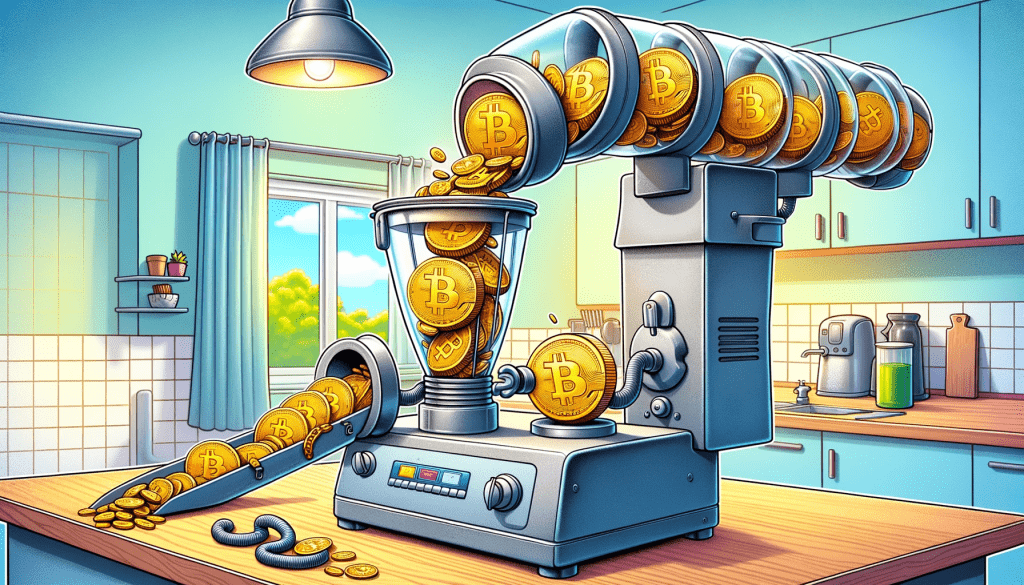
    A Bitcoin mixer is a service that Bitcoin holders can use to make their BTC transaction history more difficult to trace. There are many Bitcoin mixing services available on the market, but not all of them are worth your time.

    To help you narrow down your search, we have selected the 5 best Bitcoin mixers available right now.

    Before we take a closer look at the list of the best Bitcoin mixers, let’s first learn about why Bitcoin is not actually very private and why Bitcoin mixers even exist. 

    List of the best BTC mixers in 2026:

    1. Mixero.io – A Bitcoin mixing service featuring an advanced privacy mode
    2. Wasabi Wallet – A Bitcoin wallet designed with privacy enabled by default
    3. Mixer.money – A Bitcoin mixer offering two distinct mixing options
    4. Tornado Cash – A decentralized cryptocurrency mixer built for Ethereum
    5. Railgun – A blockchain privacy solution powered by smart contracts

    Bitcoin isn’t truly private

    Some people who are new to cryptocurrency believe that Bitcoin is fully anonymous. That assumption isn’t entirely accurate.

    At a basic level, Bitcoin appears anonymous because users don’t need to submit personal details to create a wallet or send transactions. The protocol itself doesn’t recognize real-world identities, as Bitcoin addresses are simply strings of characters with no inherent personal information attached.

    However, Bitcoin operates on a fully transparent blockchain. This public ledger records every transaction ever made on the network. Anyone can use a blockchain explorer, such as Blockchain.com, to view transactions dating back to Bitcoin’s launch in 2009.

    As a result, it’s incorrect to assume your Bitcoin activity is private just because your name isn’t directly tied to your wallet address on the blockchain.

    For instance, if you purchased Bitcoin using fiat currencies like USD or EUR through a regulated exchange, you likely had to complete identity verification. When you withdraw your BTC to a personal wallet, the exchange maintains a record connecting your identity to that withdrawal address — even if the information isn’t publicly visible.

    This data could potentially be exposed through insider leaks, cyberattacks, or legal requests from authorities. In short, while the blockchain itself doesn’t require identity information, real-world interactions often create traceable links.

    What Bitcoin mixers do

    Bitcoin mixers aim to improve privacy by making it difficult to trace where coins originated. In simple terms, mixers combine BTC from multiple users, shuffle them together, and redistribute equivalent amounts back to participants. They often randomize transaction sizes and introduce delays to complicate tracking.

    The general concept is straightforward: you send BTC to a mixer and later receive roughly the same amount back (minus service fees), but the returned coins are much harder to associate with your original transaction.

    The best Bitcoin mixers in 2026

    Before using any mixing service, review the laws in your country. Crypto regulations vary significantly, and services that are permitted in one jurisdiction may be restricted in another.

    Here’s our overview of the leading Bitcoin mixers available in 2026.

    1. Mixero.io – Advanced privacy with optional Monero integration

    Mixero.io is a CoinJoin-based Bitcoin mixing platform. It also offers an “advanced” mode that routes BTC through Monero (XMR) before converting it back to Bitcoin, providing an extra layer of obfuscation. This enhanced option comes with higher fees.

    Users can increase their fee to prioritize their transaction and speed up processing. The standard CoinJoin fee starts at 0.7% plus a fixed 0.0003 BTC charge. The advanced XMR bridge option begins at 1.6% and can go up to 4.7% for faster execution. Users can also delay transactions for up to 168 hours (7 days).

    In addition to BTC, Mixero supports ETH mixing, which may appeal to users seeking privacy tools for multiple major cryptocurrencies.

    Key features:

    • CoinJoin-based mixing with optional Monero bridge
    • Advanced XMR mode for stronger privacy at higher cost
    • Adjustable fees for faster processing
    • Fees starting at 0.7% (standard) and 1.6% (advanced)
    • Optional transaction delays up to 7 days
    • Supports both BTC and ETH

    2. Wasabi Wallet – Privacy-focused Bitcoin wallet

    Wasabi Wallet is a non-custodial Bitcoin wallet that includes built-in CoinJoin functionality. As a non-custodial solution, users retain full control of their private keys.

    CoinJoin transactions through Wasabi incur a 0.3% coordinator fee, in addition to standard Bitcoin network fees. However, the coordinator fee is waived for CoinJoin transactions under 0.01 BTC.

    By default, Wasabi routes all network traffic through the Tor network to enhance privacy, though users can disable this option.

    Key features:

    • Built-in CoinJoin integration
    • Non-custodial wallet with user-controlled keys
    • 0.3% coordinator fee (waived for small transactions)
    • Tor-enabled by default for network privacy

    3. Mixer.money – Two privacy-focused mixing options

    Operating since 2016, Mixer.money is a long-standing Bitcoin mixing service offering a simple interface and two primary modes: standard mixing and “complete anonymity.”

    The standard option charges a randomized fee between 1% and 1.5% (to enhance privacy) and typically completes within two hours. It supports transactions between 0.001 and 1 BTC and uses funds from its user base for mixing.

    The “complete anonymity” mode provides stronger privacy protections but costs between 4% and 5% and may take up to 10 hours. This mode sources liquidity from cryptocurrency exchanges.

    Mixer.money is accessible via both the regular web and the Tor network. It also provides a Telegram bot that allows users to initiate mixing directly within Telegram.

    Keep in mind that Mixer.money is centralized and therefore requires trust in the operator.

    Key features:

    • Active since 2016
    • Two mixing modes (standard and enhanced privacy)
    • Available through Tor
    • Telegram bot support

    4. Tornado Cash – Decentralized Ethereum-based mixer

    Tornado Cash is a decentralized mixing protocol primarily built on Ethereum. It breaks the on-chain connection between sender and receiver by using smart contract pools.

    Users deposit fixed amounts (such as 1 ETH or 100 ETH) into shared pools and later withdraw funds to a different address. Because many users deposit identical amounts, linking deposits and withdrawals becomes extremely difficult.

    Tornado Cash supports multiple tokens and networks, although most activity occurs on Ethereum. By standardizing deposit amounts and pooling liquidity, the protocol strengthens anonymity as participation increases.

    As of December 2025, Tornado Cash holds over $1 billion in total value locked, with ETH accounting for most of the funds, alongside assets like TORN, BNB, and DAI.

    Key features:

    • Smart contract-based privacy protocol
    • Fixed-denomination deposit pools
    • Multi-token and multi-network support
    • Over $1 billion in total value locked

    5. Railgun – Smart contract-powered privacy system

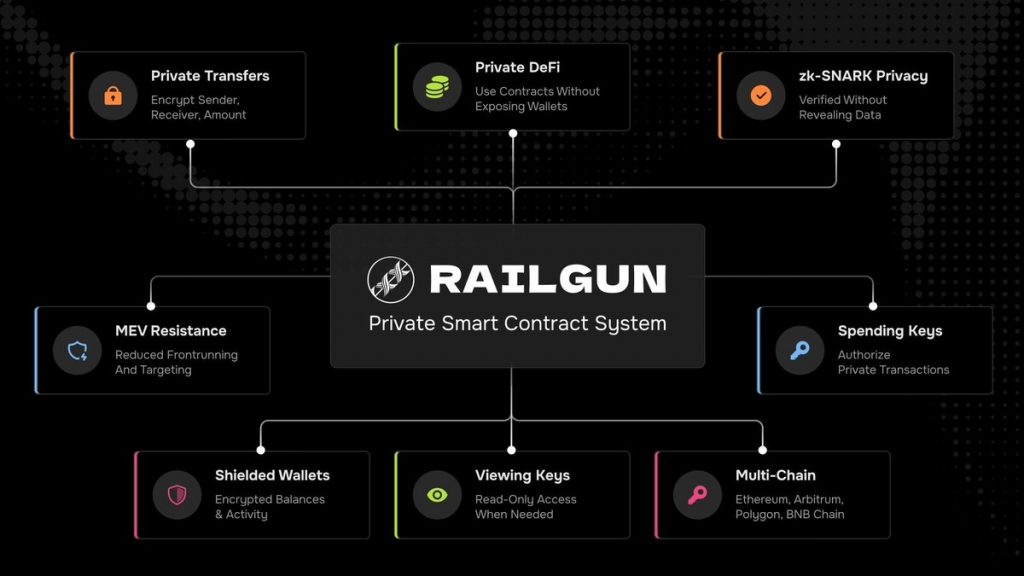
    Railgun is a privacy-focused smart contract system that shields transaction data directly on-chain. It conceals key details such as sender, recipient, token type, and amount using Private Balances, which form a shared anonymity pool.

    Transactions within the Railgun ecosystem appear to originate from this collective pool, making it challenging to determine who initiated a transfer or which assets were used.

    Privacy improves as more users participate, increasing the anonymity set. Popular tokens like USDC or DAI generally provide stronger privacy due to higher usage compared to less common assets.

    Railgun can be accessed through compatible wallets such as Railway Wallet, which supports zk-SNARK-powered private transactions without exposing balances.

    Key features:

    • Shields sender, recipient, token, and amount
    • Uses Private Balances to expand anonymity set
    • Privacy increases with user participation and TVL
    • Accessible via zk-SNARK-enabled wallets

    Are Bitcoin mixers legal?

    In many countries, Bitcoin mixers are not explicitly illegal. However, most do not implement Know Your Customer (KYC) or anti-money laundering (AML) procedures, placing them in a regulatory gray area.

    Unless a service is specifically prohibited, users typically won’t face legal consequences simply for using a mixer. That said, authorities have shut down numerous mixers over the years, and several operators have been arrested.

    While mixers can serve legitimate privacy needs, they are also used by criminals — for example, hackers attempting to launder stolen funds. This association has made them highly controversial.

    Notable enforcement actions include:

    • Bestmixer.io shut down by Europol and Dutch authorities (2019)
    • Bitcoin Fog operator arrested and charged in the U.S. (2021)
    • Tornado Cash sanctioned by OFAC (2022), with sanctions lifted in 2025
    • ChipMixer taken down by U.S. and German authorities (2023)

    Are Bitcoin mixers safe?

    Safety largely depends on the specific service used. Centralized mixers require trust that operators will not misappropriate user funds.

    It’s also important to recognize that mixing does not guarantee perfect anonymity. The effectiveness of privacy measures varies by implementation, and blockchain analysis tools continue to evolve. In some cases, investigators may still trace coins that have passed through mixers.

    Additionally, some cryptocurrency platforms and businesses may flag or restrict wallets associated with mixing services.

    Conclusion: Mixers address Bitcoin’s privacy limitations

    Bitcoin is pseudonymous rather than fully anonymous, and transactions can be traced under close examination. Mixing services aim to make blockchain activity more difficult to analyze, giving users greater financial privacy.

    However, because mixers are sometimes used for illicit purposes, they remain controversial and frequently attract regulatory scrutiny — even in jurisdictions where they are not outright banned.

  • How Long Does It Take to Mine 1 Bitcoin?

    How Long Does It Take to Mine 1 Bitcoin?

    Theoretically, you can mine 1 Bitcoin in roughly 10 minutes. This is because the Bitcoin blockchain adds a new block (and releases the associated block reward) about every 10 minutes. Realistically, however, you need to make a significant investment in ASIC miners to mine 1 BTC in a reasonable period of time.

    Currently, the Bitcoin block reward is 3.25 BTC. If you set up a solo Bitcoin miner and got extremely lucky, you would be able to earn 3.25 BTC in about 10 minutes after you started mining. However, it’s important to understand that this scenario is highly unlikely unless you made a very large investment into Bitcoin mining hardware.

    Since Bitcoin mining is extremely competitive and the Bitcoin protocol releases 100% of the block reward to a single miner, most miners would never earn any BTC if they didn’t join a mining pool.

    If a miner that’s part of a given mining pool receives a block reward, the reward is split across all miners in that pool, proportional to the amount of hashrate they are contributing to the pool. For example, if you contributed 10% of the pool’s hashrate and another miner in your pool found a block, you would receive 10% of the 3.125 BTC reward (0.3125 BTC). 

    So, how long does it take to mine 1 Bitcoin realistically?

    The Bitcoin blockchain is entirely public, which means we have access to all the information required to calculate roughly how long it would take to mine 1 Bitcoin in various scenarios.

    By knowing a mining pool’s average hashrate in a given time period and how many Bitcoin blocks they mined during that period, we can arrive at a rough estimate of how much hashrate is required to mine 1 BTC in that period. 

    Market share of Bitcoin mining pools based on number of blocks mined in the last 7 days as of February 2026. Image source: HashrateIndex.com

    For example, let’s calculate how much hashrate we would need to mine 1 BTC in 1 day on average.

    Foundry, which is currently the biggest Bitcoin mining pool in the world, mined 319 blocks in the last 7 days, which translates to 997 BTC in rewards. By dividing this figure by 7, we see that they earned 142 BTC per day on average in the last week.

    Therefore, you would need 1 / 142 (equivalent to 0.7%) of Foundry’s hashrate if you wanted to mine 1 BTC per day on average. The average hashrate of the Foundry mining pool in the last 7 days was 310.6 EH/s, and 0.7% of that figure is 2.17 EH/s. This is how much hashrate you would need to be able to mine 1 BTC per day on average.

    Reaching that level of hashrate requires a very large investment. As an example, let’s take the Bitmain Antminer S21 ASIC miner, which produces 200 TH/s and is listed at a price of $5,400 by the manufacturer (prices can vary depending on the merchant). 

    To achieve the 2.17 EH/s that is currently required to mine 1 BTC in a day on average, you would need 10,375 Antminer S21 miners, which would require an investment of $35 million.

    Your computing power determines how long it takes to mine 1 Bitcoin

    Now, let’s take a quick look at the following table to get a better idea of how fast you can mine Bitcoin, assuming different investment amounts into ASIC miners:

    Amount of Bitmain Antminer S21 ASIC minersHashrateInvestment amountTime to mine 1 Bitcoin
    51,000 TH/s$27,0001,310 days 
    102,000 TH/s$54,000655 days 
    5010,000 TH/s$270,000131 days
    10020,000 TH/s$540,00065 days
    500100,000 TH/s$2.7 million13 days
    1,000200,000 TH/s$5.4 million6.5 days
    5,0001 EH/s$27 million1.3 days
    10,0002 EH/s$54 million0.65 days

    These calculations are based on the difficulty of mining Bitcoin as of February 2026 and the assumption that the miner being used is the Antminer S21, which produces 200 TH/s and is listed at a price of $5,400 by the manufacturer. 

    It’s also important to stress that the calculations above don’t account for other costs of mining Bitcoin, such as electricity, maintenance, cooling, and the space where the miners are located. Accounting for these costs would drive the investment amounts required to mine 1 BTC in a given time period substantially higher.

    The Bitcoin mining landscape has become even more competitive lately following the Bitcoin halving, which happened on April 19, 2024. The halving reduced the block reward from 6.25 BTC to 3.125 BTC. 

    Even though the Bitcoin mining difficulty has dropped recently, it’s still roughly at the levels we saw in March. This means that mining a Bitcoin block still requires about the same amount of resources as it did in March, but yields half the rewards, which puts significant pressure on less efficient Bitcoin mining operations.

    Why Bitcoin miners join mining pools

    Without specialized Bitcoin mining hardware, it’s nearly impossible to mine 1 Bitcoin in any reasonable timeframe. For example, trying to mine Bitcoin with a standard gaming GPU won’t work due to the high level of competition in Bitcoin mining.

    Solo mining (mining Bitcoin without joining a mining pool) is more akin to gambling in a lottery than a reliable income source, unless you operate a large-scale mining farm with hundreds or thousands of rigs. The most feasible way to earn through Bitcoin mining is by joining a mining pool, which still requires a significant investment in proper mining hardware to make sense financially.

    The reason why it’s so difficult to make any profits with solo mining is that the Bitcoin protocol awards each block reward to only one miner. For example, if you controlled just 0.0001% of the total Bitcoin network’s hashrate, you would only have a 0.0001% chance of receiving a reward as each block is added to the Bitcoin blockchain. 

    Joining a mining pool provides a much more predictable stream of revenue. When any miner in your pool successfully mines a block, you would receive a portion of the Bitcoin reward, proportional to the amount of hashrate you contribute. 

    The bottom line

    With Bitcoin being priced north of $66,000 at the time of writing this article, it’s no surprise that mining 1 Bitcoin is far from a trivial task. 

    The recent Bitcoin halving has heated up the competition in the Bitcoin mining industry even further, which means that mining only makes sense for miners that can achieve the highest levels of efficiency through low electricity costs, highly effective cooling solutions, or other competitive advantages. 

    If you don’t want to make a significant investment of money and time into Bitcoin mining, it will likely result in a financial loss. Of course, if you want to engage in mining simply from a hobbyist perspective, the financial aspect is less important.

    If you want to explore an alternative way of investing into Bitcoin mining, make sure to take a look at our list of the best Bitcoin mining companies to invest in for 2026.

  • Top 6 Bitcoin Mining Stocks – The Best Bitcoin Mining Companies to Invest in for 2026

    Top 6 Bitcoin Mining Stocks – The Best Bitcoin Mining Companies to Invest in for 2026

    Bitcoin mining stocks can be an interesting option for the portfolio of investors that are bullish on cryptocurrency. These stocks provide an alternative way of gaining exposure to Bitcoin, and can even outperform BTC in certain contexts. 

    The 6 best Bitcoin mining stocks to invest in 2026:

    1. Marathon Digital Holdings – The biggest US-listed Bitcoin miner
    2. CleanSpark – A Bitcoin miner focused on low-carbon energy sources
    3. Riot Blockchain – A major Bitcoin miner with a fleet of over 100,000 miners
    4. Cipher Mining – A Bitcoin mining company launched by Bitfury
    5. Core Scientific – A Bitcoin miner that has re-emerged from bankruptcy 
    6. Hut 8 Mining – A diversified Bitcoin mining company with strong infrastructure

    Exploring the top 6 Bitcoin mining stocks in 2026

    As the next Bitcoin halving approaches, the subject of Bitcoin mining is likely to get a significant boost in exposure. Therefore, it’s important to stay up to date with the latest developments in the Bitcoin mining industry.

    Without further ado, let’s explore our list of the best Bitcoin mining stocks in 2026. We’ve focused on Bitcoin mining companies that are publicly traded in the United States, which makes it possible for any US investor to invest in them.

    1. Marathon Digital Holdings – The biggest US-listed Bitcoin miner

    Marathon is a major United States-based Bitcoin mining company, sporting 28.7 EH/s of operational hash rate as of February 17, 2026. Marathon’s mining fleet, which is distributed across 11 mining facilities, has an impressive efficiency of 18.6 J/TH.

    The company is listed on the NASDAQ stock exchange under the ticker MARA. As of February 2026, Marathon has a market capitalization of roughly $2.82 billion, which makes it the most valuable US-listed Bitcoin mining company. 

    Marathon is also notable for the significant Bitcoin holdings in its treasury. As of October 2, 2025, Marathon owned 52,850 BTC, which translates to $3.58 billion at the current Bitcoin price ($67,700). 

    In March of 2024, Marathon unveiled a new two-phase immersion cooling system for data centers called MARA 2PIC700.

    TickerMARA
    Stock price$7.55*
    LocationUnited States
    Hashrate66.5 EH/s (Feb 2026)
    *As of February 17, 2026.

    2. CleanSpark – A Bitcoin miner focused on low-carbon energy sources

    CleanSpark is a United States-based Bitcoin mining company that places an emphasis on mining with the use of low-carbon energy sources such as wind, solar, nuclear, and hydro power. 

    The company is fostering a sustainable energy framework by buying premium renewable energy credits and connecting to low-carbon power sources on the grid.

    The company mines Bitcoin across 9 operations, primarily in the Southern part of the United States. CleanSpark owns and operates 8 mining operations and uses co-location services offered by one mining operation. 

    CleanSpark is publicly traded, as it’s listed on the NASDAQ stock exchange under the ticker CLSK. At the time of writing, CleanSpark has a market cap of $2.41 billion. 

    As of January 2026, CleanSpark had 133,963 ASIC miners in its fleet, and achieved an efficiency of 16.1 J/TH. The company’s fleet had a hashrate capacity of 50.0 EH/s. The company also had Bitcoin holdings of over 13,500 BTC.

    TickerCLSK
    Stock price$16.93*
    LocationUnited States
    Hashrate16.4 EH/s (Mar 2024)
    *As of February 17, 2026

    3. Riot Blockchain – A major Bitcoin miner with a fleet of over 100,000 miners

    Riot Platforms, previously known as Riot Blockchain, is one of the leading Bitcoin mining entities in the United States, boasting more than 100,000 ASIC miners. The company has demonstrated a consistent ability to generate profit and has been on a fast track of expansion. 

    In addition to mining Bitcoin with their own ASIC miners, Riot Blockchain also provides infrastructure for Bitcoin mining and data center hosting. This is particularly aimed at institutional clients, facilitated through its inaugural large-scale Bitcoin mining center located in Rockdale, Texas. 

    This facility boasts a total developed capacity of 1.2 gigawatts, showcasing Riot Blockchain’s commitment to supporting the broader Bitcoin mining ecosystem and its scalability for institutional needs.

    Riot has a purchase agreement with ASIC miner manufacturer MicroBT through which the company has purchased 8,320 M56S++ miners and 24,960 M56S++ miners.

    TickerRIOT
    Stock price$14.49*
    LocationUnited States
    Hashrate30.8 EH/s (Nov 2024)
    *As of February 17, 2026

    4. Cipher Mining – A Bitcoin mining company launched by Bitfury

    Cipher Mining is a Bitcoin mining company in the US that’s focused on operating data centers used in Bitcoin mining and strengthening the infrastructure powering the Bitcoin network. Cipher Mining is a subsidiary of Bitfury. 

    As of June 2025, Cipher Mining had roughly 70,000 deployed mining rigs and an operating hash rate of 16.8 EH/s. This allowed the company to mine 234 BTC during the month. 

    Cipher Mining is listed on the NASDAQ, where it trades under the ticker CIFR. The company has a relatively small market capitalization of $6.09 billion, which could make it a compelling option for those who want to invest in a smaller Bitcoin mining company. 

    TickerCIFR
    Stock price$15.37*
    LocationUnited States
    Hashrate16.8 EH/s (July 2025)
    *As of February 17, 2026

    5. Core Scientific – A Bitcoin miner that has re-emerged from bankruptcy

    Core Scientific is a Bitcoin mining company founded in 2017. The company is listed on the NASDAQ stock exchange, trading under the ticker symbol CORZ. 

    Core Scientific operates 6 data centers across the United States. Besides using the data centers to mine Bitcoin, the company also offers premium hosting services. 

    Core Scientific has a market capitalization of $5.48 billion, which makes it one of the bigger US-listed Bitcoin mining companies in terms of market cap. 

    It’s worth noting that Core Scientific filed for bankruptcy in December of 2022, citing low Bitcoin prices and surging energy costs, among other factors. However, the rising Bitcoin prices in 2023 allowed the company to re-emerge from bankruptcy. In January of 2024, Core Scientific received approval to exit bankruptcy and implement a restructuring plan. 

    TickerCORZ
    Stock price$17.67*
    LocationUnited States
    Hashrate18.1 EH/s (March 2025)
    *As of February 17, 2026

    6. Hut 8 Mining – A diversified Bitcoin mining company with strong infrastructure

    Hut 8 Mining (HUT) is a Canada-based Bitcoin mining company operating a fleet of more than 115,000 ASIC miners. The company is considered well-positioned ahead of the next halving thanks to its solid balance sheet and strong gross margins. Hut 8 has also been broadening its geographic footprint, expanding into markets such as the United States and Germany.

    In 2025, Hut 8 is expected to acquire up to four natural gas–powered power plants in Canada with a combined capacity of 310 megawatts (MW). The company also plans to purchase a new mining site from Validus Power Corp. These developments follow its merger with US Bitcoin Corp., which was completed in December 2023. CEO Jaime Leverton said the acquisitions align with Hut 8’s infrastructure-first strategy and provide the company with added flexibility heading into the halving.

    In November 2024, Hut 8 revealed plans to modernize its ASIC fleet by ordering 31,145 BITMAIN Antminer S21+ units at $15.00 per terahash, with delivery scheduled for early Q1 2025. The upgrade is expected to increase the company’s self-mining capacity by roughly 3.7 EH/s.

    TickerCORZ
    Stock price$17.67*
    LocationUnited States
    Hashrate18.1 EH/s (March 2025)
    *As of February 17, 2026

    The bottom line

    In 2023, the Bitcoin mining industry experienced significant growth, with many leading companies in the sector witnessing their values more than double over the course of the year. Although the Bitcoin halving will decrease the amount of BTC earned by miners, it could also help boost the price of BTC, which would work in favor of mining companies.

    If you want to explore deeper into the world of investing, make sure to check out our article comparing crypto vs stocks. 

  • What a $10,000 Investment in Bitcoin Could Be by the Next BTC Halving, Compared to Ripple (XRP) and Little Pepe (LILPEPE)

    What a $10,000 Investment in Bitcoin Could Be by the Next BTC Halving, Compared to Ripple (XRP) and Little Pepe (LILPEPE)

    ​Assuming a hypothetical investment of $10,000 at today’s price, it becomes compelling to project what that might be worth by the next halving for Bitcoin (BTC), Ripple (XRP) (a mature marquee altcoin), and Little Pepe (LILPEPE) (an early-stage presale play).

    Bitcoin (BTC): The Established Benchmark

    The thesis driving the forecasts for BTC relies on institutional adoption, continued ETF flows, and tighter long-term supply dynamics, factors that have supported past post-halving rallies.

    A $10,000 investment can be simulated under various plausible growth rates of Bitcoin: doubling, even tripling, or even increasing 5-10x by 2028. If one assumes a mid-bull run return of 5x, then that $10,000 would reach $50,000. Although not jaw-dropping, it’s grounded in the precedent of previous halving cycles and the asset’s large-cap status. 

    Ripple (XRP): The Institutional Altcoin Bet

    Ripple’s XRP has carved a place in the market via institutional partnerships, cross-border payments infrastructure, and relative regulatory clarity. Analysts suggest its upside may now be somewhat limited compared with early-stage tokens: some suggest only around 3x remaining upside this cycle. Translating that into numbers, a $10,000 position in XRP might become roughly $30,000 in the scenario of a 3x gain. While that would still be a successful return, it highlights the difference between being a premium altcoin and chasing exponentially larger outcomes. In short, XRP offers steadier but more modest upside relative to ultra-early opportunities.

    Little Pepe (LILPEPE): The High-Reward Wildcard

    Little Pepe is currently in a late presale stage, trading at roughly $0.0022 per token and having raised tens of millions of dollars while selling billions of tokens across staged rounds. The project’s presale momentum, indicated by large sums raised and high stage-fill rates, frames the steep risk/reward profile typical of successful meme- and utility-adjacent launches. 

    A $10,000 entry at $0.0022 buys about 4,545,454 LILPEPE tokens. If the token lists at a modest $0.0030 (the often-quoted listing target), that position would be worth approximately $13,636. If the project achieves deeper traction and the token trades at $0.01, the position would grow to about $45,455. In a moonshot scenario where the token captures outsized speculative demand and trades at $0.10, the holding could reach roughly $454,545, an order of magnitude that explains why presale stages attract speculative capital. These figures reflect presale pricing and tokens sold to date; presale progress and raised totals have been widely reported.

    A Comparative Analysis

    The three instruments present contrasting return profiles. Bitcoin offers slower but historically proven asymmetric upside driven by macro narratives and supply shock mechanics; returns are meaningful on a multi-hundred-thousand price path but require large market moves for outsized multiples. Ripple mixes utility and regulation risk with the potential for multi-fold gains should real-world payment adoption accelerate. Little Pepe sits at the speculative extreme: low entry price, presale momentum, and tokenomics designed for rapid headline gains, but also meaningful token-specific and execution risk.

    From a purely mathematical standpoint, the presale-priced LILPEPE shows the largest raw upside potential for a $10,000 ticket, simply because tiny base prices scale quickly with even modest absolute price moves. Bitcoin’s path to a six-figure multiple requires broader market structural shifts; Ripple sits between those poles, combining plausible real-world use with volatility tied to legal and adoption outcomes.

    Final Thought

    In driving toward the next Bitcoin halving, a $10,000 investment diversifies across a risk-return spectrum: conservative large-cap (Bitcoin), institutional alt (XRP), and speculative early-stage (LILPEPE). If history repeats, Bitcoin could deliver a decent multiple, XRP may offer a modest one, and LILPEPE, if everything aligns, could deliver outsized returns that eclipse both. For those willing to accept the risks, the potential reward is substantial. Evaluating one’s time horizon, risk tolerance, and conviction in each project will determine where a $10,000 allocation may lead by the next halving chapter.

    For more information about Little Pepe (LILPEPE) visit the links below:

    Website: https://littlepepe.com

    Whitepaper: https://littlepepe.com/whitepaper.pdf

    Telegram: https://t.me/littlepepetoken

    Twitter/X: https://x.com/littlepepetoken

    $777k Giveaway: https://littlepepe.com/777k-giveaway/ ​

    Disclaimer: The views and opinions presented in this article do not necessarily reflect the views of CoinCheckup. The content of this article should not be considered as investment advice. Always do your own research before deciding to buy, sell or transfer any crypto assets. Past returns do not always guarantee future profits.

  • Confiscation of 127,000 BTC Could Double US Bitcoin Reserve to $36B

    Confiscation of 127,000 BTC Could Double US Bitcoin Reserve to $36B

    Key takeaways:

    • US moves to seize 127,000 Bitcoins in largest fraud case yet
    • Confiscated cryptocurrency could nearly double national reserves
    • Billion-dollar crypto fraud shows extreme luxury purchases

    A US federal court has lifted the secrecy on a high-profile criminal case involving a massive cryptocurrency fraud scheme that could potentially add $14 billion worth of Bitcoin to the government’s national reserves.

    On Tuesday, the US Department of Justice announced it had filed a lawsuit seeking the seizure of 127,271 Bitcoins, valued at approximately $14.4 billion as of press time. The cryptocurrency is linked to the indictment of Chen Zhi, the founder and chairman of a Cambodian company accused of orchestrating fraudulent investment schemes.

    The US Treasury Department’s Office of Foreign Assets Control also imposed sanctions on Zhi’s company, Prince Holding Group, and related entities on the same day the indictment was unsealed.

    According to court documents, the US is seeking forfeiture of the Bitcoins if Zhi is convicted in the United States District Court for the Eastern District of New York. He has been charged with conspiracy to commit wire fraud and conspiracy to commit money laundering. 

    The Justice Department stated that the Bitcoins are “currently under the control of the US government.”

    Living a luxurious life with stolen funds

    Some of the proceeds from the fraudulent scheme were allegedly used to purchase watches, yachts, private jets, country houses, expensive collectibles, and rare works of art. 

    As of Tuesday, Zhi remains on the run. If convicted, he faces up to 40 years in prison.

    Strategies for replenishing US cryptocurrency reserves

    Since Trump established the US government’s Strategic Bitcoin and Digital Asset Reserve in March, holdings have grown to around 198,000 Bitcoins, worth over $22 billion as of press time. Adding the confiscated Bitcoins from the Zhi case could bring the reserve to approximately 325,000 BTC, or $36 billion at current prices.

    America’s Bitcoin Reserves on the Rise Since 2022. Source: Bitbo

    Beyond seized cryptocurrencies in civil and criminal cases, some White House advisers and lawmakers have proposed alternative methods for replenishing US reserves.

    In November, Wyoming Senator Cynthia Lummis suggested converting some of the nation’s gold reserves into Bitcoin. The US currently stores more than 8,100 metric tons of gold in vaults such as Fort Knox.

    However, it remains unclear whether Trump’s executive order allows the government to purchase Bitcoin or other digital assets by selling other holdings. 

    Some advisers, including Treasury Secretary Scott Bessent, argue that budget-neutral options exist, though congressional approval may be required.

  • Fifteen Years On: How Bitcoin Pizza Day Charts Crypto’s Global Rise

    Fifteen Years On: How Bitcoin Pizza Day Charts Crypto’s Global Rise

    It’s a story that’s become almost mythical in crypto circles: two pizzas, a cool 10,000 BTC, and a programmer just curious enough to see if digital tokens could actually buy him dinner.

    Now, fifteen years later, what kicked off as a bit of an online curiosity—Bitcoin Pizza Day—isn’t just a fun footnote. It’s a really useful moment for those of us who know crypto to look back and see just how radically this industry has reshaped the financial world. We’re talking a giant leap from a niche digital toy to a genuine global financial force.

    This anniversary isn’t just about reminiscing; it’s a chance to appreciate how far the tech itself, and what we can do with it, has really come.

    Binance CEO Richard Teng recently shared his perspective on how far the crypto ecosystem has come, “Fifteen years ago, crypto was about buying a pizza. Today, it’s about building robust payment systems, stablecoins, and real-life use cases that change lives.”

    We’ve seen the explosion of stablecoins bringing much-needed efficiency to transactions, and the development of tangible, real-world uses that are actively starting to change how people live and handle their money across the globe. “It’s no longer just about a pizza. It’s about how crypto performs in the real world and how blockchain can change lives,” Teng concluded.

    Bitcoin’s 15 Years of Transformation

    That legendary deal on May 22, 2010, where Laszlo Hanyecz swapped 10,000 BTC for two Papa John’s pizzas, was about much more than just satisfying a hunger pang. It was the first time anyone really widely documented using Bitcoin to buy something physical. It was a spark, a real demonstration that this new digital thing could actually work as that peer-to-peer electronic cash system Satoshi Nakamoto talked about in the whitepaper.

    To really get your head around the scale of Bitcoin’s journey, just look at its value on Bitcoin Pizza Day itself over these 15 years. Back in 2010, those 10,000 BTC were worth a laughably small $41. Jump to 2015, and the same stash would net you $2.4 million. By 2020, it was a mind-blowing $93 million.

    And as we hit this 15th anniversary in 2025? Those two pizzas, in Bitcoin terms, would be valued at an incredible $1.05 billion at the price of around $105,000 on May 22, 2025. This isn’t just numbers going up; it’s a clear sign of growing adoption, real utility, and a fundamental change in how we think about and use value.

    This amazing growth story, as people like Richard Teng have noted, shows Bitcoin’s path from a quirky, speculative bet to an asset class that’s now drawing serious attention from big financial players. The conversation has totally shifted from “Can this even work?” to “How do we get this integrated?”

    You can see this in the increasing institutional hunger for Bitcoin. As of May 23, 2025, a pretty impressive 12.82% of all BTC is reportedly held by institutions and even some governments. That signals a deep-seated belief in Bitcoin’s long-haul value, a universe away from its first experimental use for buying a couple of pizzas.

    Making Global Impact: Bitcoin Continues to Change Lives Worldwide

    Bitcoin, and the whole crypto ecosystem it kicked off, is genuinely changing lives around the world. It’s moved way beyond just theories and into solving real, everyday money problems. The stories from users paint a really vivid picture of this ongoing change. Binance recently surveyed its users and team members about their first Bitcoin purchases.

    Take @KirillBinance from the Baltics, who shared his early adventures: “Back in 2015, almost nobody believed in BTC… I wanted to prove them that BTC is real and you can buy something using it.” He managed to find a few spots in Riga, Latvia—including Airbaltic, which started taking BTC back in 2014—and a local gift shop. “I…bought some gifts for my family, mug was the expensive one, 0.25 BTC or $50 back then. Totally, I have spent almost 1 BTC just for small gifts.” Kirill’s story isn’t just about buying presents; it’s about showing crypto’s real-world use when most people were still scratching their heads, proving Bitcoin could be practical for shopping, even if it was a pricey way to do it back then.

    Then you’ve got Jimmy from Canada, whose first brush with crypto wasn’t about investment at all; it was about pure necessity.

    “My first encounter with crypto was in late 2012, when Bitcoin was around $13. I wasn’t thinking about investing, I just needed it to buy a textbook on compilers from an online seller who insisted on Bitcoin payment.” He went on to explain that after buying the textbook the remaining bitcoin sat in an account, “[I] used a few to pay for the book, and forgot about the rest. It sat untouched for years, and I became an accidental HODLer.” Jimmy’s unexpected journey into long-term holding just shows how those early, niche uses sometimes led to significant, unplanned value, highlighting Bitcoin’s double-act as both something to spend and something to save.

    These personal accounts, and there are so many more like them, really underscore the different ways Bitcoin and cryptocurrencies have woven into people’s lives. They’ve gone from being the domain of cypherpunks and early tech heads to becoming useful tools and valuable assets for folks across continents, used for all sorts of different reasons.

    Beyond the Hype: Crypto’s Sustained Evolution

    Fifteen years on from that famous pizza exchange, Bitcoin Pizza Day is way more than just a quirky date on the crypto calendar. It’s a powerful annual nudge, reminding us of cryptocurrencies’ incredible journey from a fringe tech experiment to a serious player on the global financial stage.

    That first test of peer-to-peer digital cash has sparked a whole universe of innovation, from complex DeFi ecosystems and the tokenization of RWAs to everyday payment solutions powered by stablecoins. The steady growth in adoption, the keen interest from big institutions, and the sheer variety of uses all point to one thing: crypto’s impact isn’t just transformative; it’s here to stay, with many more exciting chapters still to be written in this financial evolution.