Author: Edward Stevens

  • The Cheapest Crypto to Transfer – Save Big on Crypto Transaction Fees

    The Cheapest Crypto to Transfer – Save Big on Crypto Transaction Fees

    Cryptocurrency is a relatively new form of digital money that has the potential to change the world. However, if we’re being realistic, many cryptocurrencies are not exactly convenient to use. High transaction costs are one of the biggest culprits for this, as sending a single transaction on Bitcoin or Ethereum can cost tens of dollars during periods of high congestion.

    Thankfully, there’s quite a few cryptocurrencies that are highly efficient and will allow you to save money on cryptocurrency transaction fees. We’ve identified the cryptos with lowest fees and compiled a list of the cheapest cryptos to transfer. 

    List of the cheapest cryptos to transfer:

    1. Solana – The fastest and most efficient smart contracts platform
    2. Stellar – Highly efficient blockchain for transferring assets
    3. XRP – A very fast cryptocurrency for value transfers
    4. Dash – Cryptocurrency designed for everyday use
    5. Dogecoin – The biggest meme coin
    6. TRON – A smart contracts platform with low fees
    7. Nano – A cryptocurrency that charges no transaction fees
    8. Zcash – A privacy coin with low transaction fees
    9. Monero – The leading privacy coin with efficient transactions
    10. Algorand – Eco-friendly and fast smart contracts platform
    11. Litecoin – A faster and cheaper counterpart of Bitcoin
    12. NEAR Protocol – A smart contracts platform with sharding technology
    13. Toncoin – A scalable crypto that’s closely integrated with Telegram

    Exploring the 13 cheapest cryptos to transfer with low transaction fees

    Here’s our list of the cheapest crypto to transfer. We tried to provide a selection that’s as diverse as possible, covering both smart contract platforms and simpler cryptocurrencies.

    1. Solana – The fastest and most efficient smart contracts platform

    Solana is a blockchain for smart contracts that is based on a highly scalable architecture. It utilizes a unique Proof-of-History mechanism combined with a Proof-of-Stake algorithm to deliver impressive throughput and very low transaction costs.

    In real-world scenarios, Solana is handling about 5,000 transactions, although the platform has displayed the ability to handle as many as 65,000 transactions per second in testing. 

    A standard transaction on Solana will only cost you about $0.023 in fees, which is some of the lowest crypto transaction fees you’ll find. More complex transactions such as NFT transfers or smart contract interactions cost slightly more, although not nearly as much as they do on Ethereum. 

    If you’re looking to explore decentralized finance, NFT protocols or blockchain-powered gaming but don’t want to spend a significant amount on money of fees, Solana is one of the strongest candidates on the market today. 

    Despite a turbulent 2022, the Solana ecosystem is still quite diverse and you’ll be able to find decentralized applications for practically every blockchain use case on the Solana blockchain. 

    2. Stellar – Highly efficient blockchain for transferring assets

    Stellar is a blockchain platform that’s focused on highly efficient asset transfers. You can use the Stellar blockchain to make transactions with the platform’s native currency XLM, or use the protocol’s built in decentralized exchange functionality to seamlessly swap between the different assets issued on the Stellar blockchain. 

    Stellar was founded by XRP co-founder Jed McCaleb and Joyce Kim. Stellar’s architecture shares a lot of similarities with the technology underpinning XRP, although the two platforms have diverged to an extent since Stellar launched in 2014. 

    When using the Stellar blockchain, you’ll usually be paying around 0.0001 XLM per transaction, which is only a fraction of a cent in USD terms. In addition to the low cost, Stellar handles transactions very quickly, as you can expect your transactions to be finalized in between 3 and 5 seconds. 

    3. XRP – A very fast cryptocurrency for value transfers

    XRP, a well-established cryptocurrency released in 2012, stands out from Bitcoin by employing the XRP Ledger Consensus Protocol instead of Proof-of-Work. This unique approach allows XRP to process transactions quickly and with very low fees.

    However, some members of the crypto community criticize XRP for potentially lacking decentralization. This is because a significant portion of the XRP supply is held by Ripple, a US-based fintech company that integrates XRP into its cross-border payment solutions. In the early days, Ripple received 80 billion XRP (80% of the supply) as a gift from the XRP founders.

    Although XRP doesn’t support smart contracts, it excels in facilitating efficient value transfers. As a result, XRP is commonly used for moving funds between different cryptocurrency exchanges.

    When setting up an XRP wallet, it’s essential to consider that each account on the XRP Ledger must maintain a reserve of at least 10 XRP, which cannot be spent.

    4. Dash – Cryptocurrency designed for everyday use

    Dash is one of the longest-running projects in the cryptocurrency space, as it made its debut already in January of 2014. Dash, which stands for “digital cash”, aims to provide a decentralized peer-to-peer currency that’s still fast and cheap enough to be suitable for every day use. 

    In fact, most of the efforts of the Dash project are focused on integrations with merchants and promoting the use of DASH for everyday purchases. 

    To achieve its impressive efficiency, Dash combines Proof-of-Work with a masternode system. Dash is also capable of providing additional privacy to transactions through its (optional) PrivateSend feature. 

    A Dash transaction will cost you less than $0.0004 in fees, and transactions can be confirmed in under 2 seconds if you utilize the InstantSend feature, which leverages Dash’s network of masternodes. 

    If you’re looking for a simple cryptocurrency to use on a daily basis, Dash is a solid option. However, the project’s relevance in the crypto market has been fading in recent years, which has hampered Dash’s adoption as a payments platform.

    5. Dogecoin – The biggest meme coin

    Dogecoin is a meme coin that made its debut back in December of 2013. Thanks to its light-hearted and humorous approach to crypto, Dogecoin quickly captured the attention of the cryptocurrency community and it remains the biggest meme coin to this day. 

    However, Dogecoin is not just a joke. It’s a fully functioning digital currency that can be used for quick and cheap peer-to-peer payments. In addition, it’s supported by an impressive number of cryptocurrency exchanges and other businesses, which means it’s not too hard to find a place where you can use your DOGE. 

    To be sure, the Dogecoin network is not quite as robust as Bitcoin. However, it still offers more than enough security for everyday transactions, and has relatively low transaction costs. 

    In most cases, you’ll be paying less than $0.033 worth of Dogecoin per transaction, although fees can increase sharply during periods of high demand. Dogecoin is also relatively fast, as it has a block time of just 1 minute. So, your Dogecoin transactions should be completed about 10 times as fast as your Bitcoin transactions. 

    6. TRON – A smart contracts platform with low fees

    TRON is a blockchain platform similar to Ethereum but utilizes a Delegated Proof-of-Stake (DPoS) consensus mechanism, enabling it to process transactions with minimal costs.

    One of TRON’s key advantages is its extremely low transaction fees compared to Ethereum, making it a preferred choice for stablecoin transactions, particularly with USDT.

    Although TRON’s decentralized application (dApp) ecosystem isn’t as expansive or diverse as Ethereum’s, it remains a viable option for those looking to engage in DeFi and other on-chain activities without incurring high transaction fees.

    7. Nano – A cryptocurrency that charges no transaction fees

    Nano is arguably the cheapest cryptocurrency to use, as it doesn’t have any transaction fees. This is enabled by Nano’s unique architecture, which doesn’t use a traditional blockchain architecture, but is instead a DAG (directed acyclic graph). In addition to practically eliminating costs, Nano’s DAG architecture also enables extremely fast transactions.

    However, you have to keep in mind that even though Nano doesn’t have any transaction fees, using it in everyday situations can be a challenge as it simply doesn’t have that much adoption. At the time of writing, Nano is ranked 204th in the cryptocurrency rankings with a relatively modest market capitalization of $74 million. 

    8. Zcash – A privacy coin with low transaction fees

    Zcash is one of the leading privacy coin options on the market. While the overall design of Zcash takes a lot of inspiration from Bitcoin (including the 21 million ZEC supply cap), it implements cutting-edge zero knowledge cryptography to enable fully private transaction.

    In Zcash, transactions can be either public or private, depending on which address you’re using. So called t-addresses are fully transparent and quite similar to Bitcoin, while z-addresses offer full privacy — nobody can see how many coins you are sending and who you are sending your coins to. 

    A Zcash transaction under typical network conditions will only cost you about $0.22 worth of ZEC, and the protocol targets a 75-second block time, which is considerably faster than Bitcoin.

    Zcash will be quite interesting to follow moving forward as there are serious plans to transition Zcash from its current Proof-of-Work consensus algorithm to a new Proof-of-Stake system. This would not only make Zcash much more environmentally friendly, but could potentially also open the door for scalability improvements which would result in faster and cheaper transactions.  

    9. Monero – The leading privacy coin with efficient transactions

    Monero is currently the largest privacy coin on the market, boasting an impressive market capitalization of around $3 billion. Monero implements a suite of privacy-protecting technologies that obfuscate the amount and destination of any given transaction. Notably, privacy on Monero is not optional – all transactions are fully private. This makes XMR a highly fungible cryptocurrency, as it’s practically impossible to tag or blacklist specific XMR coins. 

    Despite its very strong privacy features, Monero is very efficient to transact with. Sending XMR will cost you less than $0.13 in fees, and the relatively swift block time of 2 minutes means you won’t need to wait too long for your transaction to complete. 

    However, you shouldn’t expect any fancy smart contracts feature from Monero, as the project is laser-focused on enabling straightforward peer-to-peer value transfers that are as private as possible. 

    10. Litecoin – A faster and cheaper counterpart of Bitcoin

    Having launched already in October of 2011, Litecoin is one of the most established cryptocurrency projects on the market. Litecoin is similar to Bitcoin in many respects, although it implements a number of key tweaks designed to make it more efficient and suitable for everyday use. 

    Compared to Bitcoin, Litecoin has a 4x larger supply cap (84 million LTC) and a 4x faster block time (about 2.5 minutes). In addition, it uses the Scrypt hashing algorithm, instead of the SHA-256 algorithm Bitcoin is based on.

    If you’re already comfortable with using Bitcoin, Litecoin will feel extremely familiar to use. When sending LTC, you’ll typically be paying only about $0.01 in fees, and your transaction will be confirmed faster thanks to the quicker 2.5 minute block time. 

    11. Algorand – Eco-friendly and fast smart contracts platform

    Algorand is a blockchain platform designed for smart contracts that operates on a Proof-of-Stake consensus algorithm. Founded in 2017 by Silvio Micali, a renowned computer scientist known for his contributions to cryptography, the Algorand project launched its mainnet in 2019. Over time, the platform has been upgraded to enhance its smart contract capabilities and support the issuance of custom tokens.

    Algorand prides itself on being eco-friendly and efficient, with a focus on offering low transaction fees. The minimum transaction fee is 0.001 ALGO, meaning that 1 ALGO can potentially cover 1,000 transactions. 

    This feature makes Algorand an attractive option for users interested in exploring use cases like NFTs (Non-Fungible Tokens) and DeFi (Decentralized Finance) without having to contend with the high transaction fees associated with Ethereum and other platforms.

    12. NEAR Protocol – A smart contracts platform with sharding technology

    NEAR Protocol is a layer-1 blockchain that employs a sharding mechanism called Nightshade alongside a Proof-of-Stake consensus algorithm. It is designed to drive the mass adoption of web3 by offering strong scalability and developer-friendly features.

    The project envisions NEAR as a web3 operating system, allowing developers to build applications in widely used languages like JavaScript while leveraging community-built components for greater efficiency. Additionally, NEAR makes onboarding easy even for users who don’t yet own cryptocurrency, making it an accessible entry point into web3.

    Transactions on NEAR Protocol finalize in under three seconds and cost less than $0.01 in fees. As the Nightshade sharding implementation continues to evolve, NEAR’s scalability is expected to improve even further.

    For those seeking an efficient smart contract platform, NEAR Protocol stands as a strong alternative to more established options like Solana and Polygon.

    13. Toncoin – A scalable crypto that’s closely integrated with Telegram

    Toncoin is the native cryptocurrency of the TON Blockchain, a Proof-of-Stake network designed with multiple scaling technologies to support large-scale adoption.

    TON relies on a Proof-of-Stake consensus mechanism run by validator nodes. While anyone can become a validator, doing so requires a substantial amount of Toncoin. Token holders who do not run their own nodes can participate as nominators by delegating their TON to validators, helping them meet the required staking threshold.

    Although the network now operates on Proof-of-Stake, TON’s initial coin distribution was carried out through mining to ensure a fair launch.

    The project is based on technology originally developed by the team behind the Telegram messaging app. They created a blockchain called The Open Network but halted development due to regulatory challenges. Today, TON is community-led and independent from Telegram. However, the Telegram app continues to integrate Toncoin, most recently through Telegram-based clicker games and other in-app features.

    The TON Blockchain is highly efficient and cost-effective. A standard TON transaction costs around 0.0008 TON in fees, which is under $0.001 at current prices. Sending TON-based tokens, known as Jettons, costs slightly more at about 0.037 TON, or roughly $0.49.

    Toncoin is a practical choice for low-cost crypto transfers. It is listed on most major cryptocurrency exchanges and can also be used directly within the Telegram app. The network also supports the USDT stablecoin, further expanding its usefulness for everyday transactions.

    Transaction fee comparison

    Let’s take a look at how the cryptocurrencies we have featured square up against each other. As you can see, all of them are inexpensive to use, with some having practically negligible transaction costs. Please note that the transaction fees and speeds are estimates of what you can expect during normal network conditions. If there is a surge in demand for the blockchain you’re using, transaction costs will be higher, and speeds will be lower.

    Native AssetMarket Cap*Transaction FeesTransaction speed
    SolanaSOL$44.50 billion$0.033 seconds
    StellarXLM$5.13 billionLess than $0.013-5 seconds
    XRPXRP$82.57 billionLess than $0.013-5 seconds
    DashDASH$423.9 millionLess than $0.011-2 seconds
    DogecoinDOGE$15.4 billion$0.0051 minute (1 confirmation)
    TRONTRX$26.2 billionLess than $13 seconds
    NanoXNO$73.7 millionNo feesUnder 1 second
    ZcashZEC$3.80 billion$0.0275 seconds (1 confirmation)
    MoneroXMR$6.05 billionLess than $0.052 minutes (1 confirmation)
    AlgorandALGO$785.1 millionLess than $0.013 seconds
    LitecoinLTC$3.98 billion$0.012.5 minutes (1 confirmation)
    NEAR ProtocolNEAR$1.21 billionLess than $0.013 seconds
    ToncoinTON$3.31 billionLess than $0.0013-5 seconds

    The bottom line

    Hopefully, we helped you identify the best options available if you’re looking to send cryptocurrency with the lowest transaction fees. The cheapest crypto to send will allow you to make transactions at a cost of a fraction of a cent, and have your payments completed in a matter of seconds.

  • NOW Wallet Review: Is It the Right Choice for You?

    NOW Wallet Review: Is It the Right Choice for You?

    now wallet review

    NOW Wallet is a feature-rich cryptocurrency wallet that allows users to store, manage, and stake their crypto assets via a mobile and desktop app. It supports more than 70 blockchains, which means that thousands of cryptocurrencies are supported, from prominent coins like BTC and ETH to lesser-known meme coins issued on Ethereum, Solana, and more.

    In this review, we’re going to examine NOW Wallet’s key features to help you determine whether it’s the right wallet for you.

    Pros of NOW Wallet:

    • Non-custodial wallet
    • Support for fiat payments
    • Extensive Web3 features
    • User-friendly interface
    • Staking support
    • Available on desktop and mobile devices

    Cons of NOW Wallet:

    • Some features are locked behind a paywall

    A part of the broader NOW crypto ecosystem

    NOW Wallet is a non-custodial cryptocurrency wallet developed by ChangeNOW, a popular cryptocurrency exchange and swap service. The wallet is designed to provide users with a secure, user-friendly, and versatile platform for managing digital assets.

    now wallet

    The wallet is a part of the broader NOW ecosystem, which encompasses several crypto services, including:

    • ChangeNOW: Non-custodial instant crypto exchange designed for fast crypto swaps.
    • NOWNodes: Supports 50+ blockchains and API to streamline Web3 development.
    • NOWPayments: Crypto payments infrastructure that allows users and businesses to transact with crypto online easily.
    • NOW Tracker App: Portfolio tracker that allows users to stay on top of market movements easily.
    • ChangeNOW App: User-friendly crypto swaps for 250+ cryptocurrencies.
    • NOW Blog: Educational content, latest crypto news and developments, and more.

    As a non-custodial wallet, users retain full control over their private keys and funds. This means NOW Wallet does not store user data or private keys, enhancing security. Additional security features include three-layer encryption, PIN-based protection, and biometrics (Face/Touch ID).

    It’s worth noting, however, that NOW Wallet is a so-called hot wallet, meaning that it’s designed to connect directly to Web3 products and services. That should not be a problem in most cases, but you should still make sure that you connect your wallet only to services that are trustworthy.

    For crypto that you’re not planning to use on a regular basis, we would still recommend you set up one of the best crypto hardware wallets and store it there. You can transfer it to NOW Wallet at any point, so it shouldn’t be too much of a hassle. Moreover, you can easily import your existing wallets to NOW Wallet using 12- or 24-word mnemonics, consolidating your crypto management to a single service.

    Mobile and desktop app

    NOW Wallet offers apps for both mobile and desktop platforms, each designed to provide a seamless and secure experience tailored to user needs.

    Available for iOS and Android, the NOW Wallet mobile app is designed for users who need quick and secure access to their cryptocurrencies on the go.

    NOW Wallet’s desktop version for macOS, Windows, and Linux caters to users who prefer managing their crypto on larger screens. It provides a more robust experience with additional features suitable for professional or advanced users.

    It’s worth noting that users can seamlessly synchronize their wallets across devices using their recovery phrase.

    Supported blockchains and cross-chain crypto swaps

    NOW Wallet supports a wide range of cryptocurrencies, including BTC, ETH, stablecoins, privacy coins, and numerous altcoins. It also provides support for token standards like ERC-20 and BEP-2.

    Major coins are all supported, allowing users easy access and management of their digital assets. Some of the most notable supported digital assets are:

    You can refer to the official list for the full list of supported coins, tokens, and chains.

    Integrated with ChangeNOW’s exchange service, the wallet allows users to exchange one cryptocurrency for another directly within the app without the need for a separate exchange platform. An added benefit for crypto-to-crypto transactions is that no KYC is needed.

    Fiat support

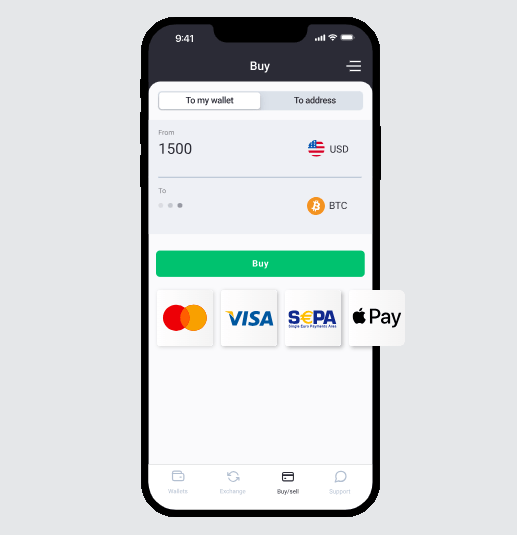
    Users can purchase cryptocurrencies using fiat money through its built-in fiat gateway, which supports payment methods like credit and debit cards. The interface is easy to use and allows users to buy and sell crypto directly from their wallet. That could be a major pro for beginner users, who may feel a bit lost when using advanced trading interfaces used by most of the top crypto exchanges.

    It’s worth noting that payment processors partnered with NOW Wallet require users to complete KYC before they can complete fiat transactions. This comes in stark contrast to crypto transactions, which have no KYC requirements.

    now wallet fiat payments

    Web 3.0 features

    NOW Wallet integrates Web3 features to cater to users who engage with decentralized applications (dApps) and blockchain-based ecosystems.

    NOW Wallet allows direct interaction with decentralized applications through protocols like WalletConnect. This allows users to seamlessly connect to popular dApps in the DeFi, NFT, and gaming spaces.

    When it comes to NFTs, NOW Wallet supports the storage of non-fungible tokens (NFTs) based on Ethereum (ERC-721/1155) and Solana. Users can view and manage directly from their wallet interface and trade them via WalletConnect, an open-source protocol that allows you to connect your wallet to supported dApps

    The wallet can store and manage utility tokens for various Web3 applications, such as governance tokens or tokens earned from play-to-earn (P2E) games.

    Staking options

    now wallet tron staking

    If you want to participate in securing blockchain ecosystems with your digital assets, you’ll be happy to learn that NOW Wallet makes the whole process very simple. You can stake various popular coins like TRX, BNB, ATOM, SOL, ADA, and more, along with the platform’s native NOW Token.

    The staking options are available in the staking section. You only need to deposit supported crypto into your wallet and stake the number of coins you want. Rewards will be automatically deposited into your wallet.

    NOW Wallet Pro: Premium benefits

    If the features available in the regular plan are not enough for you, then you can look into trying the “Pro” plans, both free and paid options. The plans come with several benefits, such as cashback when swapping with NOW Wallet, personalized web pages for online crypto payments, crypto loans, and AML security checks.

    There are three tiers available to users. For a full comparison, you can refer to the following screenshot taken from the NOW Wallet website.

    now wallet pro plans

    At this point, it’s worth noting that if you experience any issues when using NOW Wallet, you can easily reach out to their professional and responsive customer support. The NOW Wallet team claims a 99% user error resolution rate, which is very impressive.

    NOW Wallet review verdict

    NOW Wallet is ideal for individuals who value control over their assets, seek a straightforward user experience, and want to avoid the complexities of cryptocurrency exchanges. DeFi features like staking and NFTs are also easily accessible, which makes it a great option for Web3 users.

    If you’re currently looking for a more personalized crypto experience, then the NOW Wallet Pro plan might be a very good choice for you, allowing you to earn cashback and maximize the utility of your assets with crypto loans.

  • How The BlackRock ETF Could Be Bad News For Bitcoin

    How The BlackRock ETF Could Be Bad News For Bitcoin

    Of the many things that the crypto world has to be excited about in 2024, the potential BlackRock ETF is perhaps at the top of the list. The industry has been pursuing an ETF for years and multiple companies have been denied thus far.

    BlackRock looks to be in the final stages of its application and many think it will be a shoo-in for approval. With this could come several benefits for those who use crypto and could even trigger a bull run that will introduce a new all-time price high for Bitcoin.

    But according to Arthur Hayes, the co-founder of BitMEX, this ETF could also bring some negative consequences that, if unchecked, could destroy Bitcoin altogether.

    The Downsides of the ETF

    According to Hayes, we need to consider the fact that firms like BlackRock that launch ETFs specialize in a mass asset acquisition. This ETF will likely see a huge demand and to satisfy it, BlackRock will need to buy up a lot of Bitcoin. On its own, that sounds like a good thing. But at the same time, any Bitcoin expert will tell you that a certain amount of tokens need to remain in circulation to ensure a healthy ecosystem.

    More specifically, there needs to be enough Bitcoin in circulation to reward the users who validate transactions. But if all the Bitcoin is gone to ETFs run by billion-dollar corporations, there will be fewer, if not none, everyday people to initiate Bitcoin transactions. A lack of transactions means a lack of transaction fees being paid to validators. Eventually, the validators will have no motivation to continue and will not even be able to afford the network’s fees. One by one, these validators will shut off their machines and over time, the Bitcoin network will die.

    How This Could Affect Bitcoin Users

    We don’t yet know if this network death will take place at all but it must be acknowledged that large investment companies taking up too large a portion of all the crypto in the market will affect everyone who uses Bitcoin in different ways.

    For those who invest in Bitcoin, there is a chance of initially making mammoth profits. As companies buy up Bitcoin for their ETFs, the price of Bitcoin should initially spike because of the increased scarcity. This means that some traders can eventually sell their tokens for a massive profit. But this will not likely last because once too many of the tokens are concentrated in ETFs and none are available to pay the validators, the tokens that are held by traders will be essentially worthless.

    The Bitcoin ecosystem, as we’ve established, needs tokens circulating to stay healthy so it would be in the best interests of investors that Hayes’ prediction does not come true.

    Then there are people who use Bitcoin for non-investment reasons. There are many businesses that accept Bitcoin as payment for goods and services and this means that there is a category of Bitcoin users who use the token for domestic payments. They too will be affected if Hayes’ prediction comes true because a lack of network validators means that their transactions cannot be validated.

    If Bitcoin transactions cannot be validated, this means that sending and receiving Bitcoin will be tricker for users. On top of this, Bitcoin users who want to spend their tokens will need to find other alternatives. If you as a consumer found an online casino where you can gamble with cryptocurrency, for example, you might need to switch to other tokens instead. Thankfully, many online crypto casinos accept several cryptos alongside Bitcoin.

    And that’s not even touching on those who have a significant chunk of their savings held in Bitcoin as a hedge against inflation. Providing some sort of insurance against inflation has been a major selling point of Bitcoin and this is taken away in the event of validators leaving en masse.

    At the end of the day, Bitcoin is not just an investment vehicle but a currency. And at any given time, there are many people who need the currency to pay for everyday expenses. In the same way, the destruction of a central bank would render fiat currency worthless and upend people’s lives so would the collapse of the Bitcoin ecosystem.

    What Happens Next

    In a blog post, Arthur Hayes says that if this does happen and we witness the death of Bitcoin in real-time, another digital asset will rise up and take its place. There are thousands of other tokens in the market and one of them might just become the next big thing in crypto.

    There are also several Central Bank Digital currencies due to launch this year and one of them could offer an alternative to Bitcoin if this prediction comes to pass.

  • Friendzone: A New SocialFi App with a Rewarding Campaign

    Friendzone: A New SocialFi App with a Rewarding Campaign

    Key takeaways

    • Friendzone initiates the “Friend Farming” campaign, rewarding early participants in its upcoming SocialFi app.
    • Friendzone is rewarding users and creators, setting a new standard for SocialFi platforms.
    • They pioneer a model emphasizing user rewards, in-app monetization, customized controls, and real-time market dynamics.

    Friendzone is a social Web3 platform that will launch its app in January 2024, offering a new way to reward social presence and engagement in Web3. The app will enable users and creators to monetize their digital assets and social networks. The app will also feature a real-time adaptive pricing and staking mechanism that will reflect the market value of the native currency called “Creator Chips”.

    Innovative reward mechanisms and creator control

    Friendzone is the premier social Web3 platform introducing real-time adaptive pricing and native reward distribution to ensure fair and dynamic value exchange. It is tailored to a creator’s reputation and community support. The platform is the first to incentivize sustained engagement and offers creators extensive control over content monetization. It is promoting a robust and inclusive digital circular economy at a large scale.

    The project is supported by a dedicated team of core contributors and advisors from industry-leading entities such as Synthetix, Band Protocol, Koinly, Immutable, Pendle Finance, Cyball, and Sparklabs.

    To prepare the community for its protocol launch, Friendzone has announced the launch of its “Friend Farming” campaign. This campaign aims to reward its community by distributing rewards to users who contribute to the platform’s growth through early involvement. Participants can earn Airdrop Points by inviting friends, creating friendship groups, and gaining early access to the platform.

    “Friendzone is more than a platform. It is a paradigm shift in how social applications should be built starting at the root of any great Web3 project – protocol design and incentive mechanisms – which secure the platform’s integrity and also drive user engagement and retention, essential for long-term success.”

    —Kevin Lu, Friendzone Co-Founder and CEO.

    The Friendzone app will offer a unique mechanism for a sustainable and scalable social capital marketplace with native reward sharing. Creator Chips, the native currency of creator networks, incorporates a reputation factor with its responsive pricing mechanism that adjusts the value of Chips in real-time. The creator’s reputation and the user’s overall network ownership will move according to the laws of supply and demand. This way, the platform prevents price manipulation and negative network effects.

    The SocialFi app ensures an equitable distribution of a creator’s revenue, incentivizing a two-way contribution between the creator and their social network. Creators can utilize the custom access controls provided by Friendzone to tailor their offerings, including access levels, content types, and pricing.

    Wrapping up

    Friendzone is a progressive web app, available on iOS and Android platforms with a browser application on the horizon. If you’re interested, you can join the new social Web3 era. The Friendzone Friend Farming campaign is a great opportunity for crypto enthusiasts with above-average knowledge about crypto, airdrops and blockchain to join a promising and rewarding Web3 community.

  • How UTIX Is Transforming Online Ticketing Industry with UTX Token, New Listing on BitMart

    How UTIX Is Transforming Online Ticketing Industry with UTX Token, New Listing on BitMart

    eTicketing

    The online ticketing industry is facing many challenges, such as fraud, scalping, high fees, and lack of transparency. However, blockchain technology can offer a solution that can improve the efficiency and security of e-ticketing platforms. One of the projects that is leveraging blockchain to revolutionize the online ticketing industry is UTIX, a software-as-a-service platform that provides event organizers with free and customizable e-ticketing solutions.

    What is UTIX?

    UTIX stands as an innovative blockchain-driven online e-ticketing solution. It enables event organizers worldwide, granting them a streamlined process and unprecedented autonomy in ticket sales. Running on the Ethereum blockchain, UTIX sets its sights on eradicating the inefficacies that have long troubled conventional e-ticketing systems. Beyond its resilience against counterfeit threats, UTIX provides a unique way to set secondary market ticket prices, preventing scalping.

    How UTIX uses blockchain to improve online ticketing and prevent scalping?

    As already mentioned, UTIX is built on the Ethereum blockchain, which allows it to use smart contracts to control and monitor the sale of tickets via its e-ticketing ecosystem. UTIX charges small fees on each ticket sold, which are used to reward users with its native $UTX ERC-20 token. Users can earn $UTX every time they buy tickets through UTIX, and use them to get discounts on future events or trade them on exchanges. UTIX has also registered its Whitepaper with the MFSA (Malta Financial Services Authority) and became one of only 3 digital assets in the world with this level of regulation.

    One of the main benefits of UTIX is that it gives event organizers full control over their ticket sales, including the secondary market price. This prevents ticket scalpers from buying tickets in bulk and reselling them at inflated prices. UTIX also reduces the risk of counterfeit tickets by using blockchain’s immutability and transparency. Moreover, UTIX has a simple and user-friendly interface that hides the complexity of blockchain technology from both event organizers and end users.

    UTIX has recently announced that its $UTX token will be listed on BitMart, a leading global digital asset trading platform with over 2 million users. This will increase the liquidity and utility of the token, as well as the exposure and adoption of the UTIX platform. The listing will take place on October 31, and BitMart will support $UTX/$USDT and $UTX/$BTC trading pairs.

    “We’re thrilled to announce the first listing of our $UTX token, which holds the distinction of being the world’s first MFSA-regulated digital asset. As we scale UTIX to become the dominant platform in the broken e-ticketing market, the listing will increase exposure to the project and $UTIX’s novel utility. BitMart’s massive user base will bring more liquidity to the market and greater value to our community,”

    —Max Mayhew, Managing Director of UTIX

    A BitMart representative also commented:

    “BitMart is proud to become the first major global cryptocurrency exchange to list the $UTX loyalty rewards token. UTIX’s mission to bring new efficiencies to the online ticketing industry is a transformative one that showcases yet another promising use case for blockchain. With $UTIX now available to trade on our platform, it’s a project that’s rapidly approaching maturity,”

    Wrapping up

    UTIX stands at the forefront of transforming the online ticketing industry through innovative blockchain technology. With a commitment to empowering event organizers, eliminating scalping, and enhancing user experiences, UTIX’s Ethereum-based ecosystem provides unparalleled transparency and control. As UTIX’s native $UTX token makes its debut on BitMart, a global digital asset trading platform, the project takes a significant step towards increased liquidity and exposure. UTIX’s vision to revolutionize e-ticketing is not only impressive but also promising, and it aims to redefine the industry’s standards while ensuring fair access to events for all.

  • Kresus Partners with Collectibles.com: Paving the Way for Web3 Collecting

    Kresus Partners with Collectibles.com: Paving the Way for Web3 Collecting

    Leading app developer Kresus has entered into a strategic partnership with Collectibles.com, a pioneering web3 community and marketplace tailored for collectors and enthusiasts. This collaboration designates Kresus as the preferred wallet solution for Collectibles.com, offering users an enhanced and seamless web3 experience.

    How Kresus and Collectibles.com are transforming collecting

    Collectibles.com, set to launch in October, has already generated substantial interest, with collectors eagerly signing up for its waitlist and securing custom usernames. The platform promises an array of features, including the ability to buy, sell, and trade collectibles, while fostering connections among collectors across various niches, spanning sports cards, comics, memorabilia, and more.

    As part of this partnership, users signing up for Collectibles.com will have the option to either create or link their Kresus wallet during registration. The Kresus wallet, renowned for its security and user-friendliness, empowers users to manage their digital assets and engage with decentralized applications on web3.

    This collaboration significantly simplifies the process of acquiring cryptocurrency on Collectibles.com by enabling users to use fiat currencies directly, eliminating the need for third-party exchanges. Payment options include debit and credit cards, bank transfers, Apple Pay, Google Pay, and more.

    Trevor Traina, Founder and CEO of Kresus, expressed excitement about the partnership, recognizing Collectibles.com as a game-changer for collectors worldwide. He emphasized how Kresus’s secure and user-friendly wallet will play a pivotal role in introducing collectors to the world of web3.

    “We are truly excited to be part of Collectibles.com’s journey. The platform is a godsend for passionate collectors the world over, and our secure and user-friendly Kresus wallet will play a key role in introducing collectors to the world of web3.”

    —Trevor Traina, Kresus Founder and CEO

    The advantages of Web3 for Collectors

    Collectibles.com aims to enhance the collecting experience by leveraging the power of web3 technology. Web3 technology offers users greater control and ownership over their data and assets, harnessing the innovations of blockchain technology.

    Dietrich von Behren, Co-Founder and Chief Business & Strategy Officer of Collectibles.com, expressed confidence in the partnership, highlighting Kresus’s commitment to user security and web3 experience. He emphasized that the partnership aligns with Collectibles.com’s goal of creating a community-driven platform for collectors, ultimately enhancing the user experience.

    Radix’s Babylon upgrade: a game-changer for Web3 and DeFi

    In a parallel development, decentralized ledger platform Radix Publishing celebrated the successful completion of its Babylon mainnet upgrade, marking the transition from the Olympia era to a new phase for the Radix Network.

    The Babylon upgrade represents a substantial overhaul of the Radix Network mainnet, introducing the capability to deploy Scrypto-based smart contracts and a suite of innovative features. Notably, it heralds the introduction of the Radix Mobile Wallet.

    CEO of RDX Works, Piers Ridyard, anticipates a new era, emphasizing that Babylon brings together the Full Stack for DeFi, creating an ecosystem where developers can intuitively build and launch secure dApps, and where users can confidently engage with them.

    The Babylon upgrade introduces five new products to enhance the Radix ecosystem:

    1. Radix Mobile Wallet: Offering a secure method for managing accounts and holding various assets, including tokens and NFTs on Radix.
    2. Radix Connect: Facilitating the connection of Radix Wallet to desktop dApps via a secure peer-to-peer link using the Radix browser extension.
    3. Radix Dashboard: Serving as a comprehensive explorer for the Radix Network, enabling staking, unstaking, and claiming XRD from validators.
    4. Developer Console: Equipping developers with functionalities to deploy packages to the network, streamlining the integration of new software components.
    5. dApp Sandbox: A developer tool simplifying experimentation with dApp frontend requests to the Radix Wallet.

    Babylon enhances the user experience for web3 developers, offering a self-incentivizing DeFi dApp ecosystem where impactful decentralized applications can be built and deployed at scale. Collectors and developers alike stand to benefit from these transformative advancements in the web3 and DeFi spaces.

    Both Kresus and Radix’s Babylon upgrade represent significant steps forward in harnessing the potential of web3 technology, offering improved experiences for users and creators in their respective domains.

  • How to Find Reliable Crypto Gambling Sites

    How to Find Reliable Crypto Gambling Sites

    reliable crypto casino

    Gambling sites that use cryptocurrency as a payment method are on the rise. Players prefer to bet using crypto as it allows for online privacy and provides instant and safe payments. With so many such gambling sites out there, players are finding it difficult to figure out which gambling sites are trustworthy.

    In this article, we’ll discuss how to find a reliable crypto gambling site and what to look for in one. We’ll especially focus on how to make sure that the site you’ll use is safe and trustworthy.

    Is the Casino Licensed?

    The first thing to look for in a crypto casino is the proper license. The casino needs to get a license in order to operate. This license is issued by the government agency that regulates gambling. For the most part, the licenses are issued by offshore zones that allow betting so that the casino can legally operate online and work in countries that restrict it in the first place.

    Some casinos offer incredible payouts and potential for huge wins but aren’t licensed. It doesn’t pay off to use such casinos, since they are probably not reliable.

    Look For Online Reviews

    Online reviews are one of the most important tools players have when looking for reliable BTC gambling sites. These reviews provide information on how safe the casino is and what features it offers. They also review the games, the payment options, and the customer support quality.

    Such review aggregates are always a bit unfair to new gambling sites as it takes time to establish a reputation. However, these casinos often offer additional bonuses and better deals early on as a way to get traction and add new users.

    Learn About the Cryptocurrency

    BTC gambling sites work the same as the ones that use traditional fiat currency when it comes to games and other options. The payments themselves are somewhat different as the value of your winnings can change, due to the volatility of the cryptocurrency market. This is another important area players should be informed about.

    There are plenty of resources out there and reliable sites such as CCN are a great place for players to start. The market is very much alive and new players pop up on the scene every now and then. There are also new regulations and new tech advances. Players that bet in crypto should try and stay on top of the news.

    A Variety of Payment Options

    It’s important for a casino to provide a variety of payment options. Some Bitcoin casinos also allow payments in traditional fiat currency. Most allow for payments to be made in a variety of different cryptocurrencies. Casinos also tend to offer payment option bonuses, which lower the fees for payments made in a particular currency as a part of a broader promotion deal.

    It’s best to look for casinos that provide options and allow the players to have a backup payment method such as BTC in case something goes wrong.

    Customer Support

    Customer support is an essential feature of a trustworthy Bitcoin casino. The casinos take on players from all over the world and often don’t have a physical location at all, so a customer support system becomes essential when players want to address an issue.

    A trustworthy customer support is one staffed by experts who can resolve the issue quickly. It’s also important to be able to contact the support at all times and to do so using a variety of channels. Emails, chats, and phones should all be available, and equally useful to users.

    Game Selection

    Cryptocurrency casinos provide a variety of different games, made by countless software developers. A trustworthy casino should allow the players to choose between as many games as possible. In the broadest sense, all games can be divided into games of luck and games of skill. Games of luck are the ones in which players can’t affect the outcome and games of skill are the ones that players can affect strategically.

    When choosing a casino to use, it’s best to allow yourself the chance to try the games you’re not familiar with and to explore new options along the way.

    Transparency about the Odds

    All the BTC gambling games and all games, in general, have easily quantifiable odds. These are known as the return to player rates. It’s a statistic that tells you how much of the funds you invest in the game you’ll get back. The rate is always lower than 100 percent. This means that in the long run, you’ll always end up losing more than you put in if you keep playing.

    Volatility is another important metric as it puts into perspective how risky the game is. Crypto casinos are upfront about this data and before playing you should look it up.

    Bankroll Management Options

    Managing bankroll is one of the important features of crypto casino gambling. It allows the players to create a stop loss and give up after enough bad turns. Some games can be played without paying attention to details, as they are based on luck alone – this is true for slots and some dice games. A good BTC casino should allow the players to automate these features.

    For instance, look for casinos that will automatically sign you out for a set period of time, after you’ve gone over a spending limit. It also helps to have an option to automatically raise a bet or implement a betting strategy based on the preset conditions.

    Bonuses

    All cryptocurrency casinos offer bonuses. These come in many different forms and the amounts can differ greatly. Almost all bonuses come with wagering requirements, meaning that the player can’t simply cash out a bonus and take the free money.

    A reliable BTC casino is one with bonuses that clearly state the wagering requirements attached to them and that are worth using. If a casino offers large bonuses, but they are too difficult to use or withdraw, it’s important to be aware of it and pass on such offers.

    Mobile Accessibility

    Most online gambling these days takes place using mobile devices. Younger players are used to playing on phones and tablets and most of the games have simple enough interfaces for this to work. Some games can also be automated so that the player can casually pay attention to the gameplay.

    Cryptocurrency wallets and payments can also be handled on a mobile device. Therefore the whole process from depositing funds to playing and withdrawing the winnings can be handled on a mobile device. The goal is therefore for the gameplay to be the same regardless of the device you’ll be using.

    Conclusion

    There are a lot of cryptocurrency casinos out there and choosing a reliable casino to bet in, requires some work and diligence. The players should make sure that the casinos have proper licenses and good reviews from former users.

    It also helps to have a variety of games to choose from and good customer support. A reliable Bitcoin casino should allow payments in different currencies and players should carefully study the crypto coins as well. Bonuses and wagering requirements attached to them are another feature to carefully study and compare.

  • XRP Price Jumps +30% as Judge Says Ripple’s Sales Were Not Investment Contracts

    XRP Price Jumps +30% as Judge Says Ripple’s Sales Were Not Investment Contracts

    The judge presiding over the case between Ripple and the Securities and Exchange Commission (SEC) has said that Ripple’s programmatic sales of the XRP cryptocurrency were not investment contracts.

    Following the publication of the latest documents, the markets interpreted them extremely positively, as the price of XRP has increased by about 30% in the last 24 hours.

    The XRP price, which was at around $0.47 at 15:20 PM UTC, jumped all the way up to $0.61 by 16:12 PM UTC. This kind of price increase is especially impressive given that XRP is one of the biggest cryptocurrencies on the market, boasting a market cap of $31.6 billion.

    This development means that major exchanges such as Coinbase, which have delisted XRP as a precaution, are more likely to list the popular cryptocurrency again.

    The latest development is a continuation of an intense legal battle between Ripple and the SEC, which began in December of 2020. So far, Ripple seems to have been quite successful in defending its position that XRP is not a security and that the company’s sales of XRP did not constitute a securities offering.

    As the judge has declined to issue a summary judgment, the issue will now go to trial, the date of which is not yet known.

    The precedent set by this case could also work in favor of other top cryptocurrencies, many of which are securities according to the SEC. In addition to the price spike displayed by XRP, we’ve also seen notable price spikes from cryptocurrencies such as Stellar (+12%), Solana (+10%) and Cardano (+9.5%).

  • Voltage Finance Surges Over 500% This Month After MEXC Listing – Where Can It Go Next?

    Voltage Finance Surges Over 500% This Month After MEXC Listing – Where Can It Go Next?

    Voltage Finance (VOLT) surged by an unprecedented 115% over the past 24 hours following the announcement that it was going to be listed on the MEXC Global exchange. The announcement caused VOLT to surge from a low of $0.0005 to reach as high as $0.00128 during the peak of the spike. The coin has since dropped to $0.0011, but it looks like it might continue to explode throughout the week. 

    In total, VOLT is now up by a whopping 258% over the past week and an enormous 500% over the past month. The cryptocurrency now has a market cap value of over $10 million as it starts to climb the rankings. 

    Voltage Finance is a DeFi protocol that provides a secure and transparent method for users to earn a passive income through yield farming and providing liquidity. The protocol is built on top of the Fuse Network, allowing it to take advantage of fast and cheap transactions – leaving users with higher rewards from yield-farming. 

    Through the platform, users can take advantage of its staking/liquidity pools and token swaps to receive a yield on their deposits. By depositing assets into the liquidity pool, users are entitled to their share of the 0.3% trading fees alongside the yield farming returns – which is paid in VOLT tokens. 

    The project is backed by high-profile venture capitalists, raising $2.3 million from major institutional investors in December, with another round of fundraising bringing the total to $3.4 million. Some of the venture capitalists that invested in the project include Genesis Block Ventures, Spark Capital, and Sheesha Finance. 

    The entire idea behind the project was to make DeFi accessible to the mass market through an intuitive and easy-to-use consumer-facing VOLT App. The app was released earlier this month, providing seamless DeFi access for users. 

    Today’s price surge was largely a result of VOLT being added to the MEXC Global exchange, one of the industry’s most respected CEXs. The exchange is available in over 200 countries and can boast a user base of around 6 million people. As soon as the token was added to the exchange, the token started to skyrocket to produce the 115% price surge seen today. 

    With the market surging, let us take a closer look at the charts and see the potential support and resistance areas moving forward. 

    Voltage Finance Coin Price Analysis

    Voltage Finance price analysis long term chart
    VOLT/USD – 1 DAY CHART – LONG TERM
    Voltage Finance price analysis short term chart
    VOLT/USD – 1 DAY CHART – SHORT TERM

    What has been going on?

    Starting with the long-term chart, we can see that VOLT has been on a consistent downtrend for the majority of the past year – similar to the entire cryptocurrency market. The coin continued its downtrend until finding support at $0.00015 in March 2023. From there, VOLT started to bounce higher as it quickly recovered above $0.0002 by the beginning of April. 

    The bulk of the recent market explosion didn’t occur until the second week of April 2023. The coin started to push higher on April 10th as it broke the resistance at $0.00025, and it continued to push higher through the following weeks to reach $0.0005 a few days ago. 

    Moving onto the shorter-term charts, we can see that today’s price explosion allowed VOLT to surge to new highs not seen since May 2022 – allowing it to set fresh 11-month highs. During the surge, the coin blew past resistance at $0.0006, $0.0008, and $0.001 to reach as high as $0.00128 during the explosion. The coin has dropped slightly from today’s highs but is still looking very strong as it sits around $0.00011

    VOLT Price Short Term Prediction: HYPER BULLISH

    The short-term outlook for VOLT is hyper-bullish after today’s 100+% price explosion. The market would now need to drop beneath the support at $0.0006 to turn neutral and would have to continue beneath the support at $0.0003 to be in danger of turning bearish in the short term. 

    Looking ahead, if the buyers can take out today’s highs of $0.00128, the first level of higher resistance lies at $0.0014. This is followed by resistance at $0.00159 (1.272 Fib Extension), $0.00175 (1.414 Fib Extension), $0.0018, and $0.002 (1.618 Fib Extension).

    If the buyers can successfully push VOLT even further beyond $0.002, added resistance lies at $0.0022, $0.0024 (April 2022 support), $0.0026, and $0.003. 

    Where Is The Support Toward The Downside?

    On the other side, a retracement is a likely event, given the parabolic nature of today’s price surge. If the sellers do start to push VOLT lower, the first level of support is expected at $0.001 (.236 Fib Retracement). This is followed by support at $0.00085 (.382 Fib Retracement), $0.00072 (.5 Fib Retracement), and $0.000578 (.618 Fib Retracement). 

    Beneath this, added support lies at $0.0004 and $0.00023. 

    Overall, today’s market explosion from VOLT Finance has put the coin back into the minds of traders across the industry. With the launch of its new application and the new listing on the MEXC Global exchange, we can expect VOLT to continue its unprecedented growth over the coming weeks.